In This Article
Let’s be real — nobody talks about running socks until their feet are on fire, soaked through, and covered in blisters at mile 8. Been there? Yeah, me too. If you’re training through the heat of summer or live somewhere that feels tropical year-round, choosing the right running socks for hot weather is just as important as picking the right shoes.
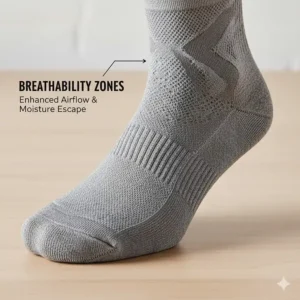
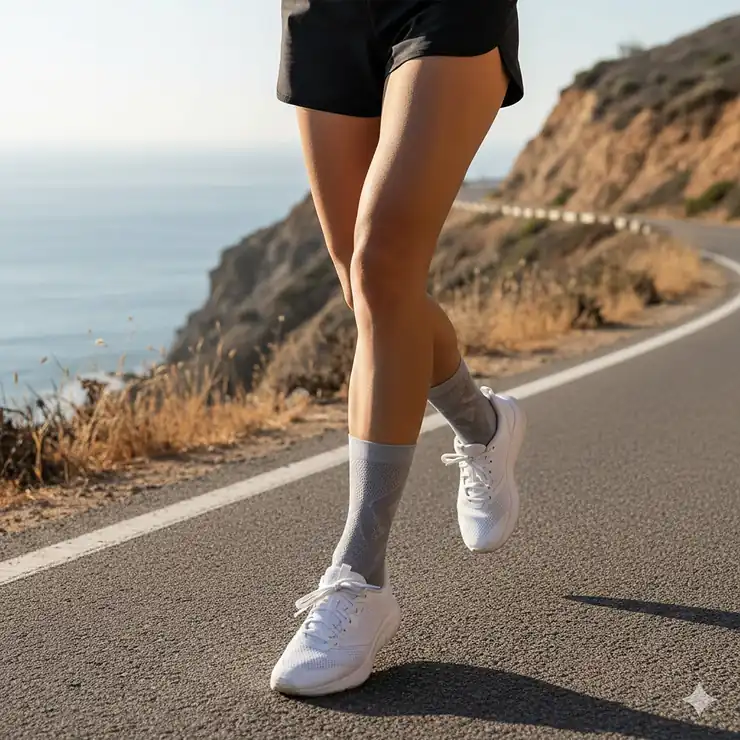
So what exactly makes a sock “hot weather ready”? A great pair of summer running socks is lightweight, moisture-wicking, and built with ventilation zones that promote heat dissipation. They keep your feet dry, reduce friction, and — most importantly — don’t turn into a sweaty, soggy mess halfway through your run. According to research from the American Podiatric Medical Association, moisture buildup is one of the primary causes of blisters, making breathable, moisture-wicking socks a frontline defense for runners of all levels.
In this guide, I’ve done the research for you. I’ve rounded up 7 real, Amazon-available options — tested and reviewed by actual runners — covering everything from budget picks to premium ventilated athletic socks built for hot climates. Whether you’re logging miles in Phoenix in July or training through a tropical climate, there’s a pair here for you.
Quick Comparison Table: Top 7 Running Socks for Hot Weather
| Product | Type | Price | Best For |
|---|---|---|---|
| Drymax Extra Protection Hot Weather Mini Crew | Mini Crew | ~$20/pair | Max heat protection |
| Balega Hidden Comfort No-Show | No-Show | ~$16.98/pair | Everyday comfort |
| Feetures Elite Max Cushion No Show Tab | No-Show | ~$18/pair | Long runs |
| Swiftwick Aspire Zero No-Show | No-Show | ~$17/pair | Speed & racing |
| Injinji Run Lightweight No-Show Toesock | Toe Sock | ~$23.95/pair | Blister prevention |
| Darn Tough Run Micro Crew Ultra-Light | Micro Crew | ~$20.95/pair | Trail & durability |
| WrightSock CoolMesh II Double Layer Quarter | Quarter Crew | ~$13/pair | Budget blister shield |
💬 Just one click – help others make better buying decisions too! 😊
Top 7 Running Socks for Hot Weather: Expert Analysis
1. Drymax Extra Protection Hot Weather Running Mini Crew
If you want the sock engineered specifically for scorching conditions, the Drymax Hot Weather Mini Crew is your answer. Drymax builds these around their proprietary PTFE (Polytetrafluoroethylene) fibers — the same material used in non-stick cookware — because PTFE has the lowest coefficient of friction of any fiber on earth. That means less rubbing, less heat generation, and dramatically fewer blisters.
Key Specs: PTFE + Drymax fiber blend, open mesh ventilation panels, dual-layer moisture management, flat toe seam, ~$20/pair
The mini crew height sits just above the ankle, offering trail debris protection without excess warmth. Built-in mesh stripe vents along the top actively release heat and sweat vapor during your run — a feature rarely seen at this price point. Runners who use these for ultramarathons in the American South rave about their performance even in 90°F+ conditions.
✅ Unmatched moisture management (25x faster than wool)
✅ PTFE fibers genuinely reduce friction-generated heat
✅ Reinforced heel for long-term durability
❌ Pricey for a single pair
❌ Limited color options
2. Balega Hidden Comfort No-Show Running Socks
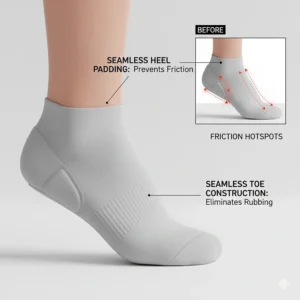
Ask any group of runners which sock they trust most, and Balega Hidden Comfort comes up again and again. Made in South Africa with a blend of mohair, nylon, and Drynamix polyester, these socks are famous for their plush feel — which sounds counterintuitive for summer running gear, but the cushioning here actually serves a purpose: it keeps sweat from sitting directly on your skin.
Key Specs: Mohair/Drynamix blend, seamless toe, ventilated mesh top, no-show cut, ~$16.98/pair
The Drynamix fiber wicks moisture effectively without trapping heat, and the seamless toe construction eliminates virtually all rubbing around the toe box. It’s a consistently top-rated sock on Amazon with thousands of verified buyer reviews praising its blister-free performance in humid summer training.
✅ Iconic softness that holds up after 100+ washes
✅ Ventilated mesh panel on top of foot
✅ Widely available in multiple sizes
❌ Slightly thicker than ultralight options
❌ Mohair may feel warm in extreme tropical climate running
3. Feetures Elite Max Cushion No Show Tab
Feetures is a brand that earns obsessive loyalty, and for good reason. The Elite Max Cushion No Show Tab is engineered with left/right-specific anatomy — meaning each sock is shaped for a specific foot, which practically eliminates bunching and sliding inside your shoe. For summer training gear, that precision fit matters enormously because sweat makes poorly fitting socks shift dangerously.
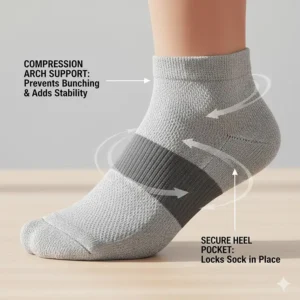
Key Specs: iWick fiber (nylon/polyester blend), targeted arch compression band, seamless toe, anatomical L/R fit, ~$18/pair
The iWick technology pushes moisture away from your skin toward the outer layer of the fabric, where it evaporates. The no-show tab also protects the back of your Achilles from shoe rub, a small but lifesaving detail during hot summer miles when sweat makes shoe collars grip harder.
✅ Anatomical fit nearly eliminates in-shoe movement
✅ Excellent moisture wicking for lightweight running socks summer use
✅ Lifetime guarantee
❌ Max Cushion version can feel slightly warm in peak heat
❌ Premium price for a single pair
4. Swiftwick Aspire Zero No-Show Ultra Thin
When heat dissipation is your priority and cushion is secondary, the Swiftwick Aspire Zero is the sock you want. The “Zero” in the name refers to its cushion level: none. This is a paper-thin, compressive sock designed for speed, racing, and runners who absolutely cannot tolerate anything that traps warmth. Think of it as a second skin.
Key Specs: Olefin + nylon blend, zero cushion, compressive fit, GripDry fiber technology, ~$17/pair, available in multi-packs
Swiftwick’s proprietary GripDry fibers include micro-treads that prevent foot slide inside the shoe — a clever solution to the heat-equals-sweaty-foot-equals-slipping problem. The olefin fiber is hydrophobic, meaning it actively repels moisture rather than simply wicking it. Runners who train in tropical climate conditions consistently praise these as their go-to for racing in heat.
✅ Minimal material = maximum breathability
✅ Stays put through the sweatiest miles
✅ Odor resistant
❌ Zero cushion means zero protection on rough pavement
❌ Not ideal for long easy runs or those with sensitive feet
5. Injinji Run Lightweight No-Show Toesock
Injinji takes a completely different approach to blister prevention: separate each toe. The Run Lightweight No-Show features individual toe sleeves, which eliminate all skin-on-skin friction between toes — typically where summer blisters form first in humid conditions. If you’ve ever developed blisters between your toes during hot, sweaty long runs, you’ll instantly understand why this design works.
Key Specs: CoolMax + LYCRA blend, individual toe sleeves, no-show cut, lightweight construction, ~$23.95/pair
CoolMax is one of the best synthetic fabrics for ventilated athletic socks in hot climates, engineered specifically to move moisture away from skin and dry fast. The LYCRA blend keeps each toe sleeve snugly in place. It takes a few days to get used to aligning each toe, but most converts never go back to traditional socks.
✅ Eliminates toe-on-toe blister formation entirely
✅ CoolMax fiber excels in humid heat
✅ Works brilliantly for tropical climate running
❌ Highest price per pair in this list
❌ Takes some practice to put on quickly
6. Darn Tough Run Micro Crew Ultra-Light (Men’s)
Vermont-made and backed by a lifetime unconditional guarantee, Darn Tough’s Run Micro Crew Ultra-Light is the sock you buy once and forget about replacing — ever. Built from a merino wool and nylon blend, these are surprisingly excellent for summer use because merino wool is one of nature’s best temperature-regulating fibers, keeping you cooler than synthetic alternatives during sustained effort.
Key Specs: 43% merino wool/54% nylon/3% Lycra, micro crew height, ultra-lightweight knit, ~$20.95/pair
The micro crew height offers a touch more ankle protection and helps keep trail debris out without adding warmth. True density engineering means the knit is so fine it nearly disappears inside your shoe. Runners who put in 50-80+ miles per week trust these for year-round, summer training gear included.
✅ Lifetime guarantee — seriously, they replace them for free
✅ Merino naturally regulates temperature and resists odor
✅ Fine knit minimizes bulk and heat
❌ Merino slightly thicker-feeling than pure synthetic
❌ Higher upfront investment (offset by lifetime guarantee)
7. WrightSock CoolMesh II Double Layer Quarter Sock
WrightSock solves the friction problem differently than everyone else: two layers of fabric that move against each other rather than against your skin. The outer layer absorbs friction from your shoe; the inner layer stays smooth against your foot. It’s a clever, physics-based approach that’s especially effective during summer running socks breathable testing in humid conditions.
Key Specs: CoolMesh double-layer construction, polyester/nylon blend, quarter crew height, blister-free guarantee, ~$13/pair
These are the best budget pick in the lineup. At roughly $13 a pair, you’re getting genuine blister-prevention technology and decent moisture management from CoolMesh polyester. The quarter crew height also makes them excellent lightweight running socks for summer trail use where debris can sneak into low-cut designs.
✅ Most affordable option with a real blister-free guarantee
✅ Double-layer technology genuinely works
✅ Quarter crew offers light ankle coverage
❌ Less premium feel than Balega or Feetures
❌ Less refined moisture management vs. top-tier options
✨ Don’t Miss These Exclusive Deals!
🔍 Take your summer running to the next level with these carefully selected socks. Click on any highlighted product to check current pricing and availability on Amazon. These picks will keep your feet cool, dry, and blister-free on every hot-weather mile!
What Makes a Great Running Sock for Hot Weather?
Moisture Management vs. Breathability: Know the Difference
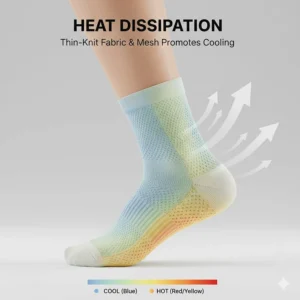
Many runners assume these two properties are the same thing — they’re not, and the distinction matters a lot in summer training gear. Breathability refers to how freely air circulates through the sock fabric, helping regulate temperature passively. Moisture management is active: the fiber physically moves sweat away from your skin toward the outer layer where it evaporates.
The best running socks for hot weather do both. Fabrics like CoolMax polyester, olefin, and Drymax fiber are technically hydrophobic — they don’t absorb moisture but push it outward. Merino wool is hygroscopic but breathes naturally. Cotton, notably, does neither well: it absorbs and holds moisture, making it the worst possible choice for summer running socks. According to research published via the Journal of Athletic Training, wet socks significantly increase skin temperature and blister risk during sustained aerobic exercise.
The Role of Sock Height in Heat Dissipation
No-Show vs. Quarter Crew vs. Mini Crew: Which Wins in Heat?
Sock height has a more direct impact on comfort during hot-weather runs than most people realize. Here’s a quick breakdown:
No-show socks expose the most skin to air circulation, making them the coolest option for road running and gym workouts. They’re the go-to for ventilated athletic socks in hot climates where every degree of heat dissipation matters. The tradeoff is zero ankle protection against shoe rub.
Quarter crew and mini crew socks sit just above or at the ankle bone. They provide a heel tab that prevents rubbing from your shoe collar — a subtle but blister-preventing detail that becomes critical when sweat loosens your shoe fit during long summer runs.
For pure summer road running, a no-show is usually the call. For trails or longer distances in tropical climate running conditions, a mini crew or quarter crew offers better protection without meaningful heat penalty.
Materials Guide: What’s Inside Your Summer Running Sock
A Breakdown of the Best Fibers for Hot Weather Running
Not all synthetic socks are created equal. Here’s how the major materials stack up for summer training gear:
| Material | Moisture Wicking | Breathability | Odor Resistance | Durability |
|---|---|---|---|---|
| Drymax/PTFE Fiber | ⭐⭐⭐⭐⭐ | ⭐⭐⭐⭐⭐ | ⭐⭐⭐⭐ | ⭐⭐⭐⭐ |
| CoolMax Polyester | ⭐⭐⭐⭐ | ⭐⭐⭐⭐ | ⭐⭐⭐ | ⭐⭐⭐⭐ |
| Merino Wool | ⭐⭐⭐⭐ | ⭐⭐⭐ | ⭐⭐⭐⭐⭐ | ⭐⭐⭐ |
| Olefin (Swiftwick) | ⭐⭐⭐⭐⭐ | ⭐⭐⭐⭐⭐ | ⭐⭐⭐⭐ | ⭐⭐⭐⭐ |
| Cotton | ⭐ | ⭐⭐ | ⭐ | ⭐⭐ |
Merino wool is worth special mention despite being a natural fiber: it’s temperature-regulating, meaning it actively buffers against both heat and cold. You might be surprised to find it in your summer rotation — Smartwool’s rundown on merino wool explains the science behind its year-round suitability.
How to Choose Running Socks for Hot Weather: A Step-by-Step Guide
Picking the right pair doesn’t need to be complicated. Here’s a simple framework:
- Identify your terrain. Road runners benefit from no-show cuts; trail runners should size up to quarter or mini crew for debris protection.
- Assess your blister history. Frequent toe blisters? Consider Injinji toe socks. Heel blisters? Prioritize socks with a blister tab.
- Pick your fiber priority. Maximum dryness = Drymax or olefin. Maximum softness = mohair (Balega). Maximum durability = merino/nylon (Darn Tough).
- Choose cushion level. Thin = cooler but less protected. Medium = balanced. For hot weather, err lighter unless you’re running on rough terrain.
- Consider compression. Moderate arch compression (like Feetures or Swiftwick) keeps the sock stationary, reducing friction-induced heat buildup.
- Set a budget. $13–$18 for solid everyday pairs; $20+ for race-day or ultra-distance performance.
- Buy multiple pairs. Rotating socks extends their life and ensures a fresh dry pair for every run.
Hot Weather Running Tips Beyond Your Socks
Even the best running socks for hot weather won’t save you if you’re ignoring other heat-management fundamentals. A few smart habits round out your summer training gear approach:
Timing matters. Running before 8 AM or after 7 PM drops both ambient temperature and sun radiation dramatically. The CDC’s heat stress guidelines recommend limiting strenuous outdoor activity between 10 AM and 4 PM during heat advisories.
Hydration affects foot health. Dehydration concentrates sweat, making it saltier and more irritating to skin. Proper hydration keeps sweat composition mild enough to reduce sock-related friction.
Shoe fit changes in heat. Feet naturally swell by up to a half-size during hot-weather runs. Keep this in mind when pairing your socks: an ultra-thick sock in a snug summer trainer means blisters are almost guaranteed by mile 5.
Antiperspirant for feet. It sounds odd, but applying a light antiperspirant to the soles and heels the night before a long hot run significantly reduces moisture output — a tactic used by ultramarathon runners in desert races.
Caring for Your Summer Running Socks
Getting the most miles from your lightweight running socks summer investment comes down to simple habits. Turn socks inside-out before washing — this removes dead skin and salt deposits that degrade fiber over time. Wash in cold water on a gentle cycle, and air dry rather than tumble dry when possible. Heat from dryers breaks down elastic fibers, particularly in compression arch bands.
Never dry running socks over direct heat sources like radiators. And if you notice thin spots at the heel or toe, thinning compression at the arch, or a sock that consistently slips inside your shoe — it’s time to replace them, no matter how attached you’ve grown.
Benefits Comparison: Technical Socks vs. Regular Cotton Socks
| Feature | Technical Running Socks | Regular Cotton Socks |
|---|---|---|
| Moisture Management | Excellent | Poor |
| Breathability | High | Low |
| Blister Prevention | Active (fibers/design) | Minimal |
| Heat Dissipation | Engineered mesh vents | None |
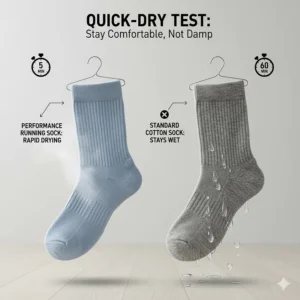
| Drying Time | 15–30 minutes | 60–120 minutes |
| Durability | 500–1,000+ miles | 100–200 miles |
| Cost Per Wear | Low | Appears low, actually high |
The data here makes a clear case. Cotton socks absorb moisture and hold it against your skin — the worst outcome possible during a summer run. Technical running socks for hot weather are engineered from the fiber level up to do the opposite.
FAQ: Your Top Questions About Running Socks for Hot Weather Answered
❓ What are the best running socks for hot weather in 2026?
❓ Are thin socks better for summer running?
❓ Can I wear merino wool socks in hot weather running?
❓ How often should I replace my running socks for hot weather training?
❓ Do toe socks actually help with blisters during hot weather runs?
Conclusion: Stay Cool, Stay Fast — Start with Your Socks
If there’s one takeaway from this deep dive, it’s this: your sock choice matters far more than most runners give it credit for. The best running socks for hot weather aren’t just about comfort — they’re about protecting your feet long enough to actually finish your runs, hit your training goals, and not spend three days nursing blisters between sessions.
For most runners, I’d point you toward the Balega Hidden Comfort if you want soft, proven performance, or the Drymax Extra Protection if you’re training in serious heat or doing ultra distances. Budget runners should absolutely try WrightSock CoolMesh II before buying anything fancier — that double-layer design outperforms its price by a wide margin.
The right pair of lightweight running socks summer-ready and properly ventilated is one of the highest-ROI investments you can make in your running routine. Go check them out, grab a few pairs, and enjoy your sweat-free miles.
✨ Don’t Miss These Exclusive Deals!
🔍 Ready to upgrade your feet for summer? Click on any highlighted product above to check the latest prices and availability on Amazon. With the right ventilated athletic socks in your kit, every hot-weather run gets a little more bearable — and a lot more enjoyable!
Recommended for You
- 7 Best Socks to Prevent Blisters Running 2026
- 7 Best Socks for Shin Splints 2026 | Pain Relief Guide
- 7 Best Running Socks for Sweaty Feet in 2026 (Anti-Blister)
Disclaimer: This article contains affiliate links. If you purchase products through these links, we may earn a small commission at no additional cost to you.
✨ Found this helpful? Share it with your running crew! 💬🤗
