
In This Article
Let’s get something straight right away: not all compression is created equal. You’ve probably seen those aggressively tight 30-40 mmHg stockings at the pharmacy — the ones that look more like medieval leg armor than actual socks. Then there’s the barely-there 8-15 mmHg range, which is basically a firm handshake for your ankles. Neither extreme is what most people actually need day-to-day.
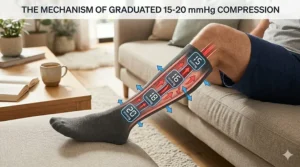
That’s where 15-20 mmhg compression socks come in. This moderate pressure range is the sweet spot — the Goldilocks zone of therapeutic leg support. It’s firm enough to meaningfully improve circulation and prevent swelling, but comfortable enough to wear on a 10-hour flight without wanting to throw your shoes out the airplane window. As a quick snapshot for anyone who landed here mid-research: 15-20 mmhg compression socks deliver graduated pressure that is tightest at the ankle and gradually decreases up the calf, effectively acting as a pump that helps push blood back toward the heart against gravity.
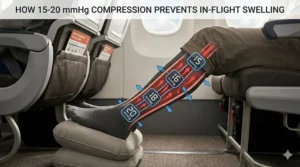
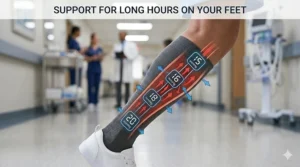
According to Healthline, compression socks in this range are widely used for preventive purposes — including reducing DVT risk during long flights, managing mild varicose veins, easing pregnancy-related swelling, and helping nurses, teachers, and anyone else on their feet all day feel human again by 5 PM. The best part? You don’t need a prescription for socks under 20 mmHg, which means these are accessible to virtually anyone who wants them.
The US market for compression hosiery continues to grow in 2026, and Amazon alone now carries hundreds of options in this category. So I dug through the noise, sorted through the bestsellers, the hidden gems, and the overhyped mediocrity to bring you this comprehensive guide. Whether you’re buying your first pair or upgrading from a brand that’s let you down one too many times, this is the only guide you’ll need.
Quick Comparison Table: Top 15-20 mmhg Compression Socks at a Glance
| Product | Material | Best For | Style | Pack Size | Price Range |
|---|---|---|---|---|---|
| CHARMKING 15-20 mmHg | 85% Nylon/15% Spandex | Budget athletes & daily wear | Knee-high | 3-8 pairs | $10–$18 |
| Sockwell Circulator 15-20mmHg | 31% Merino Wool/31% Rayon/29% Nylon/9% Spandex | Everyday comfort, USA-made | Knee-high | 1 pair | $25–$35 |
| Comrad Knee High 15-20mmHg | 91% Nylon/9% Spandex | Odor control, office wear | Knee-high | 3-pack | $40–$55 |
| Doc Miller 15-20mmHg | Premium Nylon/Spandex | Medical-adjacent, recovery | Knee-high | 1-2 pairs | $12–$20 |
| JOBST ActiveWear 15-20 mmHg | 60% Polyester/20% Nylon/11% Cotton/9% Spandex | Active lifestyles, athletes | Knee-high | 1 pair | $20–$30 |
| Truform 1943 Dress 15-20 mmHg | Nylon/Cotton blend | Professional office wear | Knee-high | 1-2 pairs | $15–$25 |
| mediven for Men Classic 15-20 mmHg | Spandex/Nylon | Business formal, German-engineered | Calf-high | 1 pair | $30–$45 |
Comparison analysis: The table above reveals a clear tiering of the market. CHARMKING dominates on value-per-pair — ideal for daily rotation when you need multiple pairs without breaking the bank. Sockwell and mediven serve buyers who want premium materials (USA-made merino wool and German-engineered Clima-Fresh tech, respectively). JOBST and Comrad live in the performance middle ground, with moisture management technology that sets them apart for active wearers. If you’re buying your first pair to try the category, the Doc Miller or CHARMKING entries are the lowest-risk starting points.
💬 Just one click — help others make better buying decisions too! 😊
Top 7 15-20 mmhg Compression Socks: Expert Analysis
1. CHARMKING Compression Socks for Women & Men (3-8 Pairs) 15-20 mmHg
The undisputed volume champion of Amazon’s compression sock category, and for good reason — CHARMKING has earned nearly 90,000 verified reviews at a 4.4-star average by doing exactly what it promises without any drama.
Specs with real-world meaning: The upgraded material blend (85% Nylon, 15% Spandex) delivers 360-degree stretch that accommodates a wide range of calf sizes without the dreaded “sausage in casing” feeling that plagues cheaper spandex-heavy alternatives. The S/M size fits Women’s US 5.5–8.5 and Men’s US 5–9; L/XL covers Women’s US 8–15.5 and Men’s US 8–14. The graduated 15-20 mmHg compression is engineered from arch to ankle upward — which matters because a sock that squeezes uniformly from toe to knee is just a tight sock, not a therapeutic one.
Who is this for? PA students on hospital rotations, retail workers, flight attendants, marathon training hobbyists — basically anyone who needs a sock that performs well and can be thrown in the wash 50 times without losing its compression. What most buyers overlook is that CHARMKING sells in multi-packs, which means the per-pair cost drops dramatically. A 4-pair pack comes in the $12–$15 range — roughly the cost of a gas station coffee, per pair. For daily rotation wear, that math is unbeatable.
Customer feedback consistently highlights the moisture-wicking performance during long hospital shifts and the bright color variety that makes them feel less medical and more like a lifestyle choice.
Pros:
✅ Outstanding value in multi-pair packs
✅ Wide size range; true-to-spec graduated compression
✅ Moisture-wicking, breathable nylon construction
Cons:
❌ Single-pair value is less compelling than the multi-pack
❌ Lighter-colored variants may show wear sooner with frequent washing
Price range: $10–$18 for multi-packs. One of the best cost-per-day compression socks you’ll find.
2. Sockwell Women’s/Men’s Circulator Moderate Graduated Compression Sock 15-20mmHg
Sockwell is what happens when compression sock engineering meets a genuinely grown-up aesthetic. Made in the USA from a blend of superfine merino wool, rayon from bamboo, nylon, and spandex — this is a sock that takes its job seriously but doesn’t look like it belongs in a hospital.
Specs with real-world meaning: The 4-zone graduated compression system is the key differentiator here. Most budget socks compress in one or two general zones; Sockwell’s Circulator applies pressure across four distinct anatomical zones — arch, ankle, lower calf, and upper calf — which creates a more precise pumping action. The Accu-fit Spandex technology also means the sock maintains its original fit all day long. Anyone who’s experienced mid-afternoon sock slippage knows this is worth its weight in gold. Sizes: S/M fits Women’s US 4–7.5; M/L fits Women’s US 8–11 (and men’s equivalents).
Who is this for? Someone who takes a holistic approach to comfort and is willing to pay slightly more for materials that feel noticeably different against skin. Merino wool is naturally thermoregulating — it keeps feet cool in summer and warm in winter, which cheap synthetic blends simply cannot do. The bamboo-rayon blend adds moisture management on top of that. This is the sock for the teacher who’s on her feet all day and also cares that her socks look and feel nice.
Reviewers frequently mention that these hold up unusually well to repeated washing, a credit to the American manufacturing and yarn quality.
Pros:
✅ Made in USA; superfine merino wool + bamboo blend
✅ 4-zone graduated compression for precise pressure control
✅ Naturally thermoregulating — wearable year-round
Cons:
❌ Higher price point — requires investment mentality, not impulse purchase
❌ Limited in colorful/athletic styles compared to synthetic-blend competitors
Price range: $25–$35 per pair. A premium investment that pays off in comfort and longevity.
3. Comrad Nylon Knee High Compression Socks 15-20mmHg (3-Pack)
Comrad made waves in the compression sock world by positioning itself as the brand for people who hate how compression socks feel — and then actually delivering on that promise. The 3-pack of Nylon Knee-High Compression Socks is their flagship Amazon offering.
Specs with real-world meaning: The 91% Nylon / 9% Spandex blend is premium-grade moisture-wicking nylon — the kind that feels genuinely soft, not plasticky. But the real conversation-starter is SmartSilver technology: silver ion fibers woven into the fabric that eliminate bacteria responsible for foot odor. This isn’t marketing fluff — silver ions genuinely disrupt bacterial cell walls. What that means practically is that these socks stay fresh through a full 12-hour shift in a way that standard nylon socks simply cannot match. The contoured design follows the natural shape of the leg, making them notably easier to put on and take off than many competitors.
Who is this for? The office worker who wears compression socks daily and has noticed that by day three of a rotation, other brands start smelling dubious. Also ideal for anyone with sweaty feet — the combination of premium nylon and antimicrobial silver tech addresses both moisture and odor simultaneously. Comrad’s unisex sizing runs across five size tiers (XS through XL by calf measurement), making fit precision better than most brands that offer just S/M and L/XL.
Customer reviews consistently rave about how easy these are to pull on — a surprisingly common complaint with compression socks is that they’re brutal to get on in the morning.
Pros:
✅ SmartSilver antimicrobial technology eliminates odor
✅ Contoured design — genuinely easier to put on
✅ Precise 5-tier sizing system for better fit accuracy
Cons:
❌ Higher upfront cost than budget options (though 3-pack mitigates this)
❌ Solid/muted colorway options — not ideal for those who want bold patterns
Price range: $40–$55 for a 3-pack. The per-pair cost is justified by the SmartSilver technology and premium nylon quality.
4. Doc Miller Compression Socks for Women and Men 15-20mmHg
Doc Miller occupies a fascinating niche: a small business brand with a deeply loyal following that’s built its reputation on being more medically-minded than lifestyle brands while remaining accessible and affordable. The name itself (not an actual doctor, to be clear — it’s a brand name) conveys exactly the positioning they’re after.
Specs with real-world meaning: Premium nylon/spandex construction, machine washable, lightweight, and designed specifically with varicose vein management, edema, post-surgery recovery, and shin splints in mind. The graduated compression is engineered to deliver maximum pressure at the ankle that decreases progressively up the calf — standard for true graduated compression but not always executed well in the budget segment, which is where Doc Miller punches above its class. The wide size range (Small through 4XL) is genuinely inclusive and one of the brand’s standout practical advantages.
Who is this for? The person who wants medical-adjacent performance without clinical pricing. Programmers who sit all day, outdoor workers who stand all day, and runners dealing with persistent shin splints will all find something to like here. What sets Doc Miller apart from pure lifestyle brands is the deliberate focus on conditions like plantar fasciitis and post-surgical recovery — the spec sheet reads more like a healthcare product than an athletic accessory, which appeals to buyers who want a sock that takes their health seriously.
Buyers frequently note that the sizing chart accuracy is excellent — which matters enormously with compression socks, since an improperly sized sock delivers the wrong compression and can cause discomfort.
Pros:
✅ Wide size range including up to 4XL — genuinely inclusive
✅ Medical-use focused design for varicose veins, edema, and recovery
✅ Machine washable; holds compression level well over time
Cons:
❌ Sold as single pairs — multi-pair rotation requires multiple purchases
❌ Clinical aesthetic won’t win any style awards
Price range: $12–$20 per pair. Excellent value for a medically-focused compression sock.
5. JOBST ActiveWear 15-20 mmHg Compression Socks, Knee High
JOBST has over 65 years of compression therapy experience behind it — which is either the most reassuring thing you can say about a sock brand, or evidence that they’ve been doing this since before most of their customers were born. The ActiveWear line is their answer to the question: “What if medical-grade compression looked like a real athletic sock?”
Specs with real-world meaning: The 60% Polyester / 20% Nylon / 11% Cotton / 9% Spandex blend is constructed using Dri-Release yarn — a technology that moves moisture away from the foot 4x faster than untreated cotton. The cushioned footbed with seamless toe closure prevents the rubbing and blister formation that’s common with generic compression socks during athletic activity. The wide comfort knee band deserves particular mention: it secures the sock in place without the pinching that plagues lesser bands, which means you’re not pulling your socks up every 90 minutes during a long shift.
Who is this for? The person whose compression sock needs to survive an actual workout, not just a workday. Hikers, runners, gym workers, and physically active professionals who need real moisture management and a sock that stays put during movement. The cushioned footbed also makes JOBST ActiveWear unusually comfortable for extended standing on hard surfaces — the kind of shift-work torture that destroys budget socks by noon.
Reviewers who work 12+ hour shifts as nurses frequently describe this as the best brand they’ve tried — specifically praising the non-slip band and moisture management.
Pros:
✅ Dri-Release yarn technology for superior moisture management
✅ Cushioned footbed + seamless toe for blister prevention
✅ Wide non-slip comfort band that stays up without pinching
Cons:
❌ Higher price per pair compared to multi-pack budget alternatives
❌ Limited color variety in the ActiveWear line
Price range: $20–$30 per pair. Justified by 65+ years of compression engineering and the Dri-Release moisture technology.
6. Truform 1943 Compression Socks, 15-20 mmHg, Men’s Dress Socks, Knee High
Truform is the answer to a very specific question: “Can I get therapeutic compression without looking like I’m wearing medical hosiery to the board meeting?” The answer, according to the 1943 dress sock series, is yes — and it’s manufactured in the USA.
Specs with real-world meaning: Five intervals of therapeutic graduated compression, with the greatest pressure at the ankle and a progressive decrease up the leg. The rib-knit styling looks like a premium dress sock from any distance that doesn’t involve a magnifying glass. The five-interval approach is actually more sophisticated than the typical “two-zone” budget construction — more compression intervals mean a smoother, more natural pressure gradient. Made in the USA using semi-automated manufacturing with quality checks at every stage of the knitting process. Sizes run from Small through X-Large with a full sizing chart included.
Who is this for? The businessman who spends 8 hours at his desk and another 3 on a cross-country flight, and wants his legs to feel like it was just a normal Thursday by the time he arrives. Or the attorney, financial advisor, or any professional for whom the words “therapeutic hosiery” are not compatible with their wardrobe. Truform bridges the gap between medical necessity and professional appearance more convincingly than almost any other brand at this price point.
The physician-prescribed quality backing is a quiet but meaningful differentiator — Truform positions itself as a product healthcare providers actually recommend, not just market to consumers.
Pros:
✅ Genuine dress-sock appearance — office and formal appropriate
✅ Five-interval graduated compression for smooth pressure gradient
✅ USA-manufactured with strict quality control
Cons:
❌ Primarily designed for men; women’s options more limited in this specific series
❌ Sold as single pairs — not the most economical for multi-pair rotation
Price range: $15–$25 per pair. Excellent value for a USA-made, professionally styled compression dress sock.
7. mediven for Men Classic 15-20 mmHg, Calf High Compression Socks
And then there’s mediven. German-engineered, anatomically designed specifically for the male foot, and featuring two proprietary technologies that no other brand on this list can claim — Clima-Fresh and the extra-wide top band system. This is the sock for when you take your vascular health as seriously as your quarterly reports.
Specs with real-world meaning: High-quality spandex construction with Clima-Fresh technology — an antimicrobial treatment that inhibits bacterial growth and keeps the sock environment genuinely fresh after hours of wear. The anatomically engineered construction accommodates the specific shape of men’s feet (wider toe box, different arch angle than women’s designs), which creates a more comfortable fit over a full workday than unisex designs offer. The extra-wide top band eliminates the binding or irritation around the top of the calf that is the most common complaint with knee-high compression socks. Made in the USA.
Who is this for? Men who’ve been prescribed or recommended compression socks by a healthcare provider, and want a product that feels like it was designed by people who understand vascular medicine rather than fashion trends. The calf-high length (just below the knee) is intentional — it covers the primary therapeutic zone for most venous conditions without the bulk of a full knee-high. mediven’s German parent company (medi GmbH) has a decades-long track record in clinical compression therapy, and that expertise shows in the construction precision.
Customers who’ve tried both mediven and budget alternatives consistently describe the fit as noticeably superior — particularly around the top band, which on cheaper socks can feel like a rubber band tourniquet after hour six.
Pros:
✅ Clima-Fresh antimicrobial technology for all-day freshness
✅ Anatomically engineered for men’s feet — genuinely better fit
✅ Extra-wide top band eliminates the binding and pinching problem
Cons:
❌ Premium pricing positions this as an investment, not a value purchase
❌ Classic/conservative styling only — no athletic or colorful variants
Price range: $30–$45 per pair. The premium is justified by German-engineered construction and technologies you won’t find in the budget segment.
✨ Don’t Miss These Exclusive Deals!
🔍 Take your leg comfort to the next level with these carefully selected compression socks. Click on any highlighted product to check current pricing and availability on Amazon. These therapeutic leg support tools will keep you moving comfortably through even the longest days!
How to Actually Wear Compression Socks (And Get the Most Out of Them)
Most people buy compression socks, pull them on when their legs are already swollen and aching, get mild relief, and conclude the socks are “fine.” This is like taking a pain reliever only after you’ve had a migraine for six hours and then wondering why it didn’t work as well as you hoped.
Here’s how to use 15-20 mmhg compression socks correctly from day one:
Step 1: Put them on first thing in the morning. The optimal time to put on graduated pressure socks is before you get out of bed — or within the first 15 minutes of waking up. Why? Because that’s when gravity hasn’t yet had the chance to pool blood in your lower extremities. You’re essentially getting ahead of the swelling rather than chasing it.
Step 2: Measure correctly for the right size. Measure the narrowest part of your ankle (just above the ankle bone), the widest part of your calf, and the length from the floor to just below your knee. Use the brand’s specific sizing chart — these are not interchangeable across brands. A sock that’s too small creates excessive pressure; one that’s too large provides almost no therapeutic benefit.
Step 3: Use a proper donning technique. Don’t grab the sock at the top and yank it up like a tube sock. Instead, turn the sock inside-out down to the heel, place your foot in, position the heel correctly, then gradually roll the sock up your leg while smoothing out wrinkles. Wrinkles in compression socks concentrate pressure at the crease point and can cause discomfort or even skin irritation.
Step 4: Remove before bed. Unless a healthcare provider specifically instructs otherwise, remove compression socks when you lie down. Lying horizontal means gravity is no longer pulling blood poolward — the compression is unnecessary and can cause discomfort during sleep.
Step 5: Care for your socks properly. Hand wash or machine wash inside a mesh laundry bag in warm water. Tumble dry low or air dry flat. High heat breaks down the spandex fibers responsible for maintaining compression — after about 50 wash cycles of proper care, even a good compression sock will gradually lose its therapeutic pressure. Budget accordingly.
Common mistake to avoid: Wearing a higher pressure level “because more must be better.” At 15-20 mmhg, you’re in the ideal general-use range. Moving to 20-30 mmhg without clinical guidance can cause problems for people with arterial insufficiency or diabetes. If the moderate range isn’t doing enough for significant swelling, talk to a physician before upgrading.
Who Actually Needs 15-20 mmhg Compression Socks? Real-World Scenarios
The list of people who genuinely benefit from mid-level compression socks is longer and more surprising than most people expect. Here are three real buyer profiles and which product from our list suits each one best:
Profile 1: The Long-Haul Traveler. Sarah takes four cross-country flights a month for work. She sits for 5+ hours at a stretch, arrives with ankles that feel like balloons, and has started dreading travel days. For her, the risk is not just discomfort — long periods of inactivity in a pressurized cabin are a genuine DVT risk factor, as documented by Yale Medicine. The right pick: Comrad Knee High 15-20mmHg (SmartSilver for odor control over long travel days) or JOBST ActiveWear (Dri-Release moisture management in a pressurized cabin).
Profile 2: The Healthcare Worker on a 12-Hour Shift. Marcus is a charge nurse who hasn’t sat down for more than 12 minutes at a stretch since 2022. By hour 10, his calves feel like concrete. He needs a sock that delivers consistent compression across 12 hours without slipping, overheating, or causing blisters. The right pick: CHARMKING 15-20mmHg for budget rotation across a full work week, or JOBST ActiveWear for single-pair performance on the longest shifts.
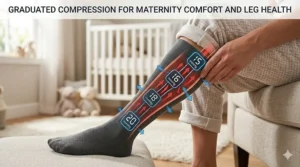
Profile 3: The Expectant Mother. Priya is 28 weeks pregnant and dealing with the kind of ankle swelling that makes shoe shopping an exercise in frustration. According to Vasculearn Network, 15-20 mmhg compression is widely recommended for pregnancy-related swelling and varicose vein prevention. She needs a sock that’s comfortable over a growing calf and doesn’t feel oppressive. The right pick: Sockwell Circulator (merino wool thermoregulation handles pregnancy-related temperature fluctuations beautifully) or Doc Miller (wide size range, specifically mentions maternity use, machine washable for easy care).
How to Choose 15-20 mmhg Compression Socks: 6 Criteria That Actually Matter
The marketing on compression socks is loud and repetitive. Every brand claims to be the most comfortable, most supportive, most breathable option on the market. Here’s how to cut through it:
1. Verify true graduated compression. The sock should explicitly state that compression is greatest at the ankle and decreases upward. If a product says “15-20 mmHg” but doesn’t specify graduated delivery, it may be applying uniform pressure — which is less therapeutically effective and more uncomfortable. Every product on our list delivers genuine graduated compression.
2. Match material to your primary use case. Synthetic nylon/spandex blends dominate the athletic and daily-wear market for good reason — they’re durable, moisture-wicking, and easy to care for. Natural fiber blends (like Sockwell’s merino wool) excel at temperature regulation and natural odor resistance but require slightly more careful washing. Dress-specific constructions (Truform 1943, mediven Classic) prioritize aesthetics and formal fit over moisture management.
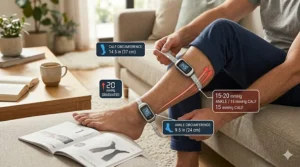
3. Prioritize sizing precision over convenience. Buying S/M because you fall somewhere in the range is the single most common mistake. Measure your ankle circumference and calf circumference. A compression sock that’s too loose delivers negligible benefit; one that’s too tight can restrict circulation. Almost every reputable brand provides a detailed sizing chart — use it.
4. Consider compression maintenance over time. A $12 compression sock that loses 30% of its compression after 10 washes is less economical than a $35 sock that maintains accurate pressure for 80+ washes. Ask yourself how frequently you’ll wear these and do the per-wear math before defaulting to the cheapest option.
5. Look for non-binding top bands. The band at the top of a knee-high compression sock should hold the sock in place without digging in. The difference between JOBST’s wide comfort band and a generic sock’s narrow elastic is something you’ll feel acutely by hour eight of a long shift.
6. Check anti-odor features for extended wear. Silver ion technology (Comrad’s SmartSilver) and Clima-Fresh treatment (mediven) are worth the premium if you’re wearing compression socks in a hot environment or for 10+ hours at a stretch. Budget socks will smell noticeably by afternoon in warm conditions.
15-20 mmhg vs. Higher Compression: What the Numbers Actually Mean for You
| Compression Level | Pressure | Requires Prescription? | Best Use Cases |
|---|---|---|---|
| 8-15 mmHg | Mild | No | Tired legs, preventive light wear |
| 15-20 mmHg | Moderate | No | Travel, pregnancy, daily wear, mild varicose veins |
| 20-30 mmHg | Firm | Recommended | Significant edema, varicose veins, post-surgery |
| 30-40 mmHg | Extra Firm | Required | Severe venous disease, lymphedema |
The table above tells a straightforward story, but the interpretation is what matters: for the vast majority of people buying compression socks for daily preventive and comfort use, 15-20 mmhg compression socks represent the upper limit of what’s appropriate without professional guidance. A study cited by Healthline showed that compression stockings at the lower end of this range can reduce DVT risk by up to 63% in surgical patients — and for the average person on a long flight or a long shift, that preventive power at a comfortable pressure level is exactly the right tradeoff.
What the numbers don’t tell you is that a correctly sized 15-20 mmHg sock worn consistently outperforms a 30-40 mmHg sock worn incorrectly or intermittently. Compliance is everything in compression therapy — a sock you actually wear daily beats a medically superior sock that stays in the drawer because it’s uncomfortable to put on.

Features That Actually Matter (And the Ones That Are Just Marketing Noise)
What actually matters:
✅ Graduated compression delivery — not just the number, but the fact that pressure decreases from ankle upward. This is non-negotiable.
✅ Spandex content and quality — this determines how well the sock maintains its compression level over time. Higher-quality spandex (like mediven’s construction) holds compression through more wash cycles than cheap-grade alternatives.
✅ Top band construction — a sock that falls down by noon has delivered exactly zero therapeutic benefit to your afternoon.
✅ Moisture management in the foot — your foot produces roughly half a pint of sweat per day. A sock that can’t handle that will make your feet miserable regardless of its compression performance.
What’s often just noise:
❌ Copper infusion marketing — several brands market copper-infused fabric as having health benefits. The antimicrobial claim has some limited evidence; the circulation benefit claim has essentially none. Silver ion technology (SmartSilver) has meaningfully more scientific support.
❌ Extreme pattern variety — 50 color options is a nice-to-have, not a performance feature. Don’t let an impressive color range distract from evaluating what actually matters.
❌ “Doctor recommended” without specifics — this phrase on packaging means nothing unless it references specific clinical data or specific physician groups. Every brand in this category makes this claim in some form.
Compression Socks for Specific Audiences: Tailored Recommendations
For nurses and healthcare workers: JOBST ActiveWear or CHARMKING (multi-pack). Long shifts demand consistent compression, non-slip bands, and moisture management. The CHARMKING multi-pack gives you a fresh pair for every workday of the week without guilt about replacement costs.
For frequent flyers and travelers: Comrad or JOBST ActiveWear. SmartSilver and Dri-Release technologies address the twin problems of long-haul travel: static low blood flow and enclosed, warm environments. Per the Vasculearn Network, moderate 15-20 mmhg compression is specifically recommended for travel-related DVT prevention.
For office professionals and business travelers: Truform 1943 or mediven for Men Classic. These are the only options on our list that look completely at home in a boardroom. The five-interval compression of the Truform and the Clima-Fresh engineering of the mediven make them worthy of their premium price in a professional context.
For athletes and runners: Doc Miller or Sockwell Circulator. Doc Miller’s shin-splint and recovery focus makes it ideal post-training; Sockwell’s 4-zone compression system and natural fiber thermoregulation support performance during activity.
For pregnant women: Sockwell Circulator or Doc Miller. Both accommodate changing leg dimensions better than stiffer constructions, and both are specifically noted for pregnancy use. Merino wool’s thermoregulation in Sockwell’s design is particularly valuable given pregnancy-related temperature fluctuations.
Long-Term Value: How to Calculate the Real Cost of Your Compression Socks
Here’s something the spec sheets never tell you: a compression sock has a functional lifespan, and once it degrades past a certain point, you’re wearing an expensive novelty sock with essentially no therapeutic benefit.
Most quality compression socks maintain their rated pressure for approximately 3–6 months of daily wear, or 80–150 wash cycles with proper care. Let’s do some honest math:
- CHARMKING 4-pair pack (~$13): 4 pairs × 90 days at daily rotation ≈ $0.04 per wear. Exceptional cost efficiency.
- Sockwell Circulator (~$30 per pair): One pair, worn 3x per week for 6 months ≈ $0.38 per wear. The merino wool construction genuinely justifies this over budget cotton-blend alternatives.
- mediven Classic (~$40 per pair): With a longer lifespan due to German-engineered spandex construction, this actually approaches mid-tier value over a 12-month horizon for daily wearers.
The variable nobody controls: wash discipline. Machine washing with hot water and high-heat drying can halve the therapeutic lifespan of even premium compression socks. Mesh laundry bags and low-heat drying aren’t optional maintenance tips — they’re the difference between a sock that earns its cost and one that goes into functional retirement after 30 washes.
FAQ: Your 15-20 mmhg Compression Socks Questions Answered
❓ Who should wear 15-20 mmhg compression socks?
❓ Can I wear 15-20 mmhg compression socks all day?
❓ How do I know if my 15-20 mmhg compression socks are the right size?
❓ How long do 15-20 mmhg compression socks last before losing effectiveness?
❓ Are 15-20 mmhg compression socks safe during pregnancy?
Conclusion: The Right Compression Sock Changes More Than You’d Expect
Here’s the honest summary: a well-chosen pair of 15-20 mmhg compression socks is one of those rare purchases where the upside is disproportionately large relative to the cost. Whether you’re a nurse who’s been white-knuckling through 12-hour shifts on swollen feet, a frequent flyer who arrives at every destination feeling like they’ve aged five years, or a professional who just wants their legs to feel normal by evening — the right pair of moderate compression socks genuinely changes the quality of that experience.
The key word in all of that is “right.” CHARMKING gives you unbeatable value per pair for daily rotation. Sockwell delivers premium American craftsmanship in a merino wool package that outperforms synthetics in comfort and thermoregulation. Comrad’s SmartSilver technology addresses the odor problem that nobody else in this category solves as elegantly. JOBST’s 65+ years of compression engineering shows in the Dri-Release moisture management and non-slip band. Doc Miller punches above its price class for medical-adjacent users. Truform’s dress-sock aesthetic makes therapeutic compression professionally appropriate. And mediven’s German precision makes the premium price feel like a reasonable trade for a sock that knows exactly what it’s doing.
The answer isn’t the same for everyone — which is precisely why this guide exists.
✨ Don’t Miss These Exclusive Deals!
🔍 Check current pricing and availability for any of the 7 best 15-20 mmhg compression socks reviewed above. Click the product links to see today’s deals on Amazon and start giving your legs the support they deserve!
Recommended for You
- 7 Best 8-15 mmhg Compression Socks for Swelling Relief 2026
- 7 Best Sheer Compression Socks 8-15 mmHg for Elegant Support 2026
- 7 Best 8-15 mmhg Compression Socks Knee High (2026 Review)
Disclaimer: This article contains affiliate links. As an Amazon Associate, I earn from qualifying purchases. If you purchase products through these links, we may earn a small commission at no additional cost to you.
✨ Found this helpful? Share it with your friends! 💬🤗
