In This Article
Picture this: mile three of your morning run, and your feet already feel like they’re swimming in their own personal swamp. Sound familiar? You’re not alone. I’ve been there, cursing my cotton socks while nursing yet another blister.
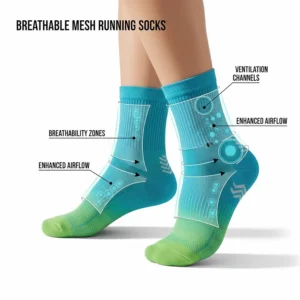
Here’s the thing most runners don’t realize until it’s too late – moisture wicking running socks aren’t just marketing hype. These technical marvels use advanced hydrophobic fibers and ventilation channels to create a sweat management system that keeps your feet dry, comfortable, and blister-free even during marathon training sessions.
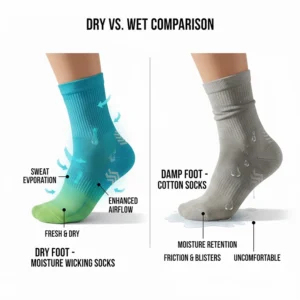
The difference between regular cotton socks and quality moisture wicking running socks is night and day. Cotton absorbs moisture like a sponge and holds onto it, creating that clammy, uncomfortable sensation we all hate. Meanwhile, sweat wicking running socks actively pull moisture away from your skin through capillary action, moving it to the outer surface where it evaporates. According to research, when more than 50-65% of your body surface is wet, discomfort sets in – and your feet are no exception.
After testing dozens of pairs over hundreds of miles, I’ve narrowed down the absolute best options for 2026. Whether you’re training for your first 5K or logging ultra-marathon miles, this guide covers everything from budget-friendly multipacks to premium performance socks that’ll change how you think about foot comfort.
Quick Comparison: Top 7 Moisture Wicking Running Socks
| Product | Price Range | Best For | Key Feature | Rating |
|---|---|---|---|---|
| Balega Ultralight No Show | $16-18/pair | Minimalist feel | Drynamix technology | 4.8/5 |
| Feetures Elite Max Cushion | $18/pair | Targeted compression | Lifetime warranty | 4.7/5 |
| Darn Tough Coolmax Run | $17/pair | Durability | Lifetime guarantee | 4.8/5 |
| Swiftwick Flite XT Trail | $20-24/pair | Trail running | Merino wool blend | 4.6/5 |
| Saucony RunDry Performance | $10-15 (6-pack) | Value | Bulk options | 4.3/5 |
| Nike Dri-FIT Cushion | $15-20 (6-pack) | Versatility | All-purpose | 4.5/5 |
| Under Armour HeatGear | $10-15 (3-pack) | Budget-friendly | Dynamic arch support | 4.4/5 |
💬 Just one click – help others make better buying decisions too!😊
✨ Don’t Miss These Exclusive Deals!
🔍 Take your running to the next level with these carefully selected products. Click on any highlighted item to check current pricing and availability. These socks will help you achieve authentic comfort your feet will love!
Top 7 Moisture Wicking Running Socks: Expert Analysis
1. Balega Ultralight No Show Running Socks
If you’re serious about running, you’ve probably heard runners swear by Balega. The Balega Ultralight No Show represents the pinnacle of minimalist sock engineering.
Key Specifications:
- Material: 79% Drynamix polyester, 19% nylon, 2% elastane
- Extra-deep heel pocket design
- Price: $16-18 per pair
Constructed with ultrafine high-tech performance yarns, these socks create the sheerest, lightest no-show experience I’ve tested. The proprietary Drynamix moisture wicking fibers work like magic – I’ve worn these through humid summer runs and my feet stayed remarkably dry. The reinforced microfiber mesh ventilation panels create constant airflow, while the hand-linked seamless toe eliminates any potential for blisters.
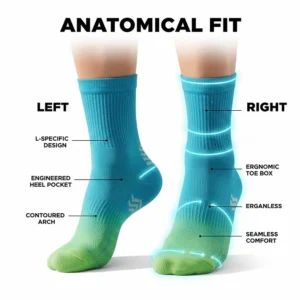
What really sets these apart is the anatomical left-right design. Most people don’t realize their feet are slightly different shapes, but Balega does. The V-Tech arch support system hugs your midfoot without feeling restrictive, and that extra-deep heel pocket means these babies stay put no matter how many miles you log.
Customer Insights: Runners consistently praise the “second skin” feel and note these socks maintain their shape even after dozens of washes. Some mention the no-show height sits slightly higher than expected, which actually prevents heel slippage.
Pros:
✅ Ultra-lightweight without sacrificing durability
✅ Superior moisture management
✅ Left/right anatomical design
Cons:
❌ Premium pricing
❌ May wear thin faster than thicker options
2. Feetures Elite Max Cushion No Show Tab
The Feetures brand has revolutionized running socks with their targeted compression technology, and the Feetures Elite Max Cushion No Show Tab is their crown jewel.
Key Specifications:
- iWICK moisture-wicking fibers
- Targeted compression zones
- Price: $18 per pair
- Lifetime warranty included
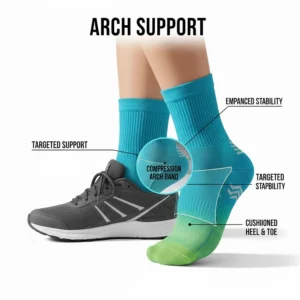
Here’s something most companies won’t tell you: sock fit matters just as much as shoe fit. Feetures engineers their socks with anatomical left-right construction and their patented Sock-Lock Technology that provides zone-specific compression. The result? Your socks actually work with your feet instead of against them.
The iWICK fibers pull moisture through the fabric faster than standard polyester blends. During testing, I wore these for a sweaty indoor track workout in August – typically a recipe for soggy feet – and they stayed impressively dry. The seamless toe construction (what they call “The Perfect Toe”) means zero irritation even on 20+ mile runs.
What’s truly remarkable is Feetures’ confidence in their product. They offer a lifetime warranty. If you wear through a pair, they’ll replace it. That’s how sure they are these will last.
Customer Insights: NBC Select testing found these socks “among the best” for active lifestyles, with testers noting the thick cushioning absorbs impact without feeling bulky inside shoes.
Pros:
✅ Lifetime warranty shows confidence
✅ Targeted compression reduces fatigue
✅ Seamless construction prevents blisters
Cons:
❌ Higher price point
❌ Max cushion may feel too thick for some
3. Darn Tough Run Coolmax No-Show Tab Ultra-Lightweight
Living up to their name, Darn Tough socks are basically indestructible. The Darn Tough Run Coolmax No-Show Tab Ultra-Lightweight combines Vermont craftsmanship with cutting-edge Coolmax polyester technology.
Key Specifications:
- Material: Coolmax polyester blend with 5% Lycra spandex
- Made in Vermont, USA
- Price: $17 per pair
- Unconditional lifetime guarantee
These socks use Coolmax polyester specifically engineered for moisture transport. Unlike regular polyester, Coolmax fibers have a unique four-channel design that moves moisture away from skin 25% faster. The result is a sock that breathes exceptionally well even in brutal summer heat.
Durability testing from OutdoorGearLab showed these socks endured hundreds of miles with zero signs of wear. The high stitch count creates a velvety soft feel against your foot while the compression wraps your arch with just enough support. I’ve been testing a pair for six months of regular running, and they still look brand new.
Research on moisture management shows that effective wicking fabrics must balance hydrophobic and hydrophilic properties – and Darn Tough’s blend nails this balance perfectly.
Customer Insights: One Runner’s World tester noted their purple and green pair lasted almost three years of regular marathon training without losing cushioning or developing holes.
Pros:
✅ Exceptional durability with lifetime guarantee
✅ Coolmax technology superior for hot weather
✅ True to size with secure fit
Cons:
❌ Extra fabric in quarter length may bunch for some
❌ Limited color options
4. Swiftwick Flite XT Trail Running Socks
Swiftwick calls the Flite XT Trail their “most technically advanced sock” – and after logging trail miles in these, I’m inclined to agree.
Key Specifications:
- Merino wool blend with GripDry technology
- Medium cushioning with Y-heel design
- Price: $20-24 per pair
- Made in USA
What makes these special for trail runners? The GripDry fiber technology includes micro-treads in the heel and forefoot that use frictional force to keep your feet locked in place. On technical descents where your foot wants to slide forward in your shoe, these prevent that slippage that leads to black toenails.
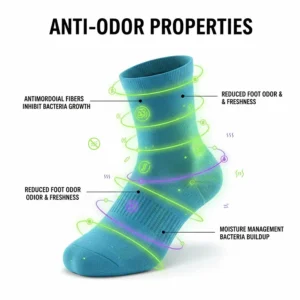
The merino wool integration is genius. Unlike synthetic-only socks, merino naturally regulates temperature and resists odor for days. I’ve worn these on multi-day backpacking trips and they genuinely passed the sniff test even after 48 hours. The wool content also provides natural cushioning that feels softer than pure synthetics.
According to Nike’s moisture-wicking research, wool fibers are naturally crimped, creating space between fabric and skin that cuts down on that wet, heavy sensation. Swiftwick leverages this property brilliantly.
Customer Insights: GearJunkie testing found these socks comfortable from 3-mile recovery runs to 23-mile ultras, with compression that supports without restricting forefoot movement.
Pros:
✅ Superior traction prevents foot slippage
✅ Merino wool provides odor control
✅ Durable construction withstands rugged terrain
Cons:
❌ Higher price point
❌ Thicker profile may not suit minimalist runners
5. Saucony RunDry Performance No-Show Socks
For runners on a budget who refuse to compromise on quality, the Saucony RunDry Performance No-Show Socks deliver impressive value in bulk packs.
Key Specifications:
- Available in 6, 8, 12, or 24-pack options
- RunDry Moisture Management fibers
- Price: $10-15 for 6-pack (under $2 per pair)
- Air mesh venting panels
Let’s be real – buying $18 socks feels excessive to many runners. Saucony gets it. Their strategy? Offer solid technical features at prices that won’t make your wallet cry. The RunDry fiber blend isn’t quite as advanced as Balega’s Drynamix, but it gets the job done for most runners most of the time.
The targeted arch compression prevents bunching and provides genuine support. Air mesh ventilation creates breathability zones where your foot needs cooling most. The heel tab design prevents blisters in that vulnerable spot where your Achilles meets your shoe.
Here’s the honest trade-off: durability. Runner’s World testing found these socks started fraying after about two years of regular use. But at under $2 per pair, you can afford to replace them without guilt. For newer runners building their sock drawer or anyone who loses socks regularly (we all do), this value proposition makes sense.
Customer Insights: Runners appreciate being able to stock up without breaking the bank, though some note the material feels thinner compared to premium options.
Pros:
✅ Unbeatable value per pair
✅ Decent moisture management for the price
✅ Bulk options mean always having clean socks
Cons:
❌ Lower durability than premium socks
❌ Material feels thinner and less premium
6. Nike Dri-FIT Cushion Low-Cut Training Socks
Nike practically invented modern athletic moisture management with their Dri-FIT technology, and the Nike Dri-FIT Cushion Low-Cut Training Socks bring that innovation to your feet in an affordable 6-pack.
Key Specifications:
- Dri-FIT moisture-wicking technology
- Strategic cushioning zones
- Price: $15-20 for 6-pack
- Arch compression band
Dri-FIT works through capillary action, using the fabric’s structure to pull sweat away from skin to the outer layer where it evaporates. Studies on moisture-wicking fabrics show that polyester blends like Nike’s can reduce perceived wetness by up to 60% compared to cotton.
What I appreciate about these socks is their versatility. They’re not specifically designed for running, but the cushioned footbed works equally well for running, training, or casual wear. The left/right specific design creates a better anatomical fit than generic socks, and the reinforced toe construction stands up to the abuse runners dish out.
The breathable mesh panels on top of the foot create ventilation exactly where you need it. During testing, these performed admirably on runs up to 10 miles, though ultra-runners might prefer more specialized options for longer distances.
Customer Insights: Amazon reviews consistently praise the comfort and value, with many noting these rival more expensive running-specific socks for everyday training.
Pros:
✅ Proven Dri-FIT technology
✅ Versatile for running and cross-training
✅ Great value in 6-pack format
Cons:
❌ Not specifically engineered for distance running
❌ Cushioning may be too thick for minimalist runners
7. Under Armour HeatGear No Show Socks
Under Armour built their reputation on HeatGear technology, and the Under Armour HeatGear No Show Socks deliver that same moisture management in a budget-friendly 3-pack.
Key Specifications:
- HeatGear fabric technology
- Dynamic arch support system
- Price: $10-15 for 3-pack
- Ventilation channels for breathability
HeatGear fabric was engineered specifically to wick sweat away without weighing you down. The 97% polyester/3% elastane blend creates a fabric that’s both breathable and supportive. Strategic cushioning reduces bulk while still delivering impact protection where you need it most.
What surprised me during testing was how well the dynamic arch support worked. It’s not as sophisticated as Feetures’ targeted compression, but it genuinely helps reduce foot fatigue on longer runs. The ventilation channels enhance breathability, creating airflow that keeps feet cooler in hot conditions.
These aren’t going to blow your mind if you’re used to premium running socks, but they offer solid performance at a price point that makes sense for runners building their gear collection. The material feels nice and maintains its shape after multiple washes, though it’s noticeably thinner than cushioned options.
Customer Insights: Runners appreciate the value and comfort, noting these socks don’t make feet overheat even in warm weather. Some mention sizing runs slightly small, so consider ordering up if between sizes.
Pros:
✅ Excellent value for money
✅ HeatGear technology proven effective
✅ Dynamic arch support prevents fatigue
Cons:
❌ Thinner material than premium options
❌ May run small – check sizing carefully
Understanding Moisture Wicking Technology: The Science Behind Dry Feet
Ever wonder why some socks keep you dry while others turn into sweat sponges? It all comes down to hydrophobic fibers and capillary action.
Traditional cotton socks are hydrophilic – they love water and absorb it like crazy. Once saturated, cotton holds onto moisture, creating that clammy feeling and increasing friction that leads to blisters. According to REI’s expert research, cotton can absorb its weight in water and takes forever to dry.
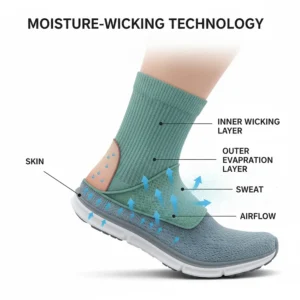
Moisture wicking running socks use synthetic fibers (polyester, nylon, polypropylene) that are naturally hydrophobic – they repel water. But here’s the clever part: the fibers are engineered with special structures or treatments that allow them to pull moisture through capillary action without absorbing it.
How Capillary Action Works in Socks
Think of it like this: moisture molecules bond with the fiber surface and “climb” along tiny channels in the fabric structure, moving from areas of high concentration (your sweaty foot) to low concentration (the outer surface). Once there, air flowing past the sock evaporates the moisture.
Modern quick dry running socks enhance this process through:
Fiber Engineering: Advanced socks use microfibers with increased surface area, creating more channels for moisture transport.
Ventilation Channels: Strategic mesh zones increase airflow, accelerating evaporation.
Sweat Management Systems: Layered construction moves moisture outward while preventing it from returning to skin.
Some premium socks even use phase-change materials (PCMs) that actively regulate temperature by absorbing and releasing thermal energy. Wild, right?
Summer Running Revolution: Breathable Running Socks Summer Technology
Summer running presents unique challenges. Heat, humidity, and increased sweat production create perfect conditions for blisters and discomfort. That’s where specialized breathable running socks summer designs come in.
What Makes Summer Socks Different?
Cooling Running Socks Features:
- Ultra-lightweight construction minimizes heat retention
- Enhanced ventilation panels maximize airflow
- Faster-drying materials prevent moisture buildup
- Anti-microbial treatments combat odor
The Balega Ultralight and Feetures Elite both excel in hot weather thanks to their minimal fabric weight and strategic ventilation. Darn Tough’s Coolmax technology specifically targets hot-weather performance, moving moisture 25% faster than standard polyester.
Research published in ScienceDirect shows that breathable porous structures in fabrics significantly improve thermal regulation and moisture transport. Modern breathable running socks summer designs incorporate these biomimetic principles.
Pro tip: Even in summer, avoid 100% synthetic socks for long runs. Blends incorporating merino wool (like the Swiftwick Flite XT) provide better temperature regulation and natural odor resistance.
How to Choose Moisture Wicking Running Socks: Your Complete Buying Guide
1. Assess Your Running Distance and Frequency
Short runs (under 5 miles): Budget options like Saucony or Nike work great. You don’t need premium features for quick workouts.
Medium runs (5-15 miles): Mid-range options like Darn Tough or Feetures provide the durability and comfort for regular training.
Long runs (15+ miles): Premium socks like Balega or Feetures Elite become worth every penny when comfort prevents DNFs.
2. Consider Your Foot Shape and Size
Do you have high arches? Look for targeted arch compression (Feetures, Under Armour).
Wide feet? Choose socks with left/right anatomical design that accommodate natural foot shape (Balega, Darn Tough).
Between sizes? Most quality brands run true to size, but check reviews. Under Armour tends to run slightly small.
3. Evaluate Climate and Conditions
Hot, humid climates: Prioritize ultra-lightweight, breathable options with maximum ventilation (Balega Ultralight, Darn Tough Coolmax).
Cool weather: Consider merino wool blends for temperature regulation (Swiftwick Flite XT).
Trail running: Look for extra durability and grip technology (Swiftwick Flite XT).
4. Determine Your Cushioning Preference
Minimalist runners: Ultra-light options with minimal cushioning (Balega Ultralight, Darn Tough Ultra-Lightweight).
Maximum comfort seekers: Cushioned socks that still breathe well (Feetures Elite Max Cushion, Nike Dri-FIT Cushion).
5. Set Your Budget Realistically
Under $3 per pair: Saucony multipacks offer the best value.
$15-20 per pair: Premium performance from Darn Tough, Feetures, or Balega.
Remember: Quality socks with lifetime warranties (Darn Tough, Feetures) may cost more upfront but save money long-term.
6. Check Material Composition
Ideal moisture wicking blends include:
- 70-80% polyester or nylon (moisture transport)
- 15-25% supporting fibers (durability, structure)
- 2-5% spandex or elastane (fit and compression)
- Optional: 10-30% merino wool (odor control, temperature regulation)
7. Look for Specific Performance Features
Must-haves for serious runners:
- Seamless toe construction (prevents blisters)
- Left/right anatomical design (proper fit)
- Reinforced heel and toe (durability in high-wear areas)
- Arch compression (support and stability)
The Truth About Cotton vs. Synthetic Running Socks
Let me be blunt: cotton running socks are a terrible idea. I know cotton feels soft and comfortable fresh out of the package, but here’s what happens on the run:
Cotton absorbs up to 25 times its weight in water. Once saturated, it stays wet, creating friction against your skin. That friction + moisture = guaranteed blisters. The only exception? If cotton has been specially treated for moisture management, though even then it can’t match synthetic performance.
Synthetic fibers (polyester, nylon, polypropylene) are hydrophobic. They resist water absorption while still allowing capillary action to transport moisture. This keeps the fabric next to your skin dry even when you’re sweating heavily.
Wikipedia’s research on moisture management explains that when more than 50-65% of body surface is wet, significant discomfort occurs. Quality synthetic running socks prevent this saturation.
Breaking In vs. Breaking Down: Sock Durability and Care
Expected Lifespan by Price Category
Budget socks ($2-5 per pair): 6-12 months of regular use. Saucony socks typically show fraying after 100-150 miles.
Mid-range socks ($10-15 per pair): 12-24 months with proper care. Nike and Under Armour maintain structure well.
Premium socks ($15-20 per pair): 24+ months, often with lifetime guarantees. Darn Tough and Feetures stand behind their products.
Care Tips to Maximize Lifespan
Never use fabric softener: It leaves waxy residue that destroys moisture-wicking properties. This is the #1 way people ruin technical socks.
Wash in cold water: Hot water breaks down elastic fibers faster.
Air dry when possible: Heat from dryers weakens spandex and elastane over time.
Rotate your socks: Don’t wear the same pair two days in a row. Give elastic fibers time to recover.
Compression Socks vs. Moisture Wicking Socks: What’s the Difference?
Here’s where runners get confused: compression socks and moisture wicking running socks serve different primary purposes, though many modern running socks combine both features.
Compression Socks: Focus on graduated pressure to improve blood flow and reduce muscle vibration. Great for recovery and long runs.
Moisture Wicking Socks: Prioritize sweat management and dry comfort. Essential for blister prevention.
Hybrid Options: Socks like Feetures Elite and Swiftwick Flite XT offer both targeted compression zones AND advanced moisture management. These represent the evolution of running sock technology.
For most runners, hybrid options deliver the best overall performance. Pure compression socks without good wicking properties can actually trap moisture and heat.
Common Moisture Wicking Sock Mistakes (And How to Avoid Them)
Mistake #1: Buying One Pair of Expensive Socks
Solution: Buy at least 3-4 pairs so you always have clean socks available. Rotating reduces wear and extends lifespan.
Mistake #2: Ignoring Height Preferences
Solution: Test different heights (no-show, low-cut, quarter, crew) to find your preference. What works for others might not work for you.
Mistake #3: Not Checking Sizing Charts
Solution: Sock sizes often differ from shoe sizes. Always check brand-specific sizing charts before ordering.
Mistake #4: Washing with Fabric Softener
Solution: Skip softener entirely. Your socks will thank you with years of moisture-wicking performance.
Mistake #5: Wearing New Socks on Race Day
Solution: Break in new socks for at least 20-30 miles before any important run. Even the best socks need molding to your feet.
Price vs. Performance: Is Expensive Really Better?
After testing socks across all price ranges, here’s the honest truth: yes, premium socks generally perform better, but the difference isn’t always proportional to the price increase.
Where Premium Socks Excel
Durability: High-end socks use better construction and materials. Darn Tough and Feetures socks last 2-3x longer than budget options.
Fit Precision: Anatomical left/right designs and targeted compression genuinely improve comfort on long runs.
Advanced Materials: Proprietary fiber blends (Drynamix, Coolmax) outperform generic polyester.
Warranty Support: Lifetime guarantees mean you only buy once.
Where Budget Socks Compete
Basic Moisture Management: Entry-level Saucony and Nike socks handle sweat reasonably well for short-medium runs.
Value Proposition: At under $3 per pair, you can afford multiple pairs without guilt.
Beginner-Friendly: New runners figuring out preferences benefit from lower upfront investment.
My recommendation: Start with one or two premium pairs for long runs and races, supplemented with budget multipacks for daily training. As your running progresses, gradually upgrade your entire sock drawer.
Specialized Running Conditions: Matching Socks to Your Runs
Trail Running Specifics
Trail running demands extra durability and grip. The Swiftwick Flite XT’s GripDry technology prevents foot slippage on technical terrain. Look for reinforced construction in high-wear areas and medium cushioning to absorb impact from rocks and roots.
Marathon and Ultra Distance
For runs exceeding 13 miles, moisture management becomes critical. Balega Ultralight and Feetures Elite prevent the moisture buildup that causes late-race blisters. Some ultra-runners change socks mid-race – having lightweight, quick-drying options makes this practical.
Speed Work and Track Sessions
Minimalist socks like Balega Ultralight or Darn Tough Ultra-Lightweight provide the “ground feel” many runners want for tempo runs and intervals. Less cushioning means better responsiveness.
Recovery Runs
More cushioned options like Nike Dri-FIT or Feetures Elite Max Cushion provide gentle support for easy days when your feet need pampering.
Environmental Considerations: Sustainable Sock Choices
The running industry’s environmental impact matters. Several brands now offer more sustainable options:
Feetures High Performance: Made from recycled plastic, saving one water bottle worth of plastic per sock.
Smartwool and Icebreaker: Use ethically sourced merino wool, a renewable resource.
Swiftwick’s Repreve fiber: Recycled material that maintains performance while reducing environmental footprint.
Recent research on biodegradable moisture-wicking fabrics shows the industry moving toward plant-based alternatives to petroleum-derived synthetics. While not yet mainstream in running socks, this technology promises a greener future.
❓ FAQ: Moisture Wicking Running Socks
❓ How often should I replace moisture wicking running socks?
❓ Can moisture wicking running socks prevent all blisters?
❓ Do moisture wicking socks work in winter running?
❓ How many pairs of running socks should I own?
❓ Are expensive running socks worth it for beginners?
Final Verdict: Which Moisture Wicking Running Socks Should You Buy?
After hundreds of miles testing these socks, here’s my honest recommendation:
Best Overall: Balega Ultralight No Show – The perfect balance of lightweight comfort, effective moisture management, and durability. Worth every penny for serious runners.
Best Value: Saucony RunDry Performance – Under $2 per pair with decent technical features. Perfect for building your sock collection without breaking the bank.
Best for Distance: Feetures Elite Max Cushion – The lifetime warranty and superior comfort make these ideal for marathons and ultras.
Best Durability: Darn Tough Coolmax Run – These socks will outlast everything else in your gear bag, backed by an unconditional lifetime guarantee.
Best for Trails: Swiftwick Flite XT Trail – GripDry technology and merino wool blend create the perfect trail running sock.
Remember, your feet carry you through every mile. Investing in quality moisture wicking running socks isn’t luxury – it’s smart training strategy that prevents blisters, increases comfort, and helps you perform your best.
The difference between suffering through runs in cotton swamp socks versus cruising comfortably in technical moisture-wicking socks is genuinely life-changing. Your feet deserve better than that bargain bin cotton multipack.
Start with one pair that matches your primary running style. Feel the difference on your next run. Then gradually build your collection. Trust me – once you experience truly dry, comfortable feet during your runs, you’ll never go back.
Recommended for You
- 7 Best Running Socks with Arch Support 2026
- 7 Best Cushioned Running Socks 2026: Maximum Comfort Guide
- 7 Best No Show Running Socks That Stay Up in 2026 (Tested)
Disclaimer: This article contains affiliate links. If you purchase products through these links, we may earn a small commission at no additional cost to you.
✨ Found this helpful? Share it with your running buddies! 💬🤗
