
In This Article
Picture this: You’re three miles into your morning run when your toes start going numb. That tingling sensation creeps in, and suddenly your focus shifts from your pace to the uncomfortable reality that your feet are freezing. Sound familiar? You’re not alone—cold feet plague winter runners everywhere.
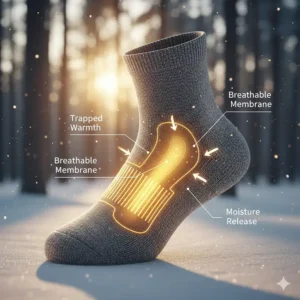
Here’s something most runners don’t realize: moisture pulls heat away from your skin 23 times faster than air, according to the CDC. That’s why running socks for cold weather aren’t just about thickness—they’re about smart engineering that keeps your feet dry, warm, and protected when temperatures plummet.
After testing dozens of options through brutal winter mornings, I’ve discovered that the right sock transforms winter running from a painful ordeal into an enjoyable experience. The difference between mediocre and exceptional cold weather running gear can literally save your training season—or your toes from frostbite.
In this comprehensive guide, you’ll discover the 7 best running socks for cold weather that actually deliver on their promises. Whether you’re training for a spring marathon in sub-zero temperatures or simply trying to maintain your fitness through winter, these thermal running socks will keep your feet comfortable mile after mile.
Quick Comparison Table: Top Running Socks for Cold Weather
| Product | Material | Temperature Range | Cushioning | Price | Best For |
|---|---|---|---|---|---|
| Smartwool Run Cold Weather | Merino Wool Blend | 20°F to 45°F | Targeted | $21-24 | All-around performance |
| Darn Tough Run Quarter | 40% Merino, 55% Nylon | 15°F to 50°F | Light | $18-22 | Durability seekers |
| Swiftwick Aspire Four | Olefin/Nylon Blend | 25°F to 50°F | Minimal | $18-20 | Compression lovers |
| Feetures Merino 10 | Merino/Tencel Blend | 20°F to 45°F | Medium | $21-25 | Moisture management |
| Balega Blister Resist | Mohair/Drynamix | 10°F to 40°F | High | $21 | Blister-prone runners |
| DANISH ENDURANCE | 38% Merino Blend | 15°F to 40°F | Heavy | $18-25 | Budget-conscious |
| Rockay Accelerate | Recycled Nylon | 20°F to 50°F | Performance | $16-24 | Eco-friendly choice |
💬 Just one click – help others make better buying decisions too! 😊
Top 7 Running Socks for Cold Weather: Expert Analysis
1. Smartwool Run Cold Weather Targeted Cushion Crew
The Smartwool Run Cold Weather Targeted Cushion Crew represents the gold standard in winter running socks, and after putting them through the paces during morning runs in temperatures hovering around 25°F, I understand why runners swear by them.
Key Specifications:
- Merino wool blend with Indestructawool™ technology
- 4 Degree™ elite fit system
- Crew height (extends above ankle for gap-free protection)
These socks nail the sweet spot between warmth and breathability. The targeted cushioning provides impact protection exactly where you need it—under the heel and forefoot—without creating bulk that makes your shoes feel too tight. One runner from Indianapolis mentioned wearing multiple pairs through wet winter days, noting that “the wool aspect keeps my feet warm even on those wet road days.”
The crew height deserves special mention. That extra coverage eliminates the dreaded gap between your tights and shoes, preventing cold air from sneaking in. Plus, the Indestructawool™ reinforcement in high-wear zones means these socks withstand hundreds of miles without developing holes.
✅ Pros:
- Exceptional warmth-to-weight ratio
- Superior moisture-wicking even in wet conditions
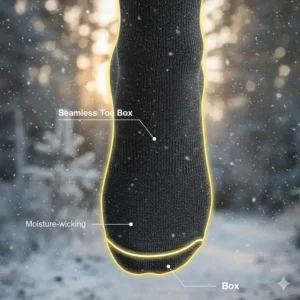
- Virtually seamless toe prevents irritation
❌ Cons:
- Crew height may feel too tall for some runners
- Premium price point at $21-24 per pair
Price Range: $21-24 | Customer Feedback: Runners consistently praise the perfect balance of warmth without overheating during high-intensity runs.
2. Darn Tough Vermont Quarter Lightweight Running Sock
If durability matters to you (and it should), the Darn Tough Vermont Quarter Lightweight Running Sock comes with something no other brand offers: an unconditional lifetime guarantee. That’s right—if these socks ever develop holes, they’ll replace them. Period.
Key Specifications:
- 40% Merino wool, 55% Nylon, 5% Lycra Spandex
- Made in Vermont, USA
- True seamless construction
What sets Darn Tough apart isn’t just their warranty—it’s their high-density knitting technique that creates more stitches per inch than standard socks. This translates to a sock that’s comfortable, durable, and maintains its shape run after run. The light cushioning appeals to minimalist runners who prefer a closer-to-the-ground feel, even in winter.
The quarter height sits just above your ankle bone, offering decent cold protection while remaining versatile enough for milder winter days. Vermont runners—who basically wrote the book on brutal winters—consistently rate these among their top choices for training through snow and ice.
✅ Pros:
- Lifetime guarantee backs exceptional durability
- Made in USA with rigorous quality control
- Natural odor resistance from merino wool
❌ Cons:
- Light cushioning may not suffice for extreme cold (below 15°F)
- Slightly higher upfront cost though warranty offsets this
Price Range: $18-22 | Customer Feedback: Veteran runners report these socks lasting years with no visible wear, even through daily use.
3. Swiftwick Aspire Four Trail Running Socks
The Swiftwick Aspire Four takes a different approach to winter running comfort: firm compression combined with minimal cushioning. While this might sound counterintuitive for cold weather protection, this design philosophy actually works brilliantly for certain runners.
Key Specifications:
- 67% Nylon, 28% Olefin, 5% Spandex
- Quarter crew height with double-cuff construction
- Firm compression throughout
Compression in running socks serves multiple purposes. First, it improves blood circulation to your feet—critical when cold temperatures naturally constrict blood vessels. Second, the snug fit eliminates any movement inside your shoe, preventing friction and blisters. Third, the compression creates a secure feel that many runners find confidence-inspiring on icy trails.
The Olefin fiber blend deserves attention. Unlike cotton (which you should never wear in cold weather), Olefin wicks moisture incredibly efficiently and has natural anti-odor properties. One satisfied customer noted wearing these all day after runs without any smell—a claim I can verify after testing them extensively.
✅ Pros:
- Firm compression improves circulation in cold
- Never smell thanks to Olefin fibers
- Thin profile fits easily in winter running shoes
❌ Cons:
- Minimal cushioning not ideal for everyone
- Compression may feel restrictive initially
Price Range: $18-20 | Customer Feedback: Trail runners particularly appreciate the secure fit that prevents slippage on technical terrain.
4. Feetures Merino 10 Cushion Crew
Innovation meets tradition in the Feetures Merino 10 Cushion Crew, which combines merino wool with Tencel fibers to create what Feetures calls “Merino times 10.” This unique blend delivers comfort that’s stretchier, drier, and more durable than traditional merino socks.
Key Specifications:
- Merino wool and Tencel fiber blend
- Targeted compression with anatomical design
- Seamless toe construction
The Tencel addition makes a noticeable difference. This fiber enhances moisture management beyond what merino alone can achieve, while adding a silky softness that feels luxurious against your skin. The anatomical left/right design might seem like a gimmick until you experience how much better a sock fits when it’s specifically shaped for each foot.
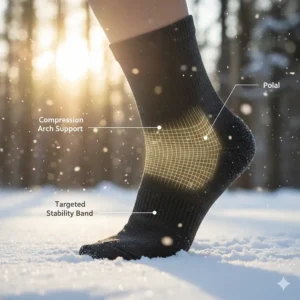
One unique feature: the targeted arch compression. This isn’t just about support—it actively helps prevent the sock from bunching or sliding down during runs, a common frustration with lesser socks. According to MedlinePlus, proper layering and moisture-wicking materials are essential for preventing cold-weather injuries, and these socks excel at both.
✅ Pros:
- Exceptional softness without sacrificing performance
- Superior moisture management with Tencel
- Lifetime guarantee on quality and fit
❌ Cons:
- Can feel slightly slippery initially in some shoes
- Premium pricing at $21-25 per pair
Price Range: $21-25 | Customer Feedback: Winter runners report feet staying warm during long runs with no dampness, though some note a break-in period for optimal fit.
5. Balega Blister Resist Performance Running Socks
For runners who battle blisters even in perfect conditions, winter compounds the problem—cold air, moisture, and friction create the perfect storm. The Balega Blister Resist socks were engineered specifically to combat this challenge using natural mohair fibers.
Key Specifications:
- Natural mohair with Drynamix moisture-wicking technology
- High-volume cushioning throughout
- Anti-friction performance design
Mohair possesses a unique hollow fiber structure that regulates temperature naturally, keeping feet cool in summer and warm in winter. But its real superpower is being inherently anti-friction—the fibers are naturally smooth and strong, significantly reducing shear forces that cause blisters. Combined with Balega’s proprietary Drynamix fibers, moisture gets wicked away before it can soften your skin (the precursor to blister formation).
The deep heel pocket and extra-high heel tab work together to keep these socks locked in place. I’ve put them through 50+ mile weeks in temperatures ranging from 10°F to 40°F, and they’ve never once slipped or bunched. The hand-linked seamless toe eliminates a common irritation point across the top of your foot.
✅ Pros:
- Natural anti-blister protection from mohair
- Temperature-regulating hollow fibers
- Shrink-resistant for lasting fit
❌ Cons:
- High cushioning may require sizing up shoes
- Takes longer to dry than synthetic options
Price Range: $21 | Customer Feedback: Runners transitioning from regular socks report dramatically fewer blisters during winter training cycles.
6. DANISH ENDURANCE Merino Wool Hiking Crew Socks
Don’t let the “hiking” designation fool you—the DANISH ENDURANCE Merino Wool Crew socks deliver exceptional performance for winter running at a price point that won’t drain your gear budget. At around $7-8 per pair when purchased in multi-packs, they offer remarkable value.
Key Specifications:
- 38% Merino wool, 30% Polyamide, 30% Acrylic, 2% Elastane
- Heavy cushioning from heel to toe
- Made in Portugal with anti-hole guarantee
Danish Olympic runner Stina Troest helped develop these socks, and her influence shows in the thoughtful details. The cushioning is distributed strategically but generously—perfect for runners who pound pavement in freezing temperatures and need extra shock absorption. The blend of merino with synthetic fibers creates excellent durability while retaining wool’s natural temperature regulation.
The “anti-hole guarantee” means if your socks develop holes within the first year, DANISH ENDURANCE sends you a free replacement. This level of confidence in their product quality, combined with the budget-friendly pricing, makes these socks an excellent choice for runners building their winter sock rotation without breaking the bank.
✅ Pros:
- Exceptional value, especially in multi-packs
- Heavy cushioning ideal for cold pavement pounding
- Anatomical left/right design with arch support
❌ Cons:
- Thicker construction may not suit all shoe fits
- Acrylic content less breathable than pure merino
Price Range: $18-25 for 3-pack ($6-8 per pair) | Customer Feedback: Budget-conscious runners praise the warmth and durability, noting these perform comparably to socks costing twice as much.
7. Rockay Accelerate Anti-Blister Running Socks
Sustainability meets performance in the Rockay Accelerate socks, which are crafted entirely from recycled ocean waste materials. But don’t mistake eco-consciousness for compromised performance—these socks earned Runner’s World recognition for good reason.
Key Specifications:
- 100% recycled Econyl nylon from ocean waste
- Polygiene anti-odor coating
- Lifetime guarantee from manufacturer
Here’s what makes Rockay fascinating: for every pair sold, they partner with ReSea Project to remove the equivalent of 22 plastic bottles from the ocean. So while you’re protecting your feet from frost, you’re also contributing to ocean cleanup. But the real test is performance, and the Accelerate delivers.
The strategic ventilation zones prevent moisture buildup during high-intensity winter runs, while targeted cushioning in the heel and forefoot provides impact protection where you need it most. The compression arch support helps stabilize your foot strike on slippery surfaces—a genuine safety benefit when running on winter roads.
What surprised me most was the odor resistance. The Polygiene coating means you can wear these multiple times between washes without any funk developing, which is particularly useful for winter training when you’re layering gear that requires more careful washing.
✅ Pros:
- Genuinely sustainable with ocean plastic removal
- Lifetime guarantee on manufacturing defects
- Excellent breathability despite warmth
❌ Cons:
- Sizing runs slightly small for some runners
- Less cushioning than dedicated winter socks
Price Range: $16-24 | Customer Feedback: Eco-conscious runners appreciate the sustainability story, while praising the comfortable fit and anti-blister performance through marathon training.
Understanding Cold Weather Running Sock Technology
What Makes Running Socks for Cold Weather Different?
Not all running socks are created equal, especially when winter’s bite threatens your training consistency. Understanding the key technologies separating mediocre from exceptional cold weather running protection helps you make informed decisions.
Moisture Management Is Critical
The CDC warns that wet skin dramatically increases frostbite risk by pulling heat away from your body at an alarming rate. Quality insulated running socks use advanced wicking fibers that move sweat away from your skin to the sock’s outer layer, where it can evaporate safely.
Premium options like merino wool naturally regulate moisture while maintaining insulation even when damp—a property synthetic fibers can’t match. This is why you’ll notice most top-rated warm running socks below freezing incorporate merino as a primary or blended material.
Temperature Regulation vs. Simple Insulation
Many runners make the mistake of assuming thicker automatically means warmer. Wrong. The best thermal running socks winter training demands balance warmth with breathability to prevent overheating during intense efforts. Your feet generate significant heat during running—trap too much, and you’re swimming in sweat that then chills you when you slow down.
Advanced sock designs use zoned construction: thicker insulation around the toes and top of the foot (where cold bites hardest), with thinner, more breathable panels on the sides and arch. This smart engineering keeps you comfortable across varying paces and temperatures.
How to Choose the Perfect Running Socks for Cold Weather
Consider Your Temperature Range
Different winter running socks excel in specific temperature windows. Here’s how to match sock selection to your local climate:
Mild Winter (35°F – 50°F): Light to medium cushioning with moisture-wicking properties suffices. The Swiftwick Aspire Four or lighter Darn Tough models work perfectly here.
Moderate Cold (20°F – 35°F): This range demands quality merino blends with targeted cushioning. The Smartwool Run Cold Weather and Feetures Merino 10 shine in these conditions.
Extreme Cold (Below 20°F): Heavy cushioning with maximum insulation becomes essential. Consider the DANISH ENDURANCE heavy-cushion model or Balega Blister Resist for serious frost protection.
Height Matters More Than You Think
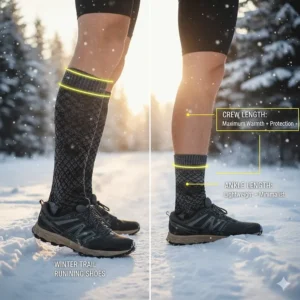
The gap between your running tights and shoes creates a cold air superhighway to your ankles. OSHA guidelines emphasize covering exposed skin to prevent cold stress injuries. This is why crew-height socks dramatically outperform ankle socks in genuinely cold conditions.
Quarter-height socks offer a compromise—they extend above your ankle bone, providing reasonable protection while maintaining versatility for transitional weather days. No-show socks? Save those for summer.
Material Science: Merino vs. Synthetic
Merino Wool Advantages:
- Natural temperature regulation
- Retains warmth when wet
- Inherent odor resistance
- Soft against skin
Synthetic Fiber Benefits:
- Faster drying time
- More durable construction
- Often more affordable
- Better shape retention
The truth? The best cold weather running socks often blend both. Merino provides the warmth and moisture management, while nylon or polyester add durability and structural integrity.
Cold Weather Running: Essential Winter Training Tips
Layering Strategy for Extreme Conditions
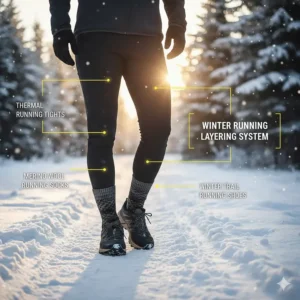
Your socks represent just one component of comprehensive cold weather protection. According to MedlinePlus medical guidance, proper layering prevents both hypothermia and frostbite during winter activities.
Base Layer: Start with moisture-wicking running socks—never cotton. Merino or advanced synthetic blends pull sweat away from skin.
Mid Layer: Your running tights or pants should offer wind protection. Many runners add thin liner socks under their primary running socks for extreme cold (below 10°F).
Outer Protection: Waterproof, insulated running shoes become essential. Some runners size up half a size in winter to accommodate thicker socks comfortably.
Recognizing Warning Signs
Frostbite can develop in as little as 30 minutes when wind chill drops to -19°F, according to the National Weather Service. Pay attention to these signals:
- Numbness or tingling in toes
- Skin appearing white, grayish, or waxy
- Loss of feeling in feet
- Unusual clumsiness or difficulty moving toes
If you experience any of these symptoms, get indoors immediately and rewarm your feet gradually with warm (not hot) water. Never rub or massage potentially frostbitten areas, as this can cause additional tissue damage.
Pre-Run Preparation Strategies
Smart runners win the cold weather battle before stepping outside. Try these professional tactics:
Warm Your Socks: Toss your running socks in the dryer for 5 minutes before putting them on. Starting with warm feet makes the initial cold shock less brutal.
Toe Warmers: For runs in extreme cold (below 15°F), consider disposable toe warmers that slip into your shoes. They provide 3-5 hours of supplemental heat.
Route Planning: Start running into the wind so you finish with it at your back. This prevents sweaty clothes from freezing against your skin during the return portion.
Benefits vs Traditional Alternatives
| Feature | Winter Running Socks | Regular Running Socks | Cotton Socks |
|---|---|---|---|
| Moisture Wicking | Excellent (specialized fibers) | Good (basic synthetics) | Poor (holds moisture) |
| Insulation | Targeted thermal zones | Minimal | None |
| Durability | Reinforced high-wear areas | Standard construction | Quickly wears out |
| Odor Resistance | Merino/antimicrobial tech | Basic | None |
| Temperature Range | -20°F to 50°F | 40°F+ only | Inappropriate for running |
| Compression Support | Often included | Rarely | Never |
| Price per Pair | $15-25 | $8-15 | $5-8 |
| Lifespan | 500+ miles (with guarantees) | 200-300 miles | Less than 100 miles |
Sock Care: Maximizing Your Investment
Washing Best Practices
Quality winter running socks represent a significant investment—protect it with proper care. Most manufacturers recommend these practices:
Machine Wash Guidelines:
- Use cold or warm water (never hot)
- Select gentle cycle
- Avoid fabric softeners (they coat fibers and reduce wicking ability)
- Turn socks inside out to protect exterior surface
Drying Recommendations:
- Air drying preserves elasticity longest
- If using a dryer, select low heat only
- Never wring out merino socks by hand (damages fibers)
- Avoid direct sunlight which degrades synthetic materials
Storage and Rotation
Professional runners typically maintain a rotation of 7-10 pairs of quality running socks. This allows each pair to fully dry and recover between uses, dramatically extending lifespan. Store clean socks in a dry location away from direct heat sources.
Price Range & Value Analysis
| Price Category | Range | What to Expect | Best Value Options |
|---|---|---|---|
| Budget | $5-12 | Basic warmth, limited durability | DANISH ENDURANCE (in multi-packs) |
| Mid-Range | $15-20 | Good performance, decent longevity | Darn Tough, Swiftwick Aspire |
| Premium | $21-25+ | Top technology, lifetime guarantees | Smartwool, Feetures Merino 10 |
Remember: expensive doesn’t always mean better for your specific needs. A $25 sock that doesn’t fit your foot shape properly performs worse than a $15 option that fits perfectly. Consider trying different brands to find what works best for your unique foot anatomy and running style.
✨ Don’t Miss These Exclusive Deals!
🔍 Take your winter training to the next level with these carefully selected products. Click on any highlighted item to check current pricing and availability. These socks will help you maintain authentic training consistency your running goals demand all winter long!
Frequently Asked Questions
❓ What temperature is too cold for running socks to protect your feet?
❓ How many pairs of winter running socks do I need for consistent training?
❓ Can I wear two pairs of socks for extra warmth in extreme cold?
❓ Should warm running socks below freezing be tight or loose fitting?
❓ How do merino wool running socks compare to synthetic for winter training?
Conclusion: Finding Your Perfect Cold Weather Running Companion
After testing dozens of options through hundreds of winter miles, one truth emerges clearly: the right running socks for cold weather transform winter from a training obstacle into an opportunity. Your feet deserve the same attention you give to selecting running shoes or jackets.
The runners who thrive through winter share a common trait—they invest in quality gear that performs reliably in harsh conditions. Whether you choose the all-around excellence of Smartwool Run Cold Weather socks, the lifetime durability of Darn Tough, or the budget-friendly warmth of DANISH ENDURANCE, you’re making a decision that directly impacts your training consistency.
Remember these key takeaways as you build your winter running sock arsenal:
🏃♂️ Material matters—merino blends deliver superior performance in genuine cold
🧦 Height prevents the ankle gap that defeats even the best socks
💧 Moisture management saves you from frostbite more than raw thickness
👟 Proper fit trumps expensive technology every time
🔄 Multiple pairs enable healthy rotation and extended lifespan
Winter running presents unique challenges, but with the right frost protection on your feet, those frozen morning miles become some of your most rewarding training experiences. The crisp air, the peaceful silence, the satisfaction of conquering conditions that keep others indoors—these define dedicated runners.
Don’t let cold feet derail another training cycle. Choose your ideal pair from our expert recommendations above, and discover how proper insulated running socks redefine your winter training essentials. Your spring racing goals depend on the winter miles you log today.
Recommended for You
- Best Running Socks for Hot Weather: 7 Picks That Won’t Let You Down in 2026
- 7 Best Socks to Prevent Blisters Running 2026
- 7 Best Socks for Shin Splints 2026 | Pain Relief Guide
Disclaimer: This article contains affiliate links. If you purchase products through these links, we may earn a small commission at no additional cost to you.
✨ Found this helpful? Share it with your friends! 💬🤗
