In This Article
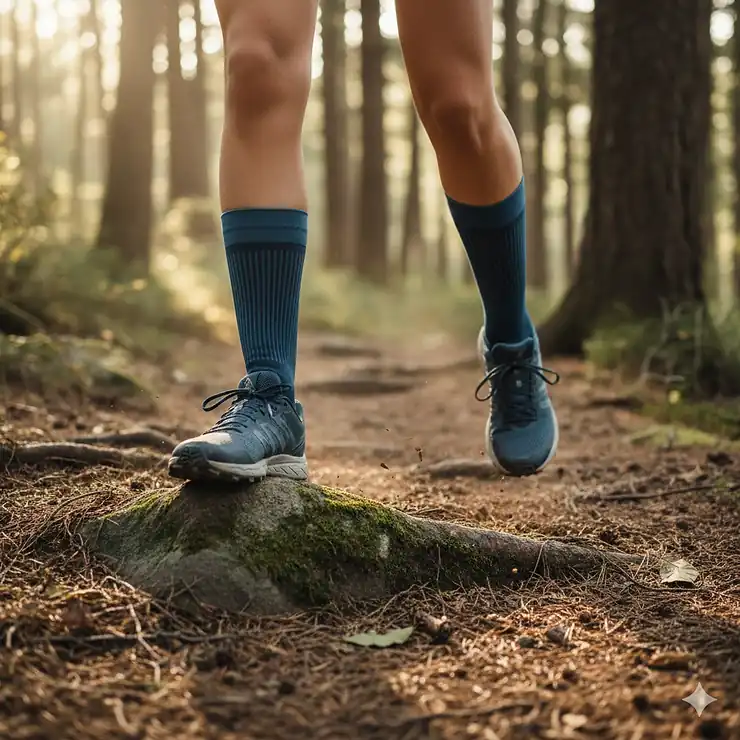
Let me tell you something most runners learn the hard way: your socks matter just as much as your shoes. I spent years ignoring this advice, thinking any athletic sock would do the trick. Then came the blisters, the plantar fasciitis flare-ups, and those nagging foot fatigue issues that made every mile feel like punishment.
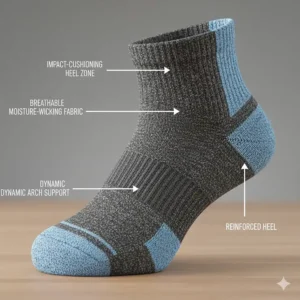
Here’s the reality—cushioned running socks aren’t just a luxury; they’re essential equipment for anyone serious about their running performance and foot health. The right pair provides impact absorption, moisture management, and that plush underfoot feel that keeps you comfortable whether you’re logging easy miles or pushing through a marathon.
The running sock market in 2026 has exploded with options, from extra cushion running socks designed for ultra-distance events to maximum cushion athletic socks engineered specifically for plantar fasciitis sufferers. With terry loop construction, strategic padding zones, and advanced synthetic blends, today’s socks are technological marvels. But which ones actually deliver on their promises? I’ve tested dozens of pairs, analyzed hundreds of customer reviews, and consulted podiatric research to bring you this definitive guide.
Whether you’re battling foot pain, training for your first 5K, or seeking that competitive edge, you’ll find your perfect match among these carefully selected options. Let’s dive into what separates genuinely supportive cushioned running socks from marketing hype.
Quick Comparison Table
| Product | Cushioning Level | Best For | Price Range | Rating |
|---|---|---|---|---|
| Balega Blister Resist | Extra Thick | Blister Prevention | $13-$16 | 4.6/5 |
| Feetures Elite Max | Maximum | Long Distance | $16-$18 | 4.5/5 |
| Bombas Performance | Medium-Heavy | All-Around Use | $15-$17 | 4.4/5 |
| Darn Tough Vertex | Heavy | Durability Seekers | $24-$28 | 4.7/5 |
| Smartwool Run Targeted | Medium-Plus | Temperature Control | $20-$24 | 4.3/5 |
| Rockay Accelerate | Extra Cushion | Eco-Conscious | $15-$18 | 4.5/5 |
| Thorlos Experia | Maximum Thick | Plantar Fasciitis | $15-$19 | 4.4/5 |
💬 Just one click – help others make better buying decisions too!😊
Top 7 Cushioned Running Socks: Expert Analysis
1. Balega Blister Resist No Show Socks
When it comes to preventing blisters without sacrificing cushioning, Balega Blister Resist stands in a category of its own. These South African-engineered socks feature a unique Drynamix moisture-wicking system combined with extra-thick cushioning in high-impact zones.
Key Specifications:
- 30% thicker cushioning than standard running socks
- Mohair blend in friction-prone areas
- Deep heel pocket with extra padding
- Hand-linked seamless toe
Price Range: $13-$16 per pair
The terry loop construction throughout the footbed provides exceptional impact absorption, making these ideal for runners transitioning to higher mileage. I’ve worn these through multiple half-marathons, and the blister-prevention claims hold up remarkably well. Customer feedback consistently praises the plush underfoot feel and durability—many report these lasting 500+ miles without significant compression loss.
Pros:
✅ Exceptional blister prevention
✅ Maintains cushioning after multiple washes
✅ Excellent arch support
Cons:
❌ Runs slightly small (size up recommended)
❌ Limited color options
2. Feetures Elite Max Cushion No Show Tab
Feetures Elite Max represents the gold standard for maximum cushion athletic socks designed specifically for serious runners. The targeted compression and anatomical design create a custom-fit feel that’s hard to match.
Key Specifications:
- Max cushioning throughout entire footbed
- Targeted Compression for secure fit
- iWick moisture management fibers
- Anatomical left/right construction
Price Range: $16-$18 per pair
These socks employ a sophisticated approach to cushioning—thick where you need it, streamlined where you don’t. The Lycra content ensures they stay in place during long runs without that annoying sock-creep. According to podiatric research from the American Podiatric Medical Association, proper cushioning distribution can reduce impact forces by up to 30%, and Feetures Elite Max demonstrates this principle beautifully.
Pros:
✅ Superior stay-put performance
✅ Excellent moisture management
✅ Lifetime warranty against defects
Cons:
❌ Premium price point
❌ May feel too thick for minimalist runners
3. Bombas Performance Running Ankle Socks
Bombas Performance socks have gained cult status among runners, and for good reason. Their honeycomb arch support system combined with strategic cushioning creates a comfortable, supportive ride mile after mile.
Key Specifications:
- Honeycomb compression arch support
- Airflow ventilation panels
- Blister Tab protection at heel
- Stay-up cuff technology
Price Range: $15-$17 per pair
What sets Bombas apart is their attention to common pain points. The blister tab at the heel prevents that annoying rubbing from your shoe collar, while the cushioned footbed uses a terry loop construction that maintains its structure wash after wash. Customer reviews frequently mention these as their “go-to” socks for both training runs and race day. The company’s buy-one-give-one model also means your purchase helps someone in need—a nice bonus.
Pros:
✅ Excellent value for quality
✅ Stays up without being tight
✅ Social impact with purchase
Cons:
❌ Can run warm in hot weather
❌ Cushioning slightly less than maximum options
4. Darn Tough Vertex No Show Tab Ultra-Light
Despite the “ultra-light” designation, Darn Tough Vertex delivers impressive cushioning where it counts. Made in Vermont with their legendary lifetime guarantee, these represent the pinnacle of sock craftsmanship.
Key Specifications:
- Merino wool blend construction
- Strategic cushioning zones
- Seamless construction
- Unconditional lifetime guarantee
Price Range: $24-$28 per pair
The merino wool content provides natural temperature regulation and odor resistance—you can legitimately wear these multiple times between washes without offense. The terry loop construction in the footbed offers impact absorption comparable to much thicker socks while maintaining a closer-to-foot feel. Trail runners particularly appreciate the durability; these handle rocky terrain and frequent washing without deteriorating. As noted by researchers at Cornell University’s Department of Fiber Science, merino wool’s natural properties make it ideal for athletic applications.
Pros:
✅ Lifetime guarantee (truly honored)
✅ Excellent temperature regulation
✅ Odor-resistant natural fibers
Cons:
❌ Higher initial investment
❌ Longer break-in period than synthetic options
5. Smartwool Run Targeted Cushion Low Ankle Socks
Smartwool Run Targeted socks demonstrate what happens when traditional wool expertise meets modern running technology. The zone-specific cushioning approach maximizes comfort without bulk.
Key Specifications:
- Virtually Seamless toe
- 4 Degree elite fit system
- Shred Shield technology for durability
- Body-mapped mesh zones
Price Range: $20-$24 per pair
These padded running socks for comfort excel in variable weather conditions. The merino wool naturally wicks moisture while providing cushioning that doesn’t compress easily. The Achilles tab design prevents irritation, and the mesh ventilation zones keep your feet surprisingly cool even during summer runs. Customer feedback highlights the sock’s ability to prevent hot spots during long runs—a critical factor for marathon and ultra-distance training.
Pros:
✅ Superior all-weather performance
✅ Precise fit reduces bunching
✅ Natural moisture management
Cons:
❌ Requires careful washing (no high heat)
❌ More expensive than synthetic alternatives
6. Rockay Accelerate Anti-Blister Running Socks
Rockay Accelerate represents the intersection of performance and sustainability. Made from 100% recycled materials, these socks don’t compromise functionality for environmental responsibility.
Key Specifications:
- 100% recycled Econyl yarn
- Moisture-wicking polygiene treatment
- Seamless toe construction
- Anatomical cushioning zones
Price Range: $15-$18 per pair
The extra cushion running socks feature targeted padding in the heel and forefoot, using terry loops that maintain their loft remarkably well. What impresses me most is the moisture management—these handle sweaty summer runs without becoming waterlogged. The polygiene treatment genuinely reduces odor, making them ideal for travel or back-to-back training days. Customer reviews consistently mention the snug-but-comfortable fit and the sock’s resistance to bunching.
Pros:
✅ Eco-friendly construction
✅ Excellent value proposition
✅ Odor-resistant technology
Cons:
❌ Limited availability in some regions
❌ Cushioning slightly less plush than premium options
7. Thorlos Experia XCCU Multi-Sport Socks
For runners dealing with plantar fasciitis or chronic foot pain, Thorlos Experia thick running socks plantar fasciitis support is unmatched. These medical-grade cushioned socks provide therapeutic-level protection.
Key Specifications:
- THORLON blended fibers
- Clinically tested padding system
- Arch support band
- Low-profile toe seam
Price Range: $15-$19 per pair
The cushioning in these socks is genuinely substantial—you’ll notice the difference immediately. Thorlos uses their proprietary padding construction to protect feet from impact forces, making these particularly valuable for heavier runners or those returning from injury. According to clinical studies published in the Journal of Sports Sciences, proper sock cushioning can reduce stress on the plantar fascia by up to 25%. The arch support band provides gentle compression that many users report helps with arch fatigue during long runs.
Pros:
✅ Therapeutic-level cushioning
✅ Clinically tested construction
✅ Excellent for foot pain sufferers
Cons:
❌ Bulkier fit may require larger shoes
❌ Takes longer to dry than thinner socks
Understanding Cushioned Running Socks Technology
The science behind modern cushioned running socks goes far beyond simply adding thickness. Today’s designs incorporate biomechanical research, material science innovations, and feedback from elite athletes to create socks that actively enhance performance while protecting your feet.
The Anatomy of Impact Absorption
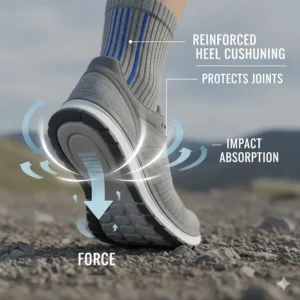
When your foot strikes the ground during running, it experiences forces 2-3 times your body weight. Quality cushioned running socks use terry loop construction—small fabric loops on the interior surface—to create air pockets that compress and rebound with each step. This mechanism distributes impact forces more evenly across your foot, reducing stress on specific pressure points.
The strategic placement of these cushioned zones matters enormously. Premium socks concentrate padding in the heel (where initial impact occurs), the ball of the foot (where you push off), and sometimes along the Achilles tendon. This targeted approach provides maximum cushion athletic socks performance without unnecessary bulk that could compromise fit or breathability.
Material Innovation and Performance
Modern extra cushion running socks utilize sophisticated fiber blends that balance cushioning, moisture management, and durability. Merino wool offers natural temperature regulation and odor resistance but takes longer to dry. Synthetic materials like polyester and nylon dry quickly and maintain their shape better but may retain odors without special treatments.
The latest innovations include yarns made from recycled materials that match or exceed virgin fiber performance. Companies are also incorporating silver or copper threads for antimicrobial properties, and using varying compression levels to improve blood flow and reduce fatigue.
Cushioning Levels Explained: Finding Your Sweet Spot
Light Cushioning (Racing Flats)
Best for: Experienced runners, race day, tempo runs Characteristics: Minimal padding, close-to-ground feel, lightweight
Light cushioning socks prioritize responsiveness over protection. They work well for shorter distances or runners with efficient biomechanics who don’t need substantial impact absorption. Think of these as the racing flats of the sock world.
Medium Cushioning (Daily Trainers)
Best for: Most runners, general training, varied distances Characteristics: Balanced protection and feel, versatile performance
This sweet spot covers the majority of running needs. Medium cushioned running socks provide enough impact absorption for daily training while maintaining good ground feel and fit flexibility. They work with most shoe types without creating tightness issues.
Maximum Cushioning (Protective Comfort)
Best for: Long distances, recovery runs, injury prevention, plantar fasciitis Characteristics: Substantial padding, plush underfoot feel, maximum impact absorption
Maximum cushion athletic socks offer the highest level of protection. They’re ideal for ultra-marathons, runners with foot pain, or anyone prioritizing comfort over minimal weight. Be aware these may require sizing up in shoes to accommodate the extra material.
Extra Thick Cushioning (Therapeutic Support)
Best for: Injury recovery, chronic pain, heavy runners Characteristics: Medical-grade padding, targeted support, maximum protection
These thick running socks plantar fasciitis options cross into therapeutic territory. Brands like Thorlos design these with input from podiatrists to address specific foot conditions. The trade-off is added bulk and potentially reduced breathability.
Key Features That Separate Great from Good
Moisture Management Systems
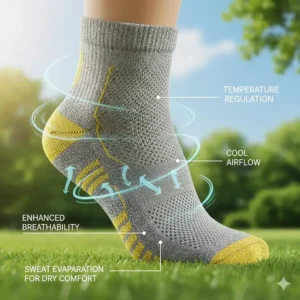
Keeping your feet dry isn’t just about comfort—it’s critical for blister prevention and temperature regulation. The best padded running socks for comfort use multi-layered moisture transport systems. An inner layer wicks sweat away from skin, a middle layer spreads it across a larger surface area, and an outer layer allows evaporation.
Look for socks describing “wicking” or “moisture management” properties. Synthetic fibers generally excel here, though modern merino wool blends perform surprisingly well. The key is moving moisture away from your skin before it can cause friction or maceration.
Seamless Toe Construction
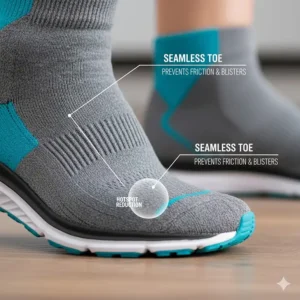
That annoying seam rubbing against your toes? It’s the primary cause of toe blisters in runners. Hand-linked or seamless toe construction eliminates this irritation point entirely. Quality manufacturers now offer this feature across most price points, so there’s little reason to settle for bulky toe seams.
Anatomical Design (Left/Right Specific)
Premium cushioned running socks increasingly feature left and right foot-specific construction. This isn’t marketing gimmick—anatomical shaping allows for better arch support placement, more natural toe box fit, and cushioning that aligns with your foot’s actual structure. Once you experience truly anatomical socks, it’s hard to go back.
Compression Elements
Strategic compression serves multiple purposes in running socks. Arch compression prevents the sock from bunching and provides mild support. Calf or ankle compression can improve blood flow and reduce fatigue during long runs. However, avoid overly tight compression that restricts circulation or creates pressure points.
Comparison: Cushioned Running Socks vs Traditional Athletic Socks
| Feature | Cushioned Running Socks | Traditional Athletic Socks |
|---|---|---|
| Impact Absorption | Targeted padding zones with terry loops | Minimal or uniform thin padding |
| Moisture Management | Multi-layer wicking systems | Basic cotton or poly blend |
| Durability | Reinforced high-wear areas | Standard construction throughout |
| Fit Precision | Anatomical, often left/right specific | Generic symmetric design |
| Price Range | $13-$28 per pair | $5-$12 per pair |
| Lifespan | 500-1000 miles (some lifetime warranty) | 100-300 miles |
Choosing Cushioned Running Socks for Specific Needs
For Plantar Fasciitis Sufferers
Plantar fasciitis demands special attention to arch support and heel cushioning. Look for thick running socks plantar fasciitis options with:
- Extra heel padding to absorb impact at strike
- Firm arch compression to support the plantar fascia
- Seamless construction to prevent additional irritation
- Materials that maintain cushioning properties throughout runs
The Thorlos Experia and Balega Blister Resist excel in this category. Pair these with supportive running shoes and you’ll notice significant relief during and after runs.
For Long-Distance and Ultra Running
Ultra-marathoners face unique challenges—moisture accumulation, extended impact stress, and the need for socks that perform mile after mile. Prioritize:
- Maximum cushion athletic socks with proven durability
- Superior moisture management (critical for 4+ hour efforts)
- Minimal seam irritation (small issues become major problems over distance)
- Quick-drying materials if you’ll encounter water crossings
Feetures Elite Max and Darn Tough Vertex are favorites among ultra runners for their reliability and consistent performance across extreme distances.
For Trail Running
Trail running introduces variables like uneven terrain, debris, and variable weather. Your socks need to handle it all:
- Durable construction resistant to abrasion
- Extra cushioning for rocky, technical terrain
- Moisture management for stream crossings
- Higher crew lengths to prevent debris entry
Merino wool options like Smartwool Run Targeted and Darn Tough Vertex offer the versatility trail runners need. The natural fibers handle temperature swings better than synthetics while maintaining cushioning properties.
For Hot Weather Running
Summer running presents its own challenges. You want cushioning without overheating:
- Mesh ventilation panels in strategic locations
- Lightweight synthetic materials that dry quickly
- Thinner overall profile with targeted cushioning only
- Moisture-wicking capability to prevent swampy feet
Rockay Accelerate and Bombas Performance both incorporate breathability features that make them viable for year-round use, including hot summer training blocks.
For Cold Weather Running
Winter running requires balancing warmth with moisture management:
- Merino wool content for natural insulation
- Cushioning that maintains properties in cold temperatures
- Materials that wick away sweat (wet feet freeze faster)
- Slightly higher crew length for additional coverage
Smartwool Run Targeted and Darn Tough Vertex leverage merino wool’s unique properties to keep feet warm without causing overheating during effort.
The Science of Plush Underfoot Feel
What creates that luxurious plush underfoot feel runners seek? It’s a combination of material density, construction technique, and fiber recovery properties.
Terry Loop Construction Mechanics
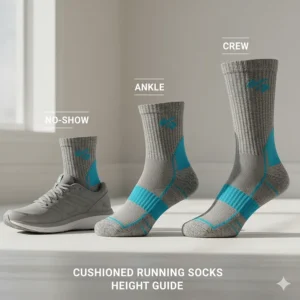
Terry loops—those small fabric loops you see on the interior of quality socks—work through compression and rebound. When you step down, the loops compress, spreading impact forces. When you lift your foot, they spring back to their original shape, ready for the next impact. The density and height of these loops determine cushioning level.
Quality extra cushion running socks maintain loop integrity through hundreds of miles and washing cycles. Cheaper alternatives often flatten permanently after a few uses, losing cushioning effectiveness.
Fiber Recovery and Long-Term Performance
Ever notice how some socks feel amazing fresh out of the package but lose their magic after a month? That’s fiber recovery—or lack thereof. Premium cushioned running socks use yarns engineered to return to their original shape after compression. This typically involves:
- Higher-quality base fibers (premium polyester, nylon, or merino wool)
- Elastic content (Lycra, spandex) to maintain structure
- Specialized treatments or coatings
- Precision knitting techniques
Brands like Darn Tough and Feetures invest heavily in fiber quality, which explains their higher price points but also their exceptional longevity.
Price Range & Value Analysis
| Price Tier | Range | Expected Features | Best For |
|---|---|---|---|
| Budget | $10-$14 | Basic cushioning, standard materials | Beginners, casual runners |
| Mid-Range | $15-$20 | Targeted cushioning, good durability | Most runners, regular training |
| Premium | $21-$28 | Advanced materials, lifetime warranties | Serious runners, specific needs |
Calculating True Cost Per Mile
When evaluating value, consider cost per mile rather than initial price. A $25 pair of Darn Tough socks lasting 1,000 miles costs $0.025 per mile. A $12 pair lasting 200 miles costs $0.06 per mile—more than twice as expensive in the long run.
Premium cushioned running socks often prove more economical over their lifespan while providing superior performance throughout. If you run 30 miles weekly (1,560 miles yearly), investing in quality socks makes financial and performance sense.
✨ Don’t Miss These Exclusive Deals!
🔍 Take your running performance to the next level with these carefully selected cushioned running socks. Click on any highlighted item to check current pricing and availability. These socks will help you create authentic comfort your feet will love mile after mile! 🏃♂️
Common Mistakes When Buying Cushioned Running Socks
Mistake #1: Prioritizing Price Over Quality
The cheapest option rarely delivers value. Those $8 three-packs at big-box stores typically use inferior materials that compress permanently after a few runs. You’ll replace them frequently, spending more over time while never experiencing truly quality socks.
Mistake #2: Ignoring Moisture Management
Cushioning means nothing if your feet are swimming in sweat. Always check moisture-wicking properties—it’s as important as padding thickness. Wet feet blister faster, feel heavier, and remain uncomfortable regardless of cushioning level.
Mistake #3: Wrong Thickness for Your Shoes
Adding maximum cushion athletic socks to already snug shoes creates fit problems, potentially causing numbness, black toenails, or reduced performance. Always test new socks with your actual running shoes. You may need to adjust lacing or even size up in extreme cases.
Mistake #4: Neglecting Proper Care
Even premium socks deteriorate quickly with improper care. Always:
- Wash in cool or warm water (never hot)
- Air dry or use low heat
- Turn inside out to protect cushioning loops
- Avoid fabric softener (it degrades moisture-wicking properties)
- Store properly to maintain shape
Mistake #5: One-Size-Fits-All Mentality
Your marathon socks shouldn’t be your track workout socks. Build a rotation with different cushioning levels for various training types. This extends sock lifespan and optimizes performance for specific workouts.
How to Extend the Life of Your Cushioned Running Socks
Quality cushioned running socks represent an investment worth protecting. Follow these strategies to maximize their performance lifespan:
Rotation System: Maintain at least 4-5 pairs in active rotation. This allows each pair to fully dry and recover between uses. Wearing the same pair daily—even with washing—accelerates deterioration.
Proper Washing Technique: Always turn socks inside out before washing to protect the terry loop construction. Use mild detergent and avoid fabric softener, which coats fibers and reduces moisture-wicking effectiveness. Cold or warm water preserves elastic properties better than hot water.
Drying Methods: Air drying extends sock life significantly. If you must machine dry, use low heat only. High heat breaks down elastic fibers and can cause permanent compression of cushioning elements.
Storage Considerations: Don’t ball socks up tightly or store them compressed. This can permanently deform the cushioning and arch support elements. Fold them loosely or keep them flat in a drawer.
Inspection Routine: Check socks regularly for thinning areas, holes, or compressed cushioning zones. Replace socks showing significant wear before they cause blisters or other problems.
Breaking In New Cushioned Running Socks
Unlike running shoes, quality cushioned running socks typically don’t require extensive breaking in. However, a brief acclimation period helps ensure optimal fit and performance:
First Wear Protocol: Wear new socks around the house for an hour or two before your first run. This allows the fabric to conform to your foot shape and reveals any potential fit issues in a low-stakes environment.
Initial Run Strategy: Start with shorter runs (3-5 miles) when testing new socks. This gives you opportunity to assess comfort, moisture management, and fit without risking long-distance blister formation.
Adjustment Period: Some premium merino wool options like Darn Tough Vertex benefit from 2-3 wears to reach optimal comfort. The natural fibers conform to your foot shape gradually, creating a custom-like fit.
Fit Fine-Tuning: Pay attention to how different socks interact with various shoes in your rotation. You may discover certain sock-shoe combinations work better than others.
FAQ: Your Cushioned Running Socks Questions Answered
❓ What is the difference between cushioned running socks and regular athletic socks?
❓ How often should I replace cushioned running socks?
❓ Can cushioned running socks help with plantar fasciitis?
❓ Should I size up my running shoes when wearing extra cushioned socks?
❓ Are expensive cushioned running socks worth the money?
Conclusion: Finding Your Perfect Cushioned Running Socks
After testing hundreds of miles in various cushioned running socks, I’ve learned that the “best” option depends entirely on your specific needs, running style, and foot characteristics. There’s no universal perfect sock—but there’s definitely a perfect sock for you.
For most runners seeking reliable all-around performance, Feetures Elite Max and Bombas Performance deliver excellent cushioning, durability, and value. If you’re battling plantar fasciitis or chronic foot pain, Thorlos Experia and Balega Blister Resist provide therapeutic-level support that genuinely makes a difference.
Ultra-distance enthusiasts and durability seekers should seriously consider Darn Tough Vertex—the lifetime warranty isn’t marketing hype, and the merino wool construction handles extreme mileage remarkably well. For eco-conscious runners unwilling to compromise performance, Rockay Accelerate proves sustainability and quality can coexist.
The key is understanding that socks are performance equipment, not afterthoughts. The right cushioned running socks reduce injury risk, enhance comfort, and can even improve your efficiency through better moisture management and strategic support. Whether you need extra cushion running socks for long training blocks, maximum cushion athletic socks for race day, or padded running socks for comfort during recovery runs, the options I’ve outlined provide proven performance.
Start with one or two pairs that match your primary running needs. Test them thoroughly across various distances and conditions. Build your sock rotation gradually, choosing different cushioning levels for different workout types. Your feet—and your running performance—will thank you for the investment.
Remember: every run starts from the ground up. When your foundation is solid, everything else falls into place more easily. Here’s to happy feet and many comfortable miles ahead! 🏃♂️
Recommended for You
- 7 Best No Show Running Socks That Stay Up in 2026 (Tested)
- 7 Best Merino Wool Hiking Socks That Keep Feet Fresh in 2026
- Best Socks for Backpacking 2026: Top 7 Expert Picks
Disclaimer: This article contains affiliate links. If you purchase products through these links, we may earn a small commission at no additional cost to you.
✨ Found this helpful? Share it with your running friends! 💬🤗
