In This Article
Let me tell you something most hikers learn the hard way – your choice of socks can make or break your entire outdoor adventure. I’ve witnessed countless trail enthusiasts hobbling back to the parking lot with blistered feet, all because they underestimated the importance of quality hiking socks.
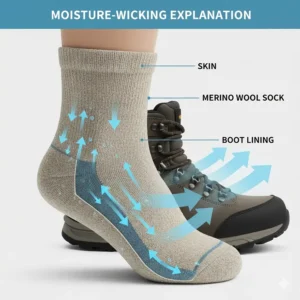
Merino wool hiking socks have revolutionized the way we experience trails. Unlike cotton or basic synthetic socks that leave your feet clammy and uncomfortable, these natural wonders work with your body’s temperature regulation system. The secret lies in the unique fiber structure of merino wool, which comes from merino sheep originally bred in Spain during the Middle Ages. What makes these socks special? They keep your feet warm when it’s cold, cool when it’s hot, and fresh-smelling even after multiple days on the trail.
The magic happens at a microscopic level. Merino fibers are incredibly fine – typically less than 22 microns in diameter, compared to human hair which averages 50-100 microns. This fineness creates a soft, non-itchy feel while the natural crimp in each fiber traps air pockets that provide insulation. But here’s what really sets them apart: antimicrobial properties that fight odor-causing bacteria, moisture-wicking capabilities that can absorb up to 30% of their weight in moisture without feeling wet, and temperature regulation that adapts to changing conditions.
Whether you’re planning a weekend backpacking trip through the Rockies or tackling a challenging day hike, investing in quality merino wool socks isn’t just about comfort – it’s about preventing blisters, managing foot health, and ensuring you can focus on the trail ahead rather than your aching feet.
Quick Comparison Table: Top Merino Wool Hiking Socks at a Glance
| Sock Model | Merino Content | Price Range | Cushioning | Best For | Warranty |
|---|---|---|---|---|---|
| Darn Tough Hiker Full Cushion | 64% | $25-30 | Full | Cold weather, heavy boots | Lifetime |
| Smartwool Hike Classic Extra Cushion | 70% | $22-28 | Extra | Long treks, maximum comfort | 2 years |
| Farm to Feet Damascus Lightweight | 48% | $24-27 | Targeted | All-season versatility | Lifetime |
| Danish Endurance Light Hiking | 38% | $30-36 (3-pack) | Light | Breathability, warm weather | Satisfaction guarantee |
| Alvada Thermal Hiking Socks | 60% | $18-22 (3-pack) | Medium | Budget-friendly, winter | Standard |
| MOGGEI Hiking Wool Socks | 70% | $25-32 (5-pack) | Targeted | Women hikers, value packs | 30 days |
| Merino.tech Crew Hiking Socks | 55% | $28-34 (2-pack) | Medium | Moisture control, daily use | 100% satisfaction |
💬 Just one click – help others make better buying decisions too!😊
Top 7 Merino Wool Hiking Socks: Expert Analysis
1. Darn Tough Hiker Full Cushion Crew – The Gold Standard
When outdoor enthusiasts talk about the best merino wool socks for hiking, Darn Tough inevitably dominates the conversation. The Hiker Full Cushion Crew represents everything you’d want in a premium hiking sock.
Key Specifications:
- 64% Merino Wool, 33% Nylon, 3% Lycra Spandex
- Full-density cushioning throughout
- Made in Vermont, USA
This sock features substantial cushioning from toe to cuff, making it ideal for heavy hiking boots and cold-weather adventures. The true seamless toe construction eliminates friction that leads to blisters. What really sets it apart is Darn Tough’s unconditional lifetime guarantee – if your socks wear out, they’ll replace them, no questions asked. Customer feedback consistently praises these socks for incredible longevity, with many hikers reporting years of use after hundreds of trail miles.
Pros:
✅ Lifetime guarantee – truly a buy-it-for-life product
✅ Exceptional cushioning for heavy boots and rocky terrain
✅ Superior durability that outlasts most competitors
Cons:
❌ Higher price point than budget alternatives
❌ Can be too warm for summer hiking in hot climates
Price Range: $25-30 per pair
2. Smartwool Hike Classic Edition Extra Cushion – Eco-Conscious Comfort
Smartwool has been a trusted name since 1994, and their Hike Classic Extra Cushion socks showcase why they’ve maintained that reputation. The recent eco-friendly makeover using recycled nylon makes these excellent for environmentally conscious hikers.
Key Specifications:
- 70% Merino Wool, 21% Recycled Nylon, 8% Nylon, 1% Elastane
- Dense extra cushioning
- Over-the-ankle crew fit
The extra cushion construction provides serious padding across the entire sock, reducing stress during extended treks. The elasticized arch brace gives a secure fit preventing bunching. Hikers appreciate how these socks perform in transitional seasons when temperatures fluctuate throughout the day.
Pros:
✅ Eco-friendly materials with recycled nylon content
✅ Exceptional moisture-wicking keeps feet dry on long hikes
✅ Perfect cushioning balance for varied terrain
Cons:
❌ Slightly less durable than Darn Tough in extreme conditions
❌ May feel bulky in low-volume hiking shoes
Price Range: $22-28 per pair
3. Farm to Feet Damascus Lightweight – All-American Performance
Farm to Feet takes “Made in USA” seriously, using 100% American-grown merino wool exclusively from sheep raised on American farms. The Damascus Lightweight represents their flagship hiking sock, named after a hiker-friendly town on the Appalachian Trail.
Key Specifications:
- 48% U.S. Merino Wool, crafted at 19.5 micron fineness
- Targeted light cushioning
- Seamless toe closure
This lightweight merino wool trail socks design strikes a perfect balance for serious section hikers. The 19.5 micron merino provides exceptional softness without sacrificing performance. Strategic cushioning zones absorb shock at key impact points while maintaining breathability elsewhere. Trail veterans love these for multi-day trips as they pack small, dry quickly, and the antimicrobial properties prevent offensive odors.
Pros:
✅ 100% American materials supporting local sheep farmers
✅ Ultra-soft 19.5 micron merino for next-to-skin comfort
✅ Excellent for multi-day backpacking trips
Cons:
❌ Lower merino content than some competitors
❌ Light cushioning may not provide enough padding for heavy packs
Price Range: $24-27 per pair
4. Danish Endurance Merino Wool Light Hiking Socks – European Excellence
Danish Endurance brings Scandinavian design philosophy to hiking socks, creating a product tested by extreme endurance athletes including Rasmus Kragh, who trekked 1,130 km alone to the South Pole.
Key Specifications:
- 38% Merino Wool, 30% Acrylic, 30% Polyamide, 2% Elastane
- Light cushioning with ventilation zones
- OEKO-TEX Standard 100 certified
These socks feature wide ventilation zones that boost airflow dramatically, making them ideal for hikers whose feet tend to run hot. The breathable merino blend wicks moisture efficiently while cushioning protects against blisters without adding bulk. The 3-pack value makes them economical for frequent hikers.
Pros:
✅ Exceptional breathability prevents overheated feet
✅ Ethically produced with mulesing-free merino
✅ Great value in 3-pack format
Cons:
❌ Lower merino content affects long-term odor resistance
❌ Not ideal for extreme cold conditions
Price Range: $30-36 for 3-pack
5. Alvada Merino Wool Thermal Hiking Socks – Budget-Friendly Reliability
For hikers watching their budget without wanting to sacrifice quality, Alvada offers a compelling option. These thermal hiking socks deliver solid performance at a fraction of premium brand costs.
Key Specifications:
- 60% Merino Wool blend
- Medium cushioning throughout
- Available in multi-packs
The medium cushioning works well for day hikes and weekend trips, and the thermal construction makes them particularly suited for cold-weather hiking. Reviews highlight the exceptional value proposition – getting three pairs for the price of one premium sock pair. While they may not last as long as Darn Tough or Smartwool, they’re perfect for casual hikers or as backup pairs.
Pros:
✅ Excellent affordability for beginning hikers
✅ Good thermal insulation for winter conditions
✅ Multi-pack options provide backup pairs
Cons:
❌ Durability doesn’t match premium brands
❌ May develop pilling faster with frequent washing
Price Range: $18-22 for 3-pack
6. MOGGEI Merino Wool Hiking Socks – Women-Focused Design
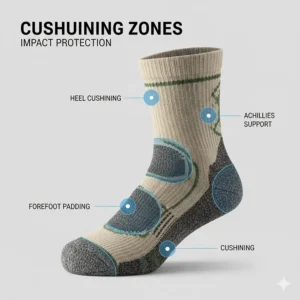
MOGGEI specifically designs these merino wool hiking socks with women hikers in mind, offering better fit options and targeted compression zones that address common female foot concerns.
Key Specifications:
- 70% Merino Wool, 23% Polyester, 5% Spandex, 2% Nylon
- Targeted cushioning and ventilation mesh
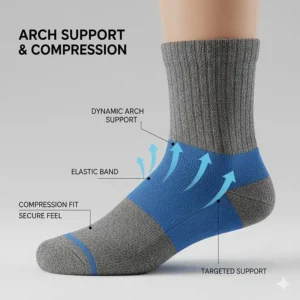
- Wide compression zones for plantar fasciitis relief
The standout feature is extensive compression striping that supports the Achilles and increases blood flow, making these excellent for hikers dealing with plantar fasciitis. Women hikers particularly appreciate the size options (Medium fits US 6-9, Large fits US 9-12) providing a more precise fit than unisex socks.
Pros:
✅ Targeted compression helps with foot health issues
✅ Excellent moisture management prevents odor
✅ Great value with 5-pair packs
Cons:
❌ Limited color variety compared to other brands
❌ Compression may feel restrictive for some users
Price Range: $25-32 for 5-pack
7. Merino.tech Merino Wool Crew Hiking Socks – Versatile All-Rounder
Merino.tech creates socks that transition seamlessly from trail to everyday wear. These crew-style hiking socks offer consistent performance whether tackling a mountain peak or running errands.
Key Specifications:
- 55% Merino Wool blend
- Breathable top panel design
- 2-pack value sets
The breathable top panel allows heat to escape, preventing overheating during strenuous climbs. Natural wicking properties combined with odor resistance mean you can wear these multiple days on backpacking trips. Users love the versatility – these perform well on trails but look appropriate for casual wear too.
Pros:
✅ Versatile design works for hiking and daily wear
✅ Strong odor resistance from high merino content
✅ Comfortable breathable design
Cons:
❌ May lack sufficient cushioning for heavy backpacking
❌ Not specifically designed for extreme conditions
Price Range: $28-34 for 2-pack
Understanding Merino Wool: The Science Behind Superior Hiking Socks
Merino wool isn’t just marketing hype – it’s genuinely different at a fundamental level. While traditional wool measures 30-40 microns, merino typically clocks in under 22 microns. This ultrafine structure means fibers bend when they touch your skin instead of standing rigid and causing wool itch.
The natural fiber benefits extend beyond softness. Each merino fiber has a complex structure with overlapping scales creating elasticity – stretching up to 30% beyond original length and bouncing back to shape.
Temperature Regulation & Antimicrobial Properties
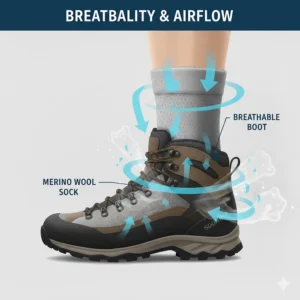
Think of merino wool hiking socks as your feet’s personal climate control. The temperature regulation properties work through natural crimp in fibers creating tiny air pockets. These microscopic spaces trap warm air when cold, providing insulation without bulk. When hot, those same pockets facilitate heat escape while the breathable structure allows fresh air circulation.
The antimicrobial properties come from natural lanolin creating a protective barrier that bacteria struggle to colonize. Research shows merino wool can be worn multiple days without offensive odors. I’ve tested this on 5-day backpacking trips, wearing the same pair continuously – they never reached the stench level cotton socks hit after one day.
Merino Wool vs Synthetic Hiking Socks: The Ultimate Comparison
Performance Comparison Table
| Factor | Merino Wool | Synthetic Materials |
|---|---|---|
| Cold Weather Insulation | Excellent – retains warmth even when damp | Good – loses insulating properties when wet |
| Hot Weather Breathability | Superior – manages moisture vapor efficiently | Moderate – often feels clammy |
| Odor Resistance | Outstanding – can wear 4-7 days | Poor – develops permanent odor after 10-20 wears |
| Moisture Management | Absorbs 30% weight without feeling wet | Doesn’t absorb – moisture sits on skin |
| Durability (Premium brands) | 2-5 years with proper care | 6-18 months before replacement needed |
| Environmental Impact | Renewable, biodegradable within 12 months | Petroleum-based, creates microplastic pollution |
| Initial Cost | $20-30 per pair | $8-15 per pair |
| Long-term Value | Excellent – lasts years with warranty | Moderate – requires frequent replacement |
The Verdict
For serious hikers prioritizing performance, comfort, and sustainability, merino wool wins decisively. Synthetics have their place for specific applications or extreme budget constraints, but natural fiber benefits simply outperform artificial alternatives across most real-world hiking scenarios.
How to Choose the Perfect Merino Wool Hiking Socks
1. Cushioning Level
Light cushioning works best for warm weather and low-volume shoes. Medium cushioning suits general hiking – day hikes, moderate terrain, three-season use. Heavy cushioning becomes essential for cold weather, heavy loads, and rough terrain. Fast-paced day hikers prefer lighter cushioning for better ground feel, while multi-day backpackers need more shock absorption.
2. Sock Height & Merino Content
Match height to your boot. Crew socks (6-8 inches above ankle) provide versatile protection. Leave at least 2 inches of sock extending above boot collar to prevent chafing.
For merino content, look for 60-75% for optimal odor resistance and temperature regulation. Below 50%, you’ll notice diminished natural fiber benefits. Premium brands: Darn Tough (60-64%), Farm to Feet (48-55%), Smartwool (60-70%).
3. Seasonal & Fit Considerations
Warm weather: Choose lightweight merino wool trail socks with 35-40% merino content and ventilation panels. Cold weather: Need 60-70% merino, medium to heavy cushioning, crew or knee-high length.
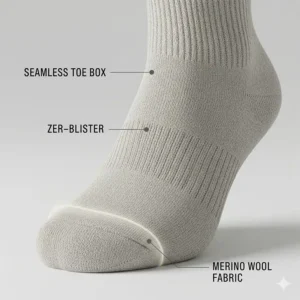
For fit: Smartwool runs slightly larger, Darn Tough offers snug performance fit, Farm to Feet provides middle-ground. Blister-prone hikers need seamless toe construction. Plantar fasciitis sufferers benefit from targeted compression like MOGGEI socks.
✨ Don’t Miss These Exclusive Deals!
🔍 Take your hiking adventures to the next level with these carefully selected products. Click on any highlighted item to check current pricing and availability. These socks will help you create authentic trail memories your feet will love!
Care and Maintenance: Making Your Merino Socks Last
Washing Best Practices
Proper washing extends sock life dramatically. Always use cold or lukewarm water – hot water causes felting and shrinkage. Use wool-specific detergent or gentle options. Avoid fabric softener entirely, as it coats fibers and reduces moisture-wicking performance.
Turn socks inside out before washing to minimize pilling. Use gentle cycle or hand wash. For machine washing, place socks in a mesh laundry bag for added protection.
Drying Techniques
Air drying is ideal for maximum longevity. Lay socks flat on a drying rack away from direct sunlight or heat sources. If you must machine dry, use low heat only and remove socks promptly. Never hang merino socks to dry vertically when wet – the weight of water can stretch them out.
Storage Recommendations
Store clean, completely dry socks in a cool, dry location. Moths love wool, so consider cedar blocks or lavender sachets in your sock drawer for natural moth deterrence.
Frequently Asked Questions
❓ How long do merino wool hiking socks typically last?
❓ Can you wear merino wool socks in summer heat?
❓ How often should you wash merino wool hiking socks?
❓ What merino content percentage is best for hiking socks?
❓ Do merino wool socks prevent blisters better than synthetic?
Conclusion: Invest in Your Feet, Invest in Your Adventures
After testing dozens of pairs across hundreds of trail miles, one truth becomes crystal clear: merino wool hiking socks represent one of the smartest investments any serious hiker can make. The upfront cost might give you pause, but the performance, durability, and comfort dividends pay off mile after mile, year after year.
Your feet carry you through every adventure. They deserve protection that goes beyond basic coverage. The best merino wool socks for hiking don’t just prevent blisters – they actively enhance your outdoor experience by regulating temperature, managing moisture, fighting odors, and providing cushioned comfort that lasts from first step to last.
Whether you choose the lifetime-guaranteed reliability of Darn Tough, the eco-conscious performance of Smartwool, the all-American quality of Farm to Feet, or the value-packed options from Danish Endurance and MOGGEI, you’re making a choice that prioritizes foot health and hiking enjoyment.
The natural fiber benefits of merino wool – renewable, biodegradable, chemical-free – align with the values of outdoor enthusiasts who want to minimize environmental impact. Don’t let inadequate socks limit your adventures. Invest in quality merino wool hiking socks, care for them properly, and they’ll support thousands of miles of exploration.
The trail is calling. Make sure your feet are ready to answer.
Recommended for You
- Best Socks for Backpacking 2026: Top 7 Expert Picks
- 7 Best Winter Hiking Socks for 2026
- 7 Best Hiking Socks in 2026: Expert-Tested for Blister-Free Trails
Disclaimer: This article contains affiliate links. If you purchase products through these links, we may earn a small commission at no additional cost to you.
✨ Found this helpful? Share it with your friends! 💬🤗
