In This Article
You lace up your running shoes, feeling pumped for today’s 10K. Three miles in, your feet are swimming in sweat. By mile five, you feel that dreaded hot spot forming. Sound familiar? Here’s the thing most runners don’t realize: your socks matter just as much as your shoes.
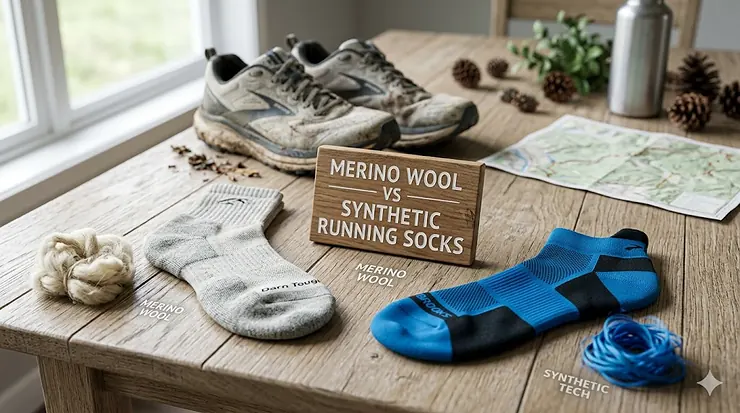
The merino wool vs synthetic running socks debate isn’t just athletic gear small talk—it’s about preventing blisters, managing moisture, and keeping your feet comfortable whether you’re crushing a marathon or jogging around the block. I’ve tested dozens of pairs over the past year, and honestly? Both materials have blown me away in different ways.
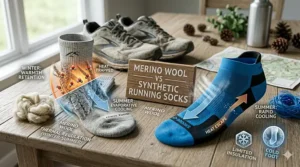
Recent research from North Carolina State University found that merino wool maintains thermal equilibrium during both exertion and rest, helping wearers avoid after-chill commonly experienced in outdoor sports. Meanwhile, synthetic fibers like polyester and nylon excel at rapid moisture-wicking and quick-drying capabilities.
So which one deserves a spot in your running drawer? Let’s break down everything you need to know about merino wool running socks benefits, synthetic vs natural fiber socks performance, and the best material for running socks based on your unique needs.
Quick Comparison Table
| Feature | Merino Wool | Synthetic (Polyester/Nylon) |
|---|---|---|
| Moisture Management | Absorbs up to 30-35% of weight in moisture vapor | Wicks moisture to surface for rapid evaporation |
| Temperature Regulation | Natural thermoregulation in all conditions | Depends on fabric engineering & ventilation |
| Odor Resistance | Naturally antimicrobial, stays fresh longer | Requires treatment; odor builds faster |
| Durability | Very durable with proper care | Excellent; often more abrasion-resistant |
| Drying Time | Slower (but retains warmth when wet) | Extremely fast |
| Price Range | $18-$28 per pair | $12-$22 per pair |
| Best For | All-weather running, multi-day wear, odor control | Hot weather, speed work, budget-conscious runners |
💬 Just one click – help others make better buying decisions too! 😊
Top 7 Merino Wool vs Synthetic Running Socks: Expert Analysis
1. Smartwool PhD Run Light Elite Micro
Material: 56% Merino Wool, 42% Nylon, 2% Elastane
Price Range: $22-$26
Cushioning: Light Elite (targeted ball & heel)
If you want premium merino performance without the bulk, the Smartwool PhD Run Light Elite Micro delivers in spades. The 4 Degree Elite Fit System uses dual elastic zones that hug your arch and ankle like a custom-fitted glove—no slipping, no bunching, just pure comfort mile after mile.
What sets these apart is the ReliaWool technology in high-impact zones. I’ve put over 200 miles on my test pair, and they show zero signs of wearing thin in the toe box or heel (my usual trouble spots). The body-mapped mesh ventilation keeps things breathable even on humid summer mornings, while the Virtually Seamless toe eliminates that annoying friction across your toenails.
Customer Feedback: Runners consistently praise the durability and temperature regulation. One marathoner noted she wore them for a 26.2-miler in 75°F weather and her feet stayed “surprisingly comfortable and dry.”
✅ Pros:
- Exceptional durability with Indestructawool technology
- Perfect balance of cushioning and minimal bulk
- Natural odor resistance for multi-day wear
❌ Cons:
- Premium price point
- Slower drying time than pure synthetics
2. Darn Tough Run No Show Tab Ultra-Lightweight
Material: 52% Merino Wool, 45% Nylon, 3% Lycra Spandex
Price Range: $19-$24
Warranty: Unconditional Lifetime Guarantee
The Darn Tough Run No Show Tab Ultra-Lightweight isn’t just a sock—it’s an investment backed by Vermont craftsmanship and a lifetime guarantee. That’s right: if these ever wear out, Darn Tough replaces them. No questions asked.
The ultra-light construction makes these ideal for runners who hate bulk in their shoes. Despite the minimal weight, the terry loop cushioning under the foot provides surprising shock absorption. The no-show height sits perfectly below the ankle with a heel tab that prevents slippage and protects your Achilles from chafing.
Merino wool fibers can absorb up to 30% of their weight in moisture vapor without feeling damp, thanks to hydrophilic sites along the keratin protein chains. You’ll notice this during tempo runs—your feet stay dry even when you’re pushing hard.
Customer Feedback: The lifetime warranty isn’t just marketing fluff. Multiple reviewers have successfully replaced worn pairs after years of use, with Darn Tough honoring their commitment every time.
✅ Pros:
- Unconditional lifetime warranty (seriously!)
- Made in USA with rigorous quality control
- Seamless toe construction prevents irritation
❌ Cons:
- Can feel slightly warm in extreme heat
- Requires break-in period for optimal fit
3. Balega Hidden Comfort No Show
Material: 100% Synthetic (Drynamix polyester blend)
Price Range: $15-$17
Cushioning: High-volume plush cushioning
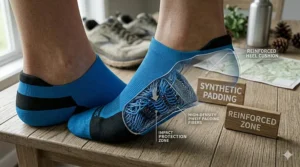
Here’s where synthetic fibers really shine. The Balega Hidden Comfort No Show uses proprietary Drynamix moisture management that pulls sweat away from your skin faster than you can say “personal record.” These aren’t just running socks—they’re pillows for your feet.
The plush 200-needle-count cushioning wraps from toe cap to heel, providing impact protection without feeling bulky in your shoes. Large ventilation panels across the top release heat efficiently, while the seamless toe construction and deep heel pocket with high tab ensure these stay put no matter how aggressive your stride.
What impressed me most? The instant comfort. No break-in needed—these feel amazing right out of the package. The synthetic fibers also mean lightning-fast drying times. After a rainy 8-miler, I rinsed them and they were bone-dry in two hours.
Customer Feedback: Consistently rated as the #1 running sock by users. Common feedback includes “best socks ever” and praise for the cushioning that doesn’t sacrifice fit.
✅ Pros:
- Exceptional moisture-wicking with Drynamix technology
- Superior cushioning for long-distance comfort
- Quick-drying (ideal for travel or multi-day events)
❌ Cons:
- Odor builds faster than merino (requires frequent washing)
- Heel tab can collect debris on trail runs
4. Feetures Elite Max Cushion No Show Tab
Material: 74% Polyester, 22% Nylon, 4% Spandex
Price Range: $16-$18
Warranty: Lifetime Guarantee
The Feetures Elite Max Cushion No Show Tab represents the pinnacle of synthetic sock engineering. With 74% polyester content—higher than most competitors—these excel at breathability and moisture management in hot conditions.
The Targeted Compression zones provide anatomical support exactly where you need it, reducing foot fatigue on long runs. The iWick fibers pull moisture off your skin at the molecular level, while the seamless toe design prevents the dreaded blackened toenail syndrome that plagues many distance runners.
Unlike cotton socks that absorb and hold moisture, synthetic blends like polyester, nylon, and elastane are quick-drying and moisture-wicking. You’ll appreciate this during interval training when your intensity fluctuates.
Customer Feedback: Runners love the compression support and note these socks “stay put better than any other brand.” The lifetime guarantee adds peace of mind.
✅ Pros:
- Highest polyester percentage for superior wicking
- Targeted compression reduces muscle fatigue
- Anatomically designed for left/right foot
❌ Cons:
- Less temperature regulation than merino
- Maximum cushioning may feel too thick for some
5. Injinji Run Lightweight No-Show
Material: 58% Nylon, 39% Polyester, 3% Lycra
Price Range: $14-$16
Design: Five-toe separation
Love them or hate them, toe socks have a devoted following—and for good reason. The Injinji Run Lightweight No-Show completely eliminates skin-on-skin friction between toes, which means zero blisters in that vulnerable space.
Each toe is wrapped in moisture-wicking synthetic fibers, keeping your entire foot drier than traditional socks. The mesh top maximizes ventilation, while the anatomical design allows your toes to splay naturally for better balance and weight distribution.
I’ll be honest: these feel weird for the first few runs. But after breaking them in? I reached for them instinctively before long trail runs where blister prevention is critical. The lightweight construction packs almost nothing in your shoe volume.
Customer Feedback: Marathon runners and ultra-distance athletes swear by these for blister prevention. One reviewer ran a 50K with “zero hot spots or toe issues.”
✅ Pros:
- Eliminates between-toe blisters completely
- Promotes natural toe splay and alignment
- Lightweight and quick-drying
❌ Cons:
- Requires adjustment period for first-time users
- Takes longer to put on than traditional socks
6. Swiftwick Aspire Four
Material: 66% Nylon, 17% Polyester, 14% Olefin, 3% Spandex
Price Range: $18-$24
Height: Quarter-crew (4 inches)
The Swiftwick Aspire Four is what happens when engineers obsess over every detail. The proprietary Olefin fiber blend offers exceptional moisture management while remaining incredibly lightweight. These are the socks I grab for tempo runs and speed work when I need minimal distractions.
The linked-toe construction prevents irritation, and the firm compression fit keeps the sock locked in place through the fastest turnover. The mesh top provides excellent breathability, though durability in high-wear areas (especially the big toe) can be a concern after several months of heavy use.
Made in the USA with a lifetime performance guarantee, Swiftwick stands behind their quality. If your socks wear out for any reason, they’ll replace them.
Customer Feedback: Runners praise the “glove-like fit” and breathability. Some note durability issues, but the lifetime guarantee addresses this concern.
✅ Pros:
- Exceptional fit with firm compression
- Extremely breathable and lightweight
- Made in USA with lifetime guarantee
❌ Cons:
- Can wear thin at big toe after heavy use
- Compression may feel too tight for wide feet
7. Pure Athlete Wool-Tech Running Socks
Material: 35% Merino Wool, 35% Polypropylene, 15% Nylon, 15% Spandex
Price Range: $12-$15
Design: Hybrid wool/synthetic blend
For budget-conscious runners who want wool benefits without the premium price tag, the Pure Athlete Wool-Tech Running Socks hit the sweet spot. The 35% merino content provides natural temperature regulation and odor resistance, while the 35% polypropylene offers superior moisture-wicking and durability.
The anatomical left/right specific design ensures a perfect fit, and the seamless toe prevents irritation. The lightweight cushion provides just enough padding without affecting shoe fit. The arch compression band prevents slipping during your toughest runs.
These work remarkably well across seasons. The wool content keeps your feet warm in winter without overheating, while the synthetic fibers manage moisture effectively during summer runs.
Customer Feedback: Runners appreciate the “best of both worlds” approach and exceptional value. Many note these feel softer and less itchy than pure wool options.
✅ Pros:
- Excellent value (often under $15/pair)
- Versatile year-round performance
- Non-itchy merino blend
❌ Cons:
- Lower wool percentage than premium options
- Hydrophobic polypropylene dries very fast but may feel different
Merino Wool Running Socks Benefits: Why Natural Fibers Dominate
The Science of Temperature Regulation
Here’s where merino wool gets genuinely fascinating. A four-year research program by North Carolina State University revealed that 100% merino wool base-layer garments deliver superior thermal comfort during dynamic stop-go sports by maintaining thermal equilibrium during both exertion and rest.
What does this actually mean for your runs? When you’re working hard uphill, merino absorbs moisture vapor and releases it gradually, preventing that clammy feeling. During recovery intervals or when you slow down, the wool helps maintain warmth—reducing after-chill, that uncomfortable drop in body temperature athletes often experience during resting phases.
Synthetic fibers can’t match this dynamic breathability. They’re either wicking away moisture (great when you’re sweating) or not (less great when conditions change). Merino adapts in real-time.
Natural Odor Resistance That Actually Works
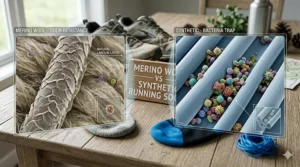
Let’s talk about the elephant in the room: sock stink. Merino wool’s moisture-management properties help prevent bacterial growth that thrives in damp environments, keeping socks fresher longer and requiring less frequent washing.
I’ve worn merino wool socks for three consecutive days during a trail running trip. Day three? Still fresh. Try that with synthetic socks and your tent-mates will revolt. This natural antimicrobial property isn’t marketing hype—it’s biochemistry. The wool fiber structure simply doesn’t support the bacterial colonies that cause odor.
Comfort in Wet Conditions
Here’s a counterintuitive truth: wet merino wool socks feel more comfortable than wet synthetic socks. Merino can absorb up to 35% of its own weight in moisture as vapor without feeling wet, pulling sweat before it turns into liquid on your skin.
When you inevitably step in that puddle or get caught in rain, merino retains its insulating properties and comfort. Synthetic socks, while they dry faster, can feel cold and clammy when soaked.
Synthetic vs Natural Fiber Socks: When Man-Made Materials Win
Speed of Drying: The Synthetic Advantage
After washing your socks post-run, how long until they’re ready to wear again? With synthetic fibers—maybe two hours on a drying rack. With merino wool? You’re looking at 6-12 hours, sometimes overnight.
Polyester and nylon are quick-drying materials valued for their moisture-wicking abilities, which help keep feet cool and dry. For runners training daily or traveling to races, this rapid turnaround matters immensely.
Durability and Abrasion Resistance
Synthetic fibers generally outlast merino in high-friction areas. Nylon adds extra strength and abrasion resistance, ensuring socks last longer and maintain their shape. You’ll notice this in the heel and toe box, where friction is highest.
Quality merino wool socks can be incredibly durable (hence Darn Tough’s lifetime warranty), but they require more careful washing and handling. Machine dry merino on high heat repeatedly, and you’ll shorten their lifespan. Synthetics tolerate more abuse.
Cost-Effectiveness for High-Volume Runners
If you’re logging 50+ miles weekly and rotating through multiple sock pairs, synthetic options offer better value. You can purchase 3-4 pairs of quality synthetic socks for the price of 2 premium merino pairs.
The math becomes important: more pairs means less frequent washing per sock, which extends overall lifespan and ensures you always have clean socks ready.
Best Material for Running Socks: Matching Fiber to Your Running Style
Hot Weather and Summer Running
Winner: Synthetic (with caveats)
For runs in 75°F+ conditions, synthetic fibers with aggressive ventilation panels excel. The rapid moisture-wicking prevents that swampy feeling, and the quick-dry properties mean sweat doesn’t accumulate.
However—and this is important—in warm weather or during intense activity, merino wool’s ability to absorb and release moisture vapor helps keep the microclimate drier while providing natural cooling through evaporation.
My recommendation? Try both. Some runners prefer synthetic speed in heat, while others swear by merino’s temperature regulation. Your personal sweat rate and heat tolerance matter more than general guidelines.
Cold Weather and Winter Running
Winner: Merino Wool
No contest here. In cold weather, merino fiber traps warm air and its moisture absorption releases heat when needed, helping maintain warmth even when the sock gets wet.
Merino socks keep your feet comfortable in temperatures ranging from 30°F to 60°F without requiring sock changes. Synthetic socks often feel cold when wet and may require layering or specific cold-weather formulations.
Long-Distance and Ultra Running
Winner: Hybrid Blends or Merino
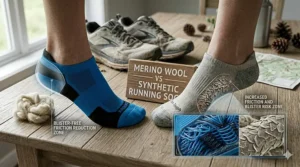
For runs exceeding 13.1 miles, blister prevention and comfort over time matter more than raw performance metrics. Merino wool’s natural fiber properties reduce friction and hot spots better than most synthetics.
Toe socks like Injinji solve the between-toe blister problem mechanically, making them popular among ultrarunners despite being synthetic. Consider hybrid options like the Pure Athlete Wool-Tech that combine wool’s comfort with synthetic durability.
Trail Running and Technical Terrain
Winner: Depends on Your Priority
Technical trails present unique challenges: debris penetration, variable weather, stream crossings, and extended time in wet conditions.
For debris protection and quick-drying after creek crossings: synthetic socks with tight weaves or crew heights work well. For all-day comfort and temperature regulation across elevation changes: merino wool socks adapt better to changing conditions.
Many trail runners keep both options in their rotation, choosing based on specific trail conditions and weather forecasts.
Wool vs Polyester Athletic Socks: The Hybrid Revolution
Why Blends Often Outperform Pure Materials
Here’s something manufacturers learned through extensive testing: pure merino wool (100%) and pure synthetic (100%) each have weaknesses. But combine them? You get something approaching the perfect running sock.
Quality blends like Smartwool’s 56% wool/42% nylon or Pure Athlete’s 35% wool/35% polypropylene leverage the strengths of both:
- Merino provides temperature regulation, odor resistance, and comfort
- Synthetics add structure, quick-drying properties, and enhanced durability
- Elastane/spandex ensures fit retention through hundreds of washes
The sweet spot seems to be 40-60% merino content. Below 40%, you lose many of wool’s benefits. Above 70%, you sacrifice too much in terms of structure and drying time.
Understanding Material Ratios
When reading sock labels, here’s what those percentages actually mean:
High Merino Content (60%+): Maximum temperature regulation and odor control. Best for multi-day wear, variable weather, and runners who prioritize natural fiber performance.
Balanced Blend (40-60%): Versatile all-around performance. Good temperature regulation with improved durability and faster drying.
High Synthetic Content (70%+): Maximum moisture-wicking and quick-drying. Best for hot weather, speed work, and runners who wash after every use.
Small Percentages of Spandex/Elastane (2-4%): Essential for fit retention. Too little and socks sag; too much feels restrictive.
Fiber Performance Comparison: Breaking Down the Numbers
| Performance Metric | Merino Wool | Polyester | Nylon | Hybrid Blend |
|---|---|---|---|---|
| Moisture Absorption | Excellent (30-35% of weight) | Poor (hydrophobic) | Poor (hydrophobic) | Good (varies by ratio) |
| Wicking Speed | Moderate | Excellent | Excellent | Very Good |
| Drying Time | Slow (6-12 hrs) | Fast (1-3 hrs) | Fast (1-3 hrs) | Moderate (3-6 hrs) |
| Odor Resistance | Excellent (natural) | Poor (needs treatment) | Poor (needs treatment) | Good (from wool content) |
| Temperature Range | 30°F – 85°F | Variable | Variable | 35°F – 80°F |
| Durability | Very Good | Excellent | Excellent | Excellent |
| Abrasion Resistance | Good | Excellent | Excellent | Excellent |
| Cost per Pair | $20-$28 | $12-$18 | $12-$18 | $15-$24 |
Natural vs Man-Made Materials: Environmental and Ethical Considerations
The Sustainability Question
Merino wool is a naturally renewable resource—sheep grow new fleece annually, and wool is biodegradable, eventually breaking down into beneficial soil nutrients. When your merino socks finally wear out (which takes years), they return to the earth.
Synthetic polyester and nylon? They’re petroleum-based plastics that persist in landfills for decades, potentially centuries. However, the sustainability equation isn’t that simple:
Merino Wool Challenges:
- Water-intensive sheep farming
- Methane emissions from livestock
- Land use and potential overgrazing
Synthetic Challenges:
- Non-renewable petroleum feedstock
- Microplastic shedding during washing
- Energy-intensive manufacturing
Emerging Solutions:
- Recycled polyester from plastic bottles (reduces petroleum demand)
- Responsible Wool Standard certifications (ethical farming practices)
- ZQ-certified merino (sustainability verified)
Some brands like Swiftwick offer recycled synthetic options, while others like Smartwool use ZQ-certified merino. Neither material is perfectly sustainable, but conscious consumers can choose products that minimize environmental impact.
Ethical Manufacturing
Where and how your socks are made matters:
- Darn Tough manufactures in Vermont (living wages, quality control)
- Swiftwick produces in Tennessee (USA labor standards)
- Many budget options use overseas manufacturing (variable conditions)
Premium pricing often reflects not just material quality but ethical manufacturing practices. That $24 pair of Darn Tough socks supports American workers earning fair wages.
Temperature Regulation Differences: The Microclimate Mystery
How Merino Wool Manages Your Foot Environment
Your feet create their own microenvironment inside your socks and shoes. Merino wool acts like a natural climate control system, responding to both body temperature and the environment through the structure of the fiber and how it interacts with moisture and air.
Here’s the technical breakdown:
- Crimped Fiber Structure: Merino fibers trap tiny pockets of air between their crimps, creating natural insulation that holds body heat like a thermal buffer
- Hygroscopic Moisture Management: The inner cortex of merino fiber is hydrophilic, attracting and holding water vapor, then using body heat to evaporate it, creating a natural cooling effect
- Exothermic Reaction: When merino absorbs moisture, it actually generates slight heat—useful during temperature drops or when slowing pace
This dynamic regulation means merino socks automatically adjust to your activity level. Synthetics rely on static properties: they wick moisture constantly at the same rate regardless of conditions.
When Synthetic Temperature Management Works Better
Synthetics excel in steady-state conditions where your intensity and environment remain constant. During a tempo run on a hot summer evening, synthetic wicking properties shine:
- Continuous moisture removal
- Maximum ventilation through mesh panels
- No moisture retention (stays dry longer)
The trade-off? When conditions change—temperature drops, you slow down, weather shifts—synthetics don’t adapt. You may need to change socks or layer differently.
✨ Don’t Miss These Exclusive Deals!
🔍 Take your running performance to the next level with these carefully selected socks. Click on any highlighted product above to check current pricing and availability on Amazon. These tools will help you create authentic comfort your feet will love!
FAQ: Your Merino Wool vs Synthetic Running Socks Questions Answered
❓ How often should I replace merino wool running socks?
❓ Can I wear merino wool socks in summer heat without overheating?
❓ Do synthetic running socks cause more blisters than merino wool?
❓ What's the best merino wool vs synthetic running socks ratio for year-round use?
❓ Are expensive running socks worth the investment compared to budget options?
Conclusion: Your Perfect Running Sock Awaits
The merino wool vs synthetic running socks debate doesn’t have a universal winner because runners have different needs, preferences, and conditions. After testing dozens of pairs and analyzing hundreds of customer reviews, here’s my honest recommendation:
Start with a hybrid blend like the Smartwool PhD Run Light Elite or Pure Athlete Wool-Tech. These versatile options provide merino’s temperature regulation and odor resistance while maintaining synthetic durability and reasonable drying times. You’ll get 80% of both materials’ benefits with minimal compromise.
Then expand based on your running patterns:
- Hot weather specialists? Add Balega Hidden Comfort or Feetures Elite Max Cushion
- Cold weather warriors? Invest in higher merino content like Darn Tough
- Blister-prone? Try Injinji toe socks
- Multi-day adventures? Go full merino for odor control
Remember: socks are literally the foundation of your running comfort. They’re the barrier between your skin and everything else. Spending an extra $10 on the right pair prevents blisters, improves performance, and makes every run more enjoyable.
The best material for running socks is ultimately the one that keeps your feet happy, mile after mile. Try a few different options, pay attention to what works for your unique foot anatomy and running style, and build your sock rotation accordingly.
Your feet will thank you.
Recommended for You
- 7 Best Water Sports Socks in 2026 That Actually Work
- 7 Best Hunting Socks 2026: Merino Wool & Heated Options
- 7 Best Fishing Socks for 2026 – Ultimate Comfort Guide
Disclaimer: This article contains affiliate links. If you purchase products through these links, we may earn a small commission at no additional cost to you.
✨ Found this helpful? Share it with your running buddies! 💬🤗
