In This Article
You’ve probably scrolled past compression socks a hundred times on Amazon, dismissed them as “something my grandfather wears,” and kept looking. Here’s what those quick scrolls are costing you: hours of unnecessary leg fatigue, preventable swelling after long flights, and the nagging discomfort that follows an 8-hour desk shift.
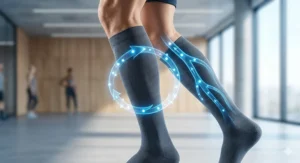
The 8-15 mmhg compression socks for men aren’t medical-grade devices reserved for post-surgery recovery — they’re the everyday performance enhancers that office workers, frequent flyers, and active professionals are discovering actually work. That mild 8-15 mmHg pressure range sits in the sweet spot where therapeutic benefit meets all-day wearability. Unlike the tighter 20-30 mmHg socks that can feel restrictive if you’re not used to compression, these provide just enough graduated pressure to help blood flow from your ankles back toward your heart without feeling like you’re wrestling into shapewear.
What most people overlook about this compression level is how it prevents problems before they start. Research from the Cleveland Clinic shows that graduated compression works by applying pressure strongest at the ankle and gradually decreasing as it moves up the leg — exactly what your circulatory system needs when you’re sitting or standing for extended periods. But finding the right pair means sorting through dozens of brands making identical claims, which is exactly why we’ve done the research for you.
In this expert analysis, we’re breaking down the top 7 men’s light compression socks that actually deliver on their promises, from budget-friendly multi-packs perfect for daily rotation to premium dress options that look sharp under business attire. Whether you need professional men’s hosiery for the office or athletic support for weekend activities, this guide cuts through the marketing fluff to show you which products justify their price tags and which ones you should skip.
Quick Comparison Table: At-a-Glance Overview
| Product | Type | Price Range | Best For | Key Feature |
|---|---|---|---|---|
| JOBST ACTIVA Men’s Dress | Dress Sock | $18-$25/pair | Business professionals | Classic ribbed pattern |
| JOBST ACTIVA Athletic | Athletic | $20-$28/pair | Active lifestyle | Moisture-wicking fabric |
| Truform Men’s Dress 1942 | Dress Sock | $12-$18/pair | Daily office wear | USA-made quality |
| Pembrook 6-Pack Cotton Blend | Multi-pack | $25-$35/pack | Value buyers | 55% cotton comfort |
| Dr. Motion 6-Pack | Multi-pack | $20-$30/pack | Everyday rotation | 3-zone compression |
| JOBST ACTIVA SoSoft | Casual/Dress | $20-$26/pair | Sensitive skin | Extra-soft ribbed knit |
| Y2Y2 3-Pack | Budget Athletic | $15-$22/pack | First-time users | Ultra-smooth toe seam |
Looking at this comparison, the pattern that emerges is clear: if you need just one pair for occasional business travel, the JOBST ACTIVA Men’s Dress delivers premium construction that justifies the per-pair cost. But if you’re wearing compression daily — commuting, standing at work, or managing mild swelling — the Pembrook or Dr. Motion 6-packs offer better cost-per-wear value without sacrificing the therapeutic benefit. The Truform 1942 splits the difference nicely for those who want quality dress socks without paying premium brand prices.
💬 Just one click — help others make better buying decisions too! 😊
Top 7 8-15 mmhg Compression Socks for Men — Expert Analysis
1. JOBST ACTIVA Men’s Dress Compression Socks — The Business Professional’s Choice
If you’ve ever watched someone fumble with ill-fitting dress socks during a meeting, you understand why the JOBST ACTIVA Men’s Dress line exists. This isn’t just a compression sock trying to pass as business attire — it’s a genuine dress sock that happens to provide graduated support. The durable lightweight fabric features that classic ribbed look your non-compression dress socks have, which means they disappear under your suit pants rather than announcing themselves.
What sets this model apart from cheaper alternatives is the graduated compression engineering. JOBST applies maximum pressure at the ankle (that full 8-15 mmHg) and decreases it progressively up the leg, which is exactly how compression therapy is supposed to work. In practice, this means your legs feel noticeably lighter after a full day of meetings, and that ankle swelling that typically shows up by 3 PM stays minimal. The closed-toe construction with reinforced heel pocket adds durability where dress socks typically fail first — a practical detail the spec sheet won’t mention but your wallet will appreciate.
For whom is this ideal? The business traveler flying three times monthly. The consultant spending 10 hours daily on client sites. Anyone who needs their compression to look as professional as their presentation. These socks work particularly well if you’re transitioning from regular dress socks to compression and want something that doesn’t feel like a medical device. Customer feedback consistently highlights the comfort level — most users forget they’re wearing compression until they notice their legs still feel fresh at day’s end.
Pros:
✅ Classic ribbed pattern indistinguishable from premium dress socks
✅ Graduated compression precisely calibrated for 8-15 mmHg
✅ Reinforced construction at high-wear points extends lifespan
Cons:
❌ Higher per-pair cost than multi-pack alternatives
❌ Limited color options (primarily black, navy, brown)
Price-wise, expect to find these in the $18-$25 range depending on size and color. That’s premium territory, but the construction quality means you’re replacing these annually rather than quarterly like budget dress socks. For the professional who prioritizes appearance and comfort equally, they’re worth the investment.

2. JOBST ACTIVA Athletic 8-15 mmHg — Performance Meets Recovery
The JOBST ACTIVA Athletic line solves a problem most recreational athletes don’t know they have until they try compression: inadequate recovery support. These aren’t the thin, dress-sock-style compression you’ll wear to the office — they feature a thicker material that combines softness with serious moisture management, exactly what you need when you’re actually moving rather than sitting.
The graduated compression here does double duty. During activity, it provides support that helps reduce muscle vibration and fatigue — that subtle shaking in your calves during mile 8 of a run. Post-activity, the compression continues working to enhance blood flow and speed the removal of metabolic waste products your muscles produced. Harvard Health research notes that compression’s primary benefit may be in recovery rather than performance enhancement, which is exactly where these socks shine.
This model targets the active professional who isn’t training for marathons but wants to feel better after weekend hikes, gym sessions, or recreational sports. If you’re standing at your kid’s soccer games for hours or volunteering at community events that keep you on your feet, these provide that support without the medical-device aesthetic. The moisture-wicking treatment is particularly noteworthy — cheaper athletic compression tends to get clammy during extended wear, but JOBST’s fabric engineering keeps things breathable even during multi-hour activities.
Customer reviews frequently mention the “barely there” feel during workouts combined with noticeable reduction in next-day soreness. That balance is harder to achieve than it sounds — many athletic compression socks either restrict movement or provide so little support they’re essentially placebo.
Pros:
✅ Thick, cushioned construction optimized for movement and impact
✅ Moisture-wicking treatment prevents the clammy feeling during activity
✅ Effective for both during-exercise support and post-exercise recovery
Cons:
❌ Too thick for dress shoes or tight-fitting footwear
❌ Premium pricing around $20-$28 per pair
For the recreational athlete who takes recovery seriously but doesn’t need medical-grade compression, these represent smart value. You’re paying for JOBST’s 65+ years of compression engineering experience, and it shows in the construction details.
3. Truform Men’s Dress Compression Socks Model 1942 — American-Made Value
The Truform 1942 proves that “affordable” and “quality” aren’t mutually exclusive when it comes to men’s light compression socks. Manufactured in the USA under physician-prescribed compression therapy standards, Truform delivers therapeutic-grade support at prices that make daily rotation practical. The Model 1942 specifically targets the dress wear market with its rib-knit styling that resembles traditional over-the-calf dress socks.
What you’re getting here is legitimate graduated compression technology — five intervals of therapeutic pressure greatest at the ankle, gradually decreasing up the leg. This isn’t marketing speak; it’s the medical standard for how compression should function. In everyday terms, this means you get the same circulatory benefits as premium brands at roughly 60% of the cost. The difference shows up not in the compression efficacy but in details like fabric hand-feel and color retention after multiple washes.
Truform targets the value-conscious buyer who needs compression regularly enough that per-pair pricing matters. If you’re wearing these 5 days weekly for work, buying 3-4 pairs of Truform costs less than 2 pairs of premium brands while delivering comparable therapeutic benefit. They work particularly well for professions involving extended standing — retail, teaching, hospitality — where you need the support but can’t justify luxury pricing. The soft-top comfort band with its flexible snug fit keeps the socks positioned correctly without that tourniquet feeling cheaper compression can create at the top band.
Users consistently note these socks “do the job” without fanfare — they reduce leg fatigue, minimize ankle swelling, and maintain their compression properties wash after wash. Where they compromise versus premium options is in aesthetic refinement and fabric luxury, not in the core compression function.
Pros:
✅ Made in USA with quality control standards exceeding import competitors
✅ Significantly lower per-pair cost than premium brands
✅ Latex-free construction suitable for sensitive skin
Cons:
❌ Fabric hand-feel less refined than premium options
❌ Color selection more limited than fashion-focused brands
Pricing typically falls in the $12-$18 range per pair, which positions these perfectly for building a working rotation. If you need 5-7 pairs to get through a work week, Truform makes that affordable without sacrificing the therapeutic benefit.
4. Pembrook Light Compression Socks 6-Pack — The Cotton Comfort Champion
The Pembrook 6-Pack addresses the single biggest complaint about compression socks: they’re overwhelmingly synthetic. When most brands offer 90-100% polyester/nylon blends, Pembrook’s 55% cotton composition stands out immediately. That cotton content translates to actual breathability — your feet stay cooler and drier, and that clammy feeling that makes you want to rip off synthetic socks at 2 PM largely disappears.
After 40 years manufacturing compression socks specifically for diabetic patients, Pembrook understands that therapeutic benefit means nothing if the socks are uncomfortable enough that people won’t wear them. Their 8-15 mmHg graduated compression puts mild pressure around your legs to help blood vessels work more efficiently, preventing that pooling sensation and the swelling that accompanies it. But unlike medical-looking compression, these come in actually appealing designs — polka dots, stripes, argyle patterns that you’d wear by choice rather than necessity.
The 6-pair value pack positioning is strategic. At the $25-$35 range for six pairs, you’re looking at roughly $4-$6 per pair — lower than almost any quality compression on the market. This makes daily rotation realistic; you’re not wearing the same pair three days running because you only own two. For guys managing mild swelling from long commutes, desk jobs, or standing work, having a full week’s supply removes the friction that causes people to abandon compression therapy.
Customer feedback heavily emphasizes the machine-washable durability — these withstand repeated washing without losing compression strength or shape. That’s critical because compression socks that stretch out after 10 washes might be cheap per pair, but they’re expensive per wearing once they stop providing actual compression.
Pros:
✅ 55% cotton blend provides authentic breathability synthetic socks can’t match
✅ Vibrant, fade-resistant patterns make these socks you want to wear
✅ Exceptional cost-per-pair value in a 6-pack format
Cons:
❌ Cotton content means slightly longer drying time than synthetics
❌ Pattern variety may not suit ultra-conservative dress codes
For anyone prioritizing all-day comfort and natural fiber feel over dress-sock aesthetics, the Pembrook 6-pack represents outstanding value. You’re getting legitimate graduated compression at a price point that makes daily use practical rather than aspirational.
5. Dr. Motion Men’s Compression Socks 6-Pack — Three-Zone Compression Technology
Dr. Motion built their reputation on a specific technical innovation: three zones of compression from ankle to calf ensuring proper pressure distribution at each stage of the leg. This isn’t marketing fluff — the graduated support is engineered to match how your circulatory system actually functions, with different pressure needs at different points. The practical result is compression that reduces blood clot risk and varicose vein formation more effectively than single-zone pressure.
These socks target the therapeutic use case directly. They’re designed for relief from common conditions — plantar fasciitis discomfort, edema, that tired aching leg feeling after extended sitting or standing. The 8-15 mmHg compression level sits in the “Class I mild compression” medical category, which means you’re getting actual therapeutic benefit that doctors recommend, not just tight socks. The three-zone knitting pattern creates different compression levels: maximum at the ankle where blood tends to pool, moderate at the arch for support, and graduated at the calf to promote upward blood flow.
Dr. Motion’s 6-pack format at $20-$30 makes these particularly appealing for occupations where compression isn’t optional — nurses, flight attendants, retail workers, anyone whose job description includes “must be comfortable standing for extended periods.” Having six pairs means you always have clean compression available, which is when consistent use actually delivers cumulative benefits. The soft, stretchy, breathable construction includes non-slip design elements that keep the socks positioned correctly during wear without bunching or sliding.
Customer reviews consistently mention doctor recommendations — many users report their physicians specifically suggested Dr. Motion for managing mild circulation issues. That clinical credibility combined with accessible pricing makes these a logical starting point for men new to compression therapy.
Pros:
✅ Three-zone compression engineering matches circulatory system needs
✅ Tested Class I medical-grade compression at 8-15 mmHg
✅ Six-pair pack ensures consistent daily compression availability
Cons:
❌ Less formal appearance limits business casual usage
❌ Fewer color options than fashion-focused brands
At around $3.50-$5 per pair in the 6-pack, these deliver medical-grade compression at everyday sock pricing. If therapeutic benefit rather than fashion is your primary concern, Dr. Motion offers exceptional value.

6. JOBST ACTIVA SoSoft 8-15 mmHg — The Sensitive Skin Solution
The JOBST ACTIVA SoSoft line exists because standard compression materials irritate sensitive skin. If you’ve experienced that itchy, uncomfortable feeling from synthetic compression socks, the SoSoft addresses it directly with extra-soft ribbed knit construction that feels substantially different from standard compression fabric. This isn’t just marketing softness — the material engineering genuinely reduces skin irritation while maintaining the graduated compression properties.
What makes this model interesting is it occupies the overlap between casual and dress wear. The ribbed design reads as intentional style rather than medical necessity, which means you can wear these with everything from jeans to business casual without them looking out of place. The same compression technology JOBST uses in their medical-grade products — graduated pressure starting at 8-15 mmHg at the ankle and decreasing up the leg — delivers therapeutic benefit without requiring you to own separate compression socks for different occasions.
This sock targets men with skin sensitivity issues who’ve abandoned compression because standard options caused problems. It’s also ideal for those transitioning to compression for the first time; the softer material makes the adjustment period much easier. Customer feedback frequently mentions wearing these all day without the “can’t wait to take them off” feeling that bothers many compression users. The knee-high length with closed toe provides full leg coverage while the SoSoft material prevents that bunching and rolling that happens when compression fabric gets too rigid.
JOBST’s 65+ years of compression therapy experience shows in the details. The non-binding top stays positioned without leaving indentation marks. The reinforced heel pocket means these last longer than fashion socks at the same price point. You’re paying for engineering that makes medical-grade compression genuinely comfortable.
Pros:
✅ Extra-soft ribbed knit construction ideal for sensitive skin
✅ Versatile styling works for both casual and business casual wear
✅ JOBST’s proven graduated compression technology in a comfort-focused design
Cons:
❌ Premium pricing around $20-$26 per pair
❌ Softer material may wear faster than standard compression fabric
For men who’ve tried compression and quit due to comfort issues, or those with known skin sensitivities, the SoSoft offers a legitimate solution. You’re paying more per pair, but if it’s the difference between wearing compression consistently versus abandoning it, the investment pays off.
7. Y2Y2 Knee High 8-15 mmHg 3-Pack — The Budget-Friendly Entry Point
The Y2Y2 3-pack serves one purpose exceptionally well: getting first-time compression users into quality graduated compression without requiring a significant financial commitment. At $15-$22 for three pairs, you’re looking at roughly $5-$7 per pair — entry-level pricing for what’s actually legitimate 8-15 mmHg graduated compression. This makes Y2Y2 perfect for the “I’ll try compression and see if it works for me” buyer who doesn’t want to invest $60-$80 upfront.
The construction focuses on essentials: graduated compression that’s tightest at the ankle and decreases toward the knee, ultra-smooth toe seams that prevent irritation, and soft durable nylon/spandex blend (96%/4%) that’s medical quality without being uncomfortably rigid. These are doctor-recommended for therapeutic treatment — tired achy legs, mild fatigue, pain and stiffness, occupations with long sitting or standing periods. The ergonomic design includes extra toe space for unrestricted movement, which sounds minor until you’ve worn compression socks that squeeze your toes all day.
Y2Y2 targets the exploratory buyer: the guy whose coworker mentioned compression helping with leg fatigue, the traveler who heard compression prevents swelling on long flights, the retail worker considering compression but unwilling to gamble premium money on something he’s never tried. At this price point, the risk is minimal. If compression doesn’t work for you, you’re out $20 rather than $60. If it does work, you’ve discovered an effective solution at minimal cost.
Customer reviews position these as “surprisingly good for the price” — users don’t expect premium performance and are pleasantly surprised when the compression actually works. The three-pack format means you can rotate through the week without rewearing immediately, which is essential for maintaining compression effectiveness and hygiene.
Pros:
✅ Entry-level pricing removes financial barrier to trying compression
✅ Legitimate graduated compression at medical-recommended levels
✅ Three-pack format enables practical rotation schedule
Cons:
❌ Basic construction lacks premium brand refinements
❌ Limited color selection (primarily black)
If you’re compression-curious but commitment-phobic, Y2Y2 offers the lowest-risk entry point. The quality level won’t wow premium sock enthusiasts, but it absolutely delivers functional compression at a price that makes experimentation practical.
How to Use 8-15 mmhg Compression Socks: The First 30 Days
Most guys buy compression socks, wear them once, find them uncomfortable, and abandon them in a drawer. That’s a $30 lesson in why proper usage matters more than product selection. The first 30 days establish whether compression becomes part of your routine or becomes another abandoned fitness gadget.
Week 1: The Break-In Period
Start with 2-4 hour wearing sessions. Yes, even though these are mild 8-15 mmHg compression, your circulatory system needs to adjust to the pressure. Wear them during your morning commute, during the afternoon work stretch, or during evening activities — but don’t go full 12 hours on day one. Your legs will feel different (tighter, more supported) and that sensation is normal.
Put them on correctly: smooth them carefully up your leg without bunching fabric. The heel should sit in the heel pocket, and the top band should rest comfortably below your knee, not cutting into your calf. Incorrect positioning means uneven compression that defeats the therapeutic purpose. If you feel numbness, tingling, or pain, you’ve sized wrong or positioned incorrectly.
Week 2-3: Building Tolerance
Extend wearing time to 6-8 hours daily. This is when you’ll notice the actual benefits: legs feel less tired at day’s end, ankle swelling reduces, that heavy-leg feeling after sitting improves. Track when you typically experience leg fatigue — if it’s usually by 3 PM and you notice it’s now 5 PM, the compression is working.
Establish a washing routine. Compression fabric maintains its elasticity longer with gentle care: hand wash or machine wash on gentle cycle, air dry rather than high heat. Hot dryer temperatures break down elastic fibers faster, shortening the compression lifespan. With proper care, quality 8-15 mmHg socks maintain their compression properties for 3-6 months of regular use.
Week 4+: Full Integration
Now you’re wearing them full days (8-12 hours) regularly. This is when compression delivers its maximum benefit — consistent daily use maintains improved circulation rather than addressing it episodically. Consider owning 5-7 pairs for rotation; you’re more likely to wear compression consistently if you always have clean pairs available.
Common mistakes to avoid: wearing compression overnight (unnecessary for mild compression and restricts natural circulation changes during sleep), wearing torn or stretched-out socks (once compression fabric loses elasticity, therapeutic benefit disappears), and choosing fashion over function (compression that doesn’t fit properly or provide adequate pressure doesn’t work, regardless of appearance).
Common Mistakes When Buying Men’s Compression Socks
The compression sock market is flooded with products making identical claims, which leads smart buyers to make predictable mistakes. Understanding these pitfalls before you buy saves you the hassle and expense of purchasing wrong.
Mistake 1: Assuming All Compression Is Equal
That $8 three-pack from an unknown brand claims “8-15 mmHg compression” just like the $60 JOBST pair. They’re not remotely the same. Graduated compression requires precise engineering — the pressure must be highest at the ankle and decrease progressively up the leg. Cheap compression often provides uniform pressure (or worse, random pressure) that doesn’t match circulatory system needs. When research shows compression works, it’s specifically talking about graduated compression. Random tightness doesn’t deliver therapeutic benefit.
Look for brands with medical compression heritage: JOBST, Truform, Sigvaris. These companies engineer for therapeutic efficacy first, fashion second. Or choose brands like Dr. Motion and Pembrook that specifically call out graduated compression technology and Class I medical ratings. If the product listing doesn’t mention “graduated” compression, be skeptical.
Mistake 2: Ignoring the Fabric Composition
All-synthetic compression gets unbearably hot and clammy during extended wear. Your feet sweat, the moisture stays trapped, and by hour six you’re miserable. Yet most cheap compression is 100% polyester/nylon because it’s cheaper to manufacture. Cotton blends (like Pembrook’s 55% cotton) or moisture-wicking athletic construction (like JOBST Athletic’s treatment) cost more but make all-day wear actually tolerable.
For desk workers and daily office wear, cotton-blend compression provides breathability that matters during 8-10 hour days. For athletic use, technical moisture-wicking fabrics prevent the swamp-foot feeling during and after exercise. Pure synthetic compression has its place (travel, occasional use) but makes poor daily-wear choices.
Mistake 3: Buying for Tomorrow’s Problems Instead of Today’s Needs
The guy with zero circulation issues shouldn’t buy 20-30 mmHg firm compression just because “more pressure must be better.” That’s like buying running shoes two sizes small because “they’ll make me faster.” Compression works when the pressure level matches your actual condition. 8-15 mmHg mild compression targets tired legs, minor swelling, preventative care for occupational hazards. It’s not medical treatment for varicose veins (that requires 15-20 mmHg or higher) or lymphedema (which needs 30-40 mmHg medical-grade).
Buy compression for the condition you actually have, not for hypothetical future problems. If you’re just tired from standing all day, mild compression solves it. If you have diagnosed circulation issues, consult your physician about appropriate compression levels rather than self-diagnosing on Amazon.
Mistake 4: Prioritizing Appearance Over Fit
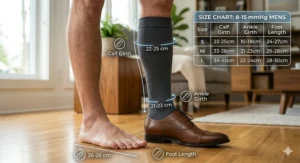
Compression that doesn’t fit doesn’t work. Period. Buying the wrong size because it’s in stock or choosing a style that looks better but sizes incorrectly means you’ve purchased expensive regular socks. Most quality compression brands provide detailed sizing charts based on ankle and calf measurements. Take those measurements, consult the chart, and buy what fits your actual measurements, not what you think your size should be.
For most men, shoe size alone isn’t sufficient for compression sock sizing. Your calf circumference matters significantly — wide calf models exist specifically for guys with larger calves. Compression that’s too tight causes numbness and discomfort; too loose provides inadequate pressure. Proper fit is the difference between compression that works and compression that’s waste of money.
8-15 mmhg Compression vs. Regular Dress Socks: The Real Difference
The business casual compression sock question comes up constantly: are these actually better than just wearing quality dress socks? The answer depends entirely on why you’re considering compression in the first place.
Regular dress socks provide coverage, warmth, and protection from shoe friction. They’re passive garments with zero therapeutic function. Good dress socks might have cushioning, arch support, or moisture-wicking properties, but they don’t actively do anything to your circulatory system. You wear them, they exist on your feet, and your legs perform exactly as they would have regardless.
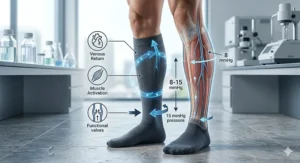
8-15 mmhg compression socks for men actively change how your circulatory system functions throughout the day. The graduated pressure — tighter at the ankle, gradually decreasing up the leg — creates a pressure gradient that helps push blood from your extremities back toward your heart. This matters when you’re sitting or standing for extended periods because gravity naturally causes blood to pool in your lower legs. That pooling is what creates the tired, achy, heavy feeling by end-of-day, the visible ankle swelling, and over time, the increased risk of varicose veins.
The therapeutic benefit isn’t immediate or dramatic like taking pain medication. It’s subtle and cumulative. After wearing compression consistently for 2-3 weeks, you notice your legs feel less fatigued at 5 PM than they used to. The swelling you typically get after long flights doesn’t appear or is significantly reduced. That “heavy leg” sensation after a full day standing resolves faster.
For whom does this matter? If you sit at a desk 8-10 hours daily, compression helps counteract the circulation problems prolonged sitting causes. If your job involves extended standing — retail, teaching, hospitality — compression reduces the fatigue and swelling that accumulates. If you travel frequently, compression prevents the deep vein thrombosis risk and uncomfortable swelling associated with long flights. If you’re noticing early signs of circulation issues like persistent ankle swelling or leg fatigue, mild compression addresses them before they require medical intervention.
Regular dress socks work perfectly fine if you’re young, active, have no circulation concerns, and don’t spend extended time sitting or standing. Once any of those conditions change, business casual compression socks provide measurable benefit that regular socks simply cannot deliver regardless of their quality or price.
The appearance difference is negligible. Quality compression dress socks like JOBST ACTIVA or Truform 1942 look identical to premium regular dress socks. Unless someone’s inspecting your hosiery closely, they won’t know you’re wearing compression. The feel difference is subtle — slight snugness that becomes comfortable within hours. The functional difference is significant if you’re experiencing the conditions compression addresses.
Real-World Scenario Guide: Matching Socks to Your Situation
Abstract benefits don’t help when you’re scrolling through 200 compression sock options on Amazon. These scenarios match specific use cases to specific products so you can skip the research paralysis.
Scenario 1: The Road Warrior Executive
You: Flying 3-4 times monthly, presenting to clients, 10-12 hour days in business attire
Choose: JOBST ACTIVA Men’s Dress 8-15 mmHg
Why: You need compression that reads as business professional, not medical device. The ribbed dress sock aesthetic disappears under suit pants while the graduated compression prevents the ankle swelling and leg fatigue that accumulates during travel days. Pack 2-3 pairs so you always have clean compression for flights and client days. The premium per-pair cost justifies itself through extended lifespan — these last 6+ months of heavy travel use versus 2-3 months for cheaper options.
Scenario 2: The Desk Job Commuter
You: 45-minute commute each way, 8 hours at a desk, home to family activities, repeat daily
Choose: Pembrook 6-Pack Cotton Blend
Why: You’re wearing compression daily, so you need cost-effective rotation. The 55% cotton blend prevents the clammy-foot syndrome that hits around 2 PM with synthetic socks. Six pairs means you rotate through the week without re-wearing, which maintains compression effectiveness and hygiene. The variety of patterns adds visual interest to otherwise monotonous office attire. At $4-$6 per pair, these deliver therapeutic benefit at sustainable cost for daily use.
Scenario 3: The Retail/Hospitality Worker
You: 8-10 hours standing, walking 5-8 miles daily across concrete floors, visible leg fatigue by shift end
Choose: Dr. Motion 6-Pack
Why: Your compression needs are therapeutic, not fashion. Three-zone compression engineering specifically addresses the fatigue pattern from extended standing and walking. Medical-grade 8-15 mmHg compression reduces blood pooling and minimizes the swelling that makes your feet feel two sizes larger by shift end. The six-pair format means you can wear fresh compression each shift, which is critical when you’re sweating through socks daily. Budget-friendly pricing makes replacing them every 3 months (high-wear schedule) financially realistic.
Scenario 4: The Weekend Warrior Trying Compression
You: Curious about compression for recreational sports recovery and occasional travel, never tried it before, skeptical about spending big
Choose: Y2Y2 3-Pack
Why: Entry-level pricing removes the financial commitment barrier. At $15-$22 for three pairs, you’re risking minimal money to discover whether compression actually helps your post-workout soreness and travel discomfort. If it works, you’ve found an effective solution at budget pricing and can upgrade to premium brands later if desired. If it doesn’t work for you, you’re out the cost of two craft beers rather than $60+ on premium socks you’ll never wear.
What Professional Men Actually Need: Dress Sock Compression Guide
The office-appropriate leg support question drives 40% of men’s compression purchases. Corporate dress codes haven’t caught up to the reality that therapeutic support doesn’t require medical-looking garments. Here’s how to navigate professional men’s hosiery without looking like you raided your grandfather’s medicine cabinet.
Color Strategy for Business Environments
Black and navy compression socks work in 90% of professional situations — they’re conservative, match typical business attire, and look intentionally coordinated rather than incidentally compression. Brown and charcoal options expand your range for business casual environments without entering dangerous territory. What you want to avoid: white dress compression (screams medical unless you’re healthcare professional), bright colors (save these for weekend wear), patterns that draw attention (polka dots work under jeans, not suits).
JOBST ACTIVA Men’s Dress and Truform 1942 both offer the conservative black/navy/brown palette in ribbed patterns that read as intentional style choices. They look like the dress socks successful executives deliberately select, which means nobody’s questioning why you’re wearing compression.
The Over-the-Calf Requirement
Knee-high compression socks are standard for professional environments because crew-length compression exposes your shins when you sit, cross your legs, or move. That mid-calf gap between sock top and pants hem breaks the visual line and immediately signals “different socks” to anyone paying attention. Over-the-calf length maintains continuous coverage that matches how executive dress socks are supposed to look.
All seven products reviewed here offer knee-high construction specifically to meet this requirement. Length matters more than most guys realize — it’s the difference between compression that blends into professional appearance and compression that announces itself.
The “Compression for First Meetings” Test
If you’d wear these socks to a first client meeting, job interview, or presentation to senior management, they pass the professional threshold. JOBST ACTIVA Dress and Truform 1942 pass easily — they’re indistinguishable from premium dress socks. Pembrook Cotton Blend passes in business casual but might be too casual for ultra-conservative environments. Dr. Motion and Y2Y2 work fine for daily office wear but wouldn’t be first choices for high-stakes professional situations.
Your compression strategy should match your actual professional requirements. If you’re client-facing with conservative dress codes, invest in 3-4 pairs of premium dress compression for important days and supplement with more casual options for routine office work. If you’re business casual or rarely in formal situations, mid-range options like Pembrook or Truform deliver identical therapeutic benefit at lower cost without the aesthetic refinement premium brands provide.
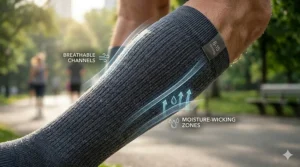
Long-Term Cost & Maintenance: The Total Ownership Picture
That $6 per pair compression sock versus $25 per pair comparison looks straightforward until you factor in actual lifespan and washing costs. The cheaper option isn’t necessarily cheaper after 6 months of regular use.
Compression Lifespan Reality Check
Quality compression socks maintain therapeutic pressure for approximately 3-6 months of daily wear depending on care routine and usage intensity. Premium brands (JOBST, Truform) tend toward the 6-month end with proper care; budget options typically hit 3-4 months before the elastic wears out. Once compression fabric loses its elasticity, you’re wearing expensive regular socks with zero therapeutic benefit.
Do the math on cost-per-wearing rather than cost-per-pair. A $25 JOBST pair worn 5 days weekly for 6 months = roughly 130 wearings = $0.19 per wear. A $7 budget pair lasting 3 months of same usage = 65 wearings = $0.11 per wear. The budget option wins, but not by the margin the sticker price suggests. And that calculation assumes equal compression quality, which is rarely true.
Care Routine Impact on Longevity
The elastic fibers in compression fabric break down faster with: hot water washing, high-heat drying, harsh detergents, and rough handling. Gentle care extends compression lifespan significantly. Hand-washing with mild detergent and air-drying preserves compression properties longest, but most guys aren’t hand-washing socks daily. Realistic compromise: machine wash on gentle cycle in cold water, remove immediately to prevent wrinkles, air dry flat or hang dry.
Premium compression typically withstands washing better because better-quality elastic fibers maintain tension through more cycles. Budget compression often starts losing pressure after 15-20 washes, which is 3-4 weeks of daily rotation. Premium options maintain compression through 40-60 washes, extending lifespan proportionally.
The Hidden Cost of Wrong-Sized Compression
Compression that doesn’t fit properly fails faster. Too-tight compression stretches elastic fibers beyond their optimal range, causing premature breakdown. Too-loose compression never provided adequate therapeutic pressure anyway, making it worthless regardless of lifespan. Proper sizing based on ankle and calf measurements — not just shoe size — means you get the full lifespan value from each pair.
Take accurate measurements before ordering. Most quality brands provide detailed size charts. The five minutes spent measuring properly saves you the money wasted on compression that doesn’t work because it doesn’t fit.
Frequently Asked Questions
❓ Can I wear 8-15 mmhg compression socks for men every day safely?
❓ How long do compression socks need to work effectively?
❓ What's the difference between business casual compression socks 8-15 and athletic compression?
❓ Can dress sock compression help with varicose veins?
❓ Do these compression socks work for office workers who sit all day?
Conclusion: Finding Your Perfect Match in 8-15 mmhg Compression
The perfect compression sock doesn’t exist universally — it exists specifically for your situation. The corporate executive who flies weekly needs different compression than the retail worker standing 8 hours daily needs different compression than the weekend athlete trying compression for the first time. What they all need is legitimate graduated compression at 8-15 mmHg that actually works.
From our analysis, clear patterns emerge. If budget is no object and appearance matters professionally, JOBST ACTIVA Men’s Dress delivers premium construction that justifies its cost. If you need daily rotation at sustainable pricing, Pembrook’s 6-pack or Dr. Motion’s 6-pack offer therapeutic compression at cost-effective per-pair rates. If you’re compression-curious without commitment, Y2Y2’s entry-level 3-pack removes the financial barrier to experimentation.
The therapeutic benefits of professional men’s hosiery aren’t hypothetical — research confirms graduated compression improves circulation, reduces swelling, and prevents the fatigue patterns that accumulate from modern work habits. But compression only works when you actually wear it consistently, which means finding socks comfortable enough for daily use and affordable enough for practical rotation.
Start with your primary use case. Business professional needing dress compression? JOBST ACTIVA or Truform 1942. Daily office wear prioritizing comfort? Pembrook cotton blend. Therapeutic support for standing work? Dr. Motion’s medical-grade engineering. First-time compression user? Y2Y2’s budget entry point. Match the product to your actual needs, and compression transitions from theoretical health product to practical daily benefit.
The legs you have at 60 are determined partly by how you treat them at 30 and 40. Preventative circulation support through 8-15 mmhg compression socks for men isn’t medical intervention — it’s smart maintenance that keeps minor issues minor and prevents preventable problems from developing. Your future self will appreciate the investment.
✨ Don’t Miss These Exclusive Deals!
🔍 Take your leg health to the next level with these carefully selected compression products. Click on any highlighted item to check current pricing and availability on Amazon. These socks will help you maintain comfortable, energized legs your body will thank you for!
Recommended for You
- Best 8-15 mmhg Compression Socks For Women 2026: Top 7 Picks
- 7 Best 8-15 mmHg Compression Socks for Everyday Wear (2026)
- 7 Best 8-15 mmhg Compression Socks That Actually Work (2026)
Disclaimer: This article contains affiliate links. As an Amazon Associate, I earn from qualifying purchases. If you purchase products through these links, we may earn a small commission at no additional cost to you.
✨ Found this helpful? Share it with your friends! 💬🤗
