
In This Article
Ever had a perfect powder day ruined by frozen toes or uncomfortable bunching in your boots? I’ve been there, and trust me, nothing kills the vibe faster than cold, cramped feet. Here’s the thing most riders don’t realize: snowboard socks are the foundation of board boot fit and can make or break your entire day on the mountain.
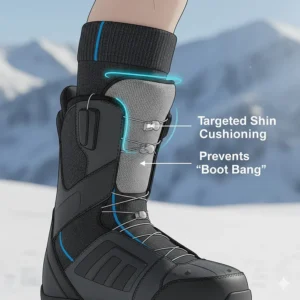
Think of them as the unsung heroes of your snow sport performance setup. While everyone obsesses over boards and bindings, your feet are literally trapped in those boots for hours, dealing with extreme cold, sweat, and constant pressure. Research shows that properly fitted equipment can reduce injury risk up to 8-fold, and socks play a crucial role in that equation. The right pair keeps you warm without overheating, wicks moisture to prevent that soggy-sock feeling, and provides strategic cushioning exactly where you need it.
What makes snowboard socks different from your everyday wool socks? They’re engineered specifically for the unique demands of riding. We’re talking moisture wicking snowboard socks made from merino wool or advanced synthetics, targeted cushioning zones for shin protection, and over-the-calf heights that prevent gaps between your boots and pants. After spending countless days testing the latest models from brands like Smartwool, Darn Tough, and OutdoorMaster, I’ve narrowed down the absolute best options for 2026 that deliver all-day riding comfort no matter your skill level or riding style.
Quick Comparison Table: Top Snowboard Socks at a Glance
| Sock Model | Material | Cushioning | Price Range | Best For |
|---|---|---|---|---|
| Smartwool Full Cushion Iguchi | 56% Merino, 43% Nylon, 1% Elastane | Full | $29-35 | All-around performance |
| Darn Tough Function X Midweight | 58% Merino, 40% Nylon, 2% Lycra | Midweight | $28-32 | Lifetime durability |
| OutdoorMaster Merino Wool 2-Pack | 30% Merino, 65% Acrylic, 5% Spandex | Medium | $22-28 | Budget value |
| FITRELL 2-Pack Ski Socks | 45% Merino, 50% Nylon, 5% Spandex | Full | $20-26 | Extra warmth |
| Pure Athlete Snowboard Socks | Premium Yarn Blend | Midweight | $18-24 | Reinforced support |
| Burton [AK] Endurance | Merino Blend | Targeted | $32-38 | Premium tech |
| Evo Medium Cushion | Polyester Blend | Medium | $16-20 | Spring riding |
💬 Just one click – help others make better buying decisions too! 😊
Top 7 Snowboard Socks: Expert Analysis
1. Smartwool Snowboard Full Cushion Iguchi Pattern OTC Socks
When a sock bears the name of legendary backcountry rider Bryan Iguchi, you know it’s been put through serious testing. The Smartwool Full Cushion Iguchi Pattern delivers exactly what its reputation promises.
Key Specifications:
- Material: 56% Merino Wool, 43% Nylon, 1% Elastane
- Cushioning: Full terry loop throughout
- Height: Over-the-calf (17 inches)
- Price: $29-35
These warm snowboarding socks feature Smartwool’s Indestructawool technology, which reinforces high-wear zones without adding bulk. The full cushioning provides excellent impact absorption on hard landings, while strategic mesh panels on the shin and instep enhance breathability. What really stands out is how they maintain their shape after multiple washes—no stretching, no sagging.
Customer Feedback: Riders consistently praise these for staying warm and dry through full-day sessions. One reviewer mentioned using them for 50+ days without any signs of wear.
✅ Pros: Exceptional durability, perfect warmth balance, stays in place
❌ Cons: Higher price point, may feel thick initially in snug boots
2. Darn Tough Function X Midweight Over-the-Calf
Darn Tough backs these with an unconditional lifetime guarantee—that’s how confident they are. The Function X Midweight hits the sweet spot between warmth and breathability.
Key Specifications:
- Material: 58% Merino Wool, 40% Nylon, 2% Lycra Spandex
- Cushioning: Midweight terry zones
- Height: Over-the-calf
- Price: $28-32
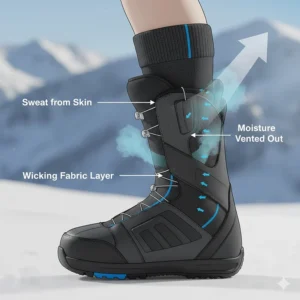
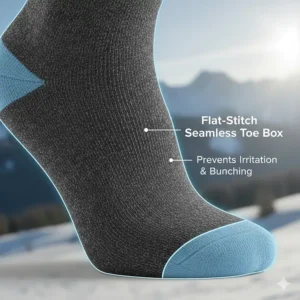
These thermal snowboard socks men women love feature True Seamless toe technology that eliminates friction points completely. The sock incorporates three distinct cushioning zones: extra padding underfoot and on the shin where it matters most, medium zones in secondary areas, and lighter material up top for ventilation. Merino wool’s natural properties allow it to absorb up to 30% of its weight in moisture while still keeping you warm.
Customer Feedback: Multiple riders report these lasting 3+ seasons with heavy use. The compression provides excellent circulation support.
✅ Pros: Lifetime warranty, superior moisture management, perfect compression
❌ Cons: Can feel snug initially, limited color options
3. OutdoorMaster Merino Wool Ski Socks 2/3-Pack
Outstanding value without sacrificing quality—the OutdoorMaster Merino Wool socks deliver performance at a fraction of premium prices.
Key Specifications:
- Material: 30% Merino Wool, 65% Acrylic, 5% Spandex
- Cushioning: Medium terry loops
- Height: High calf with non-slip cuff
- Price: $22-28 (for 2-3 pairs)
Getting 2-3 pairs of cushioned snowboard socks for under $30 seems too good to be true, but OutdoorMaster delivers. The non-slip cuff actually works—no more hiking up your socks mid-run. The acrylic blend dries noticeably faster than pure wool options, making these ideal for multi-day trips where laundry isn’t an option.
Customer Feedback: Buyers appreciate the value, with many noting these perform comparably to $40+ options. Some mention they run slightly large.
✅ Pros: Unbeatable price-to-performance ratio, quick-drying, includes multiple pairs
❌ Cons: Less plush than premium options, durability untested long-term
4. FITRELL 2-Pack Merino Wool Ski Socks
For riders who prioritize warmth above all else, the FITRELL 2-Pack brings serious heat retention without excessive bulk.
Key Specifications:
- Material: 45% Merino Wool, 50% Nylon, 5% Spandex
- Cushioning: Full cushion design
- Height: Knee-high
- Price: $20-26
These socks feature unique design elements specifically for sweat absorption, with moisture wicking snowboard socks technology throughout. The higher merino content (45%) provides excellent temperature regulation—warm in freezing temps but breathable enough to prevent overheating. The reinforced heel and toe sections show thoughtful construction.
Customer Feedback: Riders in colder climates love these for deep winter sessions. Several reviews mention exceptional arch support.
✅ Pros: Excellent warmth, great arch support, affordable 2-pack
❌ Cons: Slightly thicker fit, limited style options
5. Pure Athlete Snowboard Socks for Men & Women
Budget-friendly without feeling cheap, the Pure Athlete socks offer strategic reinforcement where snowboarders need it most.
Key Specifications:
- Material: Premium yarn blend with moisture-wicking properties
- Cushioning: Targeted zones (shin, ankle, foot)
- Height: Over-the-calf
- Price: $18-24
These socks excel at staying up—the no-slip cuff combined with the second-skin fit means they literally don’t budge. Advanced knitting techniques create cushioning precisely in the shin, ankle, and underfoot areas without adding unnecessary thickness elsewhere. This targeted approach maintains board boot fit while maximizing comfort.
Customer Feedback: Snowboarders specifically praise the reinforced toe box and heel for durability. Many report using them for snowmobiling and other winter sports too.
✅ Pros: Stays in place all day, targeted cushioning, versatile for multiple sports
❌ Cons: Less plush overall cushioning, synthetic feel
6. Burton [AK] Endurance Socks
From snowboarding’s biggest brand, the Burton [AK] Endurance represents peak performance engineering for serious riders.
Key Specifications:
- Material: Merino blend with synthetic reinforcement
- Cushioning: Precision-placed zones
- Height: Over-the-calf
- Price: $32-38
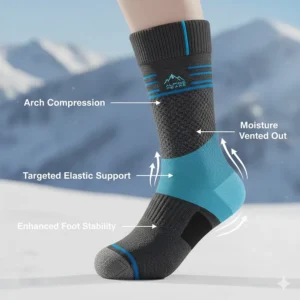
Part of Burton’s premium [AK] line, these socks feature cushioning spots dialed in specifically for typical snowboard boot pressure points—ankles, shins, and underfoot. The merino blend wicks moisture exceptionally well while the synthetic elements add durability. What sets these apart is the anatomically correct left/right foot design that enhances the natural fit.
Customer Feedback: Advanced riders appreciate the performance-oriented fit and the way these integrate seamlessly with Burton boots.
✅ Pros: Premium materials, anatomical design, excellent with Burton boots
❌ Cons: High price, may feel technical for casual riders
7. Evo Medium Cushion Snow Sock
The ultimate spring riding sock, the Evo Medium Cushion prioritizes breathability for warmer days on the mountain.
Key Specifications:
- Material: Polyester blend with moisture-wicking treatment
- Cushioning: Medium terry loops
- Height: Over-the-calf
- Price: $16-20
These lightweight socks shine when temperatures rise above freezing. The polyester construction breathes incredibly well—you won’t get that swampy feeling even on sunny spring days. At $20, they’re perfect for having multiple pairs on rotation. The material isn’t as cozy as merino options, but the breathability more than compensates during warmer conditions.
Customer Feedback: Riders love these for March-May riding when heavier socks cause overheating. Often go on steep discounts in spring sales.
✅ Pros: Superior breathability, budget-friendly, lightweight
❌ Cons: Less warmth for deep winter, synthetic odor after extended wear
✨ Don’t Miss These Exclusive Deals!
🔍 Take your snow sport performance to the next level with these carefully selected socks. Click on any highlighted product name to check current pricing and availability on Amazon. These premium socks will help you create authentic all-day riding comfort your fellow riders will envy!
Understanding Snowboard Sock Technology: What Actually Matters
The Science Behind Thermal Snowboard Socks Men Women Need
Not all thermal protection is created equal. Merino wool fibers have a unique crimped structure that traps air pockets, providing natural insulation even when wet. This is why merino-based thermal snowboard socks men women riders prefer consistently outperform synthetic alternatives in cold conditions.
The magic happens at the microscopic level. Each merino fiber can bend up to 20,000 times before breaking, which explains why quality wool socks maintain their cushioning properties season after season. Meanwhile, the fiber’s hydrophobic exterior and hydrophilic interior simultaneously repel external moisture while wicking sweat away from your skin. These natural properties make merino wool one of the most versatile textile fibers for performance applications.
Moisture Management: The Hidden Key to Warm Feet
Here’s a counterintuitive truth: wet feet don’t just feel uncomfortable—they get dangerously cold. When moisture accumulates in your socks, it conducts heat away from your body 25 times faster than dry material. This is why moisture wicking snowboard socks aren’t just a comfort feature; they’re essential for safety.
Quality socks accomplish this through layered construction. The innermost layer pulls sweat away from skin through capillary action, the middle layer spreads moisture across a larger surface area, and the outer layer releases it for evaporation. Some advanced models even incorporate silver ion treatments that reduce bacterial growth, keeping socks fresher longer.
Material Benefits Comparison
| Material | Warmth | Moisture Management | Odor Resistance | Durability | Drying Speed |
|---|---|---|---|---|---|
| 100% Merino Wool | ⭐⭐⭐⭐⭐ | ⭐⭐⭐⭐ | ⭐⭐⭐⭐⭐ | ⭐⭐⭐ | ⭐⭐ |
| Merino-Synthetic Blend | ⭐⭐⭐⭐ | ⭐⭐⭐⭐⭐ | ⭐⭐⭐⭐ | ⭐⭐⭐⭐⭐ | ⭐⭐⭐⭐ |
| Full Synthetic | ⭐⭐⭐ | ⭐⭐⭐⭐ | ⭐⭐ | ⭐⭐⭐⭐ | ⭐⭐⭐⭐⭐ |
| Cotton (Never!) | ⭐⭐ | ⭐ | ⭐ | ⭐⭐ | ⭐ |
Cushioning Placement: Strategic Padding vs. Bulk
Beginners often assume thicker equals better, but excessive cushioning actually reduces board boot fit quality. Professional riders know that strategic padding in specific zones outperforms overall thickness. Target areas include:
Shin Protection: Absorbs forward pressure from boot tongues during aggressive riding
Ankle Bones: Prevents painful pressure points from stiff boot cuffs
Achilles Zone: Reduces friction during constant flexing motions
Forefoot: Cushions impact during landings without compromising board feel
Toe Box: Protects against stubbing while maintaining toe mobility
The areas between these zones should remain relatively thin to maximize breathability and prevent your feet from feeling compressed.
How to Choose Snowboard Socks: 7 Essential Steps
1. Assess Your Climate Conditions
Riding mostly in Colorado’s dry, sub-zero temps? Prioritize insulation with warm snowboarding socks featuring higher merino content (40%+). Shredding Pacific Northwest resorts with wetter conditions? Focus on moisture wicking snowboard socks with superior drainage.
2. Match Cushioning to Boot Fit
Snug-fitting performance boots pair best with light-to-medium cushioning. Roomier recreational boots accommodate full-cushion models. If you can barely squeeze two fingers behind your heel when your boots are laced, stick with lighter options.
3. Determine Proper Height
Over-the-calf remains the gold standard for snowboarding. This height prevents gaps between boot tops and snow pants, eliminating cold spots and snow infiltration. Shorter socks work for warmer spring days but sacrifice protection.
4. Consider Sock Material Composition
Pure merino (60%+) offers maximum warmth and odor resistance but costs more. Merino-synthetic blends (30-50% merino) provide balanced performance and better durability. Full synthetic works for warmer conditions and quick-drying needs.
5. Evaluate Your Riding Intensity
Park rats doing tricks all day generate more heat and need breathable designs with strategic venting. Backcountry tourers climbing uphill want thin, breathable options. Resort cruisers can go for maximum cushioning and warmth.
6. Factor in Boot Liner Type
Heat-moldable liners pack out significantly after 5-10 days of riding. Start with snugger socks initially, then switch to medium cushioning once liners conform. Standard liners maintain consistent volume, so choose based on current fit.
7. Budget for Multiple Pairs
Having 2-3 pairs in rotation extends sock longevity dramatically. Allowing 24-48 hours between wears lets materials fully dry and elasticity recover. Consider one premium pair for cold days and budget options for milder conditions…
Snowboard Socks vs. Ski Socks vs. Regular Winter Socks
Key Structural Differences
| Feature | Snowboard Socks | Ski Socks | Regular Winter Socks |
|---|---|---|---|
| Shin Padding | Moderate (less forward pressure) | Heavy (protects from stiff ski boots) | Minimal/none |
| Ankle Support | Targeted compression | Firm compression | Light support |
| Toe Box | Roomier (board boots flex more) | Tighter (ski boots are rigid) | Variable |
| Cushioning Pattern | Asymmetric for twisting motions | Symmetric for forward flex | All-over or minimal |
The biggest difference lies in how each sport’s equipment puts pressure on your feet and legs. Snowboard boots flex in multiple directions and twist during turns, requiring cushioning that adapts to varied movements. Ski boots lock you into forward flex patterns, demanding robust shin protection against the rigid boot tongue.
Price vs. Performance: Finding Your Sweet Spot
| Price Range | What You Get | Best Options | Who It’s For |
|---|---|---|---|
| Budget ($16-24) | Basic merino blends, decent cushioning, 1-2 season lifespan | Evo Medium Cushion, Pure Athlete | Occasional riders, spring conditions |
| Mid-Range ($25-32) | Quality merino content, good durability, moisture management | OutdoorMaster 2-Pack, FITRELL, Darn Tough | Regular riders seeking value |
| Premium ($33+) | High merino %, lifetime warranties, advanced tech | Smartwool Iguchi, Burton [AK] | Serious riders, daily use |
Understanding the price-to-performance curve helps you invest wisely. Studies show that proper equipment fit, including quality socks, can reduce snowboarding injuries significantly, making premium options worthwhile for frequent riders.
Common Snowboard Sock Mistakes to Avoid
Wearing Cotton Socks
Cotton absorbs moisture like a sponge and retains it, creating the perfect recipe for frozen, uncomfortable feet. When cotton gets wet, it loses essentially all insulating properties. Always choose moisture wicking snowboard socks made from wool or technical synthetics.
Doubling Up on Socks
Adding extra layers seems logical but actually restricts circulation, causes overheating, and creates friction points between layers. Your feet need a single, well-fitted sock that allows proper blood flow. Restriction equals cold feet, period.
Ignoring Sock Care Instructions
Throwing wool socks in hot water and the dryer degrades fibers rapidly. Always wash in cold water, use wool-specific detergent, and air dry. This simple change can triple sock lifespan.
Caring for Your Snowboard Socks: Maximize Longevity
Washing Best Practices:
Turn socks inside-out before washing to protect the outer surface. Use cold water with wool-safe detergent (avoid products with enzymes or bleach). Machine wash on gentle cycle or hand wash for maximum preservation.
Drying Techniques:
Never use heated dryers—high heat destroys elastic fibers and shrinks wool. Lay flat on a clean towel in a well-ventilated area, or use a mesh drying rack. Reshape while damp to maintain proper form. Full drying takes 24-48 hours.
Storage Tips:
Store socks loosely folded rather than balled up to preserve elastic cuffs. Keep in a cool, dry location away from direct sunlight. Cedar blocks in your storage area naturally deter moths that love wool.
Mid-Season Refreshing:
After extended use, revitalize merino socks by soaking in lukewarm water with a splash of white vinegar (1 tablespoon per quart). This removes lingering odors and restores natural lanolin properties.
Advanced Tips: Getting More from Your Socks
Breaking In New Boots with Strategic Sock Selection
New boots feel tightest during the first 3-5 days as liners begin molding to your feet. Start with thin socks during break-in, then gradually increase to your target cushioning level as liners pack out. This prevents painful pressure points while maintaining optimal board boot fit throughout the season.
Managing Moisture During All-Day Sessions
Bring a spare pair of socks for marathon riding days. Swapping at lunch resets moisture levels and provides a psychological boost. Many riders keep spare socks in their car or locker for this purpose. The difference in comfort is remarkable.
Optimizing Warmth in Extreme Cold
For sub-zero riding, try this pro trick: sprinkle foot powder (or cornstarch) inside socks before wearing. This creates a moisture barrier and provides a subtle warming sensation. Chemical toe warmers work too, but position them on boot tops rather than directly against socks to prevent hot spots.
✨ Ready to Upgrade Your Sock Game?
🎿 Don’t settle for cold, uncomfortable feet on your next mountain adventure! The socks featured in this guide represent the absolute best options for 2026. Click any product name above to see current deals and grab your perfect pair before they sell out. Your feet deserve the best!
FAQ: Your Snowboard Sock Questions Answered
❓ How many pairs of snowboard socks do I need for a week-long trip?
❓ Can I use the same socks for skiing and snowboarding?
❓ What sock height works best with different boot styles?
❓ How tight should snowboard socks feel when first putting them on?
❓ Do heated battery socks work better than regular thermal socks?
Conclusion: Finding Your Perfect Pair
After testing dozens of options, one thing becomes crystal clear: there’s no single “best” snowboard sock for everyone. Your ideal match depends on climate, boot fit, riding style, and personal preferences around warmth versus breathability. The seven socks highlighted here represent the strongest performers across different categories in 2026.
For most riders, I’d recommend starting with either the Smartwool Iguchi or Darn Tough Function X as your primary pair—both deliver exceptional all-around performance with rock-solid durability. Budget-conscious riders get tremendous value from OutdoorMaster or FITRELL multi-packs. Spring riders should absolutely grab the Evo Medium Cushion for warmer days.
Remember that the right socks are an investment in your riding experience. Quality pairs last multiple seasons while cheaper alternatives fall apart mid-season, ultimately costing more. Factor in washing rotation (2-3 pairs minimum), match cushioning to your boot fit, and prioritize moisture wicking snowboard socks for all-day riding comfort. Your feet—and your riding—will thank you.
The difference between mediocre and exceptional snowboard socks might seem minor in the shop, but after a full day charging hard, those small details become everything. Don’t let poor socks be the weak link in your snow sport performance setup. Gear up properly from the ground up, and you’ll unlock your full potential on the mountain.
Recommended for You
- 7 Best Ski Socks That Keep Feet Warm All Day (2026 Reviews)
- 7 Best Crew Length Running Socks 2026
- 7 Best Lightweight Running Socks 2026 – Featherlight Performance Guide
Disclaimer: This article contains affiliate links. If you purchase products through these links, we may earn a small commission at no additional cost to you.
✨ Found this helpful? Share it with your friends! 💬🤗
