In This Article
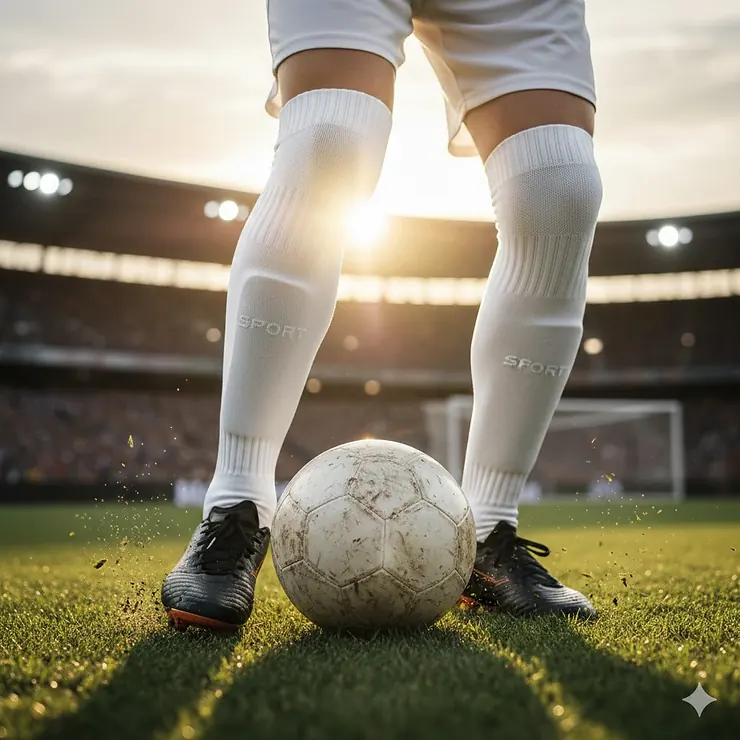
Ever wondered why professional players obsess over their soccer socks? It’s not just about style. When you’re sprinting down the field at full speed, making those sharp cuts, or defending against aggressive tackles, your socks become the unsung heroes of your performance gear. They’re the buffer between your skin and shin guards, the moisture manager during intense play, and the grip enhancer that keeps you stable inside your cleats.
I’ve tested countless pairs over the years, and here’s what I’ve learned: the difference between mediocre and exceptional soccer socks can transform your entire game. The right pair prevents blisters during that crucial overtime period, keeps your shin guards exactly where they belong, and wicks away sweat so effectively you’ll forget you’re even wearing them. The wrong pair? That’s a recipe for discomfort, distraction, and diminished performance.
Whether you’re chasing championships or just starting your soccer journey, choosing the best soccer socks isn’t about grabbing whatever’s on sale. It’s about understanding what your feet need to perform at their peak. From professional soccer socks with grip technology to cushioned options that absorb impact, the 2026 market offers incredible innovations that previous generations could only dream about.
Quick Comparison Table: Best Soccer Socks at a Glance
| Product | Key Features | Best For | Price Range | Rating |
|---|---|---|---|---|
| TRUsox 3.0 Mid-Calf | Patented IN//EX grip tech, cushioned | Professional players | $49.99 | ⭐⭐⭐⭐⭐ |
| Adidas Metro Soccer Socks | NCAA compliant, arch compression, moisture wicking | All skill levels | $12-18 | ⭐⭐⭐⭐½ |
| Nike Academy Over-The-Calf | Dri-FIT, left/right specific, arch support | Performance athletes | $14-20 | ⭐⭐⭐⭐½ |
| PUMA 6-Pack 2026 Crew | Mesh ventilation, cushioned, World Cup design | Teams & bulk buyers | $25-32 | ⭐⭐⭐⭐ |
| CWVLC Grip Soccer Socks | 16-19mmHg compression, PVC grip, cushioned | Intermediate players | $16-22 | ⭐⭐⭐⭐ |
| MadSportsStuff Fire Flame | Made in USA, double-welt, custom designs | Youth players | $12-16 | ⭐⭐⭐⭐ |
| HYCLES Kids Grip Socks | Anti-slip grippers, cotton blend, 3-pack | Young athletes 4-16 yrs | $15-20 | ⭐⭐⭐⭐ |
💬 Just one click – help others make better buying decisions too!😊
Top 7 Best Soccer Socks: Expert Analysis
1. TRUsox 3.0 Mid-Calf Grip Socks
When it comes to professional soccer socks with grip technology, TRUsox 3.0 remains the gold standard that professionals worldwide trust. These aren’t your average socks – they’re engineered with patented IN//EX technology that creates grip zones both inside and outside the fabric, essentially locking your foot to the cleat sole while preventing the sock from sliding on your skin.
Key Specifications:
- Material: 60% Nylon, 39% Cotton, 1% Spandex
- Patented dual-surface grip technology
- Mid-calf cushioned design
- Price: $49.99
What sets TRUsox apart is how they eliminate that annoying internal slippage that causes blisters and reduces power transfer. Customer feedback consistently praises how these socks enhance agility during rapid direction changes. One user noted they “finally stopped worrying about shin guard shifting during matches.”
✅ Pros:
- Maximum grip and stability
- Premium cushioning reduces impact
- Professional-grade performance
❌ Cons:
- Higher price point
- Requires proper care to maintain grip effectiveness
2. Adidas Metro Soccer Socks
The Adidas Metro Soccer Socks strike an impressive balance between performance and affordability, making them ideal for players at every level. These shin guard compatible soccer socks feature NCAA compliance standards, which means they meet rigorous athletic requirements for collegiate play.
Key Specifications:
- Arch and ankle compression zones
- Lightweight moisture wicking yarns
- Double-welt construction
- Price Range: $12-18 per pair
These moisture wicking soccer socks utilize compression technology around the arch and ankle to prevent the dreaded sock-slip mid-game. The lightweight construction doesn’t sacrifice durability – players report these lasting through multiple seasons of regular use. The fabric quickly transfers sweat away from feet, significantly reducing blister formation during extended play.
✅ Pros:
- Excellent value for performance
- NCAA compliant for competitive play
- Arch compression enhances stability
❌ Cons:
- Less grip than specialized grip socks
- Some users prefer thicker cushioning
3. Nike Academy Over-The-Calf Soccer Socks
Nike Academy socks bring cutting-edge technology to your feet with their Dri-FIT fabric that actively pulls moisture away from skin. What’s particularly clever is their left/right specific design – each sock is anatomically shaped for the corresponding foot, creating a more natural, comfortable fit that many competitors overlook.
Key Specifications:
- Dri-FIT moisture management
- Anatomically correct left/right pairs
- Integrated arch support
- Price Range: $14-20
The arch support isn’t just marketing fluff – it genuinely provides stability during those explosive sprints and quick pivots. These cushioned soccer socks feature strategic padding in high-impact zones without adding unnecessary bulk. Players appreciate how they accommodate shin guards comfortably while maintaining their over-the-calf position throughout matches.
✅ Pros:
- Superior moisture management
- Anatomical fit improves comfort
- Excellent shin guard accommodation
❌ Cons:
- Mid-range pricing
- Must pay attention to left/right pairing
4. PUMA 6-Pack Soccer 2026 Crew Socks
Perfect timing for the 2026 World Cup season, PUMA offers this celebration pack featuring designs honoring six soccer powerhouses. Beyond the aesthetics, these socks deliver serious performance with strategically placed mesh ventilation panels that keep feet remarkably cool during intense activity.
Key Specifications:
- Mesh ventilation technology
- Plush cushioned footbed
- Targeted arch support
- Price: $25-32 for 6-pack (approximately $4-5 per pair)
The cushioned soccer socks provide impact protection that matters during those hard tackles and rapid footwork. The reinforced heel and toe construction means these withstand countless matches and training sessions. For teams or players who practice frequently, the bulk pricing offers exceptional value – you’re getting professional-quality field traction enhancement at a fraction of premium sock prices.
✅ Pros:
- Outstanding bulk value
- Excellent breathability
- Durable construction
❌ Cons:
- Limited color customization
- Crew length may not suit all preferences
5. CWVLC Grip Soccer Socks
These CWVLC socks integrate medical-grade compression (16-19mmHg) with athletic performance features, creating a unique product that enhances circulation while preventing slippage. The PVC grip pads on the sole provide traction both inside cleats and on various surfaces.
Key Specifications:
- 16-19mmHg compression support
- PVC anti-slip grip technology
- Specialty terry sole for cushioning
- Price Range: $16-22
The thickened terry sole offers shock absorption that protects feet during high-intensity play without feeling bulky inside cleats. These moisture wicking soccer socks feature a glove-like fit philosophy – multiple sizes ensure proper compression effectiveness rather than stretchy one-size-fits-all approaches. The stay-in-place cuff design prevents rolling during matches, maintaining consistent cleat compatibility throughout gameplay.
✅ Pros:
- Compression enhances circulation
- Versatile grip technology
- Extra cushioning comfort
❌ Cons:
- Requires accurate sizing
- Thicker profile than some prefer
6. MadSportsStuff Fire Flame Soccer Socks
Proudly Made in USA, MadSportsStuff offers soccer socks that combine patriotic manufacturing with legitimate performance features. The double-welt top design keeps these socks firmly in place, while moisture-wicking yarns manage sweat effectively during extended play.
Key Specifications:
- Made in USA construction
- Moisture-wicking synthetic blend
- Double-welt anti-slip top
- Price Range: $12-16
These shin guard compatible soccer socks provide ample room for protective equipment without excessive bunching. The cushioned sole delivers blister control through strategic padding placement. While they don’t feature specialized grip pads, the material composition creates sufficient traction inside cleats for most playing styles. Youth players particularly appreciate the fun, bold designs that let personality shine on the field.
✅ Pros:
- American-made quality
- Youth-friendly designs
- Excellent shin guard accommodation
❌ Cons:
- No specialized grip technology
- Limited compression features
7. HYCLES Kids Grip Soccer Socks
Designed specifically for young athletes ages 4-16, HYCLES Kids grip socks address the unique needs of developing players. The anti-slip grippers strategically placed on toe, heel, and sole areas provide stability that builds confidence during skill development.
Key Specifications:
- Cotton-rich cushioned blend
- Age-specific sizing (4-8, 8-12, 12-16)
- Anti-slip grip technology
- Price: $15-20 for 3-pack
These cushioned soccer socks feature mesh design elements that quickly absorb and dissipate sweat – crucial for young players who may not recognize when discomfort affects performance. The elastic cuff and arch support combination keeps socks positioned properly without restricting circulation. Parents appreciate how the moderate thickness works across all seasons, making these versatile for year-round youth leagues.
✅ Pros:
- Age-appropriate sizing options
- Built-in grip safety features
- Multi-season versatility
❌ Cons:
- Youth-only sizing
- Grip may wear with frequent washing
🎯 Unlock Premium Performance!
Ready to transform your game with professional-grade soccer gear? Click any highlighted product name above to explore current deals and availability. The right socks can be the difference between good and exceptional performance!
Understanding Soccer Sock Technology in 2026
Soccer sock technology has evolved dramatically from the simple cotton tubes our parents wore. Modern professional soccer socks with grip incorporate materials science, biomechanics, and athlete feedback to create performance-enhancing gear that previous generations couldn’t imagine.
Material Science Revolution
Today’s best soccer socks utilize synthetic blends engineered for specific purposes. Polyester and nylon dominate because they’re inherently moisture-resistant – unlike cotton that absorbs and holds sweat, these materials wick perspiration away from skin and spread it across the fabric surface for rapid evaporation. This isn’t just comfort; it’s injury prevention. Wet skin creates friction hotspots that become blisters during extended play.
The addition of spandex or elastane (typically 1-5% of composition) provides crucial stretch and recovery properties. This allows socks to compress strategically around arches and ankles without losing shape after multiple wash cycles. Higher-end options like TRUsox incorporate specialized fibers that enhance grip properties while maintaining breathability – a challenging balance to achieve.
Grip Technology Explained
Professional soccer socks with grip utilize various approaches to enhance field traction and cleat compatibility. The most sophisticated systems, like TRUsox’s patented IN//EX technology, feature internal and external grip surfaces. Internal grips prevent your foot from sliding within the sock, while external grips reduce sock-to-shoe movement. This dual-action approach maximizes energy transfer during explosive movements.
Simpler grip sock designs apply silicone or PVC dots to sole areas. While effective, placement matters enormously – dots positioned incorrectly can create pressure points or interfere with natural foot flex. The best cushioned soccer socks integrate grip technology with padding systems, ensuring comfort doesn’t sacrifice stability.
According to sports science research, reducing internal foot slippage by even millimeters can improve acceleration response times and reduce fatigue during matches. That’s why professional players increasingly adopt grip technology despite higher costs.
Moisture Wicking: More Than Marketing Hype
When manufacturers tout “moisture wicking” capabilities, they’re describing a material’s ability to transport liquid away from skin through capillary action. Quality moisture wicking soccer socks move sweat to the fabric’s outer surface where air circulation facilitates evaporation. This process maintains dry conditions against your skin even during intense exertion.
The importance extends beyond comfort. According to research on athletic footwear environments, feet can produce up to half a cup of sweat daily during moderate activity – exponentially more during competitive play. Without effective moisture management, this creates slippery conditions inside shoes that compromise performance and generate blisters through increased friction.
Modern synthetic blends excel at moisture wicking compared to natural fibers. Cotton absorbs moisture but holds it within fibers, creating that soggy, heavy feeling after intense activity. Polyester-based fabrics transport moisture along fiber surfaces instead, maintaining structural integrity while staying dramatically lighter and drier.
Shin Guard Compatibility: The Hidden Challenge
One of the most overlooked aspects when choosing the best soccer socks is shin guard compatible soccer socks design. According to Wikipedia’s shin guard history, these protective devices became mandatory in soccer in 1990, transforming sock requirements significantly.
Why Compatibility Matters
Shin guards must fit securely without shifting during play, which requires socks that provide consistent compression without cutting off circulation. The sock must stretch sufficiently to accommodate the guard’s bulk while maintaining enough grip to prevent downward migration. This balance challenges many conventional athletic socks designed for sports without protective equipment requirements.
Quality shin guard compatible designs feature:
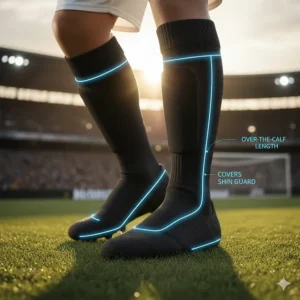
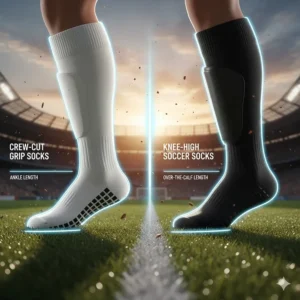
Extended Length: Over-the-calf construction provides coverage above the guard’s top edge, preventing skin exposure and maintaining uniform appearance required by FIFA regulations.
Strategic Stretch Zones: Areas designed to expand around shin guard bulk without losing compression effectiveness elsewhere.
Grip Elements: Internal friction surfaces or compression levels that secure guards against gravity and movement forces during play.
Thickness Considerations: Adequate padding between skin and guard edges prevents irritation, while avoiding excessive bulk that creates pressure points inside cleats.
Many players layer specialized grip socks under traditional team socks for enhanced protection and performance. This approach allows the grip sock to manage internal stability while the outer sock accommodates shin guards and maintains team uniform standards.
Compression Technology Benefits
The integration of compression zones in modern soccer socks isn’t accidental – it’s biomechanically strategic. Graduated compression (higher pressure at extremities, decreasing toward the heart) promotes venous return, potentially reducing muscle fatigue and enhancing endurance during extended play.
Research published in sports medicine journals suggests compression garments may reduce muscle oscillation during high-impact activities. For soccer players, this could translate to decreased fatigue in calf muscles that work continuously during matches. The arch compression featured in products like Adidas Metro socks provides additional benefits by supporting the foot’s natural arch structure, potentially reducing plantar fasciitis risk.
However, compression effectiveness depends on proper sizing. Too loose provides no benefit; too tight restricts circulation counterproductively. This is why premium products like CWVLC offer multiple size options rather than stretchy one-size-fits-all solutions.
Cleat Compatibility and Field Traction
The relationship between soccer socks, cleats, and field traction creates a performance chain where each element affects the others. Your sock’s grip technology influences how securely your foot sits within the cleat, which determines how effectively cleat studs engage with playing surfaces.
Inside-the-Cleat Dynamics
Quality cushioned soccer socks with grip technology eliminate the micro-slippage that occurs between foot and shoe during rapid direction changes. This slippage wastes energy – instead of force transferring directly from muscle contraction through bone structure to cleat to ground, energy dissipates overcoming internal friction.
Professional players obsess over this detail because at elite levels, microseconds matter. The difference between reaching that through ball or watching it roll out of bounds often comes down to acceleration efficiency. Premium grip socks enhance this efficiency by creating a unified foot-sock-cleat system that moves as one unit.
Sock Thickness Considerations
Thicker cushioned soccer socks provide impact protection but alter cleat fit. If you’ve sized cleats while wearing thin socks, switching to heavily cushioned options may create uncomfortable pressure. Many experienced players maintain consistent sock thickness throughout seasons to ensure predictable cleat feel.
The best approach involves trying cleats with the same socks you’ll wear during matches. This ensures proper fit while accounting for the sock’s impact absorption and cleat compatibility characteristics.
Match Day Performance Factors
When competition day arrives, your socks contribute more to match day performance than most players realize. Beyond physical properties, psychological factors matter too – confidence in your equipment lets you focus on gameplay rather than worrying about discomfort or equipment failure.
Pre-Game Preparation
Proper sock care maintains performance properties through multiple uses. Washing moisture wicking soccer socks in cold water preserves fiber integrity, while high heat can damage elastic components and grip surfaces. Air drying rather than machine drying extends lifespan significantly, particularly for premium grip sock models with specialized materials.
Some players pre-stretch socks before matches to ensure they’ve reached maximum dimensions, preventing mid-game tightness issues. Others apply anti-chafing products to feet before donning socks, adding another layer of blister prevention during extended play.
During-Match Considerations
Even the best soccer socks can shift slightly during intense activity. Professional players often adjust socks and shin guards during natural game breaks (throw-ins, free kicks) to maintain optimal positioning. This isn’t fidgeting – it’s performance optimization.
Monitoring foot temperature and moisture levels matters too. If socks feel soaked during halftime, changing to fresh pairs can provide psychological and physical boosts for the second half. Many competitive players keep spare sock pairs in equipment bags specifically for this purpose.
Youth Player Considerations
Young athletes require special consideration when selecting soccer socks. Growing feet change sizes rapidly, making sock longevity less critical than proper fit at purchase time. The HYCLES Kids Grip Socks address this with age-specific sizing that accommodates typical growth patterns while providing performance features appropriate for skill levels.
Sizing for Growth
Parents face the temptation to “buy big” so equipment lasts longer, but oversized socks create performance and safety issues. Excess material bunches inside cleats creating hot spots and blisters. Too-large socks also fail to provide the compression needed to secure shin guards properly.
A better approach involves accepting that soccer socks are consumable items that require replacement as children grow. Focus on current proper fit rather than future potential fit. Many youth leagues run equipment exchanges where families can swap outgrown items, making this approach more economical.
Building Good Habits
Teaching young players proper sock care establishes habits that benefit them long-term. Show them how to position shin guards correctly, explain why socks must stay pulled up during play, and involve them in post-game equipment care. These lessons extend beyond soccer into general responsibility and attention to detail.
Specialty Sock Types
Beyond standard team socks, several specialty categories serve specific needs within the soccer world.
Grip Socks vs. Traditional Socks
Pure grip socks like TRUsox typically extend only to mid-calf and focus exclusively on stability and moisture management. Players pair these with cut-down team socks worn as sleeves over the grip socks. This combination provides grip performance internally while maintaining uniform standards externally.
Traditional soccer socks prioritize shin guard accommodation and uniform appearance. While many now incorporate grip elements and moisture wicking, they’re designed as all-in-one solutions rather than layered systems. For recreational players, traditional socks usually suffice. Competitive athletes often benefit from the grip sock + sleeve combination.
Compression Socks for Recovery
Some players wear specialized compression socks post-game for recovery purposes. These differ from performance socks by emphasizing circulation enhancement over moisture management or grip. The theory holds that improved blood flow accelerates waste product removal from muscles, potentially reducing soreness and speeding recovery.
While research on compression for recovery remains mixed, many athletes swear by the practice. These aren’t meant for play – they’re recovery tools worn during rest periods between matches or training sessions.
Common Soccer Sock Problems and Solutions
Even with quality products, players encounter sock-related issues that impact performance. Understanding solutions prevents these from becoming ongoing frustrations.
Sock Slippage
If socks consistently slide down despite proper sizing, several factors might be responsible. Worn elastic loses gripping power – socks showing significant stretch wear should be replaced. Leg hair can reduce friction between skin and sock; some players address this through shaving or using grip-enhancing sprays.
Shin guard stays (elastic bands worn over socks) provide mechanical assistance keeping everything in place. While they add a step to gearing up, they’re highly effective for players struggling with slippage despite quality sock choices.
Blistering Despite Quality Socks
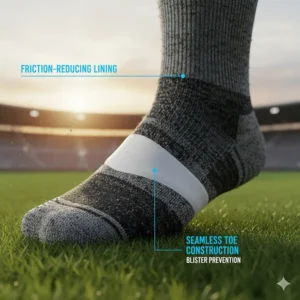
Blisters form from friction between skin and sock or sock and shoe. Quality moisture wicking soccer socks reduce moisture-related friction, but other factors contribute. Poorly fitting cleats create movement that no sock can completely compensate for. Old socks develop rough spots that irritate skin despite appearing intact.
The solution often involves addressing the entire foot system rather than just the sock. Ensure cleats fit properly, replace socks regularly, and consider anti-friction products applied directly to hot spot-prone areas before wearing socks.
Temperature Regulation Issues
Players suffering from excessively hot or cold feet may need sock adjustments. In hot weather, prioritize socks with maximum breathability – mesh zones and thinner profiles help. Cold weather requires thicker materials while maintaining moisture wicking properties. Wet feet in cold weather create genuine safety concerns beyond just discomfort.
Layering thin base socks under regular soccer socks can help in extreme cold, but test this combination during practice before relying on it for matches. The added bulk affects cleat fit and may create new problems.
Buying Guide: Choosing Your Perfect Pair
Selecting from countless options feels overwhelming, but a systematic approach simplifies the process.
Skill Level Assessment
Recreational Players: Focus on comfort and basic moisture wicking. Products like Adidas Metro or PUMA 6-Pack offer excellent value with professional-grade features at accessible prices. You’re playing for enjoyment rather than competitive advantage, so prioritize comfort and durability over cutting-edge grip technology.
Competitive Athletes: Invest in specialized grip technology and advanced compression. TRUsox 3.0 or Nike Academy provide performance advantages that matter in tight matches. The enhanced field traction and reduced fatigue during tournaments justify the premium pricing for players competing weekly.
Youth Players: Prioritize proper fit and age-appropriate features. HYCLES Kids or MadSportsStuff offer youth-specific designs that accommodate growing feet. Focus on building good habits around equipment care while ensuring current proper fit rather than “buying big” to accommodate growth.
Position-Specific Needs
Defenders: Prioritize cushioning and shin guard compatibility. You’re taking tackles and making aggressive challenges where impact protection matters most. The Adidas Metro with enhanced cushioning and secure compression zones addresses these defensive demands.
Midfielders: Balance endurance features (compression) with comfort for the all-action role requiring constant movement. The Nike Academy’s Dri-FIT technology and anatomical support system suits midfield’s grueling demands perfectly.
Forwards: Consider lightweight options with superior grip for explosive acceleration and quick direction changes. TRUsox 3.0 provides the traction advantage that separates you from defenders during crucial through balls.
Goalkeepers: While wearing the same socks as outfield players works, some keepers prefer extra padding in specific areas due to diving and foot positioning differences. The CWVLC compression socks with PVC grip help during explosive movements off the goal line.
Budget Considerations
Quality soccer socks span wide price ranges. Single pairs of premium grip socks cost $40-50, while multi-pack traditional options run $3-5 per pair. Your budget should reflect playing frequency and competitive level.
For players practicing/competing multiple times weekly, investing in 3-4 pairs of quality socks makes sense. Rotate them to extend lifespan and always have fresh options available. Weekend warriors might find mid-range options perfectly adequate for their needs.
Consider the cost-per-use calculation: A $50 premium sock lasting 30 matches costs $1.67 per use, while a $10 budget sock lasting 12 matches costs $0.83 initially but requires mid-season replacement. Over a full season, the premium option often provides better value alongside superior performance.
Key Features Checklist
Before purchasing, verify these essential features align with your needs:
✅ Moisture Management: Look for synthetic blends (polyester/nylon) rather than cotton-heavy designs
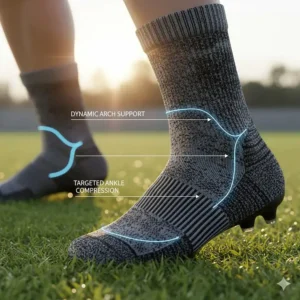
✅ Compression Zones: Arch and ankle compression prevents slippage and enhances endurance
✅ Length: Over-the-calf for complete shin guard coverage, crew for ankle guard systems
✅ Grip Technology: Internal friction surfaces or silicone pads for stability inside cleats
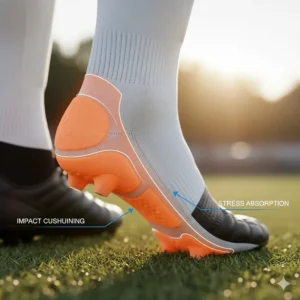
✅ Cushioning: Strategic padding in heel, toe, and forefoot for impact absorption
✅ Durability Features: Reinforced heel/toe areas, double-welt tops that won’t roll down
✅ Breathability: Mesh zones or ventilated construction for temperature regulation
✅ Sizing Options: Multiple size choices rather than one-size-fits-all stretch approaches
Where to Purchase
Online retailers like Amazon provide extensive selection and competitive pricing, but trying socks in physical stores helps ensure proper fit before investing in multiple pairs. Many specialty soccer shops allow you to feel material quality and assess compression levels in person.
Look for return policies that let you test socks during training sessions. Some brands offer satisfaction guarantees recognizing that true performance assessment requires actual play testing.
Tournament and Travel Considerations
Extended tournaments and away games create unique sock management challenges requiring additional planning.
Packing Strategy
For tournament weekends, pack at least one pair per match plus extras for unexpected issues. Wet or damaged socks mid-tournament with no replacements available can derail performance more significantly than players realize. The confidence that comes from fresh, properly-functioning equipment shouldn’t be underestimated.
Separate clean socks from used ones in dedicated bags preventing cross-contamination. Quick-dry fabrics make overnight washing possible if tournament schedules don’t allow full laundering between matches.
Emergency Repairs
Bring basic supplies for minor sock repairs: needle and matching thread for small holes, safety pins for temporary fixes. While proper replacement is ideal, emergency repairs can extend sock functionality through crucial tournament matches when replacements aren’t available.
Care and Maintenance Best Practices
Proper care extends sock lifespan and maintains performance properties that degrade with improper washing.
Washing Guidelines
Turn socks inside-out before washing to reduce pilling on visible surfaces. Use cold or warm water rather than hot – heat damages elastic fibers that provide compression. Avoid fabric softeners that can coat moisture-wicking fibers, reducing their effectiveness.
Consider dedicated mesh laundry bags that protect socks from aggressive machine action and prevent lost mates in the wash. This simple tool dramatically extends sock lifespan.
Drying Recommendations
Air drying preserves grip surfaces and elastic components far better than machine drying. While it takes longer, the lifespan extension justifies the patience. If machine drying is necessary, use low heat settings and remove socks promptly when dry.
Never leave wet socks crumpled in gym bags. This creates mildew that’s nearly impossible to eliminate completely. At minimum, unroll socks and allow air circulation until proper washing is possible.
Storage Tips
Store clean socks flat or loosely folded rather than tightly rolled. Constant tension on elastic components accelerates degradation. Keep them in cool, dry locations away from direct sunlight which can fade colors and weaken synthetic fibers over time.
Rotate through multiple pairs rather than wearing favorites exclusively. This distributes wear evenly and ensures you’re never caught with all socks in the laundry when you need them.
Price Range Analysis: Value vs. Performance
Understanding what you’re paying for helps justify investments in quality soccer equipment. Let’s break down how price correlates with features and longevity.
| Price Category | Average Cost Per Pair | Typical Features | Best For | Expected Lifespan |
|---|---|---|---|---|
| Budget ($5-12) | $8 | Basic moisture wicking, standard length | Recreational players, youth starting out | 10-15 uses |
| Mid-Range ($12-25) | $18 | Compression zones, enhanced wicking, grip elements | Regular players, competitive youth | 15-25 uses |
| Premium ($25-50+) | $38 | Advanced grip tech, medical-grade compression, specialized materials | Competitive athletes, professionals | 20-30+ uses |
Value Calculation Strategy
When evaluating sock purchases, calculate cost-per-use rather than focusing solely on initial price. A $50 TRUsox pair lasting 30 matches costs $1.67 per use. A $10 budget sock lasting 12 matches costs $0.83 per use initially but may require mid-season replacement, ultimately costing more while providing inferior performance.
For players competing weekly, investing in 3-4 premium pairs provides better value over a season than repeatedly replacing budget options. The performance advantages – reduced blistering, better grip, enhanced endurance – justify the premium for serious players.
Recreational weekend warriors playing monthly might find mid-range options like Adidas Metro or Nike Academy provide the sweet spot between performance and value. You’ll enjoy professional-grade features without paying for durability requirements you don’t need.
Material Comparison: What’s in Your Socks?
Modern soccer sock construction involves carefully balanced material blends, each component serving specific purposes.
Synthetic Performance Fabrics
Polyester (40-70% typical): The workhorse of moisture wicking soccer socks, polyester excels at transporting sweat away from skin. It’s durable, maintains shape through countless washes, and dries remarkably quickly. Unlike natural fibers, polyester doesn’t absorb water into its structure – it spreads moisture across surfaces for evaporation.
Nylon (20-60% typical): Adds strength and abrasion resistance. High-wear areas like heels and toes often feature increased nylon content. It’s smoother than polyester, reducing friction that causes blisters. Premium products like TRUsox utilize nylon-rich blends for their grip surfaces.
Spandex/Elastane (1-5% typical): Provides stretch and recovery. This small percentage allows socks to compress strategically without losing shape. Too much creates excessive stretch that prevents secure shin guard positioning; too little makes socks rigid and uncomfortable.
Natural Fiber Integration
Cotton (0-40% in quality socks): While cotton-heavy socks are comfortable initially, they absorb and retain moisture poorly suited for intense athletic activity. Modern sock designs limit cotton to comfort percentages (20-35%) combined with synthetics for performance. The HYCLES Kids socks utilize cotton blends appropriate for youth players’ sensitive skin while maintaining adequate moisture management.
Merino Wool (Specialty applications): Some premium soccer socks incorporate merino wool for its natural moisture wicking and temperature regulation. Unlike regular wool, merino is soft and non-itchy. It’s more expensive but offers natural antimicrobial properties reducing odor even after multiple uses.
The Science of Shin Guard Protection
Understanding why shin guards became mandatory helps appreciate how proper sock selection enhances this crucial safety equipment. According to sports medicine research, shin injuries account for nearly 60% of lower limb soccer injuries, making protection essential at every competitive level.
Historical Context
The shin guard’s history traces back to ancient Greek and Roman warriors who wore greaves for leg protection in battle. Soccer adopted modified versions in 1874 when Sam Weller Widdowson fashioned cricket pads into the first football shin protectors. Initially mocked by teammates, Widdowson’s innovation proved prescient – FIFA made shin guards mandatory in 1990.
Modern Protection Standards
Today’s regulations require shin guards to provide “reasonable protection” and be completely covered by socks. This is where shin guard compatible soccer socks design becomes crucial. The sock must maintain consistent compression keeping guards positioned correctly while distributing pressure to prevent both slippage and circulation restriction.
Quality products achieve this through graduated compression – tighter at the ankle, progressively looser up the calf. This prevents the tourniquet effect while securing the guard’s lower edge where slippage typically initiates. Double-welt tops (featured in MadSportsStuff and Adidas Metro designs) create elastic bands that grip the leg without rolling.
Position-Specific Performance Needs
Different playing positions create unique demands on your soccer socks. Understanding these nuances helps target sock selection to your role.
Defenders and Center Backs
You’re facing aggressive tackles, making sliding challenges, and taking impacts that other positions avoid. Prioritize cushioned soccer socks with maximum padding in heel and shin areas. The extra millimeters of foam absorb collision impact that, over a season, adds up to significant protection.
Shin guard accommodation is non-negotiable – defenders need larger guards and socks that prevent shifting during physical play. Products like Adidas Metro with their compression zones and PUMA’s cushioned footbed excel here.
Midfielders: The Marathon Runners
Midfield requires constant movement – you’re covering more ground than any other position. Focus on moisture wicking soccer socks with excellent breathability and compression features that reduce fatigue. The Nike Academy with Dri-FIT technology and anatomical design supports the all-action demands of box-to-box play.
Arch compression becomes particularly important as it provides structural support during those countless direction changes and acceleration bursts. Without proper support, midfielders risk plantar fasciitis and arch strain from repetitive stress.
Forwards and Attackers
Speed and agility define forward play. You need lightweight options that won’t slow you down, with superior grip for explosive acceleration. TRUsox 3.0 remains the gold standard here – professional strikers swear by the traction advantage during those crucial sprints beating defenders to through balls.
While cushioning matters less than for defenders, don’t completely sacrifice impact protection. Those desperate lunges for loose balls and goalkeeper collisions still require reasonable padding.
Goalkeepers: Specialized Demands
Keepers face unique challenges – diving, quick lateral movements, and extended periods in set positions. Some prefer extra padding on sides of feet for diving protection. Compression features that enhance circulation during relatively stationary periods between action benefit goalkeeper endurance.
The grip technology in professional soccer socks with grip helps during those explosive pushes off the goal line for one-on-one situations. Every microsecond of improved traction translates to inches of diving range.
Women’s Soccer Sock Considerations
While many soccer socks market as “unisex,” women’s feet present different sizing and shape considerations that affect optimal fit and performance.
Sizing Differences
Women’s feet are typically narrower in the heel with higher arches relative to length compared to men’s feet of equivalent shoe size. This means traditional “unisex” socks sized by shoe size alone may fit length-wise but lack proper heel grip, causing slippage issues that men don’t experience.
Products like Nike Academy offering anatomical left/right designs provide better accommodation for these shape differences. When possible, choose socks specifically designed for women or those offering multiple width options beyond simple length sizing.
Compression Considerations
Women may benefit more from compression features due to different muscle composition and circulation patterns. The graduated compression in CWVLC or Adidas Metro socks can be particularly effective for women experiencing leg fatigue or swelling during extended play or tournament weekends with multiple matches.
Environmental Playing Conditions
Your sock choice should adapt to the specific conditions where you play most frequently.
Hot Weather Performance
Summer soccer and indoor facilities create intense heat that challenges even the best moisture wicking soccer socks. Prioritize products with maximum ventilation – look for mesh zones along the shin and foot top. The PUMA 6-Pack with strategic mesh ventilation excels in hot conditions.
Thinner profiles help too. While you don’t want to sacrifice all cushioning, reducing bulk improves air circulation around feet. Consider the “thin” versions of products like TRUsox designed specifically for hot weather play.
Pre-cooling socks in a refrigerator before matches provides temporary relief. Place them in a sealed bag to prevent moisture absorption, then don them just before warming up. The initial coolness doesn’t last long but provides psychological comfort that improves early-game focus.
Cold Weather Adaptation
Winter soccer requires maintaining foot warmth without excessive bulk inside cleats. Layering becomes key – a thin moisture-wicking base sock manages sweat while an insulating outer sock provides warmth. Products with higher cotton content (like HYCLES Kids) offer better cold-weather insulation than pure synthetic options.
Never sacrifice moisture management for warmth. Wet feet in cold conditions create genuine hypothermia risks. Your socks must wick sweat effectively even when providing thermal insulation. This is why merino wool socks, though expensive, perform exceptionally in cold weather – they insulate while managing moisture naturally.
Artificial Turf Considerations
Turf fields create different demands than natural grass. The harder surface generates more impact stress requiring extra cushioning in heels and foreballs. Turf also runs hotter than grass, increasing moisture production requiring superior wicking capabilities.
Some players report that grip technology matters less on turf since cleat-to-surface traction differs from natural grass. However, the internal foot-to-sock stability provided by grip socks still benefits performance regardless of playing surface.
Advanced Fitting Techniques
Proper sock fit involves more than matching shoe size to sock size. These advanced techniques ensure optimal performance.
The Two-Finger Test
When wearing socks without shin guards, you should be able to slide two fingers between your sock top and leg with slight resistance. This indicates proper compression without circulation restriction. If fingers slide easily, compression is insufficient. If you can’t insert fingers at all, the sock is too tight.
Heel Pocket Check
The sock’s heel pocket should align with your actual heel, not ride up toward the ankle or down toward mid-foot. Misaligned heel pockets create bunching and friction hotspots. This is why products like Nike Academy with left/right specific designs provide superior fit – they account for subtle anatomical differences between feet.
Toe Box Freedom
While the rest of the sock should fit snugly, your toes need freedom to spread naturally during push-off phases of running. Socks creating toe compression restrict this natural splaying, reducing power generation and increasing cramp risk. Quality designs taper compression in forefoot areas while maintaining it around midfoot and ankle.
Pre-Game Break-In
Never debut brand new socks during important matches. Wear them for at least 2-3 training sessions first, allowing materials to settle and conform to your specific foot shape. This break-in period helps identify any fit issues before high-stakes competition when equipment problems create maximum disruption.
Technology Integration: What’s Next?
The soccer sock industry continues innovating, with several emerging technologies poised to reshape the market.
Smart Fabric Sensors
Several companies are developing socks with embedded sensors tracking metrics like foot pressure distribution, temperature, and movement patterns. This data, transmitted to smartphone apps, could help players identify technique issues and optimize training. While still in early adoption phases, expect widespread availability within 2-3 years.
Self-Adjusting Compression
Research into materials that respond to body temperature and movement to automatically adjust compression levels shows promise. These “smart” fabrics could tighten during intense activity for maximum support, then relax during rest periods for comfort – all without manual adjustment.
Antimicrobial Advances
While current antimicrobial treatments help control odor, next-generation solutions will actively eliminate bacteria rather than just inhibiting growth. This could extend sock lifespan significantly by preventing the breakdown of fibers that bacteria accelerate.
Storage Tips
Store clean socks flat or loosely folded rather than tightly rolled. Constant tension on elastic components accelerates degradation. Keep them in cool, dry locations away from direct sunlight which can fade colors and weaken synthetic fibers over time.
Rotate through multiple pairs rather than wearing favorites exclusively. This distributes wear evenly and ensures you’re never caught with all socks in the laundry when you need them.
Frequently Asked Questions
❓ What makes soccer socks different from regular athletic socks?
❓ How often should I replace my soccer socks?
❓ Do professional soccer socks with grip really improve performance?
❓ Can I wear regular socks under my soccer socks for extra cushioning?
❓ What's the difference between crew and over-the-calf soccer socks?
Conclusion: Elevate Your Game from the Ground Up
The journey to finding the best soccer socks isn’t about grabbing whatever’s convenient – it’s about understanding how this critical equipment piece influences every aspect of your performance. From the cushioned soccer socks that absorb impact during aggressive play to the professional soccer socks with grip that enhance your cleat compatibility, every detail matters when competition intensifies.
We’ve explored seven exceptional options spanning price ranges, skill levels, and specific performance needs. Whether you’re investing in premium TRUsox 3.0 grip technology for competitive advantages, choosing reliable Adidas Metro socks for their NCAA-compliant quality, or outfitting young athletes with properly-sized HYCLES Kids grip socks, the right choice depends on your unique requirements.
Remember that shin guard compatible soccer socks technology, moisture wicking capabilities, and match day performance features all contribute to that crucial confidence factor on the field. When you trust your equipment completely, your mind focuses entirely on gameplay – reading opponents, executing plays, and pushing your skills to new levels.
The 2026 soccer landscape offers unprecedented sock technology that previous generations couldn’t access. Take advantage of these innovations, invest wisely based on your playing frequency and skill level, and maintain your socks properly to maximize their performance lifespan. Your feet carry you through every minute of play – give them the support they deserve.
Recommended for You
- 7 Best Snowboard Socks for Ultimate Comfort 2026
- 7 Best Ski Socks That Keep Feet Warm All Day (2026 Reviews)
- 7 Best Crew Length Running Socks 2026
Disclaimer: This article contains affiliate links. If you purchase products through these links, we may earn a small commission at no additional cost to you.
✨ Found this helpful? Share it with your friends! 💬🤗
