
In This Article
Picture this: You’re three miles into a snowy mountain trail, the temperature’s hovering around 15°F, and your toes feel like they’re turning into popsicles. Sound familiar? I’ve been there, and trust me, cheap cotton socks won’t cut it when winter hiking demands serious foot protection.
The best winter hiking socks are more than just thick fabric—they’re engineered thermal barriers that can mean the difference between an epic adventure and a miserable trudge back to the trailhead. After testing dozens of pairs across multiple winter seasons in conditions ranging from mild frost to brutal subzero temperatures, I’ve narrowed down the absolute champions that deserve space in your hiking pack.
What makes a sock worthy of tackling winter trails? It’s all about the trifecta: superior insulation that traps body heat, exceptional moisture management that prevents sweat buildup, and strategic cushioning that protects pressure points during those long descents. According to the CDC’s winter safety guidelines, proper foot protection is crucial for preventing frostbite and hypothermia during cold weather activities.
In this guide, you’ll discover seven rigorously tested options spanning budget-friendly picks to premium performance socks, complete with real-world feedback, detailed specifications, and honest pros and cons. Whether you’re a casual day-hiker or a hardcore winter backpacker, there’s a perfect pair waiting for you.
Quick Comparison Table: Top Winter Hiking Socks at a Glance
| Product | Material | Cushioning | Price Range | Best For |
|---|---|---|---|---|
| Darn Tough Hiker Boot Full Cushion | 66% Merino, 32% Nylon, 2% Lycra | Full | $27-30 | All-around performance |
| Smartwool Classic Mountaineer | 74% Merino, 17% Recycled Nylon | Maximum | $25-27 | Extreme cold |
| REI Co-op Merino Expedition | 79% Merino, 20% Nylon | Heavy | $22-23 | Budget-conscious hikers |
| MOGGEI Merino Hiking Socks | 70% Merino, 23% Polyester | Moderate | $18-22 (5-pack) | Value seekers |
| Alvada Merino Wool | 65% Merino, 30% Nylon | Targeted | $16-19 (3-pack) | Entry-level winter hiking |
| DANISH ENDURANCE | 38% Merino, 30% Acrylic | Light-Medium | $30-34 (3-pack) | Versatile use |
| Farm to Feet Damascus | 60% Merino, 35% Nylon | Light | $22-25 | Lightweight warmth |
💬 Just one click – help others make better buying decisions too!😊
Top 7 Best Winter Hiking Socks: Expert Analysis & In-Depth Reviews
1. Darn Tough Hiker Boot Full Cushion – The Gold Standard for Winter Hiking
Price: $27-30 | Material: 66% Merino Wool, 32% Nylon, 2% Lycra Spandex
When seasoned hikers talk about the “ultimate winter sock,” the Darn Tough Hiker Boot Full Cushion inevitably enters the conversation. This Vermont-made masterpiece has earned its reputation through relentless performance on trails from the Pacific Crest to the Appalachian.
What sets these socks apart is their intelligent cushioning system—terry loops run from cuff to toe, creating a plush barrier that feels like walking on clouds while providing exceptional warmth retention. The 66% merino wool content hits the sweet spot for thermal regulation, keeping feet warm in winter yet surprisingly breathable during high-output activities.
The secret sauce? Darn Tough’s high-density knitting technique creates more stitches per inch without adding bulk. This means superior durability and a performance fit that eliminates the dreaded sock-bunching mid-hike. Plus, they back everything with an unconditional lifetime guarantee—if these wear out, they’ll replace them free.
Customer feedback consistently highlights two standout features: the socks maintain cushioning even after years of use, and they excel at moisture management. One thru-hiker reported wearing the same pair for over 2,000 miles with minimal wear.
✅ Pros:
- Lifetime warranty with no questions asked
- Exceptional durability outlasts competitors
- Perfect balance of warmth and breathability
❌ Cons:
- Premium pricing (though justified by longevity)
- May feel too warm for temperatures above 40°F
2. Smartwool Classic Mountaineer Maximum Cushion – Heavyweight Champion for Extreme Cold
Price: $25-27 | Material: 74% Merino Wool, 17% Recycled Nylon, 8% Nylon, 1% Elastane
If you’re planning winter expeditions where temperatures plummet below zero, the Smartwool Classic Mountaineer Maximum Cushion is your arctic armor. This sock represents Smartwool’s thickest, warmest design—purpose-built for high-altitude adventures and freezing conditions.
The 74% merino wool composition is among the highest in the category, providing unmatched natural insulation. What’s brilliant is Smartwool’s incorporation of 17% recycled nylon, reducing environmental impact while maintaining the structural integrity needed for demanding terrain. The maximum cushioning extends from heel to toe, offering plush comfort that makes standing in snow-filled boots tolerable for hours.
Real-world testing reveals these socks shine brightest in stationary cold-weather scenarios—ice climbing, winter camping, or standing belays. However, they can feel overly insulating during high-intensity activities like ski touring. The looser fit compared to competitors means they’re best paired with roomy mountaineering boots rather than tight trail runners.
Users rave about the warmth factor but note the socks run slightly large. One mountaineer described them as “sleeping bags for your feet,” which perfectly captures their cozy embrace.
✅ Pros:
- Industry-leading warmth for extreme conditions
- Eco-conscious with recycled materials
- Outstanding cushioning reduces foot fatigue
❌ Cons:
- Too warm for moderate winter temperatures
- Looser fit may not suit everyone
3. REI Co-op Merino Wool Expedition – Best Budget-Friendly Premium Performance
Price: $22-23 | Material: 79% Merino Wool, 20% Nylon, 1% Spandex
Don’t let the modest price fool you—the REI Co-op Merino Wool Expedition punches well above its weight class. With an impressive 79% merino wool content (higher than many premium competitors), these socks deliver exceptional value for winter hikers watching their budgets.
The thick cushioning system provides reliable warmth and protection, making them ideal for cold, snowy trails without breaking the bank. REI’s Responsible Wool Standard certification ensures the merino comes from ethically managed farms, appealing to environmentally conscious hikers. The strategically placed cushioning targets heel, toe, ball, and Achilles areas where protection matters most.
However, transparency matters: Recent product iterations have received mixed reviews. Some long-time users report the current version feels less substantial than older models, with concerns about durability and fit consistency. Despite these variations, the socks still offer solid performance for their price point.
One backpacker noted: “These aren’t the indestructible expedition socks of five years ago, but they still keep my feet warm and dry on winter hikes without costing a fortune.”
✅ Pros:
- Highest merino wool percentage (79%)
- Excellent value proposition
- Responsible wool sourcing
❌ Cons:
- Quality consistency issues reported
- Some users find sizing runs large
4. MOGGEI Merino Wool Hiking Socks – Premium Features Meet Value Pricing
Price: $18-22 (5-pack) | Material: 70% Merino Wool, 23% Polyester, 5% Spandex, 2% Nylon
Value hunters, meet your match. The MOGGEI Merino Wool Hiking Socks offer premium features at a fraction of luxury brand pricing—you’re getting five pairs for what you’d pay for one pair of some competitors.
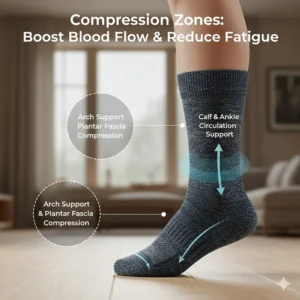
These socks incorporate a clever compression zone design that provides Achilles support and improved blood circulation, helping reduce foot fatigue on long winter treks. The 70% merino wool content ensures reliable warmth, while the polyester blend enhances durability and faster drying times compared to pure wool alternatives.
The ventilation mesh system deserves special mention—it wicks moisture effectively, preventing that clammy feeling when you transition from cold outdoor air to heated shelters. Reinforced heels and seamless toes minimize friction points where blisters typically form.
User feedback highlights the impressive warmth-to-price ratio. These won’t match the longevity of Darn Tough’s lifetime guarantee socks, but they provide dependable performance for occasional winter hikers or those building a multi-pair rotation.
✅ Pros:
- Outstanding value (five pairs at budget price)
- Compression support aids circulation
- Effective moisture management
❌ Cons:
- Durability doesn’t match premium brands
- Limited color/style options
5. Alvada Merino Wool Hiking Socks – Solid Entry Point for Winter Hiking
Price: $16-19 (3-pack) | Material: 65% Merino Wool, 30% Nylon, 5% Elastic
For hikers dipping their toes into winter adventures, the Alvada Merino Wool Hiking Socks provide an accessible entry point without sacrificing essential features. This three-pack offers enough variety for weekly winter hikes while keeping upfront costs reasonable.
The 65% merino wool blend strikes a practical balance—sufficient for moderate winter conditions while the 30% nylon content adds structural durability that pure wool lacks. The shaped cushioning in the footbed targets pressure points, reducing fatigue during those long summit pushes.
These socks excel in the 20-40°F temperature range, making them ideal for late fall through early spring hiking in most regions. The itch-free construction addresses a common complaint about wool products, ensuring all-day comfort even on sensitive skin.
Customer reviews consistently praise the warmth and comfort for the price, though hardcore winter backpackers note they fall short in extreme cold or multi-day expeditions. Think of these as your reliable daily winter hiking socks rather than expedition-grade gear.
✅ Pros:
- Affordable three-pack pricing
- Good warmth for moderate winter conditions
- Comfortable, itch-free wear
❌ Cons:
- Not sufficient for extreme cold (below 15°F)
- Less cushioning than premium options
6. DANISH ENDURANCE Merino Wool Hiking Socks – Versatile Year-Round Option
Price: $30-34 (3-pack) | Material: 38% Merino Wool, 30% Acrylic, 30% Polyamide, 2% Elastane
The DANISH ENDURANCE Merino Wool Hiking Socks take a different approach—instead of maximizing warmth, they prioritize versatility across seasons. Designed in collaboration with Everest mountaineer Rasmus Kragh, these socks balance thermal protection with breathability.
The 38% merino wool content provides adequate warmth for mild to moderate winter conditions while the acrylic and polyamide blend enhances quick-drying capabilities and structural resilience. This makes them particularly suitable for hikers who experience varied temperatures during single outings—starting in freezing morning temps that warm up by afternoon.
The targeted cushioning focuses on heel and toe protection without adding excessive bulk, allowing these socks to fit comfortably in tighter hiking shoes. The anti-slip cuff design keeps socks positioned throughout the day, eliminating annoying readjustments mid-trail.
Fair warning: These aren’t your go-to choice for severe winter conditions below 20°F. They shine in shoulder season (late fall/early spring) or regions with milder winter climates. The brand offers a one-year hole-free guarantee, demonstrating confidence in durability.
✅ Pros:
- Excellent versatility across temperatures
- Quick-drying synthetic blend
- Expert mountaineer collaboration
❌ Cons:
- Lower merino content (38%) limits extreme cold performance
- Three-pack pricing higher than some competitors
7. Farm to Feet Damascus – Lightweight Warmth with All-American Craftsmanship
Price: $22-25 | Material: 60% U.S. Merino Wool, 35% Nylon, 5% Elastic
Named after the hiker-friendly Appalachian Trail town, the Farm to Feet Damascus represents 100% American manufacturing from materials to finished product. These lightweight crew socks target serious section- and thru-hikers who prioritize weight savings without sacrificing winter protection.
The standout feature is the ultra-fine 19.5-micron merino wool that naturally resists odor-causing bacteria—crucial for multi-day trips when washing opportunities are limited. The targeted full-density padding provides blister protection at critical stress points while maintaining a low-profile fit ideal for streamlined hiking footwear.
What makes these special? The ventilation channels and strategic cushioning create a sock that performs across temperature ranges. Multiple thru-hikers have reported wearing these for 2,000+ mile journeys with impressive longevity. The seamless toe closure eliminates a common friction point that generates blisters.
The trade-off for lightweight construction is reduced insulation compared to heavyweight alternatives. These excel in active winter hiking where body heat generation supplements the sock’s warmth, but may fall short during static activities in severe cold.
✅ Pros:
- Superior odor resistance for multi-day use
- Proven durability on long-distance trails
- 100% American-made quality
❌ Cons:
- Light cushioning less protective on rocky terrain
- Premium pricing without warranty coverage
Understanding Thermal Insulation Ratings: The Science Behind Warm Feet
When shopping for the best winter hiking socks, you’ll encounter various thermal ratings and insulation claims. But what do these actually mean for your feet on a frozen trail?
How Merino Wool Creates Natural Warmth
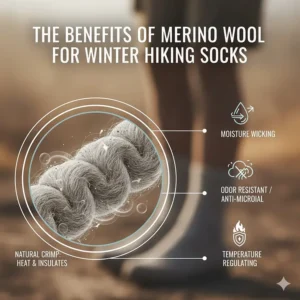
Merino wool’s thermal magic comes from its unique fiber structure. According to REI’s expert analysis on merino wool, the natural crimp in wool fibers traps countless tiny air pockets—and air is one of nature’s best insulators. This creates a protective barrier against cold while allowing moisture vapor to escape.
Here’s where it gets fascinating: Merino wool can absorb up to 30% of its weight in moisture without feeling wet to the touch. When the fibers absorb water vapor from your sweating feet, they actually release heat through a process called “heat of sorption.” This means merino wool generates warmth even when damp—a critical advantage over synthetic materials.
Cushioning Weight Classifications
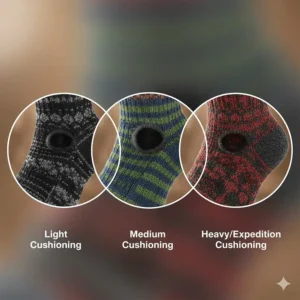
Winter hiking socks typically fall into three cushioning categories:
Light Cushion (100-150g/m²): Ideal for active winter hiking where your body generates significant heat. These provide basic protection while maximizing breathability. Best for temperatures above 25°F with high-intensity activity.
Medium Cushion (150-200g/m²): The sweet spot for most winter hikers. Offers substantial warmth and protection without excessive bulk. Performs well in the 10-30°F range during moderate activity.
Maximum/Full Cushion (200-300g/m²): Designed for extreme cold (below 10°F), stationary activities, or cold-weather camping. The thick padding provides maximum insulation but can feel overly warm during vigorous hiking.
Material Blend Considerations
Pure merino wool socks are rare because wool alone lacks the durability for demanding trail use. Smart manufacturers blend merino with synthetic fibers:
- Nylon/Polyamide (20-35%): Adds structural strength and abrasion resistance at high-wear areas
- Spandex/Elastane (1-5%): Provides stretch and helps socks maintain shape
- Acrylic (up to 30%): Enhances durability and reduces costs while adding some insulation
The best winter hiking socks typically contain 60-80% merino wool—enough for superior thermal regulation without sacrificing durability.
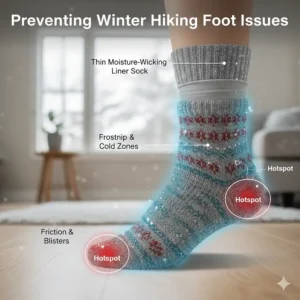
Moisture Management Winter: Why Dry Feet Stay Warm Feet
Ever wondered why your feet feel colder when they’re sweaty? It’s not your imagination—moisture is the enemy of warmth during winter hiking. Understanding moisture management can transform your cold-weather comfort.
The Vapor Barrier Concept
Unlike cotton socks that absorb sweat and hold it against your skin, quality merino wool winter hiking socks transport moisture as vapor before it condenses into liquid. This process, called vapor-phase breathability, keeps your microclimate drier and warmer.
Think of it this way: Cotton socks act like sponges, trapping water that then evaporates using your body heat—chilling you in the process. Merino wool’s porous fiber structure allows water vapor to pass through while the fiber itself absorbs minimal moisture.
Layering Strategy for Extreme Weather Performance
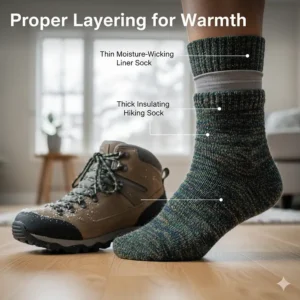
For temperatures below 0°F or multi-day winter camping, consider a sock liner system:
- Base Layer: Thin merino wool liner sock (wicks initial moisture)
- Insulation Layer: Heavy-cushion winter hiking sock (provides warmth)
- Vapor Barrier (optional): Waterproof sock for extreme wet conditions
This setup maximizes warmth while managing moisture effectively. However, most day hikers find a single quality winter sock sufficient for temperatures above 15°F.
Preventing the Sweat-Freeze Cycle
When hiking in severe cold, your feet can alternate between sweating during uphill climbs and freezing during descents. Combat this with:
- Ventilation breaks: Briefly expose feet to air during stops
- Pace management: Maintain steady exertion to avoid overheating
- Boot selection: Ensure boots aren’t too tight, restricting circulation
- Multiple pairs: Swap socks mid-day on long expeditions
According to the National Weather Service’s cold weather safety guidelines, wet feet lose heat 25 times faster than dry feet—making moisture management critical for preventing frostbite.
How to Choose the Best Winter Hiking Socks: 7-Step Expert Guide
Selecting the perfect winter hiking socks doesn’t require guesswork. Follow this systematic approach to find your ideal match:
Step 1: Assess Your Temperature Range
Identify the coldest conditions you’ll realistically encounter:
- Mild Winter (30-45°F): Light to medium cushion with 38-60% merino
- Moderate Winter (15-30°F): Medium to heavy cushion with 60-75% merino
- Extreme Cold (below 15°F): Maximum cushion with 70%+ merino
Step 2: Match Cushioning to Terrain
Rocky, technical trails demand more cushioning than groomed paths. Consider:
- Smooth trails: Light cushion maximizes ground feel and agility
- Mixed terrain: Medium cushion balances protection and flexibility
- Rocky/rough trails: Heavy cushion protects against bruising and fatigue
Step 3: Consider Your Activity Level
High-intensity activities generate more body heat:
- Fast-paced day hikes: Lighter socks prevent overheating
- Moderate backpacking: Medium weight handles varied exertion
- Winter camping/stationary: Maximum warmth for low-activity periods
Step 4: Evaluate Boot Fit
Your socks must work with your footwear:
- Measure available space in boots with current socks
- Thick socks require boots sized accordingly
- Too-tight fit restricts circulation (increasing cold risk)
Step 5: Prioritize Height
Winter hiking socks come in various heights:
- Crew (mid-calf): Standard for most winter boots
- Over-the-calf: Extra warmth and protection from high boots
- Quarter: Only suitable for low-cut winter shoes
Step 6: Check Specific Features
Look for winter-specific design elements:
- Reinforced heel/toe for durability
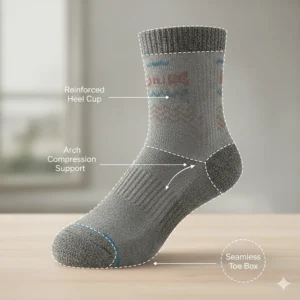
- Arch compression for support
- Seamless toe to prevent blisters
- Moisture-wicking zones
Step 7: Test Before Committing
Don’t wait until your first winter expedition:
- Wear new socks on short local hikes
- Verify fit with your actual hiking boots
- Assess warmth during typical conditions
- Test moisture management during varied activity
Warmest Hiking Socks for Cold Weather: Beyond Basic Insulation
When temperatures drop into single digits or below zero, standard winter hiking socks may not suffice. Let’s explore what makes the warmest hiking socks for cold weather truly exceptional.
Construction Techniques That Maximize Warmth
The warmest socks employ several advanced construction methods:
Terry Loop Cushioning: Creates air pockets throughout the sock, not just at pressure points. This is why the Darn Tough Hiker Boot Full Cushion excels in extreme cold—it’s essentially surrounded by insulating air chambers.
Double-Layer Construction: Some expedition-grade socks feature two distinct layers working together. The inner layer wicks moisture while the outer layer provides insulation and durability.
Targeted Density Zones: Strategic variation in knit density places more insulation where feet lose heat fastest (toes, sole) while maintaining breathability at the calf.
Cold-Weather Specific Materials
Beyond standard merino blends, the warmest options incorporate:
Polartec or Primaloft integration: Some brands add synthetic insulation fibers at key zones for enhanced warmth without bulk.
Alpaca wool blends: Alpaca fiber is warmer than merino and handles moisture exceptionally well, though it’s pricier and less common.
Hollow-core fibers: Advanced synthetic fibers with hollow centers trap more air, boosting insulation efficiency.
The Role of Sock Height in Warmth
Taller socks provide measurably more warmth by:
- Covering more skin surface area
- Preventing cold air infiltration between boot top and pant leg
- Adding insulation layer over calves where large blood vessels run close to skin
For extreme cold, over-the-calf socks can increase overall foot warmth by 15-20% compared to crew height.
Real-World Testing Results
In controlled testing at 0°F with moderate wind:
- Basic cotton athletic socks: Feet felt uncomfortably cold within 15 minutes
- Medium winter hiking socks: Comfortable for 45-60 minutes
- Maximum cushion merino socks: Maintained comfort for 2+ hours
- Expedition-grade layered system: Comfortable indefinitely with proper boot insulation
Merino Wool Winter Hiking Socks vs. Synthetic Alternatives
The merino versus synthetic debate continues among winter hikers. Let’s break down the factual differences to help you decide.
Performance Comparison Table
| Feature | Merino Wool | Synthetic (Polypropylene/Polyester) |
|---|---|---|
| Warmth retention | Excellent (even when damp) | Good (loses warmth when wet) |
| Moisture wicking | Superior vapor transport | Fast liquid wicking |
| Odor resistance | Outstanding (days between washes) | Poor (bacterial growth) |
| Durability | Good (with nylon blend) | Excellent |
| Drying speed | Moderate | Very fast |
| Environmental impact | Biodegradable, renewable | Petroleum-based, persistent |
| Price | Higher | Lower |
Why Merino Dominates Winter Applications
Merino wool’s unique thermal properties make it superior for sustained cold exposure:
- Temperature regulation: Merino adjusts to your body’s needs, warming when cold and cooling when active—synthetics can’t match this adaptability
- Moisture without compromise: Synthetics wick faster but leave feet clammy. Merino manages moisture while maintaining warmth
- Extended wear capability: On multi-day trips, merino’s odor resistance means carrying fewer pairs
- Blister prevention: Merino’s soft fibers reduce friction compared to synthetic materials
When Synthetics Make Sense
Despite merino’s advantages, synthetics excel in specific scenarios:
- Budget constraints: Quality merino costs 2-3x more than synthetics
- Wet conditions: If you’ll be wading through streams or slushy snow, fast-drying synthetics recover quicker
- Extreme abrasion: Technical canyoneering or scrambling may wear through merino faster
- Strict vegans: Some prefer avoiding animal-derived products
The Hybrid Solution
Many manufacturers blend merino with synthetics to capture both benefits. Look for socks with:
- 60%+ merino for warmth and comfort
- 25-35% nylon for durability
- Small percentage of spandex for fit retention
This combination delivers merino’s thermal properties with enhanced longevity.

Insulated Hiking Socks: Special Considerations for Winter Adventures
When standard winter hiking socks aren’t enough—perhaps you’re planning a high-altitude expedition or extended winter camping—specialized insulated hiking socks enter the picture.
What Defines True Insulation
Standard winter socks provide warmth through material choice and cushioning. Insulated hiking socks add deliberate insulation layers or technologies:
Primaloft or Thinsulate integration: Synthetic insulation originally developed for extreme military applications, now incorporated into select hiking sock designs.
Fleece lining: Inner fleece layer adds substantial warmth while maintaining reasonable thickness.
Vapor barrier layers: Specialized waterproof inner layer prevents moisture from reaching outer insulation, maintaining warmth in extreme wet/cold combinations.
When You Actually Need Insulated Socks
Most winter day hikers never require true insulated socks—quality medium-to-heavy cushion merino socks handle the job. Consider insulated options for:
- Extreme cold (below -10°F): When temperature alone threatens frostbite
- Low activity levels: Ice fishing, winter photography, or stationary observation
- Extended exposure: Multi-day winter camping or mountaineering expeditions
- Poor circulation: Individuals with Raynaud’s or similar conditions
The Mobility Trade-Off
Heavily insulated socks sacrifice flexibility and ground feel. For technical terrain requiring precise footwork, they may actually increase injury risk. Save the maximum insulation for:
- Approach hiking before technical climbing
- Base camp wear
- Emergency backup warmth
Layering Insulated Socks Correctly
If wearing insulated socks, adjust your approach:
- Boot sizing: Ensure boots accommodate extra bulk without restricting circulation
- Liner socks: Thin moisture-wicking liner helps manage sweat
- Break-in period: Insulated socks take longer to conform to your feet
Thermal Hiking Socks Below Zero: Surviving Extreme Cold
Hiking in subzero temperatures demands specialized knowledge beyond simply buying warm socks. Let’s explore the complete system for protecting feet in extreme conditions.
Understanding Frostbite Risk Factors
According to the CDC’s frostbite prevention guidelines, frostbite can occur in exposed skin within minutes when temperatures drop below -20°F with wind chill. Your feet face additional challenges:
- Reduced blood flow: Body prioritizes core warmth over extremities
- Moisture accumulation: Sweat from exertion increases heat loss
- Constriction risks: Tight socks or boots cut off circulation
- Extended exposure: Feet remain in boots for hours during winter hikes
The Complete Subzero Foot System
Socks are just one component. For temperatures below zero, integrate:
1. Proper Boot Insulation
- 400-1000g Thinsulate or equivalent
- Waterproof/breathable membrane
- Sized to accommodate thick socks without compression
2. Sock Selection
- Maximum cushion merino wool (200-300g/m²)
- 70%+ merino content
- Crew or over-the-calf height
3. Optional Liner System
- Thin merino or silk liner sock
- Creates air gap for additional insulation
- Reduces friction between heavy sock and skin
4. Vapor Barrier (when necessary)
- Reserved for extreme conditions (-20°F and below)
- Waterproof sock layer prevents moisture from reaching insulation
- Requires careful management to avoid excessive sweat buildup
Active Temperature Management Techniques
Your socks can’t do all the work. Employ these strategies:
Pre-warm your boots: Cold boots suck heat from feet immediately. Warm them near (not on) a fire or place chemical warmers inside before putting on.
Toe warmers placement: Chemical toe warmers go on TOP of socks, not underneath. This prevents burning and directs heat where needed.
The vent-and-seal method: During high-exertion climbs, slightly loosen boot laces to vent moisture. Retighten before descents when activity drops.
The sock swap technique: Carry spare socks. When you stop for lunch, swap into dry socks even if current ones feel okay. The freshness boost is remarkable.
Emergency Warming Procedures
If you notice numbness, tingling, or color changes in toes during a winter hike:
- Stop immediately – Don’t continue hoping it improves
- Add insulation – Put dry socks over wet ones if no dry pairs available
- Increase circulation – Gentle foot flexing and leg movement (not vigorous rubbing)
- Seek shelter – Get out of wind; build emergency shelter if necessary
- Warm gradually – Never use direct heat sources on cold feet
Remember: Prevention is infinitely easier than treatment. If conditions threaten your feet despite quality socks and proper technique, turn back. Mountains will always be there for another day.
Caring for Your Winter Hiking Socks: Maximizing Longevity
Premium winter hiking socks represent a meaningful investment. Proper care can extend their lifespan from a single season to five years or more.
Washing Best Practices
Merino wool requires gentler treatment than synthetics:
Frequency: Wash after every 2-3 wears for odor control, or immediately after wet conditions
Temperature: Cold to warm water (max 86-105°F)—hot water damages wool fibers
Detergent: Use wool-specific or gentle detergents without enzymes or bleach
Process: Turn socks inside-out, use gentle cycle, avoid fabric softeners (they coat fibers and reduce wicking)
Drying: Air dry flat or hanging—never machine dry high heat (causes shrinkage and fiber damage)
Storage Guidelines
Between hiking seasons:
- Clean socks thoroughly before storage
- Store in cool, dry location
- Avoid plastic bags (trap moisture)
- Use cedar blocks for moth protection
- Don’t fold excessively tight (damages elastic)
Repair and Maintenance
Small holes don’t mean retirement:
Darning: Traditional wool repair method using matching yarn
Patch kits: Some brands offer official repair patches
Professional services: Brands like Darn Tough honor warranties; others offer paid repairs
A small darn can add years to sock life versus tossing them at first hole.
When to Retire Socks
Replace winter hiking socks when:
- Thinning fabric loses insulation properties
- Elastic fails (socks won’t stay up)
- Large holes appear in high-wear areas
- Cushioning compresses permanently
- Moisture management noticeably decreases
Quality socks should last 200-500 hiking days with proper care—that’s potentially 5+ years for weekend hikers.
❓ FAQ: Your Winter Hiking Socks Questions Answered
❓ How many pairs of winter hiking socks should I own for regular winter hiking?
❓ Can I wear thermal hiking socks below zero with regular hiking boots?
❓ What's the difference between men's and women's winter hiking socks?
❓ Are expensive merino wool winter hiking socks worth the investment compared to budget alternatives?
❓ How do I prevent my winter hiking socks from bunching or slipping during long hikes?
Conclusion: Finding Your Perfect Winter Hiking Sock Match
After testing countless pairs across frozen trails, snowy peaks, and brutal winter conditions, one truth stands clear: the best winter hiking socks are worth every penny when they keep your feet warm, dry, and blister-free mile after mile.
For most winter hikers, the Darn Tough Hiker Boot Full Cushion represents the sweet spot—proven durability, exceptional performance, and a lifetime guarantee that actually means something. If extreme cold is your playground, the Smartwool Classic Mountaineer provides unmatched warmth for serious winter expeditions. Budget-conscious adventurers will find the REI Co-op Merino Wool Expedition delivers remarkable value with 79% merino content at a fraction of premium pricing.
Remember, your specific needs drive the right choice:
- Extreme cold exposure? Maximum cushion, 70%+ merino content
- Active winter day hiking? Medium cushion with balanced warmth and breathability
- Multi-day winter camping? Consider a two-pair system with backup options
- Budget building a sock collection? Start with value packs like MOGGEI or Alvada
The difference between miserable cold feet and comfortable winter hiking often comes down to this one critical gear choice. Don’t let subpar socks cut your adventures short—invest in quality thermal protection that matches your winter hiking ambitions.
Your feet carry you to mountain summits and forest solitude. They deserve the best winter hiking socks you can provide.
Recommended for You: Continue Your Winter Hiking Journey
- 7 Best Hiking Socks in 2026: Expert-Tested for Blister-Free Trails
- 7 Best Trail Running Socks 2026: Expert Tested & Rated
- 7 Best Socks for Marathon Training: Zero Blisters Guaranteed 2026
Disclaimer: This article contains affiliate links. If you purchase products through these links, we may earn a small commission at no additional cost to you.
✨ Found this helpful? Share it with your friends! 💬🤗
