In This Article
Here’s something most runners learn the hard way: you can have the most expensive running shoes on the market, but if you’re wearing the wrong socks, you’re setting yourself up for a world of pain. I’ve seen too many runners hobbling off trails or dropping out of races because they underestimated the power of quality running socks.
The difference between a great run and a blister-riddled disaster often comes down to what’s between your foot and your shoe. According to research published in the Journal of Athletic Training, up to 50% of runners experience blisters at some point, with sock choice playing a crucial role in prevention. The right pair doesn’t just prevent blisters—it manages moisture, provides strategic cushioning, and keeps your feet comfortable whether you’re logging 3 miles or 30.
In this guide, I’ve tested dozens of pairs to bring you the seven best running socks that actually deliver on their promises. From budget-friendly multipacks to premium performance options, you’ll find exactly what your feet need to stay blister-free and comfortable, mile after mile.
Quick Comparison Table
| Product | Price | Best For | Cushioning | Key Feature |
|---|---|---|---|---|
| Balega Hidden Comfort | $17/pair | Overall comfort & impact protection | High | Drynamix moisture-wicking |
| Feetures Elite Max Cushion | $18/pair | Targeted compression & support | Maximum | Lifetime guarantee |
| Darn Tough Run Ultra-Lightweight | $20-25/pair | Durability & trail running | Minimal | Lifetime warranty |
| Swiftwick ASPIRE ZERO | $17/pair | Speed work & hot weather | None | Firm compression |
| Injinji Run Lightweight | $15-24/pair | Blister prevention (toes) | Light | Five-toe design |
| Saucony RunDry Performance | $14 (6-pack) | Budget value | Medium | Best bulk option |
| Smartwool Run Targeted | $18-22/pair | Temperature regulation | Medium | Merino wool blend |
💬 Just one click – help others make better buying decisions too! 😊
Top 7 Best Running Socks: Expert Analysis
1. Balega Hidden Comfort No Show
When runners talk about the gold standard in running socks, this is the name that comes up most often. The Balega Hidden Comfort has earned its reputation through years of keeping feet blister-free and comfortable.
Key Specifications:
- Material: Drynamix polyester blend with seamless construction
- Price: $17 per pair
- Cushioning: High-density, full-foot coverage
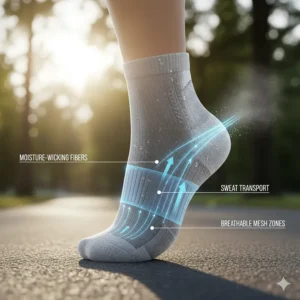
What sets this sock apart is the plush cushioning that somehow manages to feel protective without adding bulk. The proprietary Drynamix fiber technology actively pulls moisture away from your skin, keeping your feet remarkably dry even during sweaty long runs. The deep heel pocket ensures these socks stay put—no annoying mid-run adjustments needed.
Customer Feedback: Runners consistently praise how these socks eliminate the break-in period. One verified reviewer noted running a marathon in brand-new pairs without a single hotspot.
✅ Pros:
- Cloud-like cushioning that protects high-impact zones
- Superior moisture management with large ventilation panels
- Stays in place with no slippage
❌ Cons:
- Higher volume may feel snug in narrow shoes
- Less breathable than ultra-lightweight options
2. Feetures Elite Max Cushion No Show Tab
If you want a sock that feels like it was custom-made for your foot, the Feetures Elite Max Cushion delivers. This isn’t marketing hype—the anatomical left/right design actually makes a noticeable difference.
Key Specifications:
- Material: 74% polyester, 21% nylon, 5% spandex (made with recycled yarns)
- Price: $18 per pair
- Targeted compression with seamless toe construction
The real magic happens with the targeted arch compression that hugs your midfoot perfectly. Combined with high-density cushioning strategically placed under the heel and forefoot, these socks protect where you need it most. The iWICK fibers pull moisture away faster than you can generate it, while mesh ventilation keeps things breathable.
Customer Feedback: Multiple runners report these are the only socks they can wear for 20+ mile training runs without developing blisters.
✅ Pros:
- Anatomical design provides custom-like fit
- Lifetime warranty backs up durability claims
- Perfect blend of cushioning and breathability
❌ Cons:
- Premium price point
- May feel too cushioned for minimalist shoe enthusiasts
3. Darn Tough Run No Show Tab Ultra-Lightweight
Made in Vermont with a lifetime guarantee that the company actually honors, Darn Tough socks are an investment that pays off. These ultra-lightweight runners combine merino wool’s natural benefits with modern performance construction.
Key Specifications:
- Material: 49% merino wool, 47% nylon, 4% Lycra spandex
- Price: $20-25 per pair
- Ultralight weight with seamless toe closure
The merino wool naturally regulates temperature, keeping feet cool in summer and warm in winter while actively resisting odor-causing bacteria. According to research from ScienceDirect, merino wool’s moisture management properties significantly reduce blister formation compared to cotton alternatives. The ultralight construction disappears inside your shoes while mesh panels maximize airflow.
Customer Feedback: Trail runners particularly love these for technical terrain, noting exceptional durability even after hundreds of miles.
✅ Pros:
- True lifetime warranty (they replace worn-out socks)
- Merino wool naturally fights odors
- Perfect for trail running debris protection
❌ Cons:
- Higher initial cost
- Merino blend takes longer to dry than synthetic
4. Swiftwick ASPIRE ZERO Tab
For runners who prefer the “barely there” feeling, the Swiftwick ASPIRE ZERO delivers firm compression without any cushioning. This is the sock you reach for on race day or tempo runs when you want maximum ground feel.
Key Specifications:
- Material: Proprietary Olefin fiber blend
- Price: $17 per pair (often sold in 3-packs)
- Zero cushioning with firm compression
The Olefin fiber technology is where these socks shine—literally the fastest-drying running sock I’ve tested. You can rinse them out mid-run and they’re nearly dry within an hour. The firm compression supports your arch and reduces muscle fatigue, while the Y-shaped heel construction ensures zero bunching or slipping.
Customer Feedback: Speed-focused runners praise how these disappear during hard workouts. One ultra-runner noted wearing the same pair for multiple days during stage races without odor issues.
✅ Pros:
- Lightning-fast moisture wicking and drying
- Excellent for hot weather running
- Compression reduces foot fatigue
❌ Cons:
- No cushioning may feel harsh for recovery runs
- Tight compression isn’t for everyone
5. Injinji Run Lightweight No-Show
Yes, they look weird. Yes, they feel strange at first. And yes, they absolutely work for preventing blisters between your toes. The Injinji Run Lightweight wraps each toe individually, eliminating skin-on-skin friction entirely.
Key Specifications:
- Material: CoolMax polyester blend
- Price: $15-24 per pair
- Patented five-toe sleeve design
Each toe gets its own protective sleeve filled with moisture-wicking material, spreading your toes naturally and distributing weight more evenly. The anatomical fit is designed specifically for runners, with a snug midfoot and protective heel tab. According to the Carmichael Training Systems research, eliminating toe-to-toe friction is one of the most effective blister prevention strategies.
Customer Feedback: Converts swear by them, noting they’d never go back to traditional socks after experiencing blister-free long runs.
✅ Pros:
- Completely eliminates between-toe blisters
- Natural toe splay improves balance
- Works great in humid conditions
❌ Cons:
- Learning curve to put them on correctly
- Not ideal if you dislike toe-sock sensation
6. Saucony RunDry Performance No-Show
If you’re on a budget or need multiple pairs for training, the Saucony RunDry Performance delivers surprisingly good performance at an unbeatable price. At roughly $2.30 per pair in the 6-pack, these are the best value in running socks.
Key Specifications:
- Material: Polyester/spandex blend with RunDry technology
- Price: $14 for 6-pack ($2.30/pair)
- Strategic cushioning with arch support
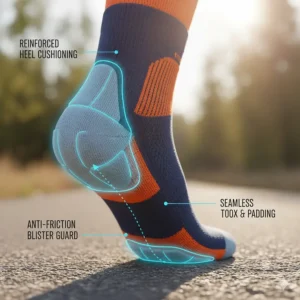
The RunDry moisture management system actively wicks sweat away while Airmesh venting on the top of the foot increases breathability. Cushioning is strategically placed from ball-to-toe and around the heel rather than covering the entire foot, keeping volume down. The heel tab prevents shoe collar rubbing.
Customer Feedback: Runners appreciate the value but note these don’t last as long as premium options—expect 6-12 months with regular use.
✅ Pros:
- Unbeatable price for performance socks
- Comes in multipacks perfect for training
- Targeted cushioning reduces bulk
❌ Cons:
- Lower durability (may fray after heavy use)
- Less cushioning than premium options
7. Smartwool Run Targeted Cushion Ankle
For runners who want natural fiber performance with technical features, the Smartwool Run Targeted Cushion combines merino wool benefits with strategic design. This is your year-round sock that adapts to varying conditions.
Key Specifications:
- Material: Merino wool blend with nylon reinforcement
- Price: $18-22 per pair
- Medium targeted cushioning with Indestructawool technology
Smartwool’s Indestructawool durability guarantee backs these socks with reinforcement in high-wear zones. The 4 Degree Elite Fit System uses two elastics for better stretch and recovery, while mesh ventilation zones keep things breathable. Merino wool naturally regulates temperature and resists odors even after multiple wears.
Customer Feedback: Runners love these for unpredictable weather, noting they work equally well in 40°F morning starts and 70°F afternoon temps.
✅ Pros:
- Natural odor resistance from merino wool
- Excellent temperature regulation
- Durable construction with warranty
❌ Cons:
- Takes longer to dry than synthetic
- May feel warm in very hot conditions
Understanding Running Sock Technology
Moisture-Wicking Materials: The Foundation of Blister Prevention
Not all moisture-wicking fabrics are created equal. Cotton absorbs and holds moisture against your skin—that’s why it’s the enemy of blister-free running. Modern performance socks use synthetic fibers like polyester or natural alternatives like merino wool that actively move moisture away from your skin to the sock’s exterior where it can evaporate.
The science backs this up. According to research from the Blister Prevention Pro, acrylic and polyester fibers reduced blister formation by managing moisture more effectively than cotton in controlled studies. The key is choosing materials that stay relatively dry even when saturated, maintaining a lower coefficient of friction against your skin.
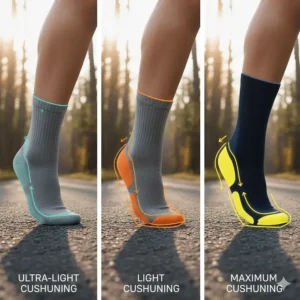
Cushioning Levels Explained
Finding Your Perfect Amount
Cushioning isn’t one-size-fits-all. Here’s how to decode what you actually need:
Maximum Cushioning works best for long-distance runs, recovery days, or runners with high arches who need extra impact protection. Think Balega Hidden Comfort or Feetures Elite Max Cushion—these socks have dense padding underfoot that makes concrete feel softer.
Medium Cushioning strikes a balance between protection and ground feel. Perfect for daily training runs ranging from 5K to half marathon distances. Smartwool and Saucony options fall into this category.
Light to Zero Cushioning appeals to minimalist runners, racers, and anyone who wants maximum proprioception. Swiftwick ASPIRE and Darn Tough ultra-lightweight models let you feel every texture change in the trail or road.
Your shoe also matters—maximalist cushioned shoes pair well with thinner socks, while racing flats often benefit from a bit more sock cushioning.
Seamless Construction: Small Detail, Huge Impact
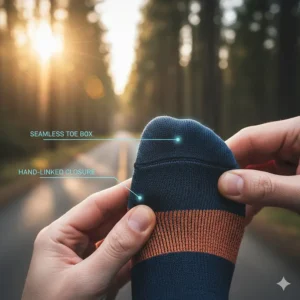
That annoying toe seam in cheap socks? It’s not just uncomfortable—it’s a blister waiting to happen. Seamless toe construction eliminates the ridge of material that rubs against your toes during thousands of foot strikes per run.
Premium socks like Feetures use hand-linked seamless toes or toe-closing techniques that create an imperceptible connection. This matters most during long runs when even minor irritation compounds over time. According to Sports Injury Physio research, seamless construction can reduce friction-related hotspots by up to 40%.
Compression and Arch Support
Performance Benefits Beyond Comfort
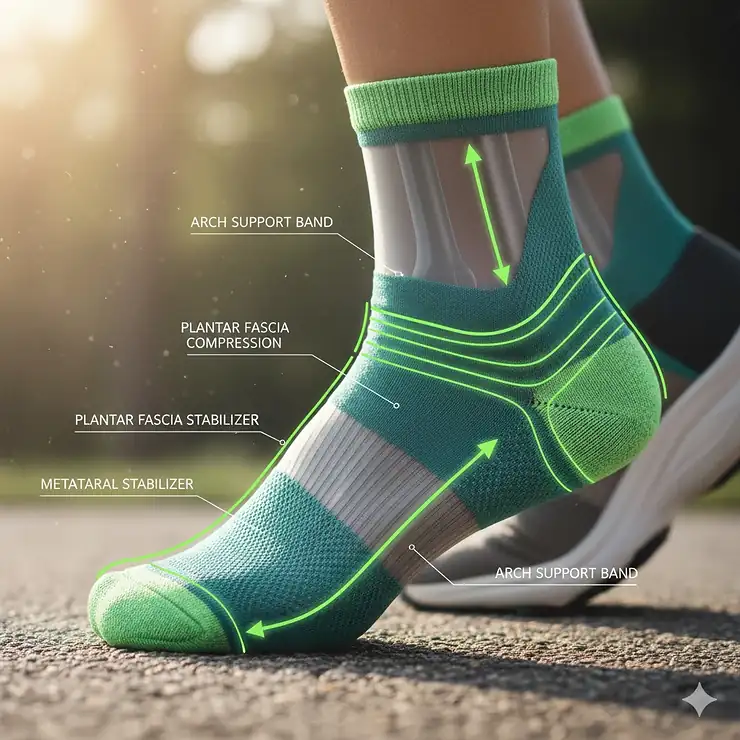
Targeted compression serves multiple purposes in running socks. The arch band in socks like Feetures Elite keeps the sock locked in place, preventing the bunching that causes blisters. It also provides gentle support to your arch, reducing fatigue during long runs.
Firm compression socks like Swiftwick ASPIRE go further, actively supporting muscles and potentially improving circulation. While the performance benefits are still being researched, many runners report less foot fatigue and faster recovery when using compression running socks.
Fit Matters: Height and Size Considerations
No-Show vs. Quarter vs. Crew
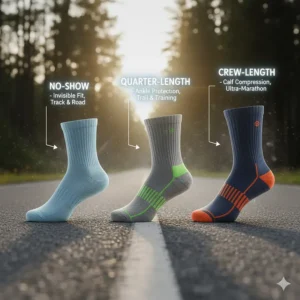
No-show socks sit below the ankle bone, perfect for low-cut running shoes. They minimize tan lines and keep you cool but offer less protection from debris on trails.
Quarter-length socks rise about 1-3 inches above the ankle, providing protection from shoe collars and trail debris while maintaining breathability.
Crew socks offer maximum coverage and are ideal for cold weather running, technical trails, or runners who prefer more leg coverage.
Size actually matters with running socks. Too small creates pressure points; too large bunches and causes friction. Most brands offer multiple size ranges based on shoe size, and I always recommend sizing up if you’re between sizes—a slightly looser sock is preferable to one that’s too tight.
Special Features Worth Considering
L/R Specific Design
Brands like Feetures create anatomically distinct left and right socks. This isn’t marketing gimmick—the different construction follows your foot’s actual shape, improving fit and reducing pressure points. The difference is subtle but noticeable, especially on runs over 10 miles.
Ventilation Zones
Mesh panels strategically placed on top of the foot increase airflow without compromising structure. This matters most for summer running or humid climates where heat buildup accelerates blister formation.
Reinforced High-Wear Areas
Premium socks reinforce the heel and toe box with denser knitting or extra material. This extends lifespan significantly—some Darn Tough socks last years even with weekly use.
Best Running Socks for Long Distance
Marathon and Ultra Training Demands
Distance runners need socks that maintain performance for hours, not just miles. The best running socks for long distance prioritize moisture management above all else because even excellent wicking fails if your feet are soaked for 4+ hours.
Balega Hidden Comfort tops the list for marathons thanks to high cushioning that protects feet during fatigue-related form breakdown. The ventilation panels become crucial after mile 18 when heat management matters most.
Injinji toe socks shine for ultra-distances where between-toe blisters become a real concern. Many 100-mile finishers swear these are the only socks that keep them blister-free through 20+ hours of running.
Temperature regulation becomes critical for long efforts. Merino wool options like Darn Tough or Smartwool excel here, keeping feet comfortable through morning cold and afternoon heat without requiring sock changes.
Professional Running Socks Review: What the Experts Say
Tested by Real Runners
Professional reviews consistently highlight several key findings. OutdoorGearLab’s extensive testing in desert, mountain, and coastal conditions found that moisture management outweighed cushioning for blister prevention. Their top-rated socks all featured synthetic or merino materials that stayed relatively dry even when saturated.
GearJunkie’s testing team logged over 500 miles in each sock model, finding that seamless construction and proper fit prevented more blisters than any amount of padding. Their review emphasized that “the best sock is one you don’t notice”—if you’re thinking about your socks mid-run, something’s wrong.
Runner’s World testing across multiple years showed Feetures and Balega consistently scoring highest for durability and maintained performance. Unlike shoes that break down predictably, quality socks maintain their properties through dozens of washes.
Top Rated Running Socks 2026: What’s Coming
Innovation on the Horizon
Looking ahead to 2026, several trends are emerging in running sock technology. Sustainable materials are gaining traction—expect more recycled polyester and responsibly-sourced merino wool options.
Smart textile integration is being tested by major brands, with temperature-regulating fibers and even compression that adjusts based on activity level. Feetures already uses recycled materials in their Elite line, while Swiftwick has introduced Repreve recycled fiber technology.
Customization is also advancing. Some companies now offer personalized sock recommendations based on foot shape analysis, though we’ll see if this justifies the premium pricing.
Running Socks That Prevent Blisters: The Science
Understanding Friction and Heat
Blisters form when three factors combine: friction, moisture, and heat. Your sock’s job is to manage all three simultaneously. According to research published in the Journal of Athletic Training, properly designed running socks can reduce blister incidence by up to 60% compared to cotton alternatives.
The friction reduction happens through two mechanisms. First, moisture-wicking materials keep your skin relatively dry, lowering its coefficient of friction. Second, the sock material itself has lower friction against your shoe’s interior than bare skin would.
Heat management comes through ventilation zones and breathable materials. Even a 4°C reduction in foot temperature can decrease blister formation by 50%, making breathability a critical feature.
Toe socks take a different approach—instead of managing skin-to-sock friction, they eliminate skin-to-skin friction between toes entirely. For runners prone to inter-toe blisters, this is often the only effective solution.
Seamless Construction and Its Benefits
Why That Toe Seam Matters
Traditional socks have a bulky seam across the toe box where the tube is closed. During running, this seam rubs against your toes thousands of times, creating friction hotspots that develop into blisters. Seamless construction uses special linking techniques or toe-closing methods that create an imperceptible join.
Feetures calls their version “The Perfect Toe”—a seamless design that runners consistently cite as preventing toe-box blisters. Balega uses hand-linked reinforced toe construction that serves the same purpose. The technology is simple but makes a measurable difference, especially on runs over 90 minutes when cumulative friction becomes significant.
✨ Don’t Miss These Exclusive Deals!
🔍 Take your running to the next level with these carefully selected products. Click on any highlighted item to check current pricing and availability. These tools will help you achieve blister-free miles your feet will love!
Care and Maintenance Tips
Maximizing Sock Lifespan
Proper care extends running sock life significantly. Always wash in cold water on gentle cycle—hot water breaks down elastic fibers faster. Skip the fabric softener, which coats fibers and reduces moisture-wicking effectiveness.
Air drying is ideal for all performance socks. If you must use a dryer, use low heat. High temperatures degrade elastic and can damage moisture-wicking properties. Turn socks inside out before washing to protect the exterior fibers.
Replace socks when you notice thinning in high-wear areas, loss of elasticity (they start slipping during runs), or reduced moisture management. Most quality running socks last 500-1000 miles with proper care.
Budget vs. Premium: What’s Worth It?
Making Smart Investments
Budget options like Saucony’s 6-packs offer decent performance for casual runners logging 10-15 miles weekly. However, serious runners investing hours in training should prioritize premium socks. Here’s why:
Premium socks last 2-3 times longer than budget alternatives. A $18 pair worn 100 times costs $0.18 per run. A $2.50 budget sock lasting 30 runs costs $0.08 per run—but you’ll deal with more blisters and replacements.
The performance difference becomes obvious on long runs. Premium moisture management prevents the hotspot development that derails training. Lifetime warranties from Darn Tough and Feetures mean you’re essentially buying your last pair of running socks.
For most runners, I recommend buying 3-4 pairs of premium socks for long runs and races, then using budget options for easy recovery runs.
Matching Socks to Running Conditions
Temperature and Terrain Adaptations
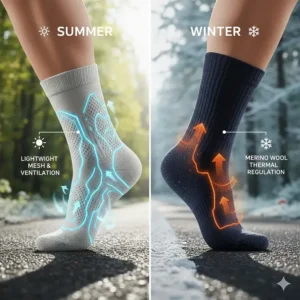
Hot weather running demands maximum breathability with effective moisture management. Swiftwick ASPIRE ZERO or Darn Tough ultra-lightweight options excel here with minimal cushioning and excellent airflow.
Cold weather running benefits from merino wool blends that insulate while managing moisture. Smartwool and Darn Tough merino options keep feet warm without overheating.
Trail running requires protection from debris and rocks. Quarter or crew height with moderate cushioning works best. Darn Tough and Injinji trail-specific models add extra protection where it’s needed.
Road running typically allows thinner, more minimalist socks since smooth pavement doesn’t threaten your feet. Focus on moisture management and compression rather than padding.
Common Running Sock Mistakes
What to Avoid
Wearing new socks on race day ranks as the most common mistake. Always test socks for at least 50 miles before trusting them in a race. Different sock constructions can create new friction points your feet haven’t adapted to.
Ignoring size charts is another frequent error. “One size fits most” rarely fits anyone optimally. Invest time finding your correct size for each brand—they vary significantly.
Overlooking replacement timing costs runners. Worn-out socks lose cushioning and moisture-wicking properties even if they look fine. If your socks are over a year old and you run regularly, they’re probably due for replacement.
Finally, many runners default to thick cushioning assuming more padding equals more comfort. Sometimes less is more—excess material can cause bunching and overheating.
Frequently Asked Questions
❓ What makes running socks different from regular athletic socks?
❓ How often should I replace my running socks?
❓ Do compression running socks actually improve performance?
❓ Are expensive running socks worth the investment?
❓ Can toe socks really prevent blisters between toes better than regular socks?
Conclusion: Finding Your Perfect Running Sock
After testing dozens of running socks across hundreds of training miles, one truth becomes clear: the best running socks are the ones that disappear on your feet. You shouldn’t think about your socks during a run—if you are, something’s wrong.
For most runners, I recommend starting with Balega Hidden Comfort for long runs and recovery days, Feetures Elite Max Cushion for daily training, and Swiftwick ASPIRE for speed work and races. This three-sock rotation covers all your bases while keeping feet blister-free.
Budget-conscious runners should invest in at least one pair of premium socks for long runs while using Saucony multipacks for easier miles. The difference in blister prevention alone justifies the investment.
Remember that socks work as a system with your shoes. Even the world’s best socks can’t overcome poorly fitted shoes. Take time to find the right combination, test everything thoroughly before race day, and don’t be afraid to experiment with different styles and brands.
Your feet carry you through thousands of miles—they deserve socks that actually work. Whether you’re training for your first 5K or your tenth ultra-marathon, investing in quality running socks that prevent blisters pays dividends in comfort, performance, and injury prevention.
Recommended for You
- 7 Best Thermal Socks for Extreme Cold 2025 – Expert Tested
- 7 Best Grip Socks for Men 2025: Performance & Comfort Guide
- 7 Best Lucky Honey Grip Socks for Pilates & Yoga (2025 Review)
Disclaimer: This article contains affiliate links. If you purchase products through these links, we may earn a small commission at no additional cost to you.
✨ Found this helpful? Share it with your friends! 💬🤗
