
In This Article
I’ll be honest – I used to think socks were just socks. Throw on whatever was clean, clip in, and go, right? Wrong. That mindset changed after a brutal century ride left my feet screaming and two blisters the size of nickels reminding me why cyclists obsess over their footwear choices.
The truth is, your cycling performance starts from the ground up. The right pair of specialized cycling socks can transform your riding experience in ways that might surprise you. We’re talking measurable aerodynamic advantages (yes, really!), enhanced blood circulation, moisture management that prevents those painful hot spots, and a custom-like fit that makes your expensive cycling shoes actually work the way they’re designed to.
In 2026, cycling sock technology has evolved far beyond simple cotton tubes. Today’s best performers incorporate compression zones that fight fatigue, moisture wicking bike socks materials that keep feet dry for hours, ventilated mesh panels positioned exactly where heat builds up, and even textured surfaces proven in wind tunnels to save watts.
Whether you’re chasing KOMs, grinding out training miles, or just want comfortable feet on your weekend rides, the best cycling socks deliver tangible benefits. This guide breaks down everything you need to know – from understanding what makes a great cycling sock to finding the perfect pair for your riding style and budget.
Quick Comparison Table
| Product | Type | Price Range | Best For | Rating |
|---|---|---|---|---|
| DANISH ENDURANCE Crew | All-Purpose | $20-25 | Versatility | ⭐⭐⭐⭐⭐ |
| ROCKBROS Road to Sky | Performance | $15-22 | Value | ⭐⭐⭐⭐½ |
| DeFeet Aireator 6″ | Lightweight | $13-17 | Breathability | ⭐⭐⭐⭐⭐ |
| Swiftwick ASPIRE FOUR | Compression | $17-22 | Support | ⭐⭐⭐⭐⭐ |
| Castelli Quindici Merino | Cold Weather | $18-25 | Warmth | ⭐⭐⭐⭐ |
| GripGrab Lightweight SL | Summer Riding | $12-20 | Hot Weather | ⭐⭐⭐⭐ |
| SockGuy SGX 6″ | Compression | $13-18 | Budget Performance | ⭐⭐⭐⭐ |
💬 Just one click – help others make better buying decisions too! 😊
Top 7 Best Cycling Socks: Expert Analysis
1. DANISH ENDURANCE Cycling Socks – Best Overall Performance
Price: $20-25 (3-pack)
Developed in collaboration with Danish Ironman athlete Anders Hofman, these crew-length beauties are engineered for serious riders who demand versatility. Made from 56% polypropylene, 39% polyamide, and 5% elastane, they strike that perfect balance between performance and comfort.
What sets them apart? Cooling lanes that actively move heat away from your feet, targeted padding in heel and toe zones to prevent blisters, and moisture-wicking properties that keep your feet dry even during intense intervals. The fabric is OEKO-TEX Standard 100 certified, meaning zero harmful substances – a detail your skin will appreciate on those multi-hour rides.
Pros:
✅ Developed with professional endurance athletes
✅ Sustainable production in Portugal
✅ Excellent moisture management
Cons:
❌ May run slightly snug for wider feet
❌ Premium pricing compared to basic options
Customer feedback consistently highlights how these disappear on your feet – that barely-there feel that serious cyclists crave. One reviewer mentioned using a pair for seven years (!) before finally losing one in the laundry.
2. ROCKBROS Aerodynamic Cycling Socks – Best for Speed Seekers
Price: $15-22
If you’re hunting for marginal gains without emptying your wallet, ROCKBROS delivers aerodynamic advantage at an accessible price point. These socks feature wear-resistant heel construction with 94.2% nylon and 5.8% spandex – a blend that prioritizes both durability and that snug, slip-free fit.
The ergonomic support design follows your foot’s natural curves, providing stability where you need it most. Quick-dry breathable fabric with micro-ventilation holes keeps air circulating freely, while the elasticized cuff stays put without cutting into your calves.
Pros:
✅ Aerodynamic profile for reduced drag
✅ Affordable performance upgrade
✅ Excellent breathability
Cons:
❌ Limited color options
❌ Sizing runs small for some riders
These have become my go-to for race day. The compression is noticeable but not uncomfortable, and I swear they help me maintain power output longer into hard efforts.
3. DeFeet Aireator 6″ – Best for Breathability
Price: $13-17
The sock that started it all. Since 1992, DeFeet’s Aireator has been the gold standard for breathable cycling socks. That open mesh weave over the instep isn’t just for show – it creates genuine ventilation that keeps feet cooler on scorching summer rides.
Made in the USA from 60% nylon, 39% recycled polyester (Repreve®), and 1% Lycra, these represent sustainable manufacturing done right. The double cuff provides ankle zone compression that prevents slipping, while the thin profile fits perfectly in performance cycling shoes.
Pros:
✅ Iconic design trusted by pros
✅ Made from recycled materials
✅ USA manufacturing
Cons:
❌ Thin construction may not suit everyone
❌ Less cushioning than some prefer
I’ve worn these through everything from criteriums to gravel centuries. They wash beautifully, dry fast, and the breathability really shines when temperatures climb above 85°F.
4. Swiftwick ASPIRE FOUR – Best Compression Fit
Price: $17-22 (3-pack)
Tennessee-made excellence right here. Swiftwick’s ASPIRE line engineered firm compression with a thin profile creates that responsive feel serious cyclists chase. The quarter crew height sits perfectly below the calf, and double-cuff construction adds extra support exactly where cycling demands it.
Firm compression hugs every contour of your foot, supporting the arch and reducing fatigue during those suffer-fest training blocks. Maximum breathability through moisture-wicking fibers keeps feet cool, dry, and blister-free mile after mile.
Pros:
✅ Superior arch support
✅ Manufactured in USA
✅ Long-lasting durability
Cons:
❌ Higher price point
❌ Compression may feel too tight initially
The compression took a ride or two to get used to, but now I notice the difference immediately when I wear regular socks. My feet stay fresher longer, and recovery seems quicker.
5. Castelli Quindici Soft Merino Sock – Best for Cool Weather
Price: $18-25
Italian craftsmanship meets natural fiber performance. Castelli’s merino wool blend delivers natural insulation, moisture transportation, and anti-static properties that synthetic materials struggle to match. The 15cm cuff length provides coverage without bulk.
Arch support bands enhance comfort while providing shock absorption right where your arches take the most pressure. Nylon-reinforced heel and toe areas extend durability significantly beyond standard merino socks.
Pros:
✅ Natural temperature regulation
✅ Odor-resistant merino wool
✅ Italian quality construction
Cons:
❌ Less breathable in hot conditions
❌ Requires careful washing
These are my autumn and spring go-to socks. The merino keeps feet comfortable across a surprisingly wide temperature range – roughly 45-70°F in my experience.
6. GripGrab Lightweight SL Performance – Best for Summer Riding
Price: $12-20
Scandinavian design philosophy shines through in these lightweight summer specialists. Breathable Coolmax mesh technology regulates temperature efficiently, keeping your feet dry when heat and humidity combine forces against comfort.
Secure fit with stretch arch support means these socks stay exactly where you put them. The seamless toe closure prevents irritation, while open mesh zones maximize breathability. Available in multiple vibrant colors to match any kit.
Pros:
✅ Excellent value for money
✅ Superior hot weather performance
✅ Multiple height options
Cons:
❌ Thin construction less durable
❌ Limited cushioning
For rides above 75°F, these are unbeatable. The ventilation is exceptional, and they dry ridiculously fast if you get caught in a summer shower.
7. SockGuy SGX 6″ – Best Budget Compression Option
Price: $13-18
Don’t let the playful designs fool you – SockGuy’s Elite Performance Formula delivers legitimate compression benefits without premium pricing. The polypropylene, nylon, and spandex blend provides compression fit, performance ribbing, and enhanced ventilation.
Compression ribbing cuff increases blood flow to fight leg fatigue, while mesh upper panels maximize airflow. Snug arch support hugs your foot for maximum comfort with virtually zero slip. Reinforced toe and heel extend lifespan considerably.
Pros:
✅ Affordable compression technology
✅ Fun, unique designs
✅ True stretch-to-fit sizing
Cons:
❌ Compression less aggressive than premium options
❌ Some designs may not suit everyone’s taste
These punch way above their price point. The compression is real, the fit is solid, and honestly, wearing socks with personality just makes rides more fun.
Understanding Cycling Sock Technology
Modern cycling socks have evolved into sophisticated pieces of athletic equipment. Let me break down what separates mediocre socks from performance game-changers.
The foundation starts with material selection. Synthetic fibers like polyester and nylon dominate the market for good reason – they wick moisture exponentially better than natural fibers, dry faster, and maintain their shape through countless wash cycles. According to REI experts, synthetic materials can be woven tighter together, allowing socks to conform better to foot shape while managing moisture more effectively.
Merino wool deserves special mention. This natural fiber offers unique benefits – temperature regulation across wider ranges, natural antimicrobial properties, and softness that synthetics struggle to match. The trade-off? Slightly longer drying times and typically higher prices.
Compression technology represents another leap forward. Graduated compression (tighter at the ankle, gradually loosening toward the calf) promotes blood flow back toward your heart. Research suggests this can reduce muscle oscillation during pedaling, potentially delaying fatigue onset. The science remains somewhat debated, but countless riders report tangible benefits.
Aerodynamic considerations might sound excessive for recreational riders, but the physics are real. Wind tunnel testing has demonstrated that textured lycra surfaces create less drag than bare skin or traditional sock materials. At speeds above 25 mph, the watt savings become measurable. For competitive riders, every advantage counts.
Key Features to Look For
Moisture Management Systems
Sweat happens. How your socks handle it determines whether you finish strong or develop blisters that sideline you for weeks. Look for dedicated ventilation zones – mesh panels strategically positioned over high-heat areas like the top of the foot and around the toes.
Wicking technology pulls moisture away from skin and spreads it across fabric surface area for faster evaporation. This isn’t marketing fluff – proper moisture wicking bike socks keep feet 2-3°F cooler and significantly reduce blister risk.
Compression and Support Features
Not all compression is created equal. Quality compression socks feature graduated pressure – approximately 20-30 mmHg at the ankle, decreasing to 10-15 mmHg at the calf. This mimics natural blood flow patterns.
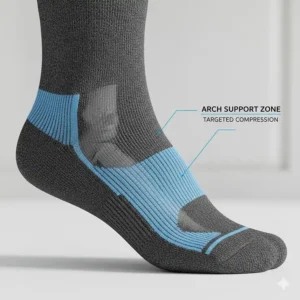
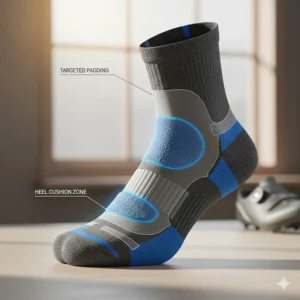
Arch bands provide support where your foot naturally flexes during pedal stroke efficiency movements. This targeted support reduces fatigue in smaller foot muscles that work constantly during rides.
Anatomical Design Elements
Left/right specific designs aren’t gimmicks. Your feet aren’t symmetrical, and socks designed accordingly fit better. Seamless toe boxes prevent friction hot spots that lead to blisters. Y-heel construction wraps your heel properly, preventing the sock from bunching or sliding.
Cuff construction matters more than you’d think. Double-cuff designs provide ankle compression that keeps socks positioned correctly without cutting circulation. Too loose and they slide down; too tight and you get uncomfortable pressure marks.
Cycling Sock Materials Comparison
| Material | Moisture Wicking | Durability | Temperature Range | Odor Resistance | Price |
|---|---|---|---|---|---|
| Polyester/Nylon | Excellent | Very Good | Hot to Moderate | Good | $ |
| Merino Wool | Very Good | Good | Cold to Moderate | Excellent | $$$ |
| Polypropylene | Excellent | Very Good | All Conditions | Very Good | $$ |
| Bamboo Blend | Good | Fair | Moderate | Excellent | $$ |
| Coolmax® | Excellent | Very Good | Hot Conditions | Good | $$ |
How to Choose the Right Cycling Socks for Your Needs
Your riding style dictates sock selection more than any other factor. Road racers prioritize different features than gravel grinders or mountain bikers.
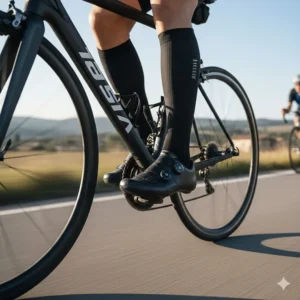
For Road Cyclists: Lightweight construction, aerodynamic profiles, and minimal bulk reign supreme. You want socks that disappear inside snug cycling shoes while providing just enough cushioning at contact points. Road cycling socks lightweight options like the DeFeet Aireator excel here.
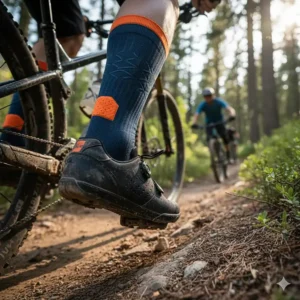
For Mountain Bikers: Durability jumps to the top of the priority list. Trail debris, mud, and frequent shoe-off moments demand tougher construction. Mid-to-tall cuff heights protect ankles from brush and rocks. Extra cushioning in heel and toe areas absorbs trail chatter.
For Gravel Riders: Versatility becomes key. You need socks that perform well across varying terrain and conditions. Medium weight, good moisture management, and moderate compression work best. Think Goldilocks – not too light, not too heavy.
For Commuters: Comfort over long durations matters most. Look for breathable materials that prevent foot fatigue during multi-hour wear. Consider socks that transition well from bike to office – subtle designs in neutral colors.
Climate considerations can’t be ignored. Summer riding in Arizona demands different socks than spring training in Belgium. I keep three categories in my drawer: lightweight summer socks (temps above 70°F), medium-weight three-season options (45-70°F), and merino winter socks (below 45°F).
Shoe interface comfort directly impacts pedal stroke efficiency. Cycling shoes fit snugly by design – loose, thick socks create pressure points and reduce power transfer. The right sock thickness depends on your shoe’s fit. Too thick and your shoes feel uncomfortably tight; too thin and you lose beneficial cushioning.
✨ Don’t Miss These Exclusive Deals!
🔍 Take your cycling performance to the next level with these carefully selected products. Click on any highlighted item to check current pricing and availability. These socks will help you create authentic comfort your feet will love!
The Science Behind Compression Cycling Socks
Let’s talk about what’s actually happening beneath the surface when you pull on compression socks.
Graduated compression applies mechanical pressure that assists venous return – essentially helping blood flow back toward your heart more efficiently. During cycling, calf muscles contract and relax repeatedly, acting as a pump. Compression enhances this natural mechanism.
Research on compression garments suggests several potential benefits: reduced muscle oscillation (which decreases microtrauma), improved oxygen delivery to working muscles, and accelerated lactate clearance. The catch? Individual responses vary significantly.
Some riders feel immediate differences – better endurance, reduced soreness, fresher legs the next day. Others notice minimal change. Body composition, fitness level, and even genetics play roles in how much you’ll benefit from compression.
The sweet spot for cycling compression sits around 15-20 mmHg at the ankle. More isn’t necessarily better – excessive compression can restrict blood flow and cause discomfort. Quality brands engineer their compression zones based on research and athlete testing.
Recovery benefits might exceed performance advantages. Post-ride compression helps clear metabolic waste products and reduces inflammation. Many riders wear compression socks for hours after hard efforts, even if they don’t wear them during the ride itself.
Proper Fit and Sizing Guide
Getting the right size makes the difference between socks you love and socks that sit unused in your drawer. Here’s how to nail it.
Most cycling sock brands use shoe size ranges rather than S/M/L designations. Measure your foot length accurately – stand on a ruler and note where your longest toe hits. Check brand-specific size charts since they vary.
The fit test is simple: socks should feel snug without restricting circulation. You shouldn’t see bunching or wrinkles when standing. The cuff should sit comfortably without digging in or sliding down. Toes should have a little wiggle room – compression around toes restricts blood flow unnecessarily.
Pay attention to arch band placement. When properly sized, compression bands sit directly over your arch, not above or below it. This targeted pressure provides support exactly where biomechanics demand it.
Length preferences are personal, but functionality differs:
- Low-cut/No-show: Minimal tan lines, maximum ventilation, less protection
- Ankle (3-4″): Balance of coverage and breathability, good for warm weather
- Quarter crew (4-6″): Most versatile, offers ankle protection
- Crew (6-8″): Additional compression, aerodynamic benefits, cooler weather comfort
- Tall (8″+): Maximum coverage, best aero advantage, mountain bike protection
Care and Maintenance Tips
Proper care extends sock lifespan dramatically. I’ve killed expensive socks through careless washing – learn from my mistakes.
Washing Best Practices:
- Turn socks inside-out before washing
- Use cold or warm water (never hot)
- Skip the fabric softener – it coats fibers and reduces wicking
- Wash with similar colors to prevent bleeding
- Avoid harsh detergents that break down technical fibers
Drying Methods: Air drying preserves elasticity and prevents shrinkage. Hang them or lay flat. If you must use a dryer, choose the lowest heat setting. High heat degrades elastic fibers and can damage compression zones.
Storage Solutions: Don’t ball up cycling socks like regular socks. The elastic gets stressed and loses shape. Fold them loosely or use sock organizers. Keep them away from direct sunlight, which can fade colors and weaken fibers over time.
When to Replace: Watch for these signs: visible thinning in high-wear areas (heel, ball of foot), loss of elasticity (socks that slide down), persistent odors that won’t wash out, or holes obviously. Most quality cycling socks last 1-2 years with regular use and proper care.
Common Cycling Sock Mistakes to Avoid
After years of riding and testing socks, I’ve identified patterns in what trips people up:
Mistake #1: Wearing cotton socks
Cotton absorbs moisture and holds it. This creates friction, heat, and perfect blister conditions. Save cotton for casual wear, never serious riding.
Mistake #2: Buying the wrong height
UCI regulations aside, sock height affects comfort and function. Too short and your ankle rubs the shoe collar. Too long in hot weather and you overheat unnecessarily.
Mistake #3: Ignoring seasonal needs
Summer socks in winter equals cold feet. Winter socks in summer equals swamp feet. Build a small rotation covering different temperature ranges.
Mistake #4: Cheap socks for serious riding
Bargain bin cycling socks usually lack proper cushioning, moisture management, and durability. The $5 you save gets spent on blister treatment and replacements.
Mistake #5: Not testing before race day
New socks on race day is asking for trouble. Break them in over several training rides to identify any fit issues or hot spots before it matters.
Price vs. Performance: What to Expect
Budget constraints are real, but understanding value helps you spend wisely.
Budget Range ($8-15 per pair):
Expect basic moisture wicking, simple construction, and decent durability. Perfect for casual riders or building an initial rotation. Brands like SockGuy and GripGrab deliver solid performance here.
Mid-Range ($15-25 per pair):
This sweet spot offers advanced materials, better compression, targeted cushioning, and improved durability. Most serious riders should invest here. DANISH ENDURANCE and Swiftwick dominate this category.
Premium Range ($25+ per pair):
You’re paying for cutting-edge materials (high-grade merino, advanced synthetics), superior construction (seamless toes, left/right specific), and often USA/European manufacturing. Brands like Castelli and high-end Swiftwick models.
The cost-per-wear calculation matters more than sticker price. A $25 pair that lasts two years and prevents blisters costs less long-term than $10 socks that wear out in six months or cause foot problems.
FAQ: Best Cycling Socks
❓ How often should I replace cycling socks?
❓ Do compression cycling socks actually improve performance?
❓ What sock height is best for road cycling?
❓ Can I use running socks for cycling?
❓ How do I prevent cycling socks from sliding down?
Conclusion: Finding Your Perfect Cycling Socks
After testing dozens of options and logging thousands of miles, here’s what I’ve learned: the best cycling socks are the ones you forget you’re wearing.
That might sound contradictory given how much we’ve discussed technology and features, but it’s true. When socks fit properly, manage moisture effectively, and support your feet correctly, they disappear from your conscious awareness. You can focus entirely on the ride – the scenery, your effort, that next climb – instead of adjusting uncomfortable socks or nursing hot spots.
Your perfect pair depends on your unique combination of riding style, climate, foot shape, and budget. A criterium racer chasing marginal gains needs different features than a bike commuter logging steady miles. Summer riders in Arizona have different requirements than spring training cyclists in the Pacific Northwest.
Start with one quality pair that matches your primary riding conditions. Test them thoroughly across various ride types and durations. Pay attention to how your feet feel during and after rides. Build your rotation gradually, learning which features matter most for your personal needs.
The investment pays dividends. Better comfort means longer rides with less fatigue. Reduced blister risk keeps you consistent in training. Proper compression might shave minutes off your PR. And let’s be honest – cycling is more enjoyable when your feet are happy.
Whether you choose the versatility of DANISH ENDURANCE, the aerodynamic advantage of ROCKBROS, the breathable excellence of DeFeet, the compression support of Swiftwick, the cold-weather comfort of Castelli, the summer performance of GripGrab, or the budget-friendly quality of SockGuy, you’re elevating your cycling experience from the ground up.
Your feet carry you through every pedal stroke. They deserve socks engineered specifically for the demands you place on them. The best cycling socks in 2026 combine decades of material science research, athlete feedback, and real-world testing into products that genuinely enhance performance.
Now get out there and ride. Your feet will thank you.
Recommended for You
- 7 Best Basketball Socks for Ankle Support & Court Performance 2026
- 7 Best Soccer Socks 2026: Grip, Comfort & Performance
- 7 Best Snowboard Socks for Ultimate Comfort 2026
Disclaimer: This article contains affiliate links. If you purchase products through these links, we may earn a small commission at no additional cost to you.
✨ Found this helpful? Share it with your friends! 💬🤗
