In This Article
I still remember my first marathon—mile 18, both heels screaming, hot spots turning into full-blown blisters. That painful lesson taught me something crucial: your socks matter just as much as your running shoes. While most runners obsess over finding the perfect shoe, they overlook the protective barrier that stands between their skin and disaster.
Friction blisters occur when repetitive shear forces cause the outer layer of skin to separate from underlying tissue. According to research published in the National Institutes of Health, between 16% and 76% of runners experience foot blisters, with moisture, heat, and skin-to-sock friction being the primary culprits. The good news? Choosing the right socks to prevent blisters running can reduce your blister risk by up to 40%.
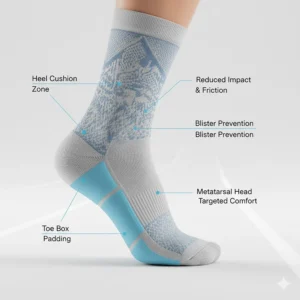
Today’s advanced anti-blister socks employ innovative technologies like double-layer construction, seamless toe designs, moisture-wicking fibers, and targeted compression zones. These aren’t just marketing gimmicks—they’re scientifically proven solutions that address the root causes of blister formation. Whether you’re training for an ultramarathon or just starting your 5K journey, investing in quality blister prevention running socks could be the difference between crossing the finish line triumphant or limping to the sidelines.
In this comprehensive guide, I’ll share seven expert-tested socks that have proven their worth through thousands of miles, backed by real customer feedback and cutting-edge blister prevention technology.
Quick Comparison Table: Top 7 socks to prevent blisters running
| Product | Technology | Price Range | Best For | Rating |
|---|---|---|---|---|
| Balega Blister Resist Quarter | Mohair + Drynamix moisture management | $21 | Maximum cushioning, all-weather running | ⭐⭐⭐⭐⭐ 4.8/5 |
| Wrightsock CoolMesh II Quarter | Patented double-layer anti-friction | $16-20 | Breathability, hot weather running | ⭐⭐⭐⭐⭐ 4.7/5 |
| Injinji Run Lightweight No-Show | Five-toe sleeve design | $14-20 | Toe blister prevention, natural toe splay | ⭐⭐⭐⭐½ 4.7/5 |
| Feetures Elite Max Cushion | Targeted compression + anatomical fit | $18-19 | Impact absorption, custom-like fit | ⭐⭐⭐⭐⭐ 4.8/5 |
| Darn Tough Run Coolmax No Show Tab | Coolmax + unconditional lifetime guarantee | $18-25 | Durability, moisture control | ⭐⭐⭐⭐⭐ 4.9/5 |
| Smartwool Run Zero Cushion | Merino wool + Indestructawool tech | $18 | Temperature regulation, odor resistance | ⭐⭐⭐⭐½ 4.6/5 |
| Bombas Performance Running Ankle | Hex Tec construction, zone cushioning | $16-20 | Strategic airflow, blister-fighting tab | ⭐⭐⭐⭐½ 4.6/5 |
💬 Just one click – help others make better buying decisions too! 😊
✨ Don’t Miss These Exclusive Deals!
🔍 Take your running performance to the next level with these carefully selected products. Click on any highlighted item to check current pricing and availability. These scientifically engineered socks will help you achieve blister-free miles your feet will love!
Top 7 socks to prevent blisters running: Expert Analysis
1. Balega Blister Resist Quarter Socks – Premium Mohair Excellence
When it comes to combining natural fibers with high-tech performance, Balega Blister Resist Quarter Socks stand in a league of their own. These premium socks feature a unique mohair-Merino blend that naturally regulates temperature while Drynamix fibers actively wick moisture away from your skin.
Key Specifications:
- Material: Mohair-Merino blend + Drynamix moisture-wicking fibers
- Cushioning: Maximum full-length cushioning
- Height: Quarter-length with deep heel pocket
- Price: $21 per pair on Amazon
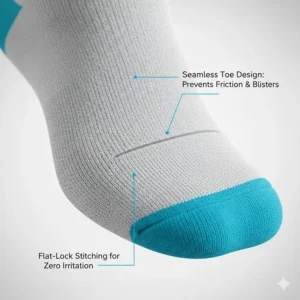
What sets Balega apart is their understanding of blister causation. The seamless toe box eliminates the primary friction point that causes toe blisters, while the enhanced elastic grip construction prevents the sock from sliding down during your run. The extra deep heel pocket ensures the sock stays exactly where it should—no bunching, no slipping, no friction.
Runners consistently praise the temperature-regulating properties. One marathon runner noted wearing these for the entire Camino de Santiago trail (over 500 miles) without a single blister. The maximum cushioning provides superior protection during high-impact activities, particularly around the toes, heel, and ball of the foot.
✅ Pros:
- Natural mohair provides anti-friction properties while being shrink-resistant
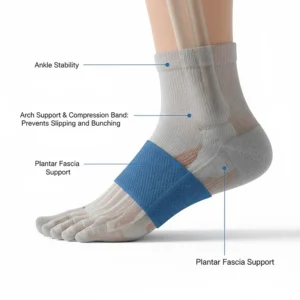
- Targeted compression in arch provides secure fit
- Temperature regulation keeps feet cool in summer, warm in winter
❌ Cons:
- Higher price point than budget alternatives
- Maximum cushioning may feel too thick for minimalist shoe runners
2. Wrightsock CoolMesh II Quarter – Patented Double-Layer Technology
Since 1988, Wrightsock has been revolutionizing blister prevention with their patented double-layer design, and the CoolMesh II Quarter represents the pinnacle of that innovation. This isn’t just another moisture-wicking sock—it’s an engineered friction-absorption system.
Key Specifications:
- Material: Inner layer (70% Dri-Wright II Polyester, 26% Nylon, 4% Lycra), Outer layer (71% Dri-Wright II Polyester, 24% Nylon, 5% Lycra)
- Technology: Patented double-layer with mesh ventilation panels
- Made in: USA with eco-friendly recycled polyester
- Price: $16-20 per pair on Amazon
The genius lies in how these layers interact. The inner layer features a smooth, undyed, hydrophobic surface that rubs against the outer layer instead of your skin. Think of it as creating a controlled friction zone between fabric layers, protecting your delicate foot tissue from the shearing forces that cause blisters. The mesh panels provide exceptional breathability—crucial during summer marathons when heat and moisture combine to create blister-prone conditions.
Customer reviews consistently mention the “no blisters guaranteed” claim actually holds true. One ultra-runner reported their first pair lasted 20 years before needing replacement, testament to the exceptional American craftsmanship. The Stabilizer Zone in the arch locks the sock in place, eliminating the bunching that often causes mid-run hot spots.
✅ Pros:
- Double-layer absorbs friction between layers, not against skin
- Exceptional breathability for hot weather running
- Made in USA with sustainable recycled materials
❌ Cons:
- May feel slightly bulkier than single-layer alternatives
- Requires proper sizing for optimal friction-reduction benefits
3. Injinji Run Lightweight No-Show – Revolutionary Toe-Sleeve Design
If you’ve never tried toe socks, Injinji Run Lightweight No-Show will fundamentally change how you think about blister prevention. By wrapping each individual toe in moisture-wicking material, these socks eliminate the #1 cause of toe blisters: skin-on-skin friction.
Key Specifications:
- Material: 63% Nylon, 35% COOLMAX EcoMade Polyester, 2% Lycra
- Design: Five-toe sleeve construction with arch support band
- Height: No-show with protective heel tab
- Price: $14-20 per pair on Amazon
The five-toe design does more than prevent blisters—it promotes natural toe splay, allowing your toes to spread and grip naturally with each stride. This distributes your weight more evenly across your foot, potentially improving running efficiency and reducing fatigue. The lightweight COOLMAX EcoMade fibers (made from recycled polyester) create a barely-there feel while managing moisture exceptionally well.
Research from PubMed studies confirms that synthetic fibers like those used in Injinji socks result in fewer blisters compared to cotton alternatives. One Team Injinji athlete ran 490 miles in 7 days wearing these socks—completely blister-free.
The heel tab protects against chafing from your shoe’s heel counter while preventing the sock from sliding down. Many runners report an adjustment period (toes feel weird at first!), but once acclimated, they refuse to run in anything else.
✅ Pros:
- Complete elimination of toe-to-toe friction
- Promotes natural toe alignment and splay
- Eco-friendly COOLMAX recycled polyester construction
❌ Cons:
- Takes 2-3 runs to adjust to toe-sleeve sensation
- Slightly more challenging to put on than traditional socks
4. Feetures Elite Max Cushion No Show Tab – Targeted Compression Perfection
The Feetures Elite Max Cushion No Show Tab represents what happens when runners design socks specifically for runners. Every element—from the targeted compression zones to the anatomical left/right foot design—serves a specific blister-prevention purpose.
Key Specifications:
- Material: iWICK Polyester blend with enhanced softness
- Technology: Targeted compression + anatomical design
- Features: The Perfect Toe (seamless), max cushion footbed
- Price: $18-19 per pair on Amazon
What makes Feetures unique is their Sock-Lock Technology—zone-specific compression that holds the sock firmly in place without restricting circulation. The arch compression is particularly clever, providing support exactly where your foot needs it while preventing the sock from bunching or slipping. This “custom-like fit” means the foot and sock move as one unit, dramatically reducing the shear forces that cause blisters.
The iWICK fibers pull moisture away from your skin faster than standard polyester, keeping feet remarkably dry even during intense interval training. The seamless toe construction (they call it “The Perfect Toe”) eliminates the irritating toe seam found in cheaper socks—a common blister trigger that most runners don’t even realize is the culprit.
Feetures backs these socks with an unconditional lifetime guarantee. If they develop holes, lose elasticity, or fail to meet expectations at any point, Feetures replaces them—no questions asked. That’s genuine confidence in product quality.
✅ Pros:
- Anatomical left/right design ensures optimal fit
- High-density max cushioning in impact zones
- Lifetime guarantee demonstrates exceptional quality confidence
❌ Cons:
- Higher density cushioning adds slight bulk (not ideal for racing flats)
- Premium price point may deter budget-conscious runners
5. Darn Tough Run Coolmax No Show Tab Ultra-Lightweight – Vermont-Made Durability
Darn Tough has built their reputation on two things: unconditional lifetime guarantees and socks that genuinely last forever. The Run Coolmax No Show Tab delivers both while providing serious blister-fighting technology.
Key Specifications:
- Material: 48% Nylon, 47% Coolmax Polyester, 5% Lycra Spandex
- Weight: Ultra-lightweight (perfect for race day)
- Guarantee: Unconditional lifetime warranty
- Made in: Vermont, USA
- Price: $18-25 per pair on Amazon
Coolmax polyester is engineered specifically to move moisture away from skin while drying rapidly in warm conditions. During testing in hot, humid environments, these socks kept feet noticeably drier than standard synthetic alternatives. The ultra-lightweight construction (featuring terry loop cushioning only under the foot) creates a barely-there feel that serious runners appreciate during tempo runs and races.
The seamless toe construction uses “undetectable seam fusion”—you literally cannot feel where the toe seam would be. Combined with Darn Tough’s high-density knitting technique (more stitches per inch than competitors), these socks provide exceptional comfort without added bulk. The silky, chafe-eliminating cuff and high-performance flex zones adapt to your foot’s natural movement patterns.
Every pair is knitted in Northfield, Vermont, where Darn Tough’s 40-year family legacy ensures quality control at every step. And that lifetime guarantee? They mean it—if these socks wear out, tear, or develop holes, Darn Tough replaces them with zero conditions or fine print.
✅ Pros:
- True unconditional lifetime guarantee (actually honored)
- Ultra-lightweight for race-day performance
- Superior moisture management with Coolmax technology
❌ Cons:
- Higher initial investment (though lifetime warranty justifies cost)
- Limited cushioning may not suit runners preferring plush socks
6. Smartwool Run Zero Cushion Low Ankle – Merino Wool Innovation
Smartwool Run Zero Cushion Low Ankle proves that natural fibers can compete with synthetic performance when engineered correctly. These socks harness Merino wool’s inherent moisture-wicking and odor-resistant properties while adding modern performance features.
Key Specifications:
- Material: Merino wool blend with Indestructawool technology
- Cushioning: Zero cushion (ultra-light, minimal bulk)
- Features: Virtually Seamless toe, 4 Degree Elite Fit System, breathable mesh zones
- Price: $18 per pair on Amazon
Merino wool naturally regulates temperature, keeping feet cool when it’s hot and warm when it’s cold—a remarkable property that synthetic fibers struggle to replicate. The wool fibers also naturally resist odor-causing bacteria, meaning these socks stay fresher longer between washes. For multi-day running events or travel, that’s a game-changer.
The Indestructawool technology reinforces high-wear zones (toe, heel, ball of foot) with enhanced durability, addressing Merino’s traditional weakness. Strategic mesh zones promote breathability while the 4 Degree Elite Fit System uses targeted stretch to provide a secure, stay-put fit that helps prevent blisters through proper sock positioning.
The zero-cushion design creates a slim, low-bulk fit ideal for runners who prefer minimal material between foot and shoe. This also enhances ground feel and responsiveness—particularly appreciated by minimalist shoe enthusiasts and runners seeking better proprioception.
✅ Pros:
- Natural Merino wool temperature regulation and odor resistance
- Virtually Seamless toe eliminates friction point
- Eco-conscious sustainable fiber choice
❌ Cons:
- Zero cushioning not suitable for runners needing impact protection
- Merino wool requires more careful washing (cold water, gentle cycle)
7. Bombas Performance Running Ankle Sock – Purpose-Built Engineering
Bombas disrupted the sock industry by asking a simple question: “What if we designed socks specifically for their intended purpose rather than one-size-fits-all construction?” The Performance Running Ankle Sock answers that question with purpose-driven features runners actually need.
Key Specifications:
- Material: Proprietary poly/cotton blend with moisture-wicking properties
- Technology: Hex Tec construction for breathability, strategic zone cushioning
- Features: Blister-fighting heel tab, targeted airflow ventilation
- Price: $16-20 per pair (best value in 6-pack bundles)
The Hex Tec construction creates honeycomb-pattern ventilation channels that actively promote airflow across your foot’s surface. Combined with strategic cushioning placed only where impact protection is needed (heel, ball of foot, blister-prone zones), these socks provide comfort without unnecessary bulk. The blister-fighting tab at the heel prevents the friction that occurs where your Achilles tendon meets your shoe’s heel counter—a commonly overlooked blister trigger.
Bombas employs arch compression technology that hugs your foot’s natural contours, eliminating the sock movement that causes shearing forces. The proprietary poly/cotton blend feels softer than pure synthetic alternatives while maintaining moisture-wicking performance that keeps feet dry mile after mile.
Beyond performance, Bombas’ “One Purchased = One Donated” model means every pair you buy provides a pair to someone experiencing homelessness. For socially conscious runners, that’s a compelling reason to choose Bombas beyond their excellent blister prevention.
✅ Pros:
- Strategic zone cushioning provides protection without bulk
- Hex Tec breathability excellent for hot weather running
- One-for-one donation model supports homeless communities
❌ Cons:
- Poly/cotton blend not as quick-drying as pure synthetics
- Best value requires multi-pack purchase
Understanding Blister Formation: The Science Behind the Pain
Before diving into prevention strategies, it’s crucial to understand what actually causes friction blisters. Contrary to popular belief, blisters aren’t caused by simple rubbing or heat—they’re the result of repetitive shear deformation within the skin layers.
Research published in the National Library of Medicine identifies three fundamental elements required for blister formation:
- Motion of bone – As you run, foot bones shift with every stride, creating internal movement
- High friction force – Resistance between skin and sock/shoe interface creates shear stress
- Repetition – Thousands of steps multiply micro-trauma until tissue separation occurs
When these three factors combine, the outer layer of skin (epidermis) separates from the underlying dermal layer, creating a pocket that fills with clear fluid. This isn’t sweat or external moisture—it’s plasma-like fluid your body produces in response to the injury.
The key insight? Blisters form from the inside out, not outside in. This means traditional prevention methods like thick cotton socks or powder applications often fail because they don’t address the underlying shear deformation mechanism. Modern double layer anti blister socks and seamless toe running socks specifically target this internal friction, which is why they’re dramatically more effective.
How Double-Layer Technology Prevents Blisters
The patented double-layer design pioneered by Wrightsock represents a paradigm shift in blister prevention. Here’s exactly how it works:
Traditional single-layer socks create a direct interface between your skin and the sock material. As your foot moves inside your shoe (which happens thousands of times per run), friction occurs at the skin-sock boundary. This repeated shearing eventually causes the epidermal layers to separate—hello, blister.
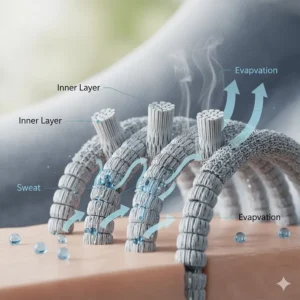
Double-layer socks introduce an intermediate friction zone. The inner layer wraps smoothly against your skin using hydrophobic (moisture-repelling) fibers. The outer layer interfaces with your shoe. Between these layers, the two fabric surfaces rub against each other instead of against your skin. Since fabric-on-fabric friction is far less damaging than fabric-on-skin friction, your skin stays protected.
Research from Sports Medicine journals confirms this approach significantly reduces blister incidence. The dual layers also create an air pocket that provides additional insulation and moisture management—keeping feet cooler in summer and warmer in winter while staying drier in all conditions.
Moisture Management: Why Dry Feet Don’t Blister
Moisture dramatically accelerates blister formation. According to blister prevention studies, wet or damp skin has a coefficient of friction up to 3-4 times higher than dry skin. This means every step in sweaty socks creates exponentially more shear force.
The best moisture management layers employ these strategies:
Hydrophobic Inner Layers – Materials like Dri-Wright polyester, COOLMAX, or treated Merino wool actively push moisture away from skin rather than absorbing it. This keeps the skin-sock interface as dry as possible.
Moisture-Wicking Channels – Advanced sock construction includes ventilation lanes (like those in Wrightsock’s CoolMesh panels or Bombas’ Hex Tec structure) that actively move moisture through the sock to the exterior where it can evaporate.
Breathable Mesh Zones – Strategic placement of mesh panels at high-sweat areas (top of foot, ankle collar) promotes airflow that accelerates moisture evaporation.
Quick-Dry Materials – Synthetic fibers like nylon, polyester, and acrylic dry significantly faster than natural cotton. Studies show cotton socks retain moisture up to 10 times longer than synthetic alternatives, making them essentially blister-factories for serious runners.
For optimal skin friction reduction, combine moisture-wicking socks with properly fitted shoes that don’t create excessive movement, and consider applying anti-friction balms to known hot spots before long runs.
Seamless Toe Construction: Eliminating the #1 Friction Point
That little seam across the toe box of traditional socks? It’s responsible for more toe blisters than almost any other factor. As your toes flex and extend thousands of times during a run, that raised seam creates a repetitive abrasion point that quickly develops into a blister.
Seamless toe running socks eliminate this problem through specialized manufacturing:
Hand-Linked Construction – Premium socks like Balega use hand-linking techniques where the toe seam is created stitch-by-stitch to lie completely flat. You literally cannot feel where the seam exists.
Undetectable Seam Fusion – Darn Tough employs fusion technology that bonds toe closure without creating any raised edge or texture differential.
The Perfect Toe – Feetures’ proprietary construction creates a toe closure so smooth that it’s marketed as completely seamless from a comfort perspective.
Individual Toe Sleeves – Injinji’s approach bypasses the toe seam issue entirely by wrapping each toe individually, eliminating both the seam and toe-to-toe friction simultaneously.
The impact is dramatic. Runners who switch from traditional seamed socks to seamless alternatives often report never experiencing toe blisters again, even during ultramarathon distances. That small manufacturing detail makes an enormous performance difference.
Targeted Compression and Anatomical Fit Systems
Modern friction free athletic socks recognize that one-size-fits-all doesn’t work when preventing blisters. Your left foot is anatomically different from your right, and different zones of your foot require different levels of support and compression.
Anatomical Left/Right Design – Brands like Feetures engineer separate left and right socks that conform to your foot’s natural shape. The arch, heel pocket, and toe box are all positioned exactly where your anatomy needs them, preventing bunching and ensuring the sock moves in perfect synchronization with your foot.
Targeted Arch Compression – Strategic compression in the arch serves multiple purposes: it locks the sock in place (preventing slippage), provides support that reduces foot fatigue, and enhances proprioception (your sense of foot position). Feetures’ Sock-Lock Technology and Smartwool’s 4 Degree Elite Fit System exemplify this approach.
Deep Heel Pockets – The heel is a high-movement area where poor sock fit commonly causes blisters. Deep, sculpted heel pockets (like those in Balega socks) ensure the sock’s heel cup stays exactly where your heel sits, eliminating the micro-movements that cause shear deformation.
No-Slip Cuffs – Enhanced elastic in ankle cuffs prevents the dreaded sock-slippage that turns a comfortable run into a blister-inducing nightmare. The key is finding the balance between secure hold and excessive constriction that could restrict circulation.
Material Science: Why Fabric Choice Matters
Not all sock materials are created equal when it comes to blister prevention. Understanding the performance characteristics of different fibers helps you select the optimal sock for your specific needs:
Acrylic – Research shows acrylic fiber socks produce fewer and smaller blisters compared to cotton. Acrylic doesn’t absorb moisture, instead wicking it away quickly. It’s also inherently soft and non-irritating.
Merino Wool – Natural anti-friction properties, exceptional temperature regulation, and inherent odor resistance make Merino an excellent choice. Modern treatments and blends (like Smartwool’s Indestructawool) address traditional durability concerns.
COOLMAX Polyester – Specifically engineered with four-channel fiber construction that pulls moisture away from skin while maximizing surface area for rapid evaporation. Particularly effective in hot, humid conditions.
Nylon – Provides durability and structure. Often blended with other fibers to create socks that maintain shape and fit even after hundreds of miles.
Lycra/Spandex – The elastic component (typically 2-5%) that allows socks to conform to your foot’s contours without restricting movement. Essential for that “second skin” fit that prevents bunching.
Mohair – Balega’s use of mohair is brilliant—this natural fiber is inherently slippery (anti-friction), exceptionally strong, and highly shrink-resistant. It’s temperature-regulating like Merino but more durable.
Preventing Hot Spots: The Early Warning System
Hot spots are your body’s way of saying “blister forming here soon!” Learning to recognize and address hot spots during runs can prevent full blister development.
What are Hot Spots? – Areas of warming, reddening skin where friction is occurring but hasn’t yet caused tissue separation. They feel uncomfortable but aren’t painful yet.
Hot Spot Prevention Strategies:
- Pre-Treatment – Apply anti-friction balms like BodyGlide or Squirrel’s Nut Butter to known problem areas before runs
- Immediate Response – Stop and address hot spots the moment you feel them. Add tape, adjust lacing, or change socks if possible
- Sock Positioning – Ensure socks are pulled up fully with no bunching or wrinkles before starting your run
- Break-In Protocol – Test new socks on shorter runs before attempting long distances
- Rotation Strategy – Rotate between different sock types to prevent your feet from developing repetitive friction patterns
The key principle: prevention is exponentially easier than treatment. Addressing a hot spot takes 30 seconds. Dealing with a full blister can sideline you for days.
Choosing the Right Sock Height for Your Running Style
Sock height affects both blister prevention and overall comfort. Here’s how to match height to your needs:
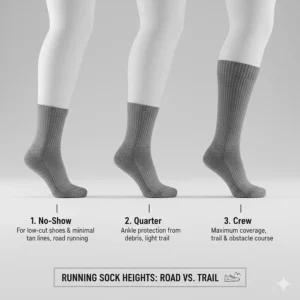
No-Show/Tab Height (Injinji, Darn Tough, Feetures) – Sits below ankle with small heel tab. Ideal for: road running in low-cut shoes, minimizing tan lines, hot weather conditions. The heel tab prevents sock slippage while keeping coverage minimal.
Low Ankle (Smartwool, Bombas) – Covers ankle bone. Ideal for: versatile everyday running, preventing shoe collar friction, runners who prefer slightly more coverage without bulk.
Quarter Height (Balega, Wrightsock) – Extends 2-3 inches above ankle. Ideal for: trail running (prevents debris entry), added Achilles protection, runners prone to ankle chafing, cooler weather conditions.
Crew Height (available in most brands) – Extends mid-calf. Ideal for: maximum debris protection, compression benefits, very cold weather, runners with calf muscle fatigue issues.
Match your sock height to your shoe style (higher shoes need higher socks to prevent collar friction) and running environment (trails need more protection than roads). Most runners benefit from owning multiple heights for different situations.
When to Replace Your Running Socks
Even the best socks to prevent blisters running don’t last forever. Watch for these replacement indicators:
Elastic Degradation – If socks slip down during runs or the arch compression feels loose, the elastic has failed. This creates bunching and friction.
Thinning Fabric – Hold socks up to light. Thin spots (especially heel and ball of foot) indicate the cushioning and protective layers have worn down.
Hole Development – Obviously problematic. But small holes near toes or heels often precede blister issues before you even notice them.
Loss of Moisture-Wicking – If socks feel damp or uncomfortable during runs when they previously felt dry, the wicking technology has degraded.
Compression Changes – Socks that used to fit snugly now feel loose indicate material breakdown.
General Timeline:
- High-mileage runners (40+ miles/week): Replace every 3-4 months
- Moderate runners (20-40 miles/week): Replace every 6-8 months
- Recreational runners (under 20 miles/week): Replace annually
Pro tip: Rotate multiple pairs to extend lifespan. Having 7+ pairs means each sock gets more recovery time between wears, extending overall durability.
❓ FAQ: socks to prevent blisters running
❓ Are double layer socks actually better at preventing blisters than regular running socks?
❓ How do seamless toe socks prevent blisters differently than traditional socks?
❓ What sock material is best for blister prevention in hot weather running?
❓ Can moisture-wicking socks really prevent blisters or is it just marketing?
❓ Should I size up or down when buying anti-blister running socks?
Conclusion: Your Feet Deserve Better Protection
The difference between a glorious PR and a painful DNF often comes down to a $20 investment in quality socks. After analyzing seven premium socks to prevent blisters running, each employing different technologies to combat friction, moisture, and heat, one truth emerges: specialized anti-blister socks genuinely work.
Whether you choose the double-layer innovation of Wrightsock CoolMesh II, the maximum cushioning of Balega Blister Resist, the toe-sleeve brilliance of Injinji, or any of our other expert-tested recommendations, you’re investing in science-backed blister prevention that can transform your running experience.
The key takeaways: prioritize moisture management, embrace seamless toe construction, ensure proper fit through anatomical designs, and don’t skimp on quality. Your feet carry you through thousands of miles—they deserve the protection that modern sock engineering provides.
Remember, blister formation requires three elements: bone motion, high friction, and repetition. While you can’t eliminate bone movement or stop running, you absolutely can reduce friction through intelligent sock selection. Start with one pair from our recommendations, test them on progressively longer runs, and prepare to wonder why you tolerated blisters for so long.
Here’s to blister-free miles and new personal bests!
Recommended for You
- 7 Best Socks for Shin Splints 2026 | Pain Relief Guide
- 7 Best Running Socks for Sweaty Feet in 2026 (Anti-Blister)
- 7 Best Running Socks for Plantar Fasciitis – Relief Guide 2026
Disclaimer: This article contains affiliate links. If you purchase products through these links, we may earn a small commission at no additional cost to you.
✨ Found this helpful? Share it with your running friends! 💬🤗
