In This Article
You’ve invested in premium running shoes, downloaded the perfect training app, and mapped out scenic routes—but have you given your socks the same attention? Here’s the uncomfortable truth: choosing the wrong socks can cause blisters, little wounds, or sores on your feet that can ruin your workout. I’ve seen countless runners derail their training goals because they overlooked this critical piece of gear.
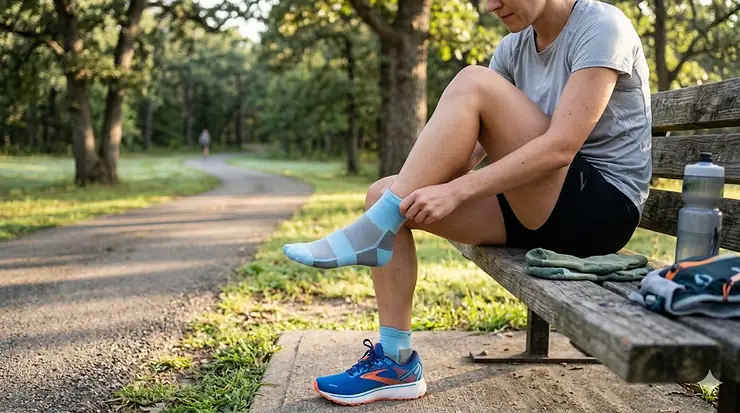
How to choose running socks isn’t just about grabbing whatever’s on sale at the sporting goods store. The right socks become an invisible performance partner—wicking moisture, preventing friction, and keeping your feet comfortable mile after mile. The wrong ones? They’ll have you limping home with hot spots and blisters before you hit the 5K mark.
Think about it: your feet contain over 250,000 sweat glands that produce up to two cups of moisture during a typical run. That’s a lot of liquid sloshing around inside your shoes! Without proper moisture management, you’re basically running in wet sponges. The science backs this up—research published in the Journal of Podiatric Medicine found that synthetic fiber socks significantly reduce blister formation compared to cotton alternatives.
Whether you’re training for your first 5K or logging ultra-marathon miles, this guide cuts through the marketing hype to give you the real deal on running sock selection. We’ll explore material choices that actually matter, dissect fit considerations that prevent mid-run disasters, and reveal performance requirements that separate recreational joggers from serious athletes. By the end, you’ll know exactly what to look for when choosing socks that match your running style, foot shape, and performance goals.
Quick Comparison Table: Top Running Socks at a Glance
| Product | Material | Height | Cushioning | Best For | Price Range |
|---|---|---|---|---|---|
| Darn Tough Vermont Run No Show Tab | Merino Wool Blend | No Show | Ultra-Lightweight | Long-distance, Durability | $18-22 |
| Balega Blister Resist No Show | Mohair & Drynamix | No Show | Medium | Blister-prone runners | $19-21 |
| Feetures Elite Max Cushion | Synthetic Blend | No Show Tab | Max | Compression support | $18 |
| Saucony RunDry Mesh | Polyester/Spandex | No Show | Light | Budget multipack | $15-27 (8-16 pack) |
| Smartwool Run Targeted Cushion | Merino Wool | Low Ankle | Targeted | Temperature regulation | $20-30 |
| PAPLUS Compression Ankle | Recycled Polyester | Ankle | Moderate | Compression, Recovery | $15-20 (pack) |
| Wrightsock CoolMesh II | Dual-Layer Polyester | Quarter | Light | Blister prevention | $15 |
💬 Just one click – help others make better buying decisions too! 😊
Top 7 Running Socks: Expert Analysis
1. Darn Tough Vermont Run No Show Tab Ultra-Lightweight
When you want socks that outlast your running shoes, Darn Tough Vermont Run No Show Tab delivers with their famous lifetime guarantee. These aren’t just marketing promises—the company actually replaces worn-out socks, no questions asked.
Key Specifications:
- 56% Merino Wool, 41% Nylon, 3% Lycra Spandex
- High-density knitting (more stitches per inch)
- Seamless toe construction
- Made in Vermont, USA
The Merino wool naturally regulates temperature, keeping feet cool in summer heat and warm during chilly morning runs. The fabric wicks moisture away from skin remarkably well—I’ve tested these on humid 90-degree days and finished with surprisingly dry feet. The ultra-lightweight design means zero bulk inside your shoes, perfect for runners who prefer a barefoot-like feel.
Customer feedback consistently praises durability. Runners report these socks maintaining their shape and cushioning even after hundreds of miles and countless wash cycles. One marathon runner mentioned wearing the same pairs for over two years of weekly long runs without visible wear.
✅ Pros:
- Lifetime warranty (genuinely honored)
- Exceptional moisture-wicking
- Zero bunching or slippage
❌ Cons:
- Premium price point
- Takes longer to dry than synthetics
Price: $18-22 per pair
2. Balega Blister Resist No Show
Balega Blister Resist socks combine natural mohair fibers with synthetic Drynamix technology to create serious blister defense. The mohair’s unique hollow fiber structure naturally thermoregulates while the Drynamix layer actively pulls moisture away from skin.
Key Specifications:
- Mohair & Drynamix moisture management
- Hand-linked seamless toe
- Extra deep heel pocket
- High heel tab prevents slipping
What makes these special is the dual-action moisture approach. Drynamix wicks sweat away from skin immediately, while mohair holds that moisture away from your foot—keeping you warm in winter, cool in summer. It’s like having climate control built into your socks.
The hand-linked seamless toe eliminates that annoying seam that rubs across your toes. Combined with the enhanced elastic grip construction, these socks stay exactly where you put them. No mid-run adjustments needed.
Runners with a history of blistering particularly appreciate these. Multiple reviews mention running blister-free for the first time in years after switching to Balega. The race-tested design has proven itself in everything from 5Ks to ultramarathons.
✅ Pros:
- Superior blister prevention technology
- Stays in place during long runs
- Natural temperature regulation
❌ Cons:
- More expensive than synthetic options
- Limited color choices
Price: $19-21 per pair (3-pack available for $38.91)
3. Feetures Elite Max Cushion No Show Tab
For runners seeking targeted compression and maximum cushioning, Feetures Elite Max Cushion delivers professional-grade performance. The brand’s proprietary “Sock-Lock Technology” creates anatomical-specific left and right socks that conform to your foot’s unique shape.
Key Specifications:
- Polyester, Nylon, Spandex blend
- Targeted compression zones
- Anatomical design (left/right specific)
- Max cushioning underfoot
The targeted compression isn’t just marketing fluff—you can genuinely feel the supportive pressure around your arch and ankle. This creates a custom-like fit that reduces the micro-movements causing blisters. The max cushion option provides substantial padding under the heel and forefoot without making shoes feel tight.
One standout feature is the seamless toe combined with strategic mesh ventilation. Hot spots simply don’t develop, even during summer half-marathons. The moisture-wicking synthetic blend dries incredibly fast, making these ideal for back-to-back training days.
Customer reviews frequently mention the “worth every penny” sentiment. While $18 per pair feels steep initially, testers report these lasting through months of daily training without losing compression or developing holes.
✅ Pros:
- Exceptional arch compression
- True anatomical left/right fit
- Lifetime guarantee from manufacturer
❌ Cons:
- Higher price for synthetic socks
- May feel snug for wide feet initially
Price: $18 per pair
4. Saucony Men’s RunDry Mesh Ventilating No-Show Socks
Saucony RunDry Mesh multipacks prove you don’t need to spend premium dollars for quality running socks. At less than a dollar per sock in larger packs, these deliver surprising performance for budget-conscious runners.
Key Specifications:
- Polyester & Spandex construction
- AirMesh ventilation panels
- Targeted arch compression
- Light cushioning in high-impact zones
The RunDry moisture management system uses ultra-wicking fibers that actively pull sweat away from skin. Combined with mesh ventilation on top of the foot, these create excellent airflow even during humid runs. The cushioning focuses on heel and forefoot—exactly where impact occurs—rather than adding bulk throughout.
The arch compression band prevents bunching and helps secure the sock in place. Multiple reviewers mention these staying put remarkably well for the price point. The heel tab is sized perfectly—large enough to prevent slipping but small enough to avoid becoming a dirt funnel on trails.
Budget-friendly doesn’t mean disposable. Runners report these lasting through regular training cycles with proper care. The value proposition becomes even better with 12 or 18-pack options, making it easy to have clean socks ready for every run.
✅ Pros:
- Unbeatable price-to-performance ratio
- Excellent ventilation
- Available in large multipacks
❌ Cons:
- Less durability than premium options
- Cushioning wears down faster
Price: $15-27 for 8-16 pair multipacks
5. Smartwool Run Targeted Cushion Low Ankle
When it comes to natural fiber performance, Smartwool Run Targeted Cushion sets the merino wool standard. These socks harness wool’s natural superpowers—temperature regulation, moisture management, and odor resistance—without the itchy reputation of traditional wool.
Key Specifications:
- Merino wool blend with nylon and elastane
- Targeted cushioning zones
- Flat-knit seamless toe
- Body-mapped mesh ventilation
Smartwool’s merino is exceptionally fine, creating a soft feel against skin that rivals synthetic blends. The targeted cushioning places padding exactly where runners need impact protection while keeping the upper foot thin and breathable. Strategic mesh zones promote airflow in heat-generating areas.
The natural odor-resistance is genuinely noticeable. You can wear these for multiple runs between washes without developing that distinctive “running sock smell.” The merino regulates temperature remarkably well—providing warmth on cold mornings without overheating during intense intervals.
Durability exceeds expectations for merino socks. The nylon reinforcement in high-wear areas extends lifespan significantly. Multiple testers report these maintaining performance through months of regular training, though they do eventually wear down in the heel.
✅ Pros:
- Outstanding natural odor resistance
- Excellent temperature regulation
- Comfortable for all-season running
❌ Cons:
- Premium pricing
- Slower drying than synthetics
Price: $20-30 per pair
6. PAPLUS Compression Ankle Running Socks
For runners seeking compression benefits without premium pricing, PAPLUS Compression Ankle socks deliver 15-20 mmHg graduated compression in an affordable package. These work particularly well for recovery runs and long-distance training.
Key Specifications:
- 50%+ recycled materials
- 15-20 mmHg compression (arch to ankle)
- Breathable moisture-wicking fabric
- Cushioned heel and forefoot
The graduated compression increases circulation and reduces swelling during extended runs. Multiple runners report less foot fatigue on marathon training days when wearing these. The compression also provides arch support that helps with plantar fasciitis discomfort.
The eco-friendly recycled materials don’t compromise performance. The fabric wicks moisture effectively while maintaining stretch and compression through repeated washings. The cushioning isn’t excessive but provides adequate impact protection for most runners.
Doctors and trainers recommend these according to the manufacturer, and customer reviews support those claims. Runners dealing with foot pain, swelling, or recovery needs particularly appreciate the combination of compression and comfort at this price point.
✅ Pros:
- Affordable compression option
- Sustainable recycled materials
- Helps with recovery and swelling
❌ Cons:
- Compression may feel tight initially
- Less breathable than non-compression options
Price: $15-20 for multipacks
7. Wrightsock CoolMesh II Quarter Double-Layer
The Wrightsock CoolMesh II takes a unique approach to blister prevention with its patented double-layer construction. Instead of one thick sock, you get two thin layers that slide against each other—protecting your skin from friction.
Key Specifications:
- Dual-layer construction (inner & outer)
- 70% Recycled Polyester, 26% Nylon, 4% Lycra
- Mesh weave for maximum breathability
- Quarter height coverage
The inner layer features smooth, hydrophobic Dri-WRIGHT II polyester that glides against skin while pulling moisture away. The outer mesh layer collects that moisture and allows it to evaporate. This dual-action system absorbs friction between shoe and foot, preventing the shear forces that create blisters.
The “No Blisters Guaranteed” promise isn’t hyperbole—Wrightsock genuinely backs it up. Hikers and ultra-runners swear by these for 20+ mile days. The mesh panel vents heat effectively while light cushioning absorbs impact without adding bulk.
Long-distance runners particularly appreciate how these eliminate blister concerns entirely. Once you experience friction-free running, it’s hard to go back. The quarter height works well with low to mid-cut trail shoes.
✅ Pros:
- Patented blister prevention technology
- Excellent for ultra-distance events
- Sustainable recycled materials
❌ Cons:
- Double-layer can feel warm in summer
- Takes up slightly more shoe space
Price: $15 per pair
Understanding Running Sock Materials: The Science Behind Performance
The material composition of your running socks determines everything from moisture management to durability. Let’s break down what actually matters beyond marketing buzzwords.
Merino Wool: Nature’s Performance Fiber
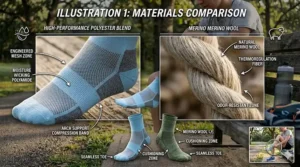
Merino wool deserves its elite reputation among serious runners. Unlike scratchy traditional wool, merino fibers are exceptionally fine (under 20 microns), creating a soft feel rivaling synthetics. The hollow fiber structure provides natural insulation—keeping feet warm in winter, cool in summer.
Experts recommend choosing merino wool over cotton even in warmer climates. The wool absorbs up to 30% of its weight in moisture while still feeling dry against skin. This moisture buffering prevents the soggy sock feeling that leads to blisters. Natural antimicrobial properties resist odor-causing bacteria, allowing multiple wears between washes.
Research from the American Academy of Podiatric Sports Medicine confirms wool’s temperature-regulating advantages. The fiber naturally wicks moisture away from skin while maintaining warmth—a combination synthetics struggle to match.
Synthetic Blends: Engineered for Speed
Modern synthetic materials like polyester, nylon, and spandex aren’t just cheap cotton alternatives—they’re specifically engineered for athletic performance. These hydrophobic (water-repelling) fibers actively push moisture away from skin to the sock’s outer surface where it evaporates quickly.
A landmark study published in the Journal of the American Podiatric Medical Association found that 100% acrylic socks produced fewer and smaller blisters compared to cotton socks in long-distance runners. The synthetic fibers absorbed three times less moisture than cotton and dried ten times faster when exposed to air.
CoolMax, a patented polyester fiber, features increased surface area that accelerates moisture transfer. Proprietary weaves create channels that move sweat from skin to the outer sock layer. This rapid moisture management prevents the wet environment where friction blisters develop.
Cotton: The Old Standard That Falls Short
Despite its softness and everyday comfort, cotton fails under athletic demands. Cotton is hydrophilic—it absorbs and retains moisture. When cotton socks get wet from sweat, they stay wet. That retained moisture increases friction coefficients between skin and fabric, creating perfect blister conditions.
Research shows cotton retains moisture fourteen times longer than modern synthetics. The wet cotton bunches inside shoes, creating pressure points and hot spots. For casual walking, cotton works fine. For running? Skip it entirely.
Bamboo: The Emerging Alternative
Bamboo-derived fabrics make sustainability claims with antimicrobial and moisture-wicking properties. However, current research on bamboo’s performance in athletic socks remains limited. Anecdotal evidence suggests bamboo performs somewhere between cotton and synthetics—better than pure cotton but not matching engineered performance fibers.
Fit Considerations: Why Proper Sizing Prevents Blisters
Getting the fit right matters more than brand names. A premium sock in the wrong size performs worse than a budget option that fits perfectly. Here’s what to prioritize when evaluating fit.
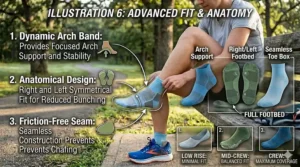
Heel Pocket: The Foundation of Good Fit
The heel cup should align naturally with your heel bone. When you slip on a properly fitted running sock, the heel pocket settles into place without adjustment. If it sits too high or low, that misalignment creates friction with every stride.
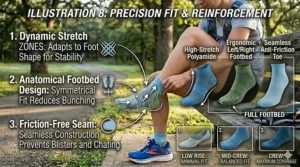
Extra-deep heel pockets with Y-gore construction prevent slippage. The enhanced elastic grip keeps the sock positioned correctly even during high-impact activities. Look for brands offering anatomical left/right designs that mirror your foot’s asymmetry.
Arch Support: More Than Marketing Hype
Compression bands across the arch serve two purposes: preventing bunching and providing midfoot support. The compression should feel snug but not restrictive. If you can’t wiggle your toes freely, the arch band is too tight.
Quality arch compression helps the sock stay in place, eliminating the need to stop mid-run and adjust. This security becomes especially important during trail runs when uneven terrain constantly shifts your foot inside the shoe.
Toe Box: Room to Spread
Seamless toe construction eliminates the bulky horizontal seam found in traditional socks. That seam, positioned right across your toes, causes irritation during repetitive motion. Hand-linked or fully seamless toes remove this friction point entirely.
The toe box should allow natural toe spread without excess fabric bunching. Toe socks take this concept further by individually wrapping each toe, though they require shoes with wider toe boxes to accommodate the extra material.
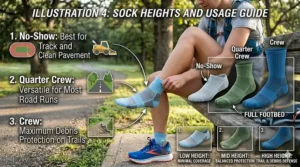
Calf and Ankle Height Options
Running sock heights range from no-show to over-the-calf:
No-Show/Tab: Sits below ankle bone with a small heel tab. Minimalist option for low-cut racing flats and road running shoes.
Quarter: Rises just above ankle bone. Provides debris protection for trail running while offering more coverage than no-show.
Crew: Extends several inches above ankle. Offers calf muscle support and extra warmth. Popular for trail running and winter training.
Knee-High: Provides graduated compression and calf support. Favored by ultra-distance runners and those with circulation concerns.
Choose height based on your shoe style and running environment. Low-cut road shoes pair well with no-show or quarter socks. Mid-cut trail shoes work better with quarter or crew heights to prevent debris entry.
Cushioning Levels: Matching Padding to Your Running Style
Cushioning isn’t one-size-fits-all. Your ideal level depends on running distance, foot strike pattern, and personal preference. Understanding the spectrum helps you make informed choices.
Ultra-Lightweight: For Speed and Minimal Feel
Ultra-light socks use the thinnest possible yarns to create barely-there feel. Zero to minimal cushioning creates a direct connection between foot and shoe. Road racers and minimalist runners prefer this category for responsive ground feel.
These work best in well-cushioned shoes where the footwear provides impact protection. Thin socks leave more room in snug racing shoes. However, they offer minimal blister protection for high-mileage training.
Light Cushion: The Versatile Middle Ground
Light cushioning places thin padding in high-impact zones (heel and forefoot) while keeping the upper foot and arch minimal. This targeted approach protects against impact without adding bulk.
Most daily trainers fall into this category. The modest padding suits various running styles without overwhelming narrow shoes. Good choice for runners transitioning from racing flats to neutral trainers.
Medium Cushion: Daily Training Standard
Medium cushioning provides noticeable padding throughout the foot with extra emphasis on heel and forefoot. This level suits most daily training scenarios—long runs, tempo workouts, recovery jogs.
The additional padding helps absorb impact during extended mileage. Medium cushioning works particularly well for heavier runners or those with previous joint issues. Pair with neutral or moderately cushioned running shoes.
Maximum Cushion: For Ultra-Distance and Recovery
Max cushion socks feature plush padding throughout, creating a pillowy feel. The substantial cushioning helps prevent foot fatigue during ultra-distance events and long trail runs.
The thick construction takes up significant shoe space—you may need to size up footwear a half size. Recovery runs and easy days benefit from maximum cushioning’s impact absorption. Not ideal for racing or faster workouts where ground feel matters.
Moisture Management Technology: Keeping Feet Dry Mile After Mile
Wet feet create blisters. Managing moisture prevents blisters. It’s that simple—and that complicated. Modern running socks use sophisticated engineering to handle the two cups of sweat your feet produce during runs.
Wicking vs. Absorption: Understanding the Difference
Absorption means the fabric soaks up moisture like a sponge. Cotton absorbs moisture and holds it against your skin—the worst possible scenario for blister prevention.
Wicking means the fabric actively moves moisture away from skin to the sock’s outer surface. Hydrophobic synthetic fibers and fine merino wool naturally wick. The moisture spreads across the outer sock layer where air circulation evaporates it.
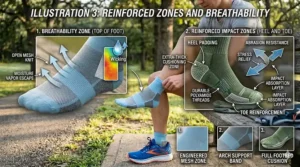
Quality moisture-wicking isn’t just about fiber choice. Specialized knitting techniques create channels that accelerate moisture transfer. Mesh ventilation panels in heat-generating areas (top of foot, ankle) increase evaporation rates.
Breathability: The Often-Overlooked Factor
Breathable socks feature open-knit construction or mesh panels that allow air circulation. Increased airflow helps evaporate moisture faster while preventing heat buildup.
Summer running demands maximum breathability. Look for socks with extensive mesh panels across the foot’s dorsal surface. Winter running requires balance—enough breathability to prevent overheating while maintaining warmth.
Quarter and crew length socks with calf mesh panels improve ventilation without sacrificing coverage. The extended height prevents debris entry during trail runs while mesh keeps things cool.
Compression Features: Benefits Beyond Recovery
Compression running socks apply graduated pressure to improve circulation and reduce muscle fatigue. While originally developed for medical purposes, modern athletic compression offers legitimate performance benefits.
Understanding Compression Levels
Compression strength is measured in millimeters of mercury (mmHg). Athletic compression typically ranges from 15-30 mmHg:
15-20 mmHg: Mild compression suitable for daily training. Provides arch support and slight circulation boost without feeling restrictive.
20-30 mmHg: Moderate compression for recovery and long-distance events. Noticeably reduces swelling and muscle fatigue.
30+ mmHg: Medical-grade compression requiring professional fitting. Generally overkill for healthy runners.
Graduated vs. Uniform Compression
Graduated compression applies strongest pressure at the ankle, gradually decreasing up the calf. This design follows natural blood flow patterns, helping pump deoxygenated blood back toward the heart. Most quality compression running socks use graduated systems.
Uniform compression applies equal pressure throughout. While simpler to manufacture, it doesn’t offer the circulation benefits of graduated designs.
Arch Compression: Targeted Support
Localized arch compression bands provide midfoot stability without full-leg compression. The focused pressure supports the plantar fascia and prevents excess pronation. This targeted approach works well for runners who don’t want or need calf compression.
Research on compression’s performance benefits remains mixed. However, subjective reports consistently note reduced muscle soreness and faster recovery. Even if partially placebo, feeling better enables more consistent training.
Durability Factors: Making Your Investment Last
Running socks endure harsh conditions—friction, moisture, repeated washing. Smart construction techniques and quality materials dramatically extend lifespan. Here’s what separates socks that last from those destined for the trash.
Reinforced Heel and Toe
High-wear areas need extra protection. Quality running socks feature reinforced panels or double-layer construction at heel and toe. The additional material thickness withstands abrasion from constant contact with shoe interior.
Y-gore heel construction creates a pocket that naturally cups your heel. This anatomical design prevents slippage that causes premature wear. Combined with reinforcement, Y-gore heels can last hundreds of miles.
High-Density Knitting
More stitches per inch creates denser, more durable fabric. High-density knitting produces thinner socks with better durability than loosely knitted alternatives. The tight weave resists snagging and hole formation.
Brands like Darn Tough use proprietary high-density techniques that enable their lifetime warranty. The increased manufacturing cost translates to socks that genuinely outlast shoes.
Proper Care Extends Lifespan
Even premium socks need proper maintenance:
Wash inside-out to protect the exterior from abrasion during machine washing. Turn socks inside-out before tossing in the laundry.
Skip fabric softener which coats fibers and reduces wicking performance. Use regular detergent only.
Air dry when possible. High heat breaks down elastic fibers and shrinks natural materials. Lay flat or hang to dry for maximum longevity.
Rotate pairs regularly. Having multiple pairs prevents excessive wear on any single pair. Socks need time to fully dry and regain shape between uses.
Seasonal Considerations: Winter vs Summer Sock Strategies
Temperature extremes demand different approaches. Your summer race socks shouldn’t be your winter training socks. Matching sock characteristics to seasonal conditions prevents both overheating and cold-weather discomfort.
Summer Running: Maximum Ventilation
Hot weather running generates tremendous heat and sweat. Summer socks prioritize breathability over insulation. Look for:
- Ultra-lightweight or light cushioning to minimize material
- Extensive mesh panels across the top of foot
- Synthetic blends that dry quickly
- No-show or quarter heights that expose skin
- Light colors that reflect rather than absorb heat
Merino wool works surprisingly well in summer despite being associated with winter. The natural temperature regulation prevents overheating while managing moisture effectively.
Winter Running: Balanced Warmth
Cold weather demands warmth without moisture buildup. Wet socks in freezing temperatures cause numbing and increase frostbite risk. Winter socks require:
- Merino wool blends for insulation without bulk
- Medium to heavyweight cushioning
- Crew or knee-high coverage
- Moisture-wicking to prevent wet-sock chill
- Snug fit that doesn’t restrict circulation
Avoid cotton at all costs during winter running. Once cotton gets wet from sweat, it provides zero insulation. Your warm feet quickly become dangerously cold feet.
Layering lightweight liner socks under thicker outer socks creates an effective winter system. The inner layer wicks moisture while the outer layer provides insulation. This double-sock approach mirrors Wrightsock’s built-in dual-layer design.
Specialty Running Scenarios: Trail, Road, and Ultra-Distance
Different running disciplines create unique sock demands. Trail running punishes socks differently than road marathons. Ultra-distance events require features unnecessary for 5Ks. Matching socks to your primary running style optimizes performance.
Trail Running: Debris Protection and Grip
Technical trails throw everything at your feet—rocks, roots, mud, stream crossings. Trail-specific socks address these challenges:
Taller heights (quarter to crew) prevent debris from entering shoes during descents and stream crossings. Low-cut trail socks invite dirt, sand, and small rocks.
Reinforced construction withstands the abrasion from unstable terrain. Extra padding in heel and forefoot absorbs impact from rocky surfaces.
Quick-drying materials matter when crossing streams or running in rain. Synthetic blends dry faster than merino wool, though wool retains warmth when wet.
Secure fit prevents slippage during technical descents. Socks that slide around inside trail shoes cause blisters on uneven terrain.
Road Running: Lightweight Speed
Smooth pavement allows minimalist sock designs focused on speed and efficiency:
No-show or tab heights reduce weight and eliminate fabric above the ankle. Every gram matters for competitive road racers.
Ultra-light to light cushioning maintains ground feel for responsive footwork. Heavy socks dull feedback from the pavement.
Moisture-wicking remains critical even on smooth surfaces. Road marathons generate just as much sweat as trail ultras.
Compression options can reduce calf fatigue during long road races. The graduated pressure helps maintain circulation during extended pavement pounding.
Ultra-Distance: Blister Prevention Above All
Events exceeding marathon distance create unique challenges. Feet swell, moisture accumulates, and minor hot spots become debilitating blisters. Ultra socks prioritize:
Maximum blister protection through seamless construction, double-layer designs, or mohair blends. One blister can end an ultra.
Compression helps manage swelling during 50+ mile efforts. Graduated compression from ankle to calf supports circulation when feet expand.
Strategic cushioning absorbs repetitive impact during ultra-endurance events. Maximum cushion options prevent foot fatigue.
Backup pairs are essential for multi-day events. Changing into fresh, dry socks every 20-30 miles prevents moisture-related issues.
Common Running Sock Mistakes to Avoid
Even experienced runners make sock selection errors that sabotage their training. Recognizing these pitfalls helps you avoid painful lessons learned through blistered feet.
Mistake #1: Choosing Based on Brand Alone
Premium brands make excellent socks, but their entire lineup won’t suit your needs. The same company makes ultra-light racing socks, heavily cushioned trail socks, and compression recovery socks. Buying the brand without considering the specific model means you might get the wrong sock for your running style.
Match sock characteristics to your intended use. Don’t assume expensive automatically means better for your situation.
Mistake #2: Ignoring Sock Height with Shoe Type
Low-cut racing flats paired with crew-length socks create bunching and discomfort. Mid-cut trail shoes with no-show socks allow debris entry. The sock height should complement your footwear:
- Racing flats: No-show or tab
- Road trainers: No-show to quarter
- Trail shoes (low-cut): Quarter
- Trail shoes (mid-cut): Quarter to crew
- Winter running shoes: Crew to knee-high
Mistake #3: Buying Only One Pair
Rotating between multiple sock pairs extends the lifespan of each pair. Socks need time to fully dry and recover their shape between uses. Wearing the same pair repeatedly causes premature wear and reduces elastic performance.
Buy at least three pairs of your favorite socks. Seven pairs means you always have clean socks ready without emergency laundry runs.
Mistake #4: Never Replacing Old Socks
Socks don’t last forever, even premium ones. Worn-down cushioning provides less impact protection. Stretched-out elastic fails to keep socks in place. Thinning heel and toe areas develop holes.
Replace running socks when cushioning compresses flat, elastic loses grip, or you notice increased blister frequency. Most quality running socks last 300-500 miles with proper care.
Mistake #5: Assuming One Sock Type Works for Everything
Your 5K race socks shouldn’t be your winter long run socks. Temperature, distance, and terrain demand different characteristics. Building a sock rotation with different options—lightweight for racing, cushioned for training, merino for winter—ensures you have the right tool for each situation.
Breaking In New Running Socks: Yes, It’s a Thing
Unlike shoes that require deliberate break-in periods, running socks need minimal accommodation. However, a few strategies help new socks perform optimally from the first wear.
Pre-Run Wash Cycle
Wash new socks before their inaugural run. Manufacturing processes leave residual chemicals and sizing agents that reduce moisture-wicking performance. One wash cycle removes these contaminants and allows fibers to fully bloom.
Skip fabric softener permanently. The coating interferes with wicking and compression features.
Gradual Introduction for Compression Socks
If you’re new to compression, start with shorter runs in your compression socks. The unusual pressure sensation takes getting used to. Begin with easy 3-5 mile runs before attempting long efforts.
Ensure proper sizing from the start. Compression socks that are too small restrict circulation rather than enhancing it. Follow manufacturer sizing charts carefully.
Testing Different Placements
Socks can shift during the first wear as elastic settles. Pay attention to heel pocket alignment and arch band positioning. Minor adjustments early prevent irritation later.
If a particular sock consistently shifts or bunches despite proper sizing, it’s not the right model for your foot shape. Don’t force it—find a better match.
✨ Don’t Miss These Exclusive Deals!
🔍 Take your running performance to the next level with these carefully selected products. Click on any highlighted item to check current pricing and availability on Amazon. These quality socks will help you create authentic blister-free runs your feet will love!
FAQ: Your Running Sock Questions Answered
❓ How often should I replace running socks?
❓ Can I wear compression socks for every run?
❓ What's the difference between running socks and regular athletic socks?
❓ Do expensive running socks really perform better than budget options?
❓ Should I size up in running socks if I'm between sizes?
Conclusion: Finding Your Perfect Running Sock Match
Choosing the right running socks transforms from overwhelming decision to strategic advantage once you understand what truly matters. The perfect socks disappear during your run—you simply don’t think about your feet. No hot spots, no moisture buildup, no mid-run adjustments. Just comfortable, blister-free miles.
Your ideal running sock depends on personal factors: running distance and frequency, foot shape and strike pattern, climate conditions, and budget constraints. Start with one or two pairs from different categories. Test them on various run types. Pay attention to what works and what doesn’t. Your feet will tell you everything you need to know.
Remember the fundamentals: moisture-wicking materials beat cotton every time. Proper fit prevents blisters better than any miracle fabric. Cushioning level should match your running style and distance. Seasonal conditions demand different sock strategies.
The seven products reviewed here represent different approaches to running sock design—from Darn Tough’s lifetime durability to Balega’s blister-specific engineering to Saucony’s budget-friendly multipacks. One of them likely matches your needs perfectly.
Don’t overthink the decision. The difference between a good running sock and a great running sock matters less than the difference between bad socks and good socks. Avoid cotton, get proper fit, choose appropriate cushioning—you’ve already avoided 90% of potential problems.
Your feet carry you thousands of miles annually. They deserve better than whatever’s cheapest at the big-box store. Invest in quality running socks. Your training consistency and race-day performance will thank you.
Recommended for You
- 7 Best Compression Socks vs Regular Running Socks 2026
- Merino Wool vs Synthetic Running Socks: 7 Best Options 2026
- 7 Best Water Sports Socks in 2026 That Actually Work
Disclaimer: This article contains affiliate links. If you purchase products through these links, we may earn a small commission at no additional cost to you.
✨ Found this helpful? Share it with your running friends! 💬🤗
