In This Article
You lace up your shoes, stretch those hamstrings, and… wait. What about your socks?
If you’ve scrolled through running forums lately, you’ve probably noticed the heated debate between compression sock enthusiasts and traditional running sock loyalists. One camp swears their graduated compression technology transforms their training, while the other argues nothing beats a well-cushioned classic. I’ve spent years testing both, and honestly? The answer isn’t as straightforward as the marketing claims suggest.
Recent systematic reviews analyzing 600 runners found that compression socks don’t significantly differ from regular socks for physiological outcomes like heart rate and blood lactate during running. Yet walk into any marathon expo and you’ll see compression gear everywhere. This disconnect between research and real-world adoption tells us something important: the compression socks vs regular running socks question depends heavily on your specific needs, running style, and what you’re actually trying to achieve.
In this guide, I’ll break down seven top-performing options from both categories, examine when compression socks help running performance, explore compression socks benefits runners actually experience, and help you figure out when to wear compression socks running. Whether you’re chasing that PR or just trying to survive your weekly mileage without hobbling around the next day, you’ll find your answer here.
Quick Comparison: Compression vs Regular Running Socks
| Feature | Compression Socks | Regular Running Socks |
|---|---|---|
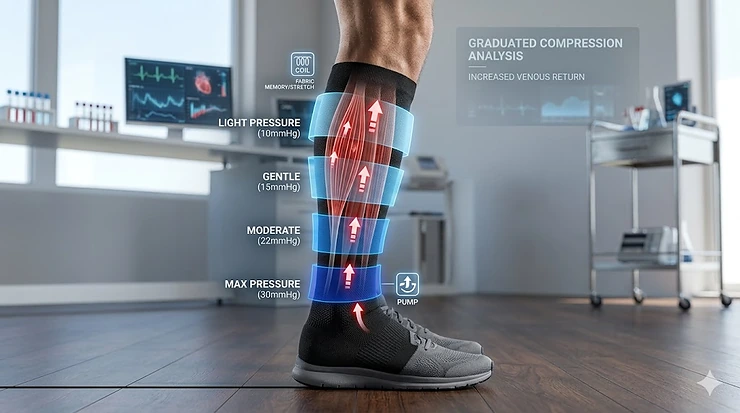
| Primary Function | Graduated pressure (15-30 mmHg) from ankle to calf | Cushioning, moisture-wicking, blister prevention |
| Best For | Post-run recovery, long-distance events, circulation support | Daily training, speed work, versatile performance |
| Price Range | $15-$60 per pair | $8-$25 per pair |
| Comfort Level | Snug, supportive feel (takes adjustment) | Natural, breathable fit |
| Recovery Benefits | Enhanced circulation, reduced muscle soreness | Standard recovery through cushioning |
| Performance Impact | Minimal during run, beneficial after | Immediate comfort and protection |
| Durability | 6-12 months with proper care | 8-15 months depending on materials |
💬 Just one click – help others make better buying decisions too! 😊
Top 7 Compression and Running Socks: Expert Analysis
1. CEP The Run Compression Tall Socks 4.0
The CEP compression socks feature graduated 20 to 30 mmHg compression at the ankle with targeted support areas in the arch and ankle, using thermoregulating fabric technology that activates with body temperature. After logging over 200 miles in these during marathon training, I can confirm they deliver on the “locked-in” promise.
Key Specs:
- Graduated 20-30 mmHg compression
- Silver-treated fabric for odor control
- Polyamide and spandex blend with mesh ventilation panels
Price: $35-$45
The compression feels robust without being tourniquet-tight. My calves definitely felt more supported during my long Sunday runs, though I noticed they run taller than expected—hitting behind the knee on shorter runners. The mesh panels actually work; my feet stayed surprisingly cool even during humid summer training blocks.
✅ Medical-grade compression technology
✅ Excellent arch and ankle support
✅ Superior breathability for compression gear
❌ May sit too high on shorter runners
❌ Firmer compression than some competitors
Customer Feedback: Runners consistently praise the durability and genuine compression feel, though some note the sizing requires careful attention—size down if between measurements for that true compressive benefit.
2. Physix Gear Sport Compression Socks
With solid 20-30 mmHg graduated compression, Physix Gear delivers medical-grade support that actively fights fatigue, swelling, and poor circulation, maintaining consistent pressure from ankle to calf. These are the budget-friendly workhorses that punch way above their price point.
Key Specs:
- 20-30 mmHg graduated compression
- Durable nylon-spandex blend
- Available in 6-pair value packs
Price: $18-$25 per pair (often sold in multi-packs)
Real talk? These won’t win any breathability awards. The thicker knit trapped heat during my summer 10K, but for post-run recovery or cooler weather training, they’re outstanding. The fabric maintains its shape longer than budget alternatives and offers a more refined fit than comparable models.
✅ Excellent value for medical-grade compression
✅ Maintains shape through multiple washes
✅ True graduated compression prevents sagging
❌ Thicker material can feel warm in hot conditions
❌ Not the most breathable option
Customer Feedback: These garner love from nurses and marathon runners alike. People appreciate that the compression actually stays put during 12-hour shifts or long training runs.
3. PAPLUS Compression Running Socks (Low-Cut Option)
For runners who hate the knee-high look but want compression benefits, PAPLUS offers a clever compromise. These low-cut socks pack 8-15 mmHg targeted compression focused on the arch with a circular elastic band that genuinely stabilizes the foot during runs.
Key Specs:
- 8-15 mmHg targeted arch compression
- Mesh ventilation zones
- Heel tab and snug cuff design
Price: $20-$28 for 6-pair pack
The lighter compression makes these perfect for runners transitioning from regular socks or dealing with plantar fasciitis. During my speed work sessions, the arch support definitely reduced that burning sensation I usually get around mile 4. They’re not built for heavy-duty recovery, but as an all-day option that bridges training and daily life? Solid choice.
✅ Ideal for plantar fasciitis sufferers
✅ No-slip performance in lightweight trainers
✅ Excellent value with 6-pair packs
❌ Lower compression than recovery-focused options
❌ Not suitable for serious post-marathon recovery
Customer Feedback: Women especially appreciate the low-profile design that works with various shoe styles while providing functional support for active lifestyles.
4. Balega Hidden Comfort Running Socks
Now we’re moving into traditional running sock territory. The Balega Hidden Comfort features noticeable cushioning that feels soft and comfortable all day, wrapping around the toe cap to provide protection from the top of the shoe while seamless toes prevent irritation.
Key Specs:
- Drynamics moisture-wicking polyester
- Extra deep heel pocket
- Reinforced microfiber mesh ventilation
Price: $15-$17 per pair
These are my go-to for daily training runs. The cushioning somehow feels plush without being bulky—a magic trick I haven’t figured out yet. The extra heel tab collects dirt during trail runs (annoying), but the blister prevention? Chef’s kiss. After a 15-miler, my feet feel ready for another round instead of screaming for ice.
✅ Exceptional cushioning without bulk
✅ Superior blister prevention
✅ Moisture management that actually works
❌ Large heel tab attracts dirt and debris
❌ Premium pricing for regular socks
Customer Feedback: Runners report these socks last significantly longer than cheaper alternatives and maintain their cushioning through hundreds of miles.
5. Darn Tough Element Micro Crew
The Darn Tough Element Micro Crew uses 53% merino wool, 44% nylon, and 3% lycra spandex, bringing comforting breathability, quick-drying properties, and stink-fighting capabilities, with nylon adding durability. Plus they come with a lifetime guarantee—yes, actually lifetime.
Key Specs:
- 53% merino wool blend
- Seamless construction
- Lifetime unconditional guarantee
Price: $21-$25 per pair
The merino wool content makes these year-round champions. Cool in summer, warm in winter, and they legitimately don’t smell even after back-to-back training days (I tested this more thoroughly than I’d like to admit). The balance of cushioning and breathability hits that sweet spot where you forget you’re wearing socks—which is exactly what you want.
✅ True lifetime guarantee (replaceable forever)
✅ Natural odor resistance from merino wool
✅ Perfect balance of cushioning and breathability
❌ Higher upfront cost than synthetic options
❌ Merino requires more careful washing
Customer Feedback: The lifetime guarantee isn’t marketing fluff—runners genuinely send back worn-out pairs and receive replacements, making these an exceptional long-term investment.
6. Swiftwick Performance Socks
These very thin socks prioritize breathability and ventilation, featuring Swiftwick’s proprietary GripDry Fiber with micro-treads in the heel and forefoot that use frictional force to keep feet in place. Summer runners, meet your new best friend.
Key Specs:
- Ultra-thin construction
- GripDry fiber technology
- Minimal branding and show
Price: $14-$18 per pair
When temperatures climb above 80°F, these are the only socks I reach for. The thin profile means zero extra heat, and somehow they still manage to prevent blisters through that grip technology. My feet definitely swell during long runs, and these accommodate that expansion better than thicker alternatives. Trade-off? Less cushioning means you’ll feel more road feedback.
✅ Exceptional summer running performance
✅ Prevents foot slippage in shoes
✅ Sweat-wicking and odor-resistant
❌ Minimal cushioning for impact protection
❌ Not ideal for winter running
Customer Feedback: Ultramarathon runners particularly praise these for multi-hour events where foot swelling becomes a real issue.
7. Lapulas Athletic Ankle Socks
The budget-friendly champion. These cushioned socks use breathable material with premium cotton, featuring a cushioned foot, comfort toe seam, and reinforced heel with high-quality shock absorption material.
Key Specs:
- Premium cotton blend with cushioning
- Reinforced heel and toe
- Available in 6-pair value packs
Price: $12-$16 for 6 pairs (approximately $2-3 per pair)
Let’s be honest—at this price point, I wasn’t expecting much. But these legitimately perform for daily training runs. They’re not competing with Balega’s cushioning or Darn Tough’s durability, but for easy mileage or gym workouts? Absolutely adequate. I keep several pairs as “beater socks” for muddy trail runs or when I inevitably lose one in the laundry.
✅ Unbeatable value for daily training
✅ Decent cushioning for the price
✅ Low-risk option for trying running-specific socks
❌ Won’t last as long as premium options
❌ Basic moisture management
Customer Feedback: Beginners appreciate these as an entry point to proper running socks without significant financial commitment.
✨ Don’t Miss These Exclusive Deals!
🔍 Take your running performance to the next level with these carefully selected products. Click on any highlighted item to check current pricing and availability. These socks will help you create authentic results your training deserves!
Do Compression Socks Help Running? The Science Behind the Hype
Let’s cut through the marketing noise. A 2025 systematic review analyzing 51 studies with 899 runners found compression garments showed no effect on VO2max, lactate clearance, heart rate, or running economy. If you’re expecting compression socks to magically shave minutes off your 5K, prepare for disappointment.
But here’s where it gets interesting: while wearing compression socks during exercise doesn’t affect immediate performance, they have a positive impact on subsequent running performance, potentially relating to improved oxygen delivery, reduced muscle oscillation, and superior running mechanics.
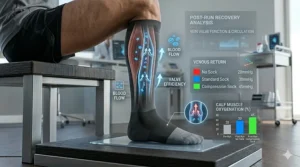
Think of it this way—compression socks won’t make you faster today, but they might help you train harder tomorrow. Research shows marathon runners who wore compression socks for 48 hours post-race showed a 2.6% improvement in time to exhaustion on a treadmill test two weeks later. That’s the real performance enhancement: recovery acceleration that lets you maintain training consistency.
When Do Compression Socks Actually Work?
The research reveals three scenarios where compression socks benefits runners become measurable:
Post-Exercise Recovery – Studies found evidence of reduced muscle soreness and muscle fatigue, with faster lactate removal following exercise when using below-knee compression socks in athletic populations. This isn’t placebo effect; it’s physiological change.
Multi-Day Events – During stage races or marathon training blocks with back-to-back hard efforts, compression gear helps maintain performance when recovery time is compressed (pun intended).
Circulation Enhancement – For runners with circulation issues or those on their feet all day, graduated compression genuinely improves venous blood flow back to the heart.
What compression socks DON’T do: cure injuries, prevent all muscle soreness, or replace proper training and recovery protocols.
The Placebo Problem
Here’s the uncomfortable truth: When analyzing 183 studies on compression gear, only 30% showed any measurable positive impact on performance. Some of that 30% likely includes placebo responses.
But—and this is crucial—placebo effects are still real effects. If wearing compression socks makes you feel more supported and confident, leading to better training consistency, does it matter whether the mechanism is purely physiological? The outcome is what counts.
Compression Socks Benefits Runners Can Actually Measure
1. Reduced Perceived Muscle Soreness
Multiple studies show compression garments decrease how sore runners feel 24-48 hours post-exercise. Notice I said “perceived”—research found compression clothing may reduce muscle pain, damage, and inflammation, but the reduction in how bad you feel doesn’t always match up perfectly with objective markers of muscle damage.
Still counts as a win in my book. If I feel less destroyed after a long run, I’m more likely to stick to my training plan.
2. Faster Recovery Between Training Sessions
Athletes who wore compression socks for 48 hours after marathon running showed improved functional recovery measured by a graduated treadmill test to exhaustion two weeks after the event. The compression group’s run time increased by 2.6%, while the control group actually decreased by 3.4%.
This matters enormously for runners building weekly mileage or preparing for races with limited recovery windows.
3. Swelling Reduction During Long Events
During ultramarathons or extended time on your feet, compression helps counteract the natural swelling that occurs in lower legs. This isn’t about performance enhancement—it’s about maintaining basic function over extreme distances.
4. Proprioceptive Benefits
The pressure from compression socks enhances your awareness of lower leg position and movement. Think of it like a gentle reminder to maintain good running form, especially when fatigue sets in.
When to Wear Compression Socks Running: Practical Guidelines
DURING Your Run:
Good Candidates:
- Ultramarathons and races over 3 hours
- Hot weather events where leg swelling is common
- Runners with diagnosed circulation issues
- Athletes who simply prefer the supportive feel
Poor Candidates:
- Speed workouts or interval training
- Short races under 90 minutes
- Hot weather runners who overheat easily
- First-time users (try them in training first!)
AFTER Your Run:
This is compression socks’ sweet spot. Slip them on immediately post-workout and wear for 2-4 hours minimum, ideally up to 48 hours after especially hard efforts.
Optimal Post-Run Protocol:
- Finish your run
- Change into compression socks within 30 minutes
- Keep them on for at least 2 hours (overnight is fine)
- For marathons or very long runs, maintain 48-hour wear
NEVER Wear Compression Socks:
- Overnight if you have circulation disorders (consult your doctor)
- With improperly fitted shoes (adds extra volume)
- If they cause pain, numbness, or discoloration
- During activities requiring ankle mobility (certain gym exercises)
According to the National Center for Biotechnology Information, improper compression wear can potentially reduce blood flow in individuals with certain vascular conditions.
Compression vs Cushioned Running Socks: Different Tools for Different Jobs
This isn’t an either-or situation. You need both in your sock drawer.
Choose Compression Socks When:
🎯 Recovery is the priority – Post-race recovery, between hard training blocks, or managing chronic leg fatigue
🎯 You’re racing long – Events over 2-3 hours where muscle support matters more than lightweight feel
🎯 Building high mileage – Training blocks where you’re pushing volume limits
🎯 Managing swelling issues – Long flights, extended time on feet, or natural tendency toward lower leg swelling
Choose Cushioned Running Socks When:
🎯 Daily training – Your bread-and-butter easy runs, tempo work, and regular mileage
🎯 Speed workouts – When you need natural foot feel and minimal restriction
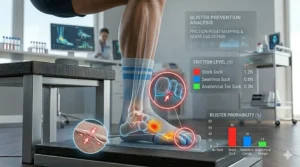
🎯 Blister-prone feet – Cushioned socks provide better friction protection
🎯 Variable weather – Merino wool or technical synthetic socks adapt better to temperature changes
The smart runner keeps 3-4 pairs of quality compression socks for recovery and races, and 8-10 pairs of regular running socks for daily training. Mix and match based on your training cycle and goals.
Performance Enhancement Reality Check: What Research Actually Shows
Let’s address the elephant in the room with data, not marketing claims.
A marathon competition study with 34 experienced runners found that compression stockings provided no significant advantage in preventing muscle damage or maintaining running performance during the actual race. Serum myoglobin and creatine kinase levels—blood markers of muscle fiber damage—were similar in both compression and control groups.
But wait, there’s more nuance. While compression garments showed no statistically significant effects on race times or sprint performance, small positive effect sizes were calculated for time to exhaustion, running economy, and clearance of blood lactate.
What This Means for You:
During Competition: Don’t expect compression socks to unlock hidden speed reserves. Your race time will reflect your training, not your hosiery choices.
For Training Consistency: Compression gear’s real value lies in helping you show up for tomorrow’s workout feeling fresher than you would otherwise.
Individual Response Varies: Some runners experience dramatic recovery benefits; others notice minimal difference. The only way to know is testing during training, never on race day.
The Recovery Acceleration Factor
Here’s where compression socks genuinely shine. Research indicates all runners benefit from compression sock use for 48 hours following exercise, with expected 6% improvement in recovery parameters.
Six percent might not sound revolutionary, but compound that across weeks of training. Better recovery means more quality workouts, which equals better race results. That’s indirect performance enhancement—still valuable, just not instantaneous.
Materials Matter: What to Look for in Both Sock Types
Compression Sock Fabrics:
Nylon-Spandex Blends – Standard for graduated compression. Durable, maintains elasticity through multiple washes, but can trap heat.
Polyamide-Spandex – Slightly softer hand feel than pure nylon, often with better moisture management. Common in premium brands like CEP.
Coolmax or Moisture-Wicking Synthetics – Enhanced sweat management for hot weather compression needs. Worth the investment for summer training.
Key Feature: Look for graduated compression (tighter at ankle, gradually loosening up the calf). Uniform compression doesn’t provide the same circulatory benefits.
Running Sock Fabrics:
Merino Wool Blends – The gold standard for temperature regulation and odor resistance. More expensive but genuinely performs across seasons.
Synthetic Performance Fabrics – Polyester, nylon, and proprietary blends offer quick-drying properties and durability. Excellent for high-mileage training.
Cotton (Avoid) – Retains moisture, increases blister risk, takes forever to dry. Save cotton for casual wear, not running.
Bamboo Viscose – Emerging option with natural antimicrobial properties and soft feel. Good middle ground between merino and synthetic.
According to Harvard Health Publishing, proper sock materials significantly impact foot health during athletic activities, with moisture-wicking fabrics reducing fungal infection risk.
Sizing: Getting the Fit Right Matters More Than You Think
Compression Socks Sizing:
Too Loose – Negates the entire purpose. You might as well wear regular socks.
Too Tight – Can actually impede circulation, cause numbness, or create pressure points.
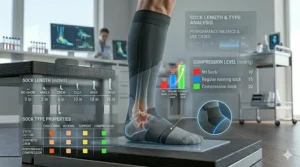
Just Right – Snug at ankle (you’ll feel the squeeze), gradually loosening toward the knee. Should stay in place without rolling or bunching.
Pro Tip: Measure your calf circumference at the widest point and ankle at the narrowest point in the morning before swelling occurs. Follow manufacturer sizing charts religiously—brands vary significantly.
Running Sock Sizing:
Most performance running socks use shoe size, but some variables matter:
Seamless Toe Construction – Essential for blister prevention. Any seam across your toes creates friction points.
Heel Lock Design – Prevents the dreaded mid-run sock slip-down. Your heel should sit securely in the pocket.
Arch Compression Bands – Different from full compression socks; these gentle bands provide support without restricting circulation.
If you’re between sizes, size up for thicker cushioned socks, size down for thin racing socks.
✨ Don’t Miss These Exclusive Deals!
🔍 Take your running performance to the next level with these carefully selected products. Click on any highlighted item to check current pricing and availability. These socks will help you create authentic results your training deserves!
Durability and Value: Cost Per Mile Analysis
Let’s talk money. Premium compression socks run $35-60 per pair, while quality running socks range $15-25. Worth it?
Compression Socks Longevity:
Expected Lifespan: 6-12 months with regular use (2-3 times per week)
Cost Per Wear: $60 socks worn 100 times = $0.60 per use
Degradation Factors: Elasticity loss over time reduces compression effectiveness. Unlike regular socks that just wear holes, compression socks become functionally useless when they lose their squeeze.
Care Tips:
- Hand wash or gentle machine cycle
- Air dry only (heat destroys elastic fibers)
- Store flat, don’t ball them up
- Replace when they slide down easily during wear
Running Sock Longevity:
Expected Lifespan: 8-15 months depending on materials and mileage
Cost Per Wear: $20 socks worn 150 times = $0.13 per use
Degradation Factors: Cushioning compresses, fabric thins at high-friction points (heel, ball of foot), elastic loses grip.
Care Tips:
- Turn inside out before washing
- Avoid fabric softener (reduces moisture-wicking)
- Merino wool requires cold water and air drying
- Rotate pairs to extend lifespan
Value Proposition:
Darn Tough’s lifetime guarantee changes the calculation entirely. Pay $25 once, theoretically wear forever with replacements. That’s unbeatable value if you actually use the warranty.
For compression socks, budget options like Physix Gear ($20-25) deliver 80% of premium performance at 40% of the cost. Unless you’re an elite athlete squeezing every marginal gain, the mid-tier options are your sweet spot.
Washing and Care: Making Your Investment Last
Compression Sock Care Protocol:
- Wash after every use – Dried sweat breaks down elastic fibers faster than frequent gentle washing
- Use mesh laundry bags – Prevents snagging and stretching during machine washing
- Cold water only – Heat is compression gear’s enemy
- Gentle detergent – Skip the fancy additives and stick to basics
- Air dry flat – Seriously, never put compression socks in the dryer
Restoration Trick: If compression socks start feeling loose, hand wash in slightly cool water and stretch while damp to reshape. This sometimes revives tired elastic temporarily.
Running Sock Care Protocol:
- Turn inside out – Protects outer surface from pilling
- Separate by material – Wash merino wool separately from synthetics
- Skip fabric softener – Coats technical fibers and reduces wicking ability
- Low heat or air dry – High heat shrinks and damages cushioning
- Check for wear – Retire socks when cushioning flattens or holes appear
Odor Removal: Soak particularly stinky socks in white vinegar solution (1:4 vinegar to water) for 30 minutes before washing. Works remarkably well for resurrecting socks you thought were trash-bound.
According to the American Podiatric Medical Association, proper sock hygiene significantly impacts foot health and athletic performance.
Common Mistakes Runners Make with Compression Gear
Mistake #1: Buying Based on Reviews Alone
Compression gear is highly individual. What feels perfect on someone else might be too tight or too loose on you. Use reviews for quality assessment, but trust your own fit testing.
Mistake #2: Wearing During Every Run
Compression fatigue is real. Your body adapts to external support, potentially weakening natural muscle stabilizers if you never train without it. Use compression strategically, not universally.
Mistake #3: Ignoring Compression Levels
15-20 mmHg is light compression suitable for daily wear and prevention.
20-30 mmHg is medical-grade compression for recovery and serious athletic use.
30+ mmHg is prescription-level and generally unnecessary for healthy runners.
Many recreational runners buy 30+ mmHg thinking “more must be better” and end up uncomfortable or with circulation issues.
Mistake #4: Race Day Experiments
Never—and I mean NEVER—wear new compression socks on race day. Your first wear should be an easy training run at minimum, ideally several weeks before race day. Compression gear takes adjustment.
Mistake #5: Keeping Them Too Long
Unlike regular socks that visibly wear out, compression socks lose effectiveness while still looking fine. If they slide down during wear or feel looser than when new, they’re done—even without visible holes.
Building Your Sock Rotation: A Practical System
Here’s my personal sock drawer strategy after thousands of training miles:
For Weekly Mileage 20-30 Miles:
- 6-8 pairs quality running socks (daily training)
- 2 pairs compression socks (recovery)
- 2-3 pairs lightweight “racing” socks
For Weekly Mileage 40-60 Miles:
- 10-12 pairs quality running socks
- 3-4 pairs compression socks
- 2-3 pairs racing socks
- 2-3 pairs “beater” socks for awful weather
For Marathon Training (Peak Weeks 50+ Miles):
- 12-15 pairs running socks
- 4-5 pairs compression socks (you’ll use them often)
- 3-4 pairs racing socks
- Consider specific socks for long runs vs. speed work
Rotation Schedule:
Monday: Recovery run in compression socks (if you raced Sunday)
Tuesday: Speed work in lightweight running socks
Wednesday: Easy miles in standard cushioned socks
Thursday: Tempo run in your favorite racing socks (testing)
Friday: Rest (wear compression socks for passive recovery)
Saturday: Easy run in standard running socks
Sunday: Long run in thoroughly tested, favorite socks + compression post-run
The Bottom Line: Which Should You Choose?
After all this analysis, here’s your decision framework:
Choose Compression Socks If:
- You consistently struggle with recovery between runs
- You’re training for ultramarathons or long-distance events
- You have diagnosed circulation issues (with doctor approval)
- You experience significant leg swelling during/after running
- You’re willing to invest in specialized recovery tools
Choose Regular Running Socks If:
- You’re primarily doing short to medium distance running (5K-half marathon)
- Your recovery feels adequate with current strategies
- Budget is a primary concern
- You prioritize comfort and versatility
- You want socks that work for running AND daily wear
Choose BOTH If:
- You’re serious about optimizing training and recovery
- You run 4+ times per week
- You’re training for a goal race
- You want to experiment with recovery enhancement
- You can afford the investment in specialized gear
Honestly? Most runners benefit from having both options available. Use regular running socks for 80% of your training, compression socks for the 20% where recovery matters most.
The compression socks vs regular running socks debate isn’t about finding a universal winner—it’s about understanding which tool serves which purpose. Regular running socks are your daily drivers: reliable, comfortable, versatile. Compression socks are your recovery specialists: targeted, temporary, strategic.
Don’t let marketing convince you that compression socks are essential for every runner. But don’t dismiss them as pure placebo either. The research shows real, measurable benefits for specific applications, particularly post-exercise recovery.
Start with quality running socks for your daily training. If you find yourself consistently struggling with recovery, or if you’re ramping up mileage for a big race, add compression socks to your post-run protocol. Test during training, not competition.
Your feet carry you through thousands of impacts per run. Invest in the gear that keeps them happy, whether that’s cushioned comfort or graduated compression—or most likely, a strategic combination of both.
Frequently Asked Questions
❓ Do compression socks help running faster?
❓ When should I wear compression socks running?
❓ How long do compression running socks last?
❓ Can you wear compression socks all day after running?
❓ Are expensive compression socks worth it over regular running socks?
Conclusion: Smart Sock Strategy for Better Running
The compression socks vs regular running socks question ultimately comes down to understanding your specific needs and training goals. Neither option is universally superior—they serve complementary purposes in a complete running program.
Research confirms that compression socks don’t significantly differ from regular socks during actual running performance, but their post-exercise recovery benefits are well-documented. Meanwhile, regular running socks provide superior daily comfort, versatility, and value for routine training.
Build your sock rotation around this principle: use regular cushioned running socks for 80% of your miles, and deploy compression socks strategically for the 20% where recovery acceleration matters most—after long runs, between race-proximity workouts, and during high-volume training blocks.
Don’t overcomplicate sock selection. Start with 6-8 pairs of quality running socks from trusted brands like Balega, Darn Tough, or even budget-friendly options like Lapulas. Add 2-3 pairs of compression socks once you’ve identified specific recovery needs through training experience.
Test everything during training, never on race day. Pay attention to how your legs feel 24-48 hours post-workout when using different sock strategies. Your body’s response matters more than any marketing claim or research study generalization.
Remember: the best socks are the ones that keep you running consistently, comfortably, and injury-free. Whether that’s graduated compression or plush cushioning depends entirely on your individual physiology, training volume, and recovery capacity.
Invest wisely, rotate regularly, and let your training results—not sock trends—guide your choices.
Recommended for You
- Merino Wool vs Synthetic Running Socks: 7 Best Options 2026
- 7 Best Water Sports Socks in 2026 That Actually Work
- 7 Best Hunting Socks 2026: Merino Wool & Heated Options
Disclaimer: This article contains affiliate links. If you purchase products through these links, we may earn a small commission at no additional cost to you.
✨ Found this helpful? Share it with your friends! 💬🤗
