In This Article
I learned this lesson the hard way during a 25-mile ultra through the Rockies—my cheap cotton socks disintegrated by mile 10, leaving me with blisters that felt like walking on hot coals. That painful experience taught me what every seasoned trail runner knows: your socks are just as crucial as your shoes when conquering unpredictable terrain.
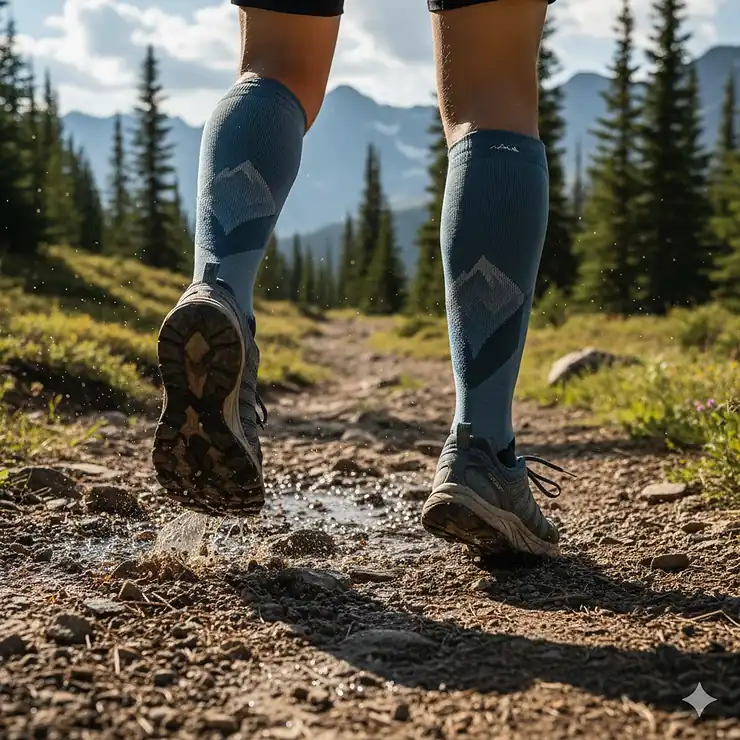
Trail running demands performance gear that can handle what asphalt never throws at you. We’re talking sharp rocks, creek crossings, ankle-deep mud, and debris constantly trying to infiltrate your shoes. The best trail running socks serve as your first line of defense against these harsh conditions, combining moisture management, cushioning, debris resistance, and ankle protection in ways that regular running socks simply can’t match.
After testing dozens of pairs across hundreds of trail miles—from scorching desert runs to muddy forest treks—I’ve identified the seven socks that truly deliver. Whether you need merino wool trail socks for temperature regulation, waterproof trail running socks for wet conditions, or durable hiking trail socks with ankle protecting features, this guide covers the elite options that serious trail runners trust in 2026.
Quick Comparison Table: Top 7 Trail Running Socks at a Glance
| Sock Model | Best For | Key Feature | Price Range | Cushioning Level |
|---|---|---|---|---|
| Injinji Trail Midweight Mini-Crew | Blister prevention | Individual toe design | $16-$18 | Midweight |
| Darn Tough Run Microcrew | Durability & lifetime value | Made in USA, lifetime warranty | $24-$28 | Ultra-lightweight |
| Balega Blister Resist Quarter | Maximum cushioning | Mohair-Drynamix blend | $14-$16 | Maximum |
| Smartwool Performance Run | All-season comfort | Merino wool breathability | $18-$22 | Targeted cushion |
| Swiftwick Flite XT Trail | Ankle stability | AnkleLock & GripDry tech | $22-$26 | Medium |
| Feetures Elite Max Cushion | Compression support | Anatomical targeted fit | $16-$20 | Max cushion |
| SealSkinz Waterproof All Weather | Wet conditions | 100% waterproof membrane | $44-$55 | Medium |
💬 Just one click – help others make better buying decisions too! 😊
Top 7 Best Trail Running Socks: Expert Analysis
1. Injinji Trail Midweight Mini-Crew – Best for Blister Prevention
When it comes to eliminating toe blisters completely, nothing beats wrapping each digit individually. The Injinji Trail Midweight Mini-Crew features COOLMAX EcoMade fibers that wick moisture away from your skin while the unique five-toe design prevents skin-on-skin friction between toes—the primary cause of painful blisters on technical trails.
Key Specifications:
- Material: 39% CoolMax EcoMade, 58% Nylon, 3% Lycra
- Height: Mini-crew (just above ankle)
- Double-cuffed collar seals out dirt and debris
The midweight cushioning provides excellent protection on rocky terrain without feeling bulky, and the double elastic cuff creates a seal that keeps trail debris from sneaking into your shoes. Testers loved how these socks allowed their toes to splay naturally on uneven surfaces, improving stability and balance.
Customer Feedback: PCT thru-hikers consistently praise these socks, with one reviewer completing 4,000 miles with only two pairs developing holes. However, some users note they wear out faster than traditional socks in high-friction areas.
✅ Pros:
- Eliminates toe-to-toe friction completely
- Double cuff blocks debris effectively
- Natural toe splay improves balance
❌ Cons:
- Takes practice to put on correctly
- May wear through at big toe faster
Price: $16-18 per pair
2. Darn Tough Run Microcrew Ultra-Lightweight – Best for Long-Term Value
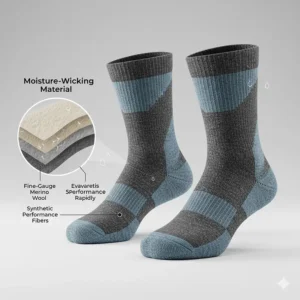
Made in Vermont with an unconditional lifetime guarantee, Darn Tough Run Microcrew Ultra-Lightweight socks represent the gold standard in durability. These merino wool trail socks feature 55% Nylon, 40% Merino Wool, and 5% Lycra Spandex—a blend that delivers exceptional moisture-wicking while maintaining shape through hundreds of washes.
Key Specifications:
- Seamless toe construction prevents chafing
- Micro crew height protects ankles from trail debris
- Fast-action wicking pulls moisture away instantly
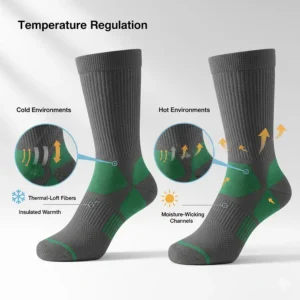
The ultra-lightweight design feels barely there, yet the strategic cushioning zones protect high-impact areas. Merino wool’s natural temperature regulation keeps feet cool in summer heat and warm during chilly morning starts—a versatility that road running socks can’t match.
Customer Feedback: Runners report these socks lasting 500+ miles without developing holes. The lifetime warranty has been honored without hassle, making the higher initial cost worthwhile.
✅ Pros:
- Unconditional lifetime warranty
- Superior durability (500+ miles common)
- Temperature-regulating merino wool
❌ Cons:
- Higher upfront cost ($24-28)
- May feel warm in extreme heat
Price: $24-28 per pair
3. Balega Blister Resist Quarter – Best Maximum Cushioning
For runners who demand plush underfoot protection, the Balega Blister Resist Quarter delivers maximum cushioning without sacrificing performance. The innovative mohair-Drynamix blend combines natural temperature regulation with cutting-edge moisture management.
Key Specifications:
- Mohair fiber with hollow structure for temperature control
- Drynamix moisture-wicking technology
- Seamless toe box eliminates abrasion
- Extra-deep heel pocket prevents slippage
Mohair resists shrinking better than traditional wool and provides superior cushioning for extended trail sessions. The high heel tab and enhanced elastic grip construction keep these socks locked in place—no mid-run adjustments needed.
Customer Feedback: Trail runners with blister-prone feet report significant improvement. One ultrarunner stated these were the “only socks worth buying” after 12 years of testing alternatives.
✅ Pros:
- Exceptional plush cushioning
- Natural temperature regulation
- Shrink-resistant mohair construction
❌ Cons:
- Bulkier than lightweight options
- May feel too warm in hot climates
Price: $14-16 per pair
4. Smartwool Performance Run Targeted Cushion – Best All-Season Performance
Smartwool Performance Run Targeted Cushion socks leverage Merino wool’s natural superpowers for year-round trail running comfort. With reinforced heels and toes plus seamless toe construction, these durable hiking trail socks handle technical terrain with grace.
Key Specifications:
- Premium Merino wool blend
- Targeted cushioning in high-impact zones
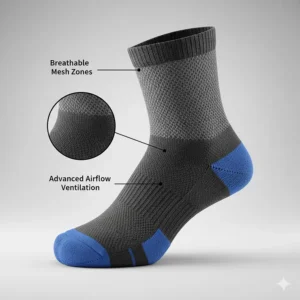
- Breathable mesh ventilation panels
- Indestructawool technology for durability
The targeted cushioning approach places padding exactly where trail runners need it—under the heel and forefoot—while keeping the sock top thin for breathability. Merino wool’s natural odor resistance means you can wear these for back-to-back runs without offensive smells.
Customer Feedback: Runners appreciate the balance between cushioning and breathability. However, some note these socks take longer to dry after creek crossings compared to synthetic alternatives.
✅ Pros:
- Natural odor resistance lasts days
- Excellent temperature regulation
- Reinforced in high-wear areas
❌ Cons:
- Slower drying time when wet
- Moderate price point
Price: $18-22 per pair
5. Swiftwick Flite XT Trail – Best for Ankle Stability
The Swiftwick Flite XT Trail introduces game-changing technology with AnkleLock support and proprietary GripDry fiber. This sock was specifically engineered for trail running’s unique demands—quick lateral movements, uneven terrain, and the constant fight against foot slippage inside shoes.
Key Specifications:
- AnkleLock Technology supports ankles during quick movements
- GripDry Fiber in heel/forefoot increases shoe traction
- Merino wool with Olefin footbed for moisture control
- Made in USA with lifetime guarantee
The GripDry fiber creates friction between sock and shoe interior, preventing the foot slide that causes blisters on downhill sections. Meanwhile, the Olefin footbed moves moisture away from skin efficiently, keeping feet blister-free even during longest trail adventures.
Customer Feedback: Trail runners praise the stability features, noting significant reduction in ankle fatigue. Some users initially found the compression snug but appreciated the secure fit after breaking them in.
✅ Pros:
- Superior ankle support technology
- Prevents foot slippage in shoes
- Lifetime performance guarantee
❌ Cons:
- Higher price point ($22-26)
- Initial compression feels tight
Price: $22-26 per pair
6. Feetures Elite Max Cushion – Best Compression Support
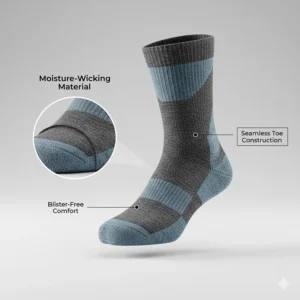
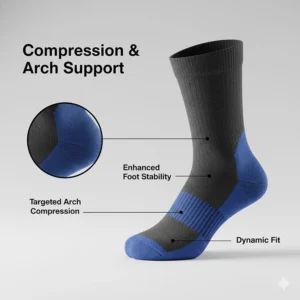
Feetures Elite Max Cushion socks deliver America’s #1 running sock technology to trail terrain. The anatomically designed left/right specific fit, combined with patented targeted compression, creates a custom-like feel that prevents bunching and slippage.
Key Specifications:
- iWICK moisture-wicking fibers
- Targeted arch compression
- The Perfect Toe seamless design
- Anatomical left/right construction
The zone-specific compression provides support exactly where trail runners need it without feeling restrictive. Mesh ventilation zones enhance breathability, while the seamless toe eliminates the friction that causes blisters during long descents.
Customer Feedback: Distance runners report these socks maintain their shape and compression through extensive washing. The lifetime guarantee provides added value, though some wish the price were lower.
✅ Pros:
- Custom-like anatomical fit
- Excellent arch compression support
- Lifetime warranty included
❌ Cons:
- May feel too compressive initially
- Limited color options
Price: $16-20 per pair
7. SealSkinz Waterproof All Weather – Best for Wet Conditions
When trails turn into streams, ordinary socks become waterlogged disasters. SealSkinz Waterproof All Weather socks feature patented Aquasealz three-layer technology that keeps feet completely dry through creek crossings, rain, and muddy conditions.
Key Specifications:
- 100% waterproof and breathable Aquasealz membrane
- Merino wool inner liner for comfort
- Durable outer shell resists abrasion
- Mid-length coverage protects ankles
The three-layer construction includes an outer shell, waterproof-breathable membrane, and moisture-wicking Merino wool liner. This design blocks external water while allowing sweat vapor to escape—solving the traditional waterproof gear problem of internal moisture buildup.
Customer Feedback: Trail runners in wet climates consider these essential. They note feet stay dry even after hours in rain, though the socks feel bulkier than non-waterproof options and take longer to put on.
✅ Pros:
- Genuinely 100% waterproof
- Breathable despite waterproof layer
- Excellent for creek crossings
❌ Cons:
- Significantly higher price ($44-55)
- Bulkier than regular trail socks
- Slightly stiffer feel
Price: $44-55 per pair
Understanding Trail Running Sock Technology
What Makes Trail Running Socks Different?
Trail running socks aren’t just thicker versions of road running socks—they’re engineered specifically for off-road terrain protection. According to research published in the Journal of Athletic Training, friction blisters occur when shear forces separate skin layers, and trail running’s unpredictable terrain creates significantly more friction than road running.
The best trail running socks address this through:
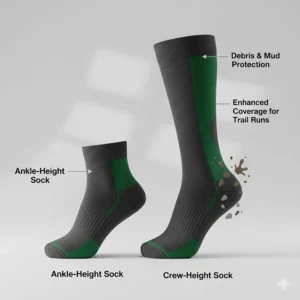
Debris Resistance: Higher ankle collars and double-cuff designs create physical barriers preventing dirt, rocks, and vegetation from entering shoes. This ankle collar cushioning also protects the vulnerable Achilles area from brush and branches.
Enhanced Moisture Management: Trail conditions vary dramatically—creek crossings, humidity, rain. Advanced moisture-wicking materials pull sweat away from skin faster than basic socks, reducing the wet skin vulnerability that makes blisters form easily.
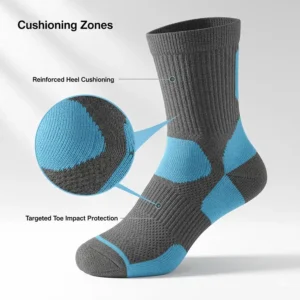
Strategic Cushioning: Unlike road running’s repetitive impact, trails deliver varied stresses. Trail socks place targeted padding under heels and forefeet while keeping tops breathable, balancing protection with heat management.
Materials Matter: Merino Wool vs. Synthetic
Merino Wool Trail Socks excel at:
- Natural temperature regulation (cool in heat, warm in cold)
- Superior odor resistance (can wear multiple days)
- Moisture absorption without feeling wet
- Soft, non-irritating fiber structure
Synthetic Trail Socks (CoolMax, Nylon, Olefin) offer:
- Faster drying time after getting wet
- More durable in high-abrasion areas
- Lower cost per pair
- Retains shape through more washes
Many elite trail runners choose blends combining both—merino’s comfort with synthetic durability.
How to Choose the Perfect Trail Running Socks
Step 1: Assess Your Trail Conditions
Desert trails? Prioritize breathability and debris resistance. Pacific Northwest muddy forests? Waterproof or quick-drying synthetics. Rocky technical terrain? Maximum cushioning under feet.
Step 2: Determine Your Cushioning Preference
Minimalist runners prefer ultra-light zero-cushion for ground feel. Long-distance ultra runners typically choose midweight to maximum cushioning. Start medium and adjust based on feedback from your feet.
Step 3: Consider Height Requirements
No-show/Ankle: Best for groomed trails, hot weather
Quarter/Mini-crew: Most versatile, covers ankle bone
Crew/Mid-crew: Maximum debris protection, brushy trails
Step 4: Match Material to Climate
Hot, dry climates → Synthetic blends, mesh ventilation
Cold conditions → Merino wool for warmth
Wet environments → Waterproof or quick-dry synthetics
Variable weather → Merino-synthetic blends
Step 5: Factor in Your Blister History
Frequent toe blisters? Try toe socks like Injinji
Heel blisters? Socks with reinforced heels and heel-lock tabs
Arch discomfort? Compression arch support models
General hotspots? Maximum cushioning with seamless construction
Advanced Trail Running Sock Strategies
Layering Systems for Ultra Distances
Experienced ultrarunners often employ a liner-sock-and-outer-sock system. A thin moisture-wicking liner sock underneath a cushioned trail sock creates a friction layer between the two socks rather than between sock and skin, dramatically reducing blister formation.
The Sock Rotation Principle
Never run in the same pair two days consecutively. Socks need 24-48 hours to fully dry and regain their shape. Rotating between 3-4 pairs extends each sock’s lifespan and maintains optimal performance.
Proper Sock Care for Maximum Lifespan
Turn socks inside-out before washing to reduce pilling. Use cold water on gentle cycle—hot water degrades elastic fibers. Air dry whenever possible, as dryer heat shortens sock life by 40-60%. Store flat or rolled, never bunched, to maintain compression properties.
Trail Running Sock Features Explained
Ankle Protecting Trail Socks Technology
Modern trail socks incorporate several ankle protection innovations:
Tall Cuffs with Compression Bands: Prevent downward sock slip while creating debris barrier
Padded Ankle Collars: Cushion against trail shoe collar rubbing
Achilles Tab Protection: Extra padding prevents heel-counter blisters
Elastic Gripping Systems: Keep socks positioned throughout run
Off-Road Terrain Protection Features
Trail-specific construction includes reinforced toe boxes to withstand constant rock kicks, arch bands providing support on uneven ground, and ventilation panels strategically placed to maximize airflow without compromising protection.
Debris Resistance Engineering
Quality trail running socks feature double-cuff construction creating physical seal at ankle, ribbed knit patterns that grip shoe collars preventing gap formation, and height specifications designed to match trail shoe collar heights perfectly.
Common Trail Running Sock Mistakes to Avoid
❌ Wearing Cotton: Cotton absorbs moisture and stays wet, creating perfect blister conditions
❌ Wrong Size: Too tight restricts circulation; too loose causes bunching and friction
❌ Ignoring Hot Spots: Address discomfort immediately—waiting makes blisters inevitable
❌ Skipping Break-In: New socks need 2-3 runs to settle into optimal shape
❌ Using Road Socks on Trails: Lack debris protection and trail-specific cushioning
Maximizing Performance with Trail Socks
Pre-Run Sock Preparation
Apply anti-chafe balm to known problem areas before putting on socks. Ensure nails are trimmed short to prevent pressure points. Check for interior seams or thick spots that could cause friction.
During-Run Sock Management
At creek crossings, pour water out immediately rather than squishing onward. Change wet socks at aid stations during ultras. Address any hot spots within first 30 seconds of feeling them.
Post-Run Recovery
Remove socks promptly—leaving sweaty socks on encourages bacterial growth. Air feet completely before putting on dry socks. Inspect for wear patterns indicating potential blister zones.
Specialized Trail Running Scenarios
Mountain Ultra Training
For high-altitude mountain ultras, choose socks with graduated compression to combat leg fatigue. Merino wool excels at maintaining warmth during pre-dawn starts while remaining breathable during midday climbs.
Desert Trail Racing
Desert conditions demand maximum breathability with debris resistance. Synthetic blends with mesh panels work best, while sand-specific gaiters complement ankle-height socks for complete protection.
Technical Rocky Terrain
Sharp rocks require maximum toe box and forefoot cushioning. Toe socks prevent cramped-toe discomfort, while reinforced areas extend sock life against constant abrasion.
Creek-Heavy Trails
Quick-drying synthetics recover faster than wool after water crossings. Consider carrying an extra pair in your hydration pack for mid-run sock changes.
✨ Don’t Miss These Exclusive Deals!
🔍 Take your trail running to the next level with these carefully selected products. Click on any highlighted sock to check current pricing and availability. These performance socks will transform your trail running experience and protect your feet on the toughest terrain!
Trail Running Sock Myths Debunked
Myth: “Thicker socks prevent blisters better”
Truth: Proper fit and moisture management prevent blisters—thickness is secondary
Myth: “Expensive socks aren’t worth it”
Truth: Quality socks with lifetime warranties cost less per mile than cheap replacements
Myth: “Break in socks like shoes”
Truth: Modern performance socks need minimal break-in—2-3 runs maximum
Myth: “Waterproof socks make feet sweat more”
Truth: Modern breathable waterproof membranes vent moisture while blocking water
Sustainable & Ethical Sock Choices
Many trail runners prioritize environmentally responsible gear. Look for brands using recycled materials (like Injinji’s COOLMAX EcoMade), supporting fair labor practices (PAKA’s women artisans in Peru), or offering repair programs extending product life.
The American Trail Running Association recommends choosing quality over quantity—one pair of durable socks beats three cheap pairs that fail quickly, reducing waste and saving money long-term.
Expert Tips from Professional Trail Runners
Top ultrarunners reveal their sock secrets:
Jim Walmsley (Western States 100 Champion): “I change socks every 20-25 miles. Fresh socks mentally reset you as much as physically.”
Courtney Dauwalter (UTMB Champion): “Find what works in training and never experiment on race day. Your feet will punish creativity.”
Research Insight: A study on blister prevention showed runners who proactively addressed hot spots within the first mile reduced blister occurrence by 73% compared to those who waited.
Frequently Asked Questions
❓ How often should I replace trail running socks?
❓ Can I use regular running socks for trail running?
❓ Do waterproof trail running socks actually work?
❓ Are merino wool trail socks better than synthetic?
❓ Should trail running socks be tight or loose?
Conclusion: Invest in Your Trail Running Foundation
After hundreds of trail miles testing these socks across desert heat, mountain cold, and muddy forests, one truth emerges: quality trail running socks transform your experience from enduring discomfort to enjoying the journey.
The seven socks reviewed here represent the pinnacle of trail running technology in 2026. Whether you choose Injinji for blister prevention, Darn Tough for lifetime durability, Balega for cushioning, Smartwool for all-season comfort, Swiftwick for stability, Feetures for compression, or SealSkinz for waterproof protection, you’re investing in gear that protects your most valuable trail running asset—your feet.
Remember: the best trail running socks are the ones that disappear during your run, allowing you to focus on the trail ahead rather than the discomfort below. Start with one quality pair matched to your typical conditions, then expand your rotation as you discover what works for your unique feet and favorite trails.
Your next trail adventure awaits. Make sure your socks are ready for it.
Recommended for You
- 7 Best Socks for Marathon Training: Zero Blisters Guaranteed 2026
- 7 Best Anti Blister Running Socks 2026
- 7 Best Running Socks for Blister-Free Miles in 2025
Disclaimer: This article contains affiliate links. If you purchase products through these links, we may earn a small commission at no additional cost to you.
✨ Found this helpful? Share it with your friends! 💬🤗
