
In This Article
Ever spent fifteen frustrating minutes wrestling with your compression stockings, only to end up sweaty, exhausted, and wondering if there’s an easier way? You’re not alone. Compression stockings apply graduated pressure at the ankle that gradually decreases up the leg, which is great for your circulation but makes them notoriously difficult to pull on.
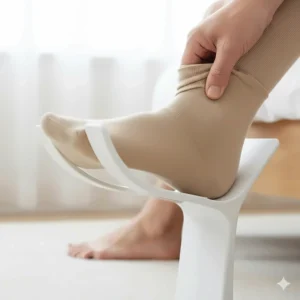
Here’s the thing: compression stockings work wonders for managing varicose veins, preventing blood clots, reducing swelling, and supporting recovery after surgery. But their tight, elastic construction creates a real challenge. If you have arthritis, limited flexibility, or you’re recovering from hip or knee replacement, putting these lifesavers on can feel impossible.
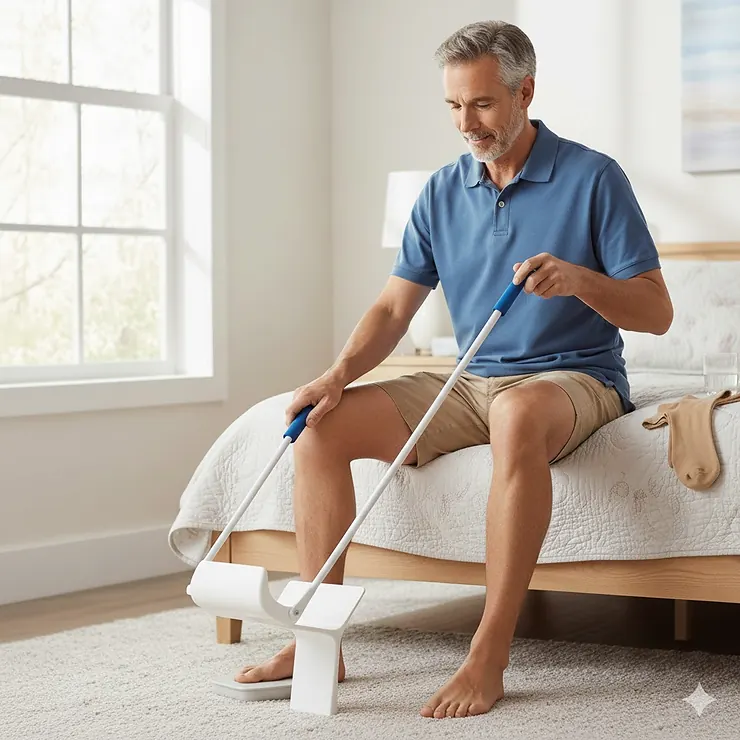
That’s exactly where a sock aid for compression stockings becomes your new best friend. These clever devices transform the struggle into a simple, seated process that takes minutes instead of a wrestling match. Whether you’re dealing with 20-30 mmHg medical-grade compression or lighter support stockings, the right donning aid makes all the difference between compliance and giving up entirely.
In this comprehensive guide, I’ll walk you through the seven best sock aid for compression stockings available in 2025, backed by real user experiences and expert analysis. We’ve tested devices ranging from budget-friendly options under twenty dollars to premium medical-grade tools, so you can find exactly what works for your specific needs and budget.
Quick Comparison Table: Top Sock Aid for Compression Stockings
| Product | Best For | Calf Size | Price Range | Key Feature |
|---|---|---|---|---|
| Truform Stockings Donner | Overall Best | S-XL (Regular), 2X-3X (Large) | $23-$43 | Lightweight wire frame, protective coating |
| RMS Sock Aid Kit | Budget-Friendly | Up to 5″ foot width | $15-$20 | Includes remover, flexible shell |
| JFMkaer Compression Sock Aid | Small to Medium Calves | Under 16″ circumference | $25-$35 | Ergonomic grip, patented leg lift |
| JOBST Stocking Donner | Medical-Grade Compression | Up to 16″ (Regular), 16-24″ (Large) | $40-$65 | Professional quality, durable epoxy |
| Zipcase Large Stocking Donner | Large Calves | 18-20″ circumference | $30-$40 | Metal construction, ergonomic design |
| Compression Sock Aid with Mat | Stability & Grip | Up to 13.9″ circumference | $20-$30 | Includes anti-slip silicone mat |
| Easy Slide Open Toe Aid | Open-Toe Stockings | Large size | $35-$45 | Portable, foldable design |
💬 Just one click – help others make better buying decisions too! 😊
Top 7 Sock Aid for Compression Stockings: Expert Analysis
1. Truform Stockings Donner – The Gold Standard
Price: $23-$43 depending on size
The Truform Stockings Donner consistently ranks as the top choice among healthcare professionals and patients alike. This wire-frame compression sock aid features a lightweight yet sturdy construction with a protective coating that prevents even the most delicate hosiery from snagging.
What sets this apart is its thoughtful engineering. The simple step-in design allows donning with minimal bending, making it perfect for those recovering from surgery or dealing with limited flexibility. Available in Regular (4-inch width donning zone for S-XL sizes), Large (6-inch width for 2X-3X), and Tall (same width as Regular but with extended arm height) versions, it accommodates virtually every body type.
Customer Feedback: Users consistently praise its durability and ease of use. One reviewer mentioned using it daily for over two years without any wear, while another noted it made post-hip replacement recovery significantly easier.
✅ Pros:
- Durable wire frame with protective coating prevents snags
- Multiple size options for perfect fit
- Lightweight and travel-friendly
- Works with both compression levels and regular hosiery
❌ Cons:
- Only compatible with Truform brand stockings for optimal performance
- May require practice for first-time users
2. RMS Sock Aid Kit – Best Value for Your Money
Price: $15-$20
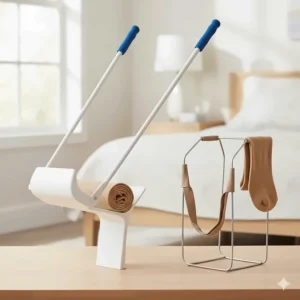
The RMS Sock Aid Kit delivers exceptional value by including both a deluxe sock aid and a compression stocking remover in one affordable package. The flexible plastic shell with foam-padded handles provides comfort during use, while the adjustable rope length accommodates users of different heights.
This kit shines for those dealing with regular socks or light to medium compression (8-20 mmHg). The unique angled design maximizes leverage for users with limited strength or flexibility, making it ideal for seniors or anyone recovering from injury.
Customer Feedback: Buyers appreciate the complete solution approach. Many report that after trying multiple products, this kit finally made wearing compression socks manageable, especially post-surgery.
✅ Pros:
- Includes both application and removal tools
- Adjustable rope for customizable reach
- Soft foam handles provide comfortable grip
- Budget-friendly without sacrificing quality
❌ Cons:
- Not designed for firm compression (20-30 mmHg+)
- Foot width limitation of 5 inches
3. JFMkaer Compression Sock Aid Device – Innovative Design for Medium Compression
Price: $25-$35
The JFMkaer Compression Sock Aid Device introduces a patented leg lift system that eliminates the need for excessive bending. This hard plastic sock puller holds compression stockings firmly in place while you complete the donning process at an inclined angle using a pushing-pulling motion.
Designed specifically for calves under 16 inches in circumference, this device excels with medium to high elasticity compression stockings. The ergonomic grip handle ensures you can apply socks even with limited hand strength, and the height-adjustable feature provides flexibility for different users.
Customer Feedback: Users mention a learning curve but report mastering the technique within a few attempts. The innovative design particularly helps those who cannot bend forward at all.
✅ Pros:
- Patented leg lift system reduces bending requirements
- Supports medium to high compression stockings
- Ergonomic design requires minimal strength
- Includes gloves and comprehensive manual
❌ Cons:
- Limited to calves under 16″ circumference
- Requires practice to master technique
4. JOBST Compression Stocking Donner – Professional-Grade Performance
Price: $40-$65 (Regular: $40-50, Large Calf: $62-71)
When you need medical-grade reliability, the JOBST Compression Stocking Donner delivers. As a product from the world leader in compression hosiery technology, this donner features easy-grip foam handles and a durable baked epoxy finish that guarantees a smooth, no-snag surface.
Available in two sizes, the Regular version accommodates calves up to 16 inches, while the Large Calf model handles 16-24 inch circumferences. The elongated handles (16-18 inches) require less effort and allow use from a comfortable seated position, making it particularly valuable for those with limited back flexibility.
Customer Feedback: Medical professionals frequently recommend this model, and users report it as “a must-have” for daily compression stocking use. The quality justifies the higher price point for long-term users.
✅ Pros:
- Professional medical-grade construction
- Works with both open and closed-toe stockings
- Durable epoxy finish prevents fabric damage
- Elongated handles reduce physical effort
❌ Cons:
- Higher price point than alternatives
- Large calf version significantly more expensive
5. Zipcase Large Size Stocking Donner – Built for Bigger Calves
Price: $30-$40
The Zipcase Large Size Stocking Donner addresses a common gap in the market: support for individuals with large to extra-large calves measuring 18-20 inches in circumference. Constructed from corrosion-resistant iron with a comfortable rubber-covered handle, this tool combines strength with user-friendly design.
The ergonomic semi-circle design provides a secure grip, while the armrest features rubber plastic insulation cotton and a rubber cover for added stability. This robust construction ensures it can handle even the tightest compression stockings without bending or breaking.
Customer Feedback: Users with larger calves praise this as one of the few options that actually fits properly. The sturdy metal construction receives consistent positive mentions for durability.
✅ Pros:
- Specifically designed for 18-20″ calves
- Durable metal construction for longevity
- Ergonomic handles reduce strain
- One-year manufacturer guarantee
❌ Cons:
- Heavier than plastic alternatives
- Not suitable for smaller calf sizes
6. Compression Sock Aid Device with Silicone Anti-Slip Mat – Complete Stability Solution
Price: $20-$30
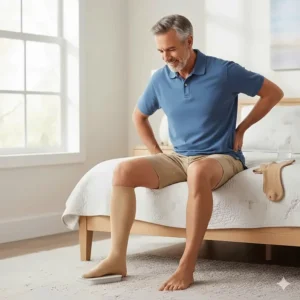
This Compression Sock Aid Device with Silicone Anti-Slip Mat offers a unique two-piece system that addresses both application and floor stability. The plastic shell sock aid handles medium to high elasticity compression stockings, while the included 19.7 x 15.7 inch silicone mat provides anti-slip support during the donning process.
The mat serves dual purposes: place it under the sock aid device to prevent sliding, or use it after putting on stockings to adjust them by rubbing your feet on the textured surface. This ensures proper compression stocking fit without requiring assistance.
Customer Feedback: Users particularly appreciate the mat for hardwood or tile floors where other devices tend to slide. The complete package approach eliminates the frustration of chasing your sock aid across the room.
✅ Pros:
- Includes large anti-slip mat for stability
- Ergonomic handle for limited strength situations
- Mat protects floors from scratches
- Complete system approach
❌ Cons:
- Limited to 13.9″ calf circumference
- Requires floor space for mat use
7. Easy Slide Open Toe Compression Sock Aid – Specialized for Open-Toe Styles
Price: $35-$45
The Easy Slide Open Toe Compression Sock Aid fills a specific niche for those wearing open-toe compression stockings and tights. This specialized donning aid makes applying these garments significantly easier by allowing the compression fabric to pass over the foot with minimal resistance.
The foldable design makes it travel-friendly, and the system reduces physical strain while also decreasing quality deterioration of expensive compression garments from excessive pulling. The device turns donning of open-toe compression stockings from a hassle into a more manageable task, particularly valuable for caregivers assisting others.
Customer Feedback: Users with rotator cuff injuries or arm limitations report this as a “lifesaver” for maintaining compression therapy compliance. The ability to apply stockings before getting out of bed prevents morning swelling.
✅ Pros:
- Specifically designed for open-toe compression
- Foldable for travel convenience
- Reduces garment wear and tear
- Increases therapy compliance
❌ Cons:
- Higher price point for specialized function
- Only works with open-toe styles
- Learning curve for proper technique
🎯 Don’t Miss These Exclusive Deals!
Take your compression stocking routine to the next level with these carefully selected sock aids. Click on any highlighted product above to check current pricing and availability. These tools will help you maintain your vascular health independently and comfortably!
Understanding Compression Stockings: Why Proper Application Matters
Compression therapy works by squeezing your lower legs to help veins return blood to your heart and prevent pooling and swelling. But here’s the catch: compression stockings only work when they’re applied correctly and worn consistently.
The graduated compression design that makes them therapeutic also makes them incredibly tight. Most medical-grade compression stockings apply 20-30 mmHg of pressure at the ankle, decreasing gradually up the leg. This precise pressure gradient requires the stocking to sit in exactly the right position—not bunched, twisted, or partially applied.
When you struggle to put on compression stockings manually, several problems arise. You might:
Damage the Fabric ⚠️
Excessive pulling, tugging, and stretching degrades the elastic fibers, reducing compression effectiveness and shortening garment lifespan. Since quality compression stockings cost $30-100 per pair, premature wear becomes expensive.
Risk Incorrect Placement 📍
Frustration leads to rushed application, resulting in wrinkles, bunching, or twisted fabric that creates pressure points rather than therapeutic compression. This defeats the entire purpose of wearing them.
Skip Wearing Them 🚫
Perhaps most importantly, difficulty donning compression stockings leads many people to simply stop using them, abandoning the medical benefits their doctor prescribed. Problems with compliance are not uncommon with graduated compression stockings.
A sock aid for compression stockings solves all these issues by providing a structured, repeatable process that positions the stocking correctly every time with minimal physical effort.
Who Benefits Most from Using a Sock Aid for Compression Stockings?
While anyone wearing compression stockings can benefit from a donning aid, certain groups find these devices absolutely essential:
Post-Surgical Patients 🏥
Recovery from hip replacement, knee replacement, or spinal surgery often includes compression stocking prescriptions but comes with strict bending restrictions. A sock aid for compression stockings allows you to comply with your compression therapy without violating movement limitations.
Arthritis Sufferers 🤲
Compression stockings are safe for most people and can provide therapeutic benefits, but arthritic hands lack the grip strength and dexterity needed for manual application. Sock aids with ergonomic handles transfer the workload from finger manipulation to larger arm movements.
Seniors with Limited Flexibility 👴👵
Natural aging reduces flexibility, making it increasingly difficult to reach your feet comfortably. The extended handles on quality sock aids mean you can don compression stockings from a seated position without extreme bending.
Pregnant Women 🤰
Pregnancy often requires compression stockings to manage swelling and prevent varicose veins, but growing bellies make bending forward to apply them uncomfortable or impossible. Sock aids provide independence during this temporary but important period.
Lymphedema Patients 💧
Lymphedema management requires daily compression garment use, often with firm pressure (30-40 mmHg). The intensity of compression makes these particularly challenging to apply, and sock aids become essential tools for consistent therapy.
Individuals with Obesity 🔄
Excess weight creates physical barriers to reaching feet comfortably. Rather than requiring assistance from others, sock aids restore independence in daily dressing routines.
How to Choose the Right Sock Aid for Compression Stockings
Selecting the perfect sock aid depends on several personal factors. Here’s your decision-making framework:
Measure Your Calf Circumference 📏
This single measurement determines which devices will actually work for you. Use a flexible measuring tape around the widest part of your calf. Most devices fall into these categories:
- Small to Medium: Under 16 inches (JFMkaer, JOBST Regular)
- Medium: 13.9-16 inches (most standard devices)
- Large: 16-18 inches (Truform Large, JOBST Large)
- Extra Large: 18-20 inches (Zipcase Large)
Don’t guess or assume—an incorrect size renders even the best sock aid for compression stockings completely useless.
Consider Your Compression Level 💪
Not all sock aids handle all compression strengths equally:
- Mild (8-15 mmHg) to Medium (15-20 mmHg): Most devices work fine
- Firm (20-30 mmHg): Requires sturdy construction like metal frames or reinforced plastic
- Extra Firm (30-40 mmHg): Consider professional-grade options like JOBST or Truform
Higher compression requires more robust tools that won’t bend or break under the fabric tension.
Assess Your Physical Limitations 🧘
Your specific challenges should guide product selection:
- Limited hand strength: Choose devices with foam-padded, ergonomic handles
- Can’t bend at all: Look for patented leg-lift systems or extended handles
- One-handed use needed: Select devices that rest on the floor independently
- Weak arms: Prioritize lightweight materials and leverage-enhancing designs
Determine Open vs. Closed Toe Needs 👣
Most sock aids accommodate closed-toe compression stockings, but open-toe styles require specialized devices. If you wear both types, you might need two different aids or select a versatile option.
Set Your Budget 💵
Quality sock aids range from $15 to $70:
- Budget ($15-$25): RMS Kit, basic donners—work for mild to medium compression
- Mid-Range ($25-$40): JFMkaer, Zipcase, specialty devices—handle most compression levels
- Premium ($40-$70): JOBST, Truform professional models—medical-grade durability
Remember that investing in quality often means better construction, longer lifespan, and greater effectiveness with stubborn compression stockings.
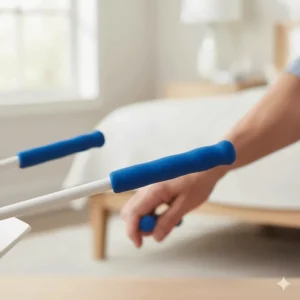
Step-by-Step Guide: Using Your Sock Aid for Compression Stockings Correctly
Even the best sock aid for compression stockings requires proper technique. Here’s the universal process that works with most devices:
Preparation Phase (Evening Before)
1. Turn Stockings Inside Out 🔄
The night before wearing, turn your compression stockings inside out to the heel. This makes morning application faster when you’re less flexible due to overnight positioning.
2. Apply Talcum Powder or Cornstarch ✨
Lightly dust your leg with powder to reduce friction. This helps the stocking glide up more smoothly without catching on skin or hair.
3. Keep Tools Within Reach 🛠️
Place your sock aid, any gloves, and stockings on your nightstand so you can apply them immediately upon waking before swelling begins.
Application Process
Step 1: Position the Sock Aid
Place your sock aid on a stable surface—floor, low stool, or anti-slip mat. Ensure it’s firmly positioned and won’t slide during use.
Step 2: Mount the Stocking
Stretch your compression stocking over the aid’s frame, rolling it down to the heel pocket with the toe pointing forward. Ensure the fabric is smooth without wrinkles or twists.
Step 3: Insert Your Foot
While seated comfortably, grasp the handles and insert your foot into the stocking. Point your toes and step down firmly until your foot reaches the floor.
Step 4: Pull Upward
Using the handles, pull the aid upward in one smooth, continuous motion. The stocking should unroll up your leg as the frame slides out. Don’t pause midway—complete the motion in one pull.
Step 5: Final Adjustments
Once the aid is removed, use your hands to smooth the stocking, ensuring the heel sits in the correct position and the fabric lies flat without bunching.
Pro Tips for Success 💡
- Morning Application: Put stockings on immediately after waking, before swelling develops
- Seated Comfort: Use a chair with good back support to maintain proper posture
- Smooth Skin: Shave legs or wear thin liner socks if body hair causes catching
- Donning Gloves: Medical-grade rubber gloves improve grip without snagging fabric
- Practice Patience: Expect a learning curve—most users need 3-5 attempts to master technique
Caring for Your Sock Aid and Compression Stockings
Proper maintenance extends the life of both your sock aid for compression stockings and the stockings themselves:
Sock Aid Maintenance 🧽
Weekly Cleaning:
Wipe down plastic or metal frames with mild soap and warm water. Dry thoroughly to prevent rust on metal components. Foam handles should be cleaned with antibacterial wipes.
Monthly Inspection:
Check for cracks in plastic frames, bent areas in wire models, or deteriorating foam padding. Replace devices showing significant wear to prevent stocking damage.
Storage:
Keep your sock aid in a dry location. Some models fold or disassemble for travel—utilize protective bags to prevent damage in luggage.
Compression Stocking Care 🧺
Wash stockings daily with mild soap and water, rinse, and air dry. If possible, maintain two pairs—wear one while washing the other. Replace compression stockings every 3 to 6 months to maintain proper compression and support.
Hand washing in cool water preserves elasticity better than machine washing. Never use bleach, fabric softener, or heat drying, as these degrade compression fibers rapidly.
Common Mistakes to Avoid When Using Sock Aids
Even with the best sock aid for compression stockings, these errors sabotage success:
Rushing the Process ⏰
Taking your time, especially during the first few weeks, prevents frustration and ensures proper technique development. Speed comes with practice.
Skipping Skin Prep 🚫
Attempting to apply compression stockings to damp, sticky, or hairy skin creates unnecessary resistance. Proper preparation makes everything easier.
Using the Wrong Size Device 📐
A sock aid that doesn’t match your calf circumference simply won’t work. Always measure before purchasing.
Forgetting Handle Adjustment 🔧
For devices with adjustable ropes or handles, take time to customize the length. This small step dramatically improves effectiveness.
Pulling Too Hard 💢
Excessive force damages both the sock aid and your compression stockings. Use steady, moderate pressure and let the device do the work.
Neglecting Device Maintenance 🔨
A damaged or dirty sock aid performs poorly and may snag expensive hosiery. Regular inspection and cleaning are essential.
Alternative Methods and Complementary Tools
While a dedicated sock aid for compression stockings works best, these complementary tools enhance the process:
Donning Gloves 🧤
Medical-grade rubber gloves with textured palms provide excellent grip on compression fabric without causing snags. They’re particularly useful for adjusting stockings after using the aid. Special donners can be purchased at medical supply stores or online to further assist with application.
Slip Socks 🧦
Thin nylon or silk liner socks worn underneath help the compression stocking glide over your foot more easily. Remove the liner sock after application.
Stocking Butler or Slider 📱
These compact devices help pull the stocking up the final few inches once your foot is through. They work well in combination with traditional sock aids.
Compression Stocking Removal Tools ✂️
The donning process gets attention, but removal can be equally challenging. Specialized removal tools hook the stocking top and pull it down with leverage, preventing the need to bend forward.
When to Seek Professional Help or Medical Advice
While sock aids dramatically improve independence, certain situations warrant professional consultation:
If You Experience:
- Persistent skin irritation or breakdown despite proper stocking use
- Inability to apply stockings even with aids due to severe mobility restrictions
- Swelling that worsens despite compression therapy compliance
- Color changes in toes or feet while wearing compression stockings
- Numbness, tingling, or pain when stockings are applied
These symptoms might indicate incorrect compression level, improper fit, or underlying medical issues requiring evaluation.
Professional Fitting Services 👩⚕️
Many medical supply stores offer professional fitting services where trained staff measure your legs and recommend appropriate compression levels. They can also demonstrate proper sock aid technique and troubleshoot challenges you’re experiencing.
For medical-grade compression stockings, your doctor will measure your legs and prescribe the right ones for you, ensuring both the compression level and the sock aid match your specific needs.
The Science Behind Compression Therapy: Why It Works
Understanding the mechanism helps appreciate why proper application with a sock aid for compression stockings matters so much.
The job of compression socks is to squeeze your legs, which squeezes the blood vessels, resulting in better circulation, less swelling, and relief from leg pain. But the science goes deeper.
How Graduated Compression Functions 🔬
Healthy leg veins contain one-way valves that prevent blood from flowing backward. When these valves weaken—due to age, injury, genetics, or prolonged sitting/standing—blood pools in the lower legs, causing swelling, aching, and eventually varicose veins.
Graduated compression stockings exert the greatest degree of compression at the ankle, and the level of compression gradually decreases up the garment. This gradient counteracts gravity’s downward pull, actively assisting blood return to the heart.
The pressure physically narrows vein diameter, increasing blood flow velocity and valve effectiveness. This prevents pooling while also reducing the fluid leakage into surrounding tissues that causes swelling.
Medical Conditions That Benefit 🏥
Healthcare providers recommend compression therapy for conditions caused by poor blood circulation, including:
- Chronic Venous Insufficiency (CVI): Weakened veins struggle to pump blood effectively
- Deep Vein Thrombosis (DVT) Prevention: Compression reduces clot formation risk
- Varicose Veins: Pressure relieves symptoms though doesn’t cure underlying condition
- Lymphedema: Maintains volume control and prevents fluid accumulation
- Post-Surgical Recovery: Supports healing and prevents complications
- Pregnancy-Related Swelling: Manages temporary but significant leg swelling
Evidence-Based Benefits 📊
Research demonstrates that compression stockings improve venous return by increasing femoral vein blood flow velocity, providing measurable therapeutic effects. While most research focuses on medical applications, athletes have also adopted compression wear for performance and recovery support.
The key to realizing these benefits? Consistent, proper use—which is exactly what a good sock aid for compression stockings enables.

❓ Frequently Asked Questions About Sock Aid for Compression Stockings
❓ Can I use a regular sock aid for compression stockings?
❓ How do I know what calf size sock aid to buy?
❓ Will a sock aid damage my expensive compression stockings?
❓ Can I travel with my sock aid for compression stockings?
❓ How long does it take to learn using a compression sock aid?
Conclusion: Regaining Independence with the Right Sock Aid
Living with compression stockings doesn’t have to mean daily struggles or dependence on others for help. The right sock aid for compression stockings transforms what feels like an impossible task into a manageable two-minute routine you can handle completely independently.
Whether you’re recovering from surgery, managing chronic venous issues, or supporting your vascular health long-term, investing in a quality sock aid represents one of the smartest decisions you can make. For under fifty dollars in most cases, you gain:
Daily Independence 🎯
Apply and remove compression stockings on your own schedule without assistance, maintaining dignity and flexibility in your routine.
Consistent Compliance ✅
When putting stockings on becomes easy, you actually wear them as prescribed, realizing the full therapeutic benefits your doctor intended.
Extended Garment Life 💰
Proper application technique reduces wear and tear, meaning your $50-100 compression stockings last the full 3-6 months instead of deteriorating prematurely from harsh handling.
Reduced Physical Strain 🧘
Eliminate the back pain, hand fatigue, and frustration that comes from wrestling with tight elastic fabric every morning.
From our research, the Truform Stockings Donner earns our top recommendation for its combination of durability, versatility, and reasonable pricing. However, the best sock aid for compression stockings ultimately depends on your specific calf size, compression level, and physical capabilities.
Take time to measure accurately, consider your particular challenges, and select a device that matches your needs. The small investment in the right tool pays dividends in improved quality of life, better health outcomes, and restored independence.
Your legs—and your sanity—will thank you.
🎯 Don’t Miss These Exclusive Deals!
Ready to make your life easier? Click on any highlighted sock aid product above to check current availability and pricing. These tools will help you maintain your compression therapy independently and comfortably. Take the first step toward easier mornings today!
Recommended for You
- Best Socks for Wide Feet 2025: 7 Comfortable Options Reviewed
- 7 Best Cotton Compression Socks 2025 | Natural & Breathable
- 7 Best Zipper Compression Socks 2025 – Expert Picks
Disclaimer: This article contains affiliate links. If you purchase products through these links, we may earn a small commission at no additional cost to you.
✨ Found this helpful? Share it with your friends! 💬🤗
