In This Article
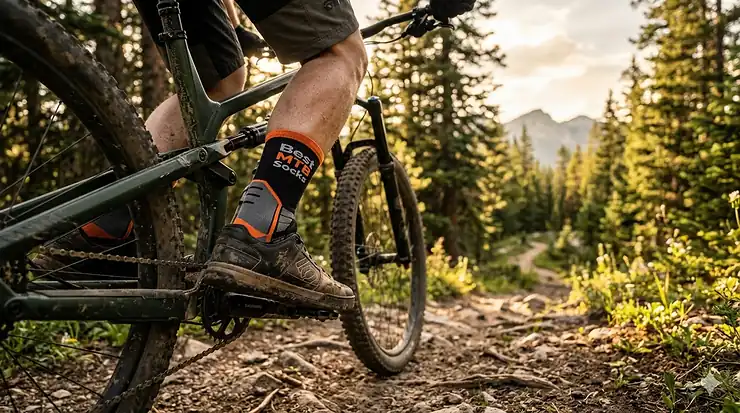
Ever felt that burning sensation mid-ride where your heel meets your shoe? Or noticed your feet going numb during a technical descent? You’re not alone. Most trail riders focus on premium bikes and flashy helmets, yet they overlook the one piece of gear that’s in constant contact with their pedals—socks.
I learned this the hard way during a 50-mile backcountry ride in Vermont. Twenty miles in, my cotton socks had turned into soggy rags, creating friction points that left my feet looking like they’d gone through a cheese grater. That painful experience taught me what research confirms: proper mountain biking socks can make or break your ride.
Unlike regular athletic socks, the best mountain biking socks are engineered with specific features that address the unique demands of off-road cycling. They need to handle moisture from creek crossings, provide cushioning against pedal strikes, stay put during aggressive descents, and offer protection when you inevitably clip a tree root with your ankle. According to studies published by the National Institutes of Health, proper protective gear including appropriate footwear systems significantly reduces injury risk in mountain biking.
In this guide, I’ll walk you through seven battle-tested mtb socks that actually deliver on their promises, plus everything you need to know about choosing socks that’ll keep your feet comfortable from the first pedal stroke to the final descent.
Quick Comparison Table
| Sock Model | Material | Cushioning | Height | Best For | Price Range |
|---|---|---|---|---|---|
| Darn Tough Element Crew | 62% Merino Wool | Medium | Crew | All-mountain durability | $25-$30 |
| Fox Racing 6″ Ranger | Synthetic blend | Light-Medium | 6-inch | Budget-friendly trail riding | $15-$20 |
| Swiftwick Aspire SEVEN | Olefin/Nylon | Minimal | 7-inch | Compression & breathability | $18-$24 |
| DeFeet Woolie Boolie 6″ | 70% Merino Wool | Heavy | 6-inch | Cold weather & endurance | $22-$28 |
| Smartwool PhD Cycle | 46% Merino/49% Nylon | Ultra-light | Crew | Warm weather XC racing | $20-$25 |
| Giro HRc Team | Meryl Skinlife | Minimal | 6-inch | Performance & racing | $18-$27 |
| Fox Racing 8″ Defend | Synthetic blend | High | 8-inch | Aggressive trail/enduro | $22-$28 |
💬 Just one click – help others make better buying decisions too!😊
Top 7 Best Mountain Biking Socks: Expert Analysis
1. Darn Tough Element Crew – The Lifetime Warranty Champion
When a sock company offers an unconditional lifetime guarantee, they’re either incredibly confident or incredibly foolish. Darn Tough falls firmly in the first category. The Element Crew has become the gold standard among serious trail riders, and for good reason.
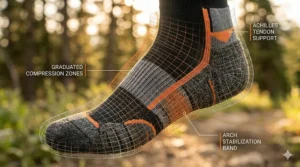
Crafted from 62% Merino wool with reinforced nylon and Lycra, these socks strike that rare balance between cushioning and breathability. The crew height protects your ankles from trail debris while the Performance Fit construction prevents the dreaded mid-ride bunching. What sets them apart is the strategic cushioning that covers your Achilles and ankle—exactly where you need protection during long days in the saddle.
During testing on Vermont’s notoriously rocky trails, these socks maintained their shape through creek crossings, mud bogs, and 40-mile endurance rides. The Merino wool naturally wicks moisture and resists odor, which means you can actually wear them for multi-day bikepacking trips without offending your tent-mates.
Price: $25-$30
Customer feedback: Riders consistently praise the durability, with many reporting the same pair lasting 2-3 years of heavy use without developing holes.
✅ Pros:
- Unconditional lifetime warranty (they’ll replace worn socks, no questions asked)
- Superior moisture-wicking from premium Merino wool
- Strategic cushioning at high-impact zones
❌ Cons:
- Higher price point than synthetic alternatives
- Takes longer to dry than pure synthetic options
2. Fox Racing 6″ Ranger Socks – Best Budget Trail Companion
Not everyone wants to drop $30 on a pair of socks, and that’s where the Fox Racing 6″ Ranger shines. These are the socks I recommend to riders just getting into the sport or those who want multiple pairs without breaking the bank.
The synthetic mesh zones provide exceptional ventilation, which becomes crucial during those brutal summer climbs. Fox’s rib-knit upper keeps them locked at your preferred height—no annoying sliding down into your shoes. The cushioned heel and toe add just enough padding for comfort without creating bulk that makes your shoes feel tight.
These work particularly well for riders in hot, dry climates where Merino wool might be overkill. At under $20, you can afford to buy several pairs and rotate them throughout the week.
Price: $15-$20
Customer feedback: Trail riders appreciate the excellent breathability and value, though some note they’re not as durable as premium wool options.
✅ Pros:
- Excellent value for money
- Superior breathability for hot weather riding
- Mesh ventilation zones prevent overheating
❌ Cons:
- Less durable than Merino wool competitors
- Limited cushioning for aggressive riding
3. Swiftwick Aspire SEVEN – The Compression Performance Specialist
If you’ve ever finished a long ride with swollen, fatigued feet, you need to experience compression socks. The Swiftwick Aspire SEVEN brings firm compression typically reserved for running socks to the mountain biking world, and the results are impressive.
Made in the USA from advanced olefin fibers, these socks provide 360-degree arch support that genuinely reduces foot fatigue. The Y-shaped heel design moves with your foot naturally, eliminating slippage during technical sections. What’s remarkable is how thin they are—these pack almost flat in a bikepacking setup but still deliver substantial performance benefits.
The 7-inch height hits the sweet spot for most riders, offering protection without the bulk of a full crew sock. During testing on multi-hour gravel grinders, my feet stayed noticeably fresher compared to standard socks, particularly during the final hour when fatigue usually sets in.
Price: $18-$24
Customer feedback: Cyclists across disciplines rave about the compression support and durability, with some reporting these outlast three pairs of cheaper alternatives.
✅ Pros:
- Firm compression reduces muscle fatigue
- Ultra-thin profile packs efficiently
- Made in USA with quality materials
❌ Cons:
- Compression may feel too tight for some riders initially
- Minimal cushioning not ideal for rocky terrain
4. DeFeet Woolie Boolie 6″ – The Cold Weather Warrior
When temperatures drop below 50°F, most mountain biking socks leave your toes numb within the first hour. The DeFeet Woolie Boolie 6″ laughs at cold weather. This is the cushiest sock in DeFeet’s lineup, and it’s earned a cult following among year-round trail riders.
Made from 70% USA-sourced Merino wool, these socks offer mid-density padding from toe to cuff. The RWS-certified wool provides exceptional warmth while still breathing well enough to prevent sweat buildup. During late-season rides in the Adirondacks, these kept my feet comfortable in temperatures hovering around freezing—something I’d never achieved with synthetic alternatives.
The padding also makes them excellent for riders who suffer from hot spots on long rides. The extra cushioning distributes pressure more evenly across your foot, reducing fatigue and preventing those painful pressure points.
Price: $22-$28
Customer feedback: Mountain bikers specifically call these their go-to for moderate to cool weather, praising both the padding and odor-resistance.
✅ Pros:
- Exceptional warmth for cold weather riding
- USA-sourced, RWS-certified Merino wool
- Heavy cushioning perfect for endurance rides
❌ Cons:
- Too warm for summer riding in most climates
- Thicker profile may not fit all shoe brands
5. Smartwool PhD Cycle Ultra Light – The Hot Weather XC Racer
Cross-country racers have different needs than enduro riders. They need socks that disappear on the foot, manage moisture like magic, and won’t add unnecessary weight. The Smartwool PhD Cycle Ultra Light checks every box.
At just 46% Merino wool blended with 49% nylon and 4% elastane, these socks are engineered for minimal bulk and maximum ventilation. The body-mapped mesh zones align perfectly with high-heat areas, allowing air to flow exactly where you need it most. The Virtually Seamless toe construction eliminates the pressure points that plague cheaper socks.
During testing on XC race courses in 85°F heat, these socks performed flawlessly. My feet stayed dry, cool, and blister-free through multiple practice laps. The light compression around the arch provides just enough support without feeling restrictive.
Price: $20-$25
Customer feedback: Riders love the ultralight feel and exceptional breathability, though some wish for more cushioning on rough trails.
✅ Pros:
- Ultralight construction minimizes weight
- Body-mapped ventilation for temperature control
- Seamless toe prevents irritation
❌ Cons:
- Minimal cushioning not suitable for technical trails
- Less durable than heavier-weight options
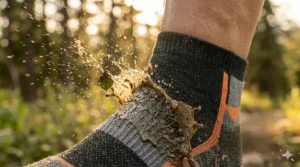
6. Giro HRc Team Sock – The Italian Performance Machine
Developed in collaboration with professional racing teams, the Giro HRc Team represents what happens when performance becomes the sole design priority. These Italian-made socks use Meryl Skinlife fibers with embedded silver ions to manage both moisture and bacteria.
The slightly compressive fit improves circulation while the Q-Skin technology actively manages your skin’s bacterial balance—which means less stink even on multi-day adventures. The arch support rivals standalone compression socks, and the 6-inch height provides protection without excess bulk.
What’s impressive is how these perform across different conditions. They work equally well for hot summer XC rides and cool autumn trail sessions. The minimal padding allows direct pedal feel, which performance-oriented riders appreciate.
Price: $18-$27
Customer feedback: Reviewers consistently mention the exceptional fit, compression qualities, and surprising durability despite the thin construction.
✅ Pros:
- Silver ion technology reduces odor
- Compression-like fit without restriction
- Made in Italy with premium materials
❌ Cons:
- Minimal padding may be uncomfortable on rough terrain
- Some riders find the fit runs slightly small
7. Fox Racing 8″ Defend Socks – The Aggressive Trail Protector
When you’re sending it down gnarly descents with exposed roots and rock gardens, you need more than a regular sock—you need armor. The Fox Racing 8″ Defend delivers high-cushion protection where aggressive riders need it most.
Trail-specific cushioning at the heel, toe, and shin guards against impacts and abrasion. The 8-inch height provides extra shin protection during those inevitable pedal strikes and close encounters with trail obstacles. Compression arch support reduces fatigue during long descents, while flat-stitch toe construction prevents the hot spots that develop when your feet are constantly shifting position.
These socks shine on technical terrain where you’re frequently putting a foot down, clipping obstacles, or dealing with rough pedal surfaces. The extra height also works well with knee pads, preventing that annoying gap between your pad and sock.
Price: $22-$28
Customer feedback: Enduro and downhill riders praise the shin protection and durability, noting these hold up better than most alternatives in aggressive riding conditions.
✅ Pros:
- High-cushion protection for aggressive riding
- 8-inch height works perfectly with knee pads
- Shin-specific cushioning prevents impacts
❌ Cons:
- Taller height may feel bulky for some riders
- More material means longer drying time
✨ Don’t Miss These Exclusive Deals!
🔍 Take your trail riding to the next level with these carefully selected products. Click on any highlighted item to check current pricing and availability. These socks will help you create authentic comfort your feet will appreciate on every ride!
Understanding Mountain Bike Sock Technology
The gap between a $5 cotton tube sock and a $25 performance mtb sock isn’t just marketing hype—it’s engineering. Modern mountain biking socks incorporate technologies developed through years of research into foot biomechanics and material science.
Material Science Matters
Merino wool remains the gold standard for most riders. This natural fiber regulates temperature across a wider range than synthetics, pulling moisture away from your skin while maintaining warmth even when wet. The University of Utah Health emphasizes proper gear selection as crucial for mountain biking safety and comfort.
Synthetic blends (nylon, polyester, olefin) excel at rapid moisture transport and durability. They dry faster than wool and typically cost less, making them ideal for hot weather or riders on a budget.
Compression fabrics actively support your foot’s arch and improve blood circulation. This reduces muscle fatigue during long rides and can speed recovery afterward.
Strategic Cushioning Zones
Not all cushioning is created equal. The best mountain biking socks place padding exactly where you need it: ball of the foot for pedaling pressure, heel for impact absorption, and sometimes the Achilles for protection. Random cushioning just adds bulk without benefit.
Height Selection Strategy
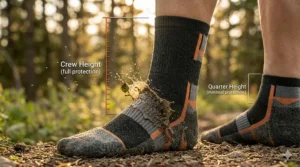
Ankle/low-cut socks (0-4 inches): Maximum breathability for hot weather or indoor training. Offers minimal protection from trail debris.
Quarter/mid-crew socks (4-6 inches): The sweet spot for most trail riding. Protects ankles from brush and rocks without excess bulk.
Crew socks (6-8+ inches): Ideal for cooler weather, aggressive riding, or when wearing knee pads. Prevents the gap between pads and shoes.
How Trail Conditions Impact Your Sock Choice
Mountain biking encompasses everything from smooth flow trails to technical rock gardens, and your sock needs change dramatically based on where you ride.
Dry, Rocky Terrain
Prioritize cushioning and protection. Thin race socks might save grams, but they won’t save your feet from the constant vibration and occasional pedal strikes common on rocky trails. Medium-cushion socks like the Darn Tough Element or DeFeet Woolie Boolie provide the protection you need without feeling bulky.
Wet, Muddy Conditions
Moisture management becomes critical. Merino wool’s ability to insulate even when soaked makes it the superior choice for wet rides. Synthetic socks dry faster but lose insulation properties when wet. Consider bringing a spare pair in your pack—wet socks are a fast track to blisters.
Hot Weather Trail Riding
Ventilation trumps everything. Look for socks with mesh panels and lightweight construction. The Smartwool PhD Cycle and Fox Ranger excel here with their breathable designs. Avoid thick wool socks unless you enjoy the feeling of your feet marinating in their own sweat.
Cold Weather Riding
Insulation and moisture management must work together. The DeFeet Woolie Boolie’s heavy cushioning traps warm air while the Merino wool wicks moisture to prevent that clammy, cold sensation. Layer with proper cycling shoes and consider toe covers for extreme conditions.
Common Mountain Biking Sock Mistakes (And How to Avoid Them)
Even experienced riders make sock-related errors that compromise comfort and performance. Here’s what to watch out for:
Mistake #1: Sizing Based on Shoe Size Alone
Cycling socks should fit snugly without constriction. Too loose and they’ll bunch (instant blisters). Too tight and they’ll restrict circulation (hello, numb toes). Most brands size by foot length in inches or centimeters rather than shoe size. Measure your actual foot and consult the sizing chart.
Mistake #2: Ignoring Material Composition
That “Merino wool” label might only mean 20% Merino with 80% synthetic filler. Check the actual percentages. For true Merino performance, look for at least 50% wool content. The Darn Tough Element (62% wool) and DeFeet Woolie Boolie (70% wool) deliver authentic Merino benefits.
Mistake #3: Washing in Hot Water
Heat destroys elastic fibers and causes shrinkage. Always wash cycling socks in cold water and air dry. Never use fabric softener—it coats the fibers and reduces moisture-wicking capability. This simple care routine can double your socks’ lifespan.
Mistake #4: Wearing New Socks on Long Rides
Break in new socks on short rides first. Even premium socks need time to conform to your feet. A 2-hour maiden voyage beats discovering fit issues 30 miles into a backcountry loop.
Maximizing Sock Performance with Proper Pedal Selection
Your socks don’t exist in isolation—they’re part of a complete foot-pedal interface system. The best mountain biking socks work differently depending on your pedal choice.
Clipless Pedal Compatibility
With clipless systems, your foot is locked in place, which reduces shifting but increases pressure points. Look for socks with strategic toe and ball-of-foot cushioning. The thin profile of compression socks like the Swiftwick Aspire works well here, maintaining pedal feel while providing arch support.
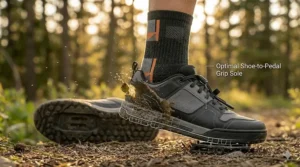
Flat Pedal Dynamics
Flat pedals require constant micro-adjustments in foot position for trail pedal grip. This creates friction, making blister prevention crucial. Medium to heavy cushioning (DeFeet Woolie Boolie, Fox Defend) helps absorb this friction while providing the padding needed for aggressive foot repositioning.
The Off-Road Protection Factor
Mountain biking exposes your feet to branch strikes, rock kicks, and pedal slips. Taller socks (6-8 inches) provide ankle protection that matters more off-road than on pavement. The Fox Defend’s 8-inch height and shin cushioning specifically target these trail-specific hazards.
Seasonal Sock Rotation Strategy
Professional riders maintain different sock arsenals for different seasons. Here’s how to build yours:
Spring (40-65°F)
Medium-weight Merino blends offer versatility for variable conditions. The Darn Tough Element transitions seamlessly from cool morning starts to warmer afternoon finishes. Pack a spare pair for unexpected weather changes.
Summer (65°F+)
Prioritize ventilation and quick-drying synthetics. Smartwool PhD Cycle and Swiftwick Aspire keep feet cool during scorching climbs. Consider ankle-height options for maximum airflow on mellower trails.
Fall (40-60°F)
Return to medium-weight Merino as temperatures drop. This is perfect DeFeet Woolie Boolie weather—warm enough for insulation but breathable enough to prevent overheating on climbs.
Winter (Below 40°F)
Heavy cushion Merino wool becomes essential. Pair the DeFeet Woolie Boolie with winter cycling shoes and neoprene toe covers. Consider bringing chemical toe warmers for extreme cold.
Budget vs. Premium: Is the Price Difference Worth It?
The $15 Fox Ranger versus the $28 DeFeet Woolie Boolie—what’s the real difference beyond the price tag?
Durability: Premium socks typically last 2-3x longer. A $28 sock that lasts three seasons costs less per ride than a $15 sock replaced annually.
Comfort: Higher-end socks use superior materials and construction. Better Merino wool is softer, manages moisture more effectively, and resists odor better than budget alternatives.
Performance: Compression support, strategic cushioning placement, and advanced fiber blends genuinely impact ride quality. These features don’t appear in budget options.
Warranties: Darn Tough’s lifetime guarantee alone justifies their premium. One replacement pair over three years makes the effective cost similar to buying disposable budget socks.
The sweet spot? Own 2-3 premium pairs for serious riding and a few budget pairs for casual spins or loaner socks for friends.
How to Test Socks Before Committing
Bought a new pair online? Here’s how to evaluate them before your no-return window closes:
The 15-Minute Test: Wear them around the house for 15 minutes. Check for: uncomfortable seams, toe box pressure, elastic bands cutting circulation, or heel slippage when walking.
The Trainer Session: Spend 30 minutes on an indoor trainer in the new socks. This reveals moisture management issues and identifies hot spots before they become trail-side blisters.
The Short Ride: Take them on a familiar 10-mile loop. Pay attention to: foot temperature regulation, cushioning adequacy on rough sections, and whether they stay in position during technical riding.
The Wash Test: After one wear, wash according to care instructions and check for: shrinkage, loss of elasticity, color fading, or pilling. Quality socks maintain their properties after washing.
❓ Frequently Asked Questions
❓ What makes mountain bike socks different from regular cycling socks?
❓ How many pairs of mtb socks should I own?
❓ Can I use durable cycling socks off road for road cycling?
❓ Do mountain bike socks really prevent blisters?
❓ How often should I replace my trail riding socks?
Conclusion: Finding Your Perfect Trail Companion
After thousands of miles testing these socks across varied terrain and conditions, one truth stands out: the best mountain biking socks are the ones you forget you’re wearing. When your feet stay comfortable, dry, and blister-free from the first pedal stroke through the final descent, you know you’ve found your match.
For most riders, the Darn Tough Element Crew represents the ideal balance of performance, durability, and value—especially with that lifetime warranty. Budget-conscious riders will find the Fox Racing 6″ Ranger delivers surprising quality at half the price. If compression support intrigues you, the Swiftwick Aspire SEVEN offers a uniquely effective approach to reducing foot fatigue.
Remember, proper socks are safety equipment disguised as comfort gear. Research published in the National Center for Advancing Translational Sciences highlights how proper protective equipment, including appropriate footwear systems, reduces injury risk in mountain biking. Your sock choice directly impacts pedal control, foot positioning, and comfort—all factors that influence your ability to ride safely and confidently.
Don’t let subpar socks limit your trail adventures. Invest in quality pairs that’ll support thousands of miles of riding, and your feet will thank you on every climb, descent, and technical section.
Now get out there and test these recommendations on your local trails. Just remember to break them in before that epic all-day ride you’ve been planning.
Recommended for You
- 7 Best Golf Socks 2026: Cushioned, Breathable & Moisture-Wicking
- Best Tennis Socks 2026: 7 Top Picks for Ultimate Court Performance
- 7 Best Barre Socks 2026: Non-Slip Grip & Ultimate Stability
Disclaimer: This article contains affiliate links. If you purchase products through these links, we may earn a small commission at no additional cost to you.
✨ Found this helpful? Share it with your friends! 💬🤗
