In This Article
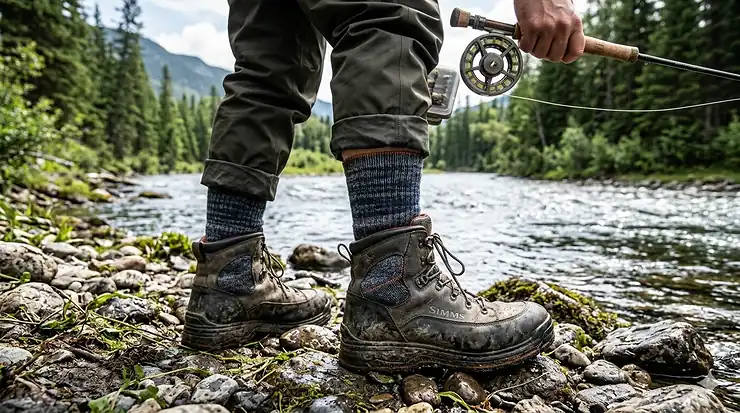
Standing knee-deep in cold streams at dawn, casting your line for hours, or wet wading through rocky riverbeds—fishing tests your feet like few other outdoor pursuits. I learned this the hard way during a steelhead trip when my cotton socks turned into soggy ice blocks by midday, cutting my adventure short with painful blisters and frozen toes.
The difference between a memorable fishing day and a miserable one often comes down to what you’re wearing on your feet. Whether you’re a fly fishing purist, bass boat enthusiast, or saltwater charter regular, having the best fishing socks transforms your time on the water from uncomfortable endurance test to pure angling bliss.
Think about it: your feet spend hours in wading boots, absorbing impact on slippery rocks, managing temperature swings from freezing dawn to midday sun, and battling constant moisture. Regular athletic socks simply can’t handle these demands. You need specialized fishing socks designed with moisture wicking fishing socks technology, genuine water resistance, and all-day angling comfort that won’t quit when conditions get tough.
This guide breaks down everything you need to know about choosing fishing socks that actually work, covering neoprene wading socks for wet conditions, merino wool options for breathability, and the critical features that separate marketing hype from genuine performance. We’ve researched current models, analyzed real customer feedback, and identified seven exceptional options across different price points and fishing styles.
Quick Comparison Table
| Product | Type | Thickness | Price Range | Best For |
|---|---|---|---|---|
| Simms Neoprene Wading Socks | Neoprene | 2.5mm | $40-50 | Wet wading, warm water |
| Korkers I-Drain Guard Socks | Neoprene | 3.5mm | $40-45 | Cold water, gravel protection |
| Darn Tough Hiker Full Cushion | Merino Wool | Medium | $27-30 | With waders, all-season |
| Smartwool Hike Classic Extra Cushion | Merino Wool | Heavy | $25-32 | Winter fishing, insulation |
| Simms Flyweight Neoprene Socks | Neoprene | 2.5mm | $45-50 | Technical wet wading |
| Korkers I-Drain 2.5mm | Neoprene | 2.5mm | $30-35 | Budget neoprene option |
| Orvis Neoprene Guard Socks | Neoprene | 2.5mm | $38-42 | Versatile wet wading |
💬 Just one click – help others make better buying decisions too! 😊
Top 7 Best Fishing Socks: Expert Analysis
1. Simms Neoprene Wading Socks – Premium Wet Wading Choice
When you need lightweight protection without sacrificing warmth, the Simms Neoprene Wading Socks deliver exceptional performance. These 2.5mm neoprene socks feature an anatomically correct left-right design that eliminates bunching and creates a second-skin fit.
Key Specifications:
- 2.5mm abrasion-resistant neoprene upper
- Perforated Airprene underfoot for drainage and breathability
- Low-profile design fits easily in wading boots
Price: $44-50
Customers consistently praise how these socks reduce foot fatigue during long days on the water. The perforated sole allows water to drain quickly while maintaining insulation, addressing the common complaint of “swamp foot” that plagues lesser neoprene socks. One angler noted wearing them for 8-hour fishing sessions in shoulder-season conditions without any discomfort.
✅ Pros:
- Anti-odor technology keeps feet fresh
- Anatomical fit prevents blisters
- Excellent durability for the price
❌ Cons:
- Not designed for use with full waders
- May feel snug initially before breaking in
Best for: Anglers who wet wade in spring through fall conditions and want reliable wade boot compatibility without the bulk of full neoprene booties.
2. Korkers I-Drain Neoprene Guard Socks 3.5mm – Maximum Protection
The Korkers I-Drain Guard Socks take neoprene fishing socks to the next level with 3.5mm thickness and integrated gravel guards. If you fish rocky streams or need extra cushioning, these deliver unmatched protection.
Key Specifications:
- 3.5mm neoprene with perforated Airprene footbed
- Built-in gravel guards with lace hooks
- Patent-pending drainage system
Price: $44-49
These are notably thicker than most wet wading socks, providing superior insulation for cold-water fishing. The gravel guard flaps over your boot laces, creating a barrier that keeps debris out during miles of stream hiking. Multiple reviews mention how the drainage system actually works—water flows out through internal channels rather than pooling around your feet.
✅ Pros:
- Best-in-class debris protection
- Extra cushioning for long hikes
- Superior cold water insulation
❌ Cons:
- Thicker profile may feel tight in some boots
- Slightly higher price point
Best for: Serious fly fishers tackling rocky rivers and anglers who need maximum warmth and protection during extended wet wading sessions.
3. Darn Tough Hiker Full Cushion – Merino Wool Excellence
For fishing with waders or cooler conditions, the Darn Tough Hiker Full Cushion socks represent the gold standard in merino wool fishing boot socks. Made in Vermont with premium materials, these socks come with an unconditional lifetime warranty.
Key Specifications:
- 54% Nylon, 43% Merino Wool, 3% Lycra Spandex
- Full cushioning from heel to toe
- True Seamless technology
Price: $27-30
These socks excel at moisture management—merino wool naturally wicks sweat away while maintaining insulation even when damp. According to research from REI, merino wool fibers are naturally hydrophobic and can absorb up to 30% of their weight in moisture before feeling wet. Anglers report wearing these for multi-day fishing trips, simply air-drying them overnight.
✅ Pros:
- Lifetime warranty—truly buy once, wear forever
- Naturally odor-resistant for multi-day trips
- Perfect temperature regulation
❌ Cons:
- Not suitable for wet wading without waders
- May be too warm for summer fishing
Best for: Anglers wearing chest waders who need all-day comfort, superior moisture wicking, and socks that last for years of heavy use.
4. Smartwool Hike Classic Extra Cushion – Cold Weather Champion
The Smartwool Hike Classic Extra Cushion brings extra warmth for winter fishing or those who run cold. This premium sock combines eco-conscious recycled nylon with responsibly sourced merino wool.
Key Specifications:
- Dense extra cushioning throughout
- Elasticized arch brace for secure fit
- Made with recycled materials
Price: $25-32
Winter fishing demands serious insulation, and these socks deliver. The extra cushioning doesn’t just add warmth—it provides impact protection when navigating icy boat decks or frozen shorelines. Smartwool’s commitment to sustainability means you can feel good about your purchase while staying comfortable during frigid fishing sessions.
✅ Pros:
- Maximum warmth for cold conditions
- Eco-friendly materials
- Excellent arch support reduces fatigue
❌ Cons:
- Bulkier than lightweight options
- May cause overheating in warm weather
Best for: Cold-weather anglers, winter steelhead fishers, and anyone who prioritizes warmth over breathability during fishing expeditions.
5. Simms Flyweight Neoprene Wading Socks – Technical Performance
The Simms Flyweight model adds technical features specifically for serious wet waders. Built-in gravel guards with silicone grip and reinforced lace hooks make these ideal for demanding conditions.
Key Specifications:
- 2.5mm Airprene underfoot, 2.5mm Neospan upper
- Mid-calf height with built-in gravel guard
- Silicone print grip prevents slipping
Price: $45-52
These socks integrate directly with Simms’ Flyweight Wet Wading Shoes but work well with most wading boots. The reinforced lace hook keeps the gravel guard secured even in strong currents—a detail that matters when you’re working upstream in fast water. Customer feedback highlights how these maintain position throughout the day without constant adjustment.
✅ Pros:
- Integrated gravel protection
- Stays secure in currents
- Excellent breathability for neoprene
❌ Cons:
- Higher price than basic neoprene
- Designed for specific use case
Best for: Technical anglers who demand premium features and reliability in challenging wet wading conditions.
6. Korkers I-Drain 2.5mm Wading Socks – Budget-Friendly Performance
If you want quality neoprene at a more accessible price, the Korkers I-Drain 2.5mm delivers solid performance without premium costs. These form-fitting socks work beautifully for warm-water fishing.
Key Specifications:
- 2.5mm neoprene with perforated Airprene
- Comfy form-fitting design
- Excellent drainage system
Price: $30-35
Don’t mistake lower price for lower quality—these socks use the same drainage technology as their thicker siblings. They’re simply designed for flats fishing, tropical destinations, or summer conditions where maximum insulation isn’t necessary. Reviews consistently mention how comfortable these feel after breaking them in, with minimal hot spots or pressure points.
✅ Pros:
- Best value in neoprene category
- Perfect thickness for warm conditions
- Proven Korkers quality
❌ Cons:
- Less insulation than 3.5mm models
- No gravel guard included
Best for: Budget-conscious anglers, warm-weather wet wading, or those new to neoprene socks who want to try the category without major investment.
7. Orvis Neoprene Wet Wading Guard Socks – Versatile All-Rounder
The Orvis Neoprene Guard Socks offer a middle-ground option with thoughtful design details. These 2.5mm sculpted anatomical socks include minimal seams and padded soles for blister prevention.
Key Specifications:
- 2.5mm anatomically sculpted neoprene
- Minimal seams to prevent chafing
- Padded sole construction
Price: $38-42
Orvis built these for summer wet wading but included enough features to punch above their weight class. The padded soles make a real difference during long days of pool-hopping, and the anatomical shaping eliminates the bunching common in cheaper neoprene. One particularly useful detail: these socks come with gravel guards and lace clips to keep debris out.
✅ Pros:
- Versatile across conditions
- Thoughtful design details
- Backed by Orvis guarantee
❌ Cons:
- Middle-of-road thickness may not suit extremes
- Slightly less durable than Simms
Best for: Anglers wanting one pair of waterproof fishing socks to handle multiple fishing scenarios and conditions.
Understanding Fishing Sock Materials and Technology
The Neoprene Advantage
Neoprene revolutionized water sports when DuPont invented this synthetic rubber in 1931. According to Wikipedia’s article on wetsuits, neoprene’s insulating properties come from gas bubbles enclosed within the material, which dramatically reduce heat conduction compared to water.
For fishing applications, neoprene socks create a protective barrier that traps a thin layer of water against your skin. Your body heat warms this water, creating insulation even when you’re standing in cold streams. The key is closed-cell neoprene construction, which prevents continuous water exchange while allowing enough flexibility for all-day wear.
Modern fishing neoprene typically comes in 2.5mm or 3.5mm thickness. Thinner options work for warm weather and provide better boot fit, while thicker versions deliver maximum insulation for cold water or extended sessions. Perforated footbeds drain standing water while maintaining the insulating layer, solving the “swampy foot” problem that plagued early designs.
Merino Wool Performance
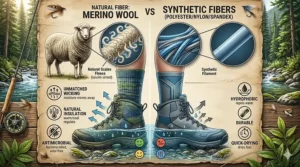
Merino wool brings different advantages to fishing socks. This natural fiber, harvested from Merino sheep, offers unique properties that synthetic materials can’t match. The fine diameter of merino fibers (typically under 22 microns compared to 50-100 microns for human hair) creates softness without itchiness.
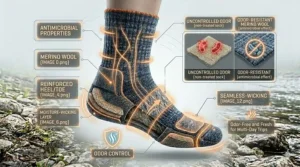
What makes merino exceptional for fishing? The fiber naturally wicks moisture vapor away from skin while remaining insulating when damp. This dual capability means your feet stay regulated whether you’re hiking to your spot or standing still waiting for that perfect cast. Merino also provides natural odor resistance—bacteria can’t thrive in the environment merino creates, letting you wear the same socks for multi-day fishing trips.
The crimp in merino fibers traps air pockets that insulate without bulk. This natural texture also gives merino incredible elasticity—up to 30% stretch with complete recovery to original shape. For fishing socks that must withstand constant movement and pressure, this resilience prevents the sagging and bunching that ruins comfort.
Hybrid Construction Approaches
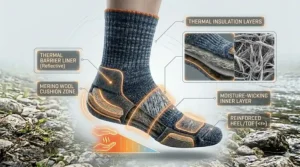
Premium fishing socks often combine materials strategically. You’ll find neoprene panels in high-wear areas like heels and toes, with mesh or perforated sections promoting airflow. Some manufacturers add nylon or spandex linings to neoprene, creating easier don/doff while protecting the delicate foam from fingernail damage.
Merino blends typically include nylon for durability and lycra for retention. A common ratio is 40-55% merino, 40-50% nylon, and 3-5% spandex. This combination maximizes merino’s natural benefits while addressing its relative fragility compared to synthetic fibers. The nylon reinforces high-stress zones, while spandex maintains fit through repeated wear and washing.
How to Choose the Perfect Fishing Socks for Your Needs
1. Match Your Fishing Style
Your primary fishing method should drive your sock choice. Wet waders who spend hours actually in the water need neoprene for thermal protection and water resistance. Bank fishers or boat anglers can get away with moisture wicking merino wool that breathes better in dry environments.
Fly fishers working rivers and streams typically want versatile options—merino wool under breathable waders for spring and fall, neoprene wading socks for summer wet wading. Bass fishers staying mostly in boats might prioritize cushioning and breathability over waterproofing. Surf fishers battling sand and saltwater benefit from neoprene’s protective qualities and easy rinsability.
2. Consider Water Temperature
Cold water (below 60°F) demands maximum insulation. Go with 3.5mm neoprene socks or heavyweight merino wool with extra cushioning. The thicker material might feel bulky initially, but you’ll appreciate the warmth after hours in frigid streams.
Moderate temperatures (60-75°F) work well with 2.5mm neoprene or midweight merino. You want protection without overheating, especially if you’re hiking between fishing spots. This range covers most spring and fall fishing.
Warm water (above 75°F) calls for minimal thickness—2.5mm neoprene or lightweight merino. Focus on breathability and quick-drying properties. Some anglers even prefer thin synthetic blend fishing boot socks in these conditions to maximize airflow.
3. Evaluate Wade Boot Compatibility
Your wading boots constrain sock thickness. Boots with generous toe boxes accommodate 3.5mm neoprene easily, while performance-fit boots require 2.5mm or merino options. Always consider your boot’s internal volume—neoprene socks compress less than traditional socks, so you may need to size up in boots.
Gravel guards become crucial if your boots have open tops. These protective flaps fold over your boot opening, preventing rocks and debris from entering during stream crossings. Integrated gravel guards on socks like the Korkers I-Drain models eliminate the need for separate guards.
4. Assess Durability Requirements
Serious anglers fish 20-50+ days per season. At that usage level, durability becomes paramount. Look for reinforced heels and toes, flat seam construction that won’t chafe, and quality materials that maintain elasticity through repeated wet-dry cycles.
Lifetime warranties matter here. Darn Tough’s unconditional guarantee means you truly buy once. Even if a sock develops holes after years of abuse, they replace it free. This kind of backing indicates confidence in construction quality and saves money long-term versus cheap socks that fail after a season.
5. Factor in Additional Activities
Do you hike miles to reach fishing spots? Extra cushioning in the footbed reduces fatigue. Planning multi-day fishing trips? Odor resistance becomes critical—merino wool excels here. Fishing in areas with sharp rocks or mussel beds? Prioritize abrasion resistance in toe and sole areas.
Essential Features in Quality Fishing Socks
Moisture Management Systems
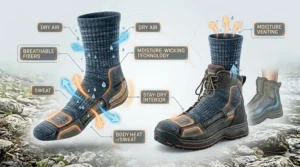
Effective moisture wicking prevents blisters and maintains comfort. Merino wool naturally pulls moisture vapor from skin and releases it to the environment. Neoprene with perforated footbeds allows water drainage while maintaining insulation through the uppers.
Advanced designs incorporate zoned ventilation—mesh panels in low-contact areas, solid material where protection matters. This targeted approach maximizes breathability without sacrificing durability. Some socks use hydrophobic treatments on outer surfaces to shed water quickly, reducing weight and maintaining warmth.
Anatomical Construction
Generic tube socks don’t cut it for serious fishing. Quality fishing socks feature left-right specific designs with shaped heel cups, articulated arches, and toe boxes matching natural foot anatomy. This precision fit eliminates bunching that causes hot spots and blisters.
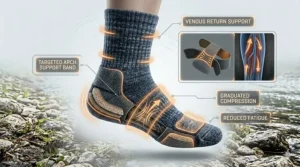
Look for differentiated cushioning—more padding under heels and forefoot where impact concentrates, less through the arch and instep where excess material creates pressure points. Elasticized zones around the arch provide support without constriction, helping fight fatigue during long days.
Seam Quality
Flat seams or seamless construction prevents the friction that ruins fishing days. Traditional raised seams create pressure lines under boots, leading to blisters within hours. True seamless knitting eliminates this issue entirely, while flat-lock stitching provides nearly invisible joins.
Toe seam placement matters particularly. Seams running across the toe box cause problems; seams positioned at the very tip or completely seamless construction work best. Check where stitching falls relative to your toes—you want seams away from contact zones.
Temperature Regulation
Beyond simple insulation, the best fishing socks actively regulate temperature. Merino wool’s hygroscopic properties mean it absorbs and releases moisture, generating heat when you’re cold and cooling when you’re warm. This responsive characteristic explains why merino works across seasons.
Neoprene socks manage temperature through thickness and air-trapping design. Thicker material provides more dead air space for insulation. Perforated sections allow heat escape during activity while maintaining warmth during stationary fishing. Some premium socks incorporate phase-change materials that store and release heat based on body temperature.
Caring for Your Fishing Socks to Maximize Lifespan
Proper Cleaning Methods
For Neoprene Socks: Rinse thoroughly with fresh water after each use, paying special attention to removing salt, sand, and organic debris. Hand wash with mild soap weekly or after particularly dirty sessions. Avoid hot water and harsh detergents—these break down neoprene’s cell structure. Never machine dry; hang in a ventilated area away from direct sunlight.
For Merino Wool Socks: Turn inside out before washing to prevent pilling. Use cold water on gentle cycle with wool-specific detergent. Skip fabric softener—it coats fibers and reduces wicking performance. Lay flat or hang to dry; high heat damages merino’s natural crimp and elasticity. Most quality merino socks survive gentle machine washing despite “hand wash only” tags.
Storage Best Practices
Store fishing socks completely dry in a cool, dark location. Folding neoprene socks creases the material, potentially causing weak points—roll them loosely instead. Merino wool tolerates folding but benefits from breathable storage containers that prevent moth damage during off-season.
Avoid compressed storage for neoprene. The foam needs air circulation to maintain loft and insulating properties. If space is tight, use mesh bags that allow airflow rather than sealed plastic containers. For merino, cedar blocks or lavender sachets naturally deter moths without chemical moth balls.
Repair and Maintenance
Small neoprene tears respond to aquaseal or similar flexible adhesives designed for wetsuits. Clean the area thoroughly, apply adhesive to both sides, and clamp or weight overnight. Larger damage often exceeds repair economics—but check warranty coverage first.
Merino wool rarely needs repair beyond darning small holes. When pilling occurs (those fuzzy balls of fiber), use a fabric shaver or sweater stone rather than picking by hand. If elastic cuffs loosen, a quick stitch can extend life significantly. Remember that quality socks with lifetime warranties simply get exchanged rather than repaired.
Fishing Socks vs. Regular Athletic Socks: Why It Matters
Performance Under Wet Conditions
Regular cotton athletic socks absorb water like sponges, lose all insulating value when wet, and take hours to dry. Cotton kills in cold environments—it conducts heat away from your body when saturated. Synthetic athletic socks improve slightly but still lack the water management properties fishing demands.
Fishing-specific socks handle moisture fundamentally differently. Neoprene doesn’t absorb water at all—it creates an insulating barrier. Merino wool manages moisture vapor at the molecular level, staying warm even when damp. This difference transforms fishing from miserable endurance test to enjoyable activity.
Durability in Harsh Environments
Fishing environments destroy regular socks. Abrasion from wading boot interiors, exposure to sun and saltwater, contact with rocks and boat decks—standard athletic socks fail within days of fishing abuse. Their materials and construction weren’t designed for submersion, chemical exposure, or constant flexing under load.
Fishing socks use materials chosen for marine environments. Neoprene resists UV degradation, saltwater, and abrasion. Quality merino blends incorporate nylon reinforcement in stress zones. Construction methods like reinforced toes and heel cups, flat seams, and elastic retention specifically address fishing’s demands.
Long-Term Cost Analysis
Budget athletic socks cost $5-10 per pair but last maybe a season of regular fishing use. Assuming 30 fishing days annually, you’ll replace them multiple times. Total five-year cost: $100+ plus the hassle of frequent replacement and discomfort from worn-out socks.
Quality fishing socks run $25-50 but last exponentially longer. Darn Tough’s lifetime warranty means you truly buy once. Even neoprene socks without warranties typically survive 3-5 years of heavy use. Five-year cost: $25-50 with superior performance throughout. The math clearly favors purpose-built fishing socks.
Common Fishing Sock Problems and Solutions
Problem: Blisters and Hot Spots
Causes: Poor fit, moisture accumulation, seam friction, or inadequate break-in period.
Solutions: Ensure proper sizing—socks should fit snug without constriction. Choose seamless or flat-seam construction. For new neoprene socks, wear them around the house for 2-3 hours before fishing to identify pressure points. Apply moleskin or anti-chafe products to known problem areas. Consider sock liner systems for extra friction protection.
Problem: Cold Feet Despite Thick Socks
Causes: Restricted circulation from too-tight fit, moisture accumulation reducing insulation, or insufficient warmth for conditions.
Solutions: Size up in socks or boots if feet feel compressed. Ensure socks are completely dry before fishing—dampness kills insulation. Layer strategically: neoprene socks over thin merino liners can outperform thick socks alone. For extreme cold, consider heated insoles or vapor barrier liners.
Problem: Overheating and Excessive Sweating
Causes: Socks too thick for conditions, poor breathability, or inadequate venting during activity.
Solutions: Match sock weight to actual water temperature, not air temperature. Rotate between heavier and lighter options as conditions change. Take breaks to air feet during long sessions. Choose socks with ventilation zones or perforate neoprene. In truly warm conditions, thinner socks with maximum breathability trump insulation.
Problem: Socks Slipping Down During Activity
Causes: Worn elastic, poor fit, or incompatible boot height.
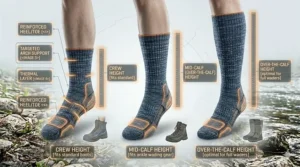
Solutions: Replace socks when elastic loses retention. Choose crew or over-calf height for maximum stay-up performance. Some anglers use sock garters or boot straps for extra security. Ensure boot fit isn’t too loose—excess space lets socks bunch.
Problem: Odor Buildup
Causes: Bacterial growth from insufficient cleaning or poor material choices.
Solutions: Rinse neoprene thoroughly after each use. Air dry completely before storage—dampness breeds bacteria. For merino wool, regular washing with enzyme detergent eliminates odor sources. Avoid leaving wet socks in sealed bags or closed boots. For persistent odor, enzyme-based sport gear treatments work wonders.
❓ FAQ: Everything You Need to Know About Fishing Socks
❓ Can you wear regular socks inside neoprene wading socks?
❓ How long do quality fishing socks typically last?
❓ Should fishing socks be worn with or without waders?
❓ What thickness neoprene works best for most fishing conditions?
❓ Do merino wool fishing socks really control odor better than synthetics?
Conclusion: Investing in Comfort Pays Dividends on the Water
Your feet carry you to the best fishing spots, keep you stable in currents, and determine whether you stay out for another hour or head home early. Skimping on fishing socks to save $20 makes zero sense when those socks directly impact every fishing session.
The seven socks we’ve covered represent genuine quality at various price points. For wet wading, the Simms Neoprene and Korkers I-Drain models deliver proven performance. If you fish with waders, Darn Tough and Smartwool merino options provide unbeatable comfort with legitimate lifetime value.
Remember that the best fishing socks for you depend on your specific fishing style, local conditions, and personal preferences. A saltwater flat fisher needs different socks than a mountain stream trout chaser. Consider water temperature, typical session length, and whether you prioritize maximum warmth or maximum breathability.
Start with one quality pair matched to your primary fishing scenario. Once you experience the difference between generic athletic socks and purpose-built fishing socks, you’ll wonder how you ever fished without them. Your feet will thank you after every trip, and your fishing performance will improve when comfort isn’t constantly distracting you.
The fishing sock market continues evolving with new materials, improved construction methods, and innovative features. But the fundamentals remain: proper moisture management, adequate insulation, durable construction, and anatomical fit. Stick with proven brands offering solid warranties, and you’ll have fishing socks that outlast multiple seasons of hard use.
Recommended for You
- 7 Best Baseball Socks 2026
- 7 Best Mountain Biking Socks That Prevent Blisters 2026
- 7 Best Golf Socks 2026: Cushioned, Breathable & Moisture-Wicking
Disclaimer: This article contains affiliate links. If you purchase products through these links, we may earn a small commission at no additional cost to you.
✨ Found this helpful? Share it with your fishing buddies! 💬🤗
