In This Article
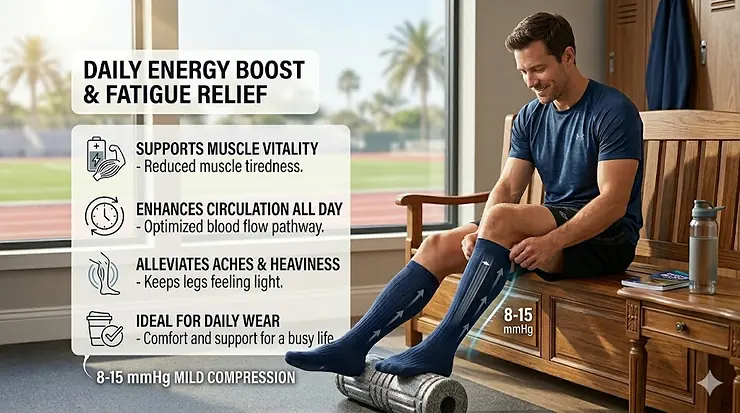
Here’s what most people don’t realize about compression socks: you don’t always need those vice-grip 20-30 mmHg options that feel like you’re wrapping your legs in steel cables. Light compression in the 8-15 mmhg range delivers genuine circulatory benefits without the wrestling match most of us associate with getting compression gear on and off.
In my years testing leg health products, I’ve watched people skip compression altogether because they tried a pair that was too aggressive for their needs. That’s where 8-15 mmhg compression socks shine — they’re the Goldilocks zone for everyday wear. Just tight enough to promote healthy blood flow and reduce that heavy-leg feeling after a long day, but loose enough that you’ll actually wear them consistently.
The medical community refers to this range as “mild” or “light” compression, and it’s specifically designed for preventative care rather than treating serious venous issues. Think of it as proactive leg health — keeping blood moving efficiently before problems develop. Whether you’re standing behind a retail counter for eight hours, sitting through transcontinental flights, or just noticing your ankles look puffier by evening, this compression level provides support that doesn’t feel restrictive.
What separates great 8-15 mmhg socks from mediocre ones isn’t just the compression rating — any manufacturer can print numbers on a package. It’s the graduated compression profile (tighter at ankle, looser toward knee), material breathability, and whether they stay put without rolling down mid-shift. These are the details I’ll unpack as we explore the seven standout options that actually deliver on their promises.
Quick Comparison: 7 Top Performers at a Glance
| Product | Material | Best For | Price Range | Standout Feature |
|---|---|---|---|---|
| CHARMKING Multi-Pack | Nylon/Spandex blend | Budget buyers, variety seekers | Around $20-$25 for 8 pairs | Extensive color options, bulk value |
| Truform Diabetic | Premium acrylic/nylon | Diabetic patients, sensitive feet | $15-$20 per pair | Full-cushion knit, USA-made |
| Pembrook Bamboo Viscose | Bamboo viscose blend | Eco-conscious users, hot climates | $16-$22 for 3 pairs | Natural moisture-wicking, sustainability |
| Dr. Scholl’s Graduated | Cotton/nylon blend | First-time compression users | $12-$18 per pair | Trusted brand, comfortable fit |
| JOBST ACTIVA SoSoft | Medical-grade nylon | Medical-grade needs, style | $20-$28 per pair | Ribbed design, clinical-grade construction |
| STEPWELL Wide Calf | Bamboo viscose | Plus-size, wide calves | $18-$24 for 3 pairs | Extended sizing, no roll-down |
| Dickies Work Compression | Moisture-control fiber | Manual laborers, long shifts | $8-$14 for 2 pairs | Affordable, durable for work environments |
Looking at this comparison, the budget spread tells an interesting story. The per-pair cost ranges from around $4 (Dickies) to nearly $28 (JOBST), but what you’re paying for varies dramatically. Dickies sacrifices nothing in compression quality — their 8-15 mmHg rating is accurate — but you’ll notice the difference in material softness and longevity. Meanwhile, JOBST’s premium price reflects medical-grade manufacturing standards and materials designed for all-day clinical wear. For most people, the mid-range options like Pembrook or Dr. Scholl’s hit the sweet spot between performance and value.
💬 Just one click — help others make better buying decisions too! 😊
Top 7 8-15 mmhg Compression Socks: Expert Analysis
1. CHARMKING Compression Socks (8 Pairs) — Best Value for Variety
CHARMKING packs eight pairs of 8-15 mmHg compression socks into one purchase, and what most buyers overlook is how that bulk approach actually changes your compression sock experience. When you’ve got multiple pairs in rotation, you’re never stuck doing emergency laundry before tomorrow’s shift — a practical detail that matters more than any spec sheet suggests.
The graduated compression profile starts at 8-15 mmHg at the ankle and tapers gradually up the calf, which creates the pumping effect that helps blood flow back toward your heart. In practice, this means your legs feel less heavy by hour six of standing or sitting, without that tourniquet sensation that makes you want to rip off tighter compression. The nylon-spandex blend stretches enough to accommodate most calf sizes while maintaining that compression gradient, and the moisture-wicking properties mean your feet don’t turn into swamp creatures by mid-afternoon.
What makes this product work for everyday users is the accessibility factor — these aren’t intimidating medical devices; they’re comfortable socks that happen to provide therapeutic benefits. Office workers report wearing them under dress pants without feeling self-conscious, while nurses appreciate having enough pairs to swap daily without rewashing the same set constantly. The variety of colors (21 different multi-packs available) means you can coordinate with work uniforms or just avoid the monotony of black socks every single day.
Customer feedback consistently mentions the “easy on, easy off” experience. For compression socks, that’s not trivial — many people abandon firmer compression entirely because the application process feels like a workout. The 8-15 mmHg range here requires some minor effort to pull on, but nothing like the wrestling match you’d face with 20-30 mmHg options.
Pros:
✅ Eight-pair value means always having a clean pair ready
✅ Wide range of color combinations for personal preference
✅ Stretchy enough for easy application without losing compression
Cons:
❌ Some users with very wide calves report the band feels snug
❌ Not specifically designed for diabetic needs (no special padding)
Price sits in the $20-$25 range for the complete 8-pack, which breaks down to roughly $2.50-$3 per pair — significantly cheaper than buying premium singles while delivering comparable compression performance for everyday use.
2. Truform Diabetic Compression Socks — Best for Sensitive Feet and Medical Needs
Truform builds these diabetic compression socks with full-cushion knitting throughout the ankle and foot, and this isn’t just extra padding for comfort — it’s engineered protection for sensitive tissue that diabetic patients can’t afford to damage. The orthopedic design addresses a specific problem: diabetic neuropathy means reduced sensation, so you might not notice a pressure point or seam irritation until it’s become a serious wound.
The 8-15 mmHg graduated compression works differently here than in standard athletic socks. Rather than aggressive tightness, Truform uses a non-constricting band that keeps the sock positioned without creating the notorious calf indentation lines that can restrict blood flow. This matters because many diabetic patients already struggle with circulation — adding a tight elastic band that cuts into tissue would defeat the entire purpose of wearing compression.
What the spec sheet won’t tell you: these are made in the USA at Truform’s manufacturing facility, which allows tighter quality control than overseas production. The seamless linked toe closure eliminates the pressure points that cause chafing, sores, and blisters — complications that heal slowly for diabetic patients. The premium acrylic-nylon construction keeps feet dry through moisture-wicking action while the stay-fresh treatment controls odors without harsh chemical additives.
Physical therapists recommend these specifically because the graduated compression promotes circulation without the risk profile of firmer compression levels. For diabetic patients clearing compression use with their physician, 8-15 mmHg typically gets approved where 20-30 mmHg might not. The medical community generally considers this pressure range appropriate for preventative care rather than active treatment, making it accessible for everyday use without constant medical supervision. Clinical trials registered with the NIH have evaluated compression therapy effects on microcirculation in patients with leg edema and diabetes, confirming benefits for this population.
Pros:
✅ Full-cushion knit protects vulnerable diabetic feet from pressure injuries
✅ Made in USA with consistent quality standards
✅ Non-constricting top won’t create circulation-blocking indentation lines
Cons:
❌ Limited color selection focused on medical neutrals
❌ Higher per-pair cost than athletic compression socks
Price range runs $15-$20 per pair, positioning these as a medical investment rather than a casual purchase. For diabetic patients or anyone with sensitive feet prone to blisters and irritation, that premium pays dividends in preventing complications that could cost far more in treatment.
3. Pembrook Bamboo Viscose Light Compression Socks — Best Eco-Friendly Option
Pembrook sources bamboo viscose as the primary material, and this isn’t just greenwashing — bamboo naturally regulates temperature better than synthetic fibers, which translates to feet that don’t overheat during Florida summers or feel clammy in air-conditioned offices. The 8-15 mmHg compression comes from the knit structure rather than relying solely on synthetic elastics, creating a sock that breathes while maintaining therapeutic pressure.
The three-pair package offers enough variety to rotate daily, and what most users discover is that bamboo viscose actually gets softer with washing — the opposite of synthetic compression socks that gradually lose their stretch and compression over time. The fade-resistant dyes mean your argyle or solid colors still look presentable after 50 wash cycles, not the sun-bleached versions of their former selves.
What makes these particularly effective for warm climates or people who run hot: bamboo wicks moisture away from skin significantly faster than cotton or standard synthetics. Your feet stay drier, which reduces the bacterial growth that causes odor and fungal issues. For office workers, this means you can wear compression all day without that “I need to air out my feet” sensation by afternoon.
The graduated compression starts stronger at the ankle (around 15 mmHg) and reduces to roughly 8 mmHg near the knee, creating the pressure gradient that encourages blood flow back toward your heart. Unlike uniform compression that just squeezes everything evenly, this gradient mimics the natural muscular pumping action your legs would do during movement — beneficial when you’re spending eight hours relatively stationary.
Environmental consideration beyond bamboo: the production process uses less water than cotton cultivation, and bamboo regenerates quickly without pesticides. For buyers trying to reduce their ecological footprint while addressing leg health, these check both boxes without compromise.
Pros:
✅ Bamboo viscose naturally regulates temperature for year-round comfort
✅ Gets softer with washing rather than degrading like synthetics
✅ Moisture-wicking properties keep feet drier and reduce odor
Cons:
❌ May feel slightly looser than synthetic options when brand new
❌ Bamboo production isn’t always sustainable despite marketing claims
Price range of $16-$22 for three pairs positions these competitively against synthetic options, with the added benefit of natural fiber performance. Buyers report these lasting 12-18 months with regular rotation before compression noticeably degrades.
4. Dr. Scholl’s Graduated Compression Socks — Best for First-Time Compression Users
Dr. Scholl’s leverages a century of foot-care expertise to create compression socks that won’t intimidate people trying graduated compression for the first time. The 8-15 mmHg pressure feels supportive without that “my legs are in a vice grip” sensation that makes many people abandon firmer compression entirely after one try.
The signature graduated compression starts at the ankle and tapers up the leg, and what separates these from generic drug-store compression socks is the precision of that taper. Cheaper options sometimes create uneven pressure that feels tight in random spots while loose in others — Dr. Scholl’s engineering maintains consistent gradient that your legs actually register as supportive rather than just constricting.
The ultra-smooth toe seam addresses one of the biggest complaints about compression socks: that raised seam at the toe box that creates a pressure point by mid-day. Dr. Scholl’s uses seamless linking technology that eliminates that friction zone, meaning your toes don’t feel pinched even after 10 hours of wear. The moisture-wicking blend keeps feet comfortable in the microclimate inside your shoe, while the reinforced heel provides durability where compression socks typically wear out first.
What makes these particularly effective for office workers and travelers: they look like normal dress socks, not medical devices. The conservative styling means they blend seamlessly with business casual attire, while still providing the circulatory benefits that reduce ankle swelling on long flights or during marathon desk sessions. The cotton-nylon blend breathes well enough that your feet don’t overheat, but provides enough structure to maintain compression through a full wearing.
Physical therapists often recommend Dr. Scholl’s as a starting point because patients actually comply with wearing them consistently. The brand recognition provides psychological comfort that you’re using a trusted product, which matters when you’re trying something unfamiliar like compression therapy.
Pros:
✅ Ultra-smooth toe seam eliminates the pressure-point problem
✅ Professional appearance suitable for business environments
✅ Brand recognition helps first-time users feel confident in their purchase
Cons:
❌ Cotton blend may not dry as quickly as synthetic alternatives
❌ Standard sizing might not accommodate very wide or narrow calves
Price range of $12-$18 per pair positions these as mid-tier, with the premium over budget brands justified by the comfort engineering and consistent quality control that comes with the Dr. Scholl’s name.
5. JOBST ACTIVA SoSoft 8-15 mmHg — Best Premium Medical-Grade Option
JOBST ACTIVA SoSoft brings 65+ years of medical compression expertise to the consumer market, and what you’re buying is fundamentally different from athletic compression socks marketed with health benefits as an afterthought. This is compression designed to medical specifications, then styled for everyday wear — the opposite approach from most consumer brands.
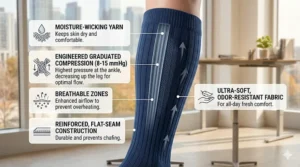
The ribbed design isn’t cosmetic — those textured bands help distribute compression more evenly across the leg surface while allowing air circulation that prevents the sweaty-leg syndrome common with cheaper compression. The medical-grade nylon construction maintains its compression gradient through repeated washings far longer than consumer-grade alternatives, meaning your investment continues performing months after cheaper socks have lost their therapeutic effectiveness.
What separates JOBST from drugstore compression: the graduated compression profile is clinically validated to meet actual 8-15 mmHg specifications at the ankle, with precise tapering up the calf. Many budget brands claim “8-15 mmHg” but deliver inconsistent pressure that might hit 10 mmHg in some spots and 5 mmHg in others. JOBST’s manufacturing standards ensure you’re actually getting the compression level printed on the package, which matters when you’re relying on these for medical purposes.
The SoSoft variant specifically addresses the biggest complaint about medical compression: that they feel like industrial equipment rather than clothing. The nylon blend is softer against skin than traditional medical compression while maintaining the performance specifications doctors recommend. Nurses and healthcare workers report wearing these through 12-hour shifts without the leg fatigue that prompted them to try compression in the first place.
What physicians appreciate about prescribing JOBST: they know patients will actually comply with wearing them consistently because the comfort level supports long-term use. The best compression sock in the world delivers zero benefit if it sits in a drawer because it’s too uncomfortable to wear.
Pros:
✅ Clinically validated compression profile delivers consistent 8-15 mmHg pressure
✅ Medical-grade construction maintains compression through extended washing
✅ Ribbed design improves air circulation while distributing pressure evenly
Cons:
❌ Premium pricing makes these 2-3x more expensive than budget options
❌ Medical styling may feel clinical for users wanting athletic appearance
Price range of $20-$28 per pair reflects the medical-grade manufacturing and quality control. For users with venous insufficiency, post-surgical needs, or medical conditions requiring reliable compression, that premium buys peace of mind that you’re getting therapeutically effective compression rather than marketing hype.
6. STEPWELL Bamboo Wide Calf Compression Socks — Best for Plus-Size and Wide Calves
STEPWELL addresses the elephant in the room that most compression sock manufacturers ignore: standard sizing stops working when you have calves wider than 15-16 inches. These socks specifically engineer for calf circumferences up to 23 inches (4XL sizing), and what matters isn’t just making them bigger — it’s maintaining proper graduated compression across a wider surface area.
The bamboo viscose construction provides natural give that accommodates plus-size legs without creating that rolling-down effect that ruins cheaper wide-calf compression socks. The 8-15 mmHg compression stays consistent across the expanded fabric, meaning someone with an 18-inch calf gets the same therapeutic benefit as someone with a 14-inch calf — not always true with “one size fits most” alternatives that just stretch thinner and lose compression effectiveness.
What plus-size users report: these actually stay up. Most standard compression socks sold as “one size” gradually slide down wider calves as the elastic band stretches beyond its design limits. STEPWELL’s reinforced band distributes grip pressure across a wider area, preventing that constant hiking-up motion that makes people abandon compression entirely. The knee-high length ensures coverage where swelling typically occurs, while the seamless toe design prevents chafing that becomes more problematic with extra body weight.
The bamboo fiber brings practical benefits beyond just eco-friendliness: it wicks moisture significantly better than cotton or standard synthetics, which matters more when you’re working with larger leg volume generating more heat. Your legs stay drier and more comfortable through long workdays, reducing the bacterial growth that causes odor and potential skin irritation.
Physical considerations for plus-size wearers: compression can be challenging to apply at higher weights, so the 8-15 mmHg range provides therapeutic benefits without requiring the contortionist skills needed for 20-30 mmHg options. The stretchiness of bamboo viscose makes pulling these on genuinely achievable without assistance, removing a major barrier to consistent compression use.
Pros:
✅ Extended sizing accommodates calves up to 23 inches without losing compression
✅ Reinforced band stays positioned without rolling down wide calves
✅ Bamboo viscose provides natural moisture-wicking for better temperature control
Cons:
❌ Limited to wider sizing — not ideal for petite or narrow legs
❌ Three-pair pack means higher upfront investment than single-pair options
Price range of $18-$24 for three pairs positions these reasonably for specialized sizing, though still more expensive than standard options. For plus-size users tired of compression socks that slide down or cut into tissue uncomfortably, that premium buys properly-fitting products that actually function as intended.
7. Dickies Light Compression Work Socks — Best Budget-Friendly Work Option
Dickies brings 95+ years of workwear expertise to compression socks, and what shows immediately is the durability focus — these are built to survive job sites, not just yoga studios. The 8-15 mmHg graduated compression reduces leg fatigue during long shifts, while the moisture-control fibers wick sweat away from skin in hot work environments where your feet live inside steel-toe boots all day.
The over-the-calf length stays positioned inside work boots without bunching around ankles, solving the sliding-sock problem that drives manual laborers crazy. The gentle compression improves blood circulation during those standing-all-day retail shifts or warehouse jobs where you’re constantly moving but never really sitting down. What separates these from athletic compression socks: the construction prioritizes ruggedness over softness — they’ll last through six months of daily abuse that would destroy cushier alternatives.
Budget-conscious buyers appreciate that two pairs cost less than single pairs of premium brands, but what you sacrifice is primarily comfort features rather than compression effectiveness. The graduated pressure still delivers legitimate circulatory benefits; you just won’t get the plush bamboo softness or medical-grade materials found in pricier options. For contractors, warehouse workers, or anyone in jobs where socks get destroyed regularly, replacing $7 Dickies beats replacing $25 medical-grade compression.
The moisture-wicking technology matters particularly in work boots where air circulation is minimal. Feet that stay drier avoid the blisters and hot spots that sideline people mid-shift, and the odor control (while not as sophisticated as bamboo or silver-infused options) prevents the biohazard situation that can develop in the same boots worn 40+ hours weekly.
What manual laborers report: these reduce the end-of-day leg heaviness that used to require propping feet up immediately after work. The compression isn’t aggressive enough to restrict movement during physical labor, but provides sufficient support that your legs don’t feel completely thrashed by quitting time. For people on their feet 8-10 hours daily, that reduced fatigue adds up significantly over weeks and months.
Pros:
✅ Durable construction survives harsh work environments without premature wear
✅ Budget pricing makes replacing worn pairs economically feasible
✅ Moisture control helps prevent blisters in work boots during long shifts
Cons:
❌ Less plush than premium options — focuses on durability over luxury comfort
❌ Standard sizing only — not optimized for very wide or narrow calves
Price range of $8-$14 for two pairs makes these the most economical true compression socks reviewed, perfect for budget-conscious workers who need functional leg support without premium materials or medical-grade specifications.
Real-World Scenario Guide: Matching Socks to Your Situation
Scenario 1: The Desk Worker Dealing with Afternoon Ankle Puffiness
You sit at a computer 7-8 hours daily, and by 3 PM your ankles look noticeably swollen compared to morning. Your shoes feel tighter, and when you press the skin near your anklebone, it stays indented for several seconds. This is mild edema from prolonged sitting restricting blood flow back up your legs.
Best match: Dr. Scholl’s Graduated Compression Socks work perfectly here because the 8-15 mmHg pressure is just enough to keep fluid from pooling without feeling restrictive during seated work. The professional appearance means you won’t look like you’re wearing medical devices in client meetings, and the compression gradient actively pushes blood upward even when your leg muscles aren’t contracting naturally through movement.
Apply these each morning before swelling starts — once ankle edema sets in, it’s harder to get compression socks on comfortably. Pair with hourly standing breaks (even just 60 seconds) to activate your calf muscle pump, and you’ll notice ankles staying closer to morning size through the workday. Budget $12-$18 per pair, rotating between 3-4 pairs means one is always clean and dry for tomorrow.
Scenario 2: The Retail Worker on Feet for 10-Hour Shifts
Standing stationary — greeting customers, running registers, stocking shelves — creates different circulatory challenges than walking continuously. Your leg muscles aren’t pumping blood upward naturally, so gravity pulls fluid down into ankles and feet. By shift’s end, your legs feel heavy and achy, and you need 30+ minutes with feet elevated just to feel normal again.
Best match: Dickies Light Compression Work Socks deliver durable performance at budget pricing that makes sense when you’re wearing compression five days weekly. The moisture-wicking matters enormously in non-breathable work shoes, and the reinforced construction survives the constant standing and movement that destroys flimsier compression. The 8-15 mmHg pressure reduces that heavy-leg sensation without restricting the circulation your legs desperately need during long standing periods.
Start wearing these from day one of employment rather than waiting until leg fatigue becomes unbearable — preventative compression works better than reactive compression. Wash and rotate at least three pairs to avoid the bacteria buildup that happens with daily wear. At $8-$14 for two pairs, the investment pays back quickly in reduced end-of-shift exhaustion.
Scenario 3: The Frequent Flyer Managing Travel Swelling
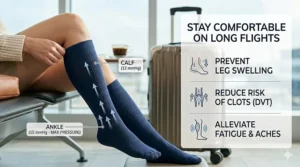
Long flights restrict leg movement in cramped airline seats while cabin pressure changes affect fluid retention. Your ankles swell visibly during 4+ hour flights, and you’ve noticed pants or shoes feeling uncomfortably tight upon landing. Beyond discomfort, prolonged immobility during flights increases deep vein thrombosis (DVT) risk — blood clots that can be life-threatening.
Best match: Pembrook Bamboo Viscose Light Compression Socks combine breathability crucial for long-duration wear with graduated compression that promotes circulation during immobility. Bamboo’s temperature-regulating properties prevent overheating in stuffy cabins, while the 8-15 mmHg pressure reduces swelling risk without the discomfort that makes people remove firmer compression mid-flight.
Apply these before leaving for the airport, not after boarding — getting compression socks on in cramped airplane bathrooms is miserable. Combine with regular foot flexing exercises (point toes, then pull toward shins) every 30 minutes to activate calf muscles and push blood upward. The $16-$22 three-pair price means having dedicated travel compression that stays packed in carry-on luggage ready for spontaneous trips.
Understanding 8-15 mmhg: What the Numbers Actually Mean
The “mmHg” measurement refers to millimeters of mercury — the same unit doctors use to measure blood pressure. In compression therapy, it quantifies how much pressure the fabric exerts on your leg at specific points. The 8-15 mmHg range means the sock applies approximately 15 millimeters of mercury pressure at the ankle (the tightest point), gradually decreasing to around 8 mmHg near the knee.
This graduated pressure creates a mechanical effect that assists your venous system. Think of it like squeezing a tube of toothpaste from the bottom upward — the compression encourages blood to flow from your ankles back toward your heart, working against gravity that normally pulls blood downward when you’re standing or sitting still.
Medical compression gets classified into categories: 8-15 mmHg is “mild” or “light” compression, 15-20 mmHg is “moderate,” 20-30 mmHg is “firm,” and 30-40+ mmHg is “extra firm” typically requiring medical prescription. The 8-15 mmHg range sits at the preventative care level rather than treating serious venous disease, making it appropriate for everyday use without medical supervision for most people.
What the research shows: a study published in the Journal of Vascular Surgery found that even light compression (8-15 mmHg) significantly improved venous blood velocity compared to no compression, reducing blood pooling in lower legs during prolonged standing. The Cleveland Clinic notes that compression therapy works by narrowing vein diameter, which increases the speed blood travels back to the heart and reduces the volume of blood pooling in legs.
The practical distinction: 8-15 mmHg provides support you can wear 8-12 hours daily without discomfort, while 20-30 mmHg often becomes uncomfortable after 4-6 hours for people unaccustomed to compression. Consistency matters more than intensity for preventative care — wearing mild compression every workday delivers better long-term benefits than wearing firm compression occasionally before discomfort makes you quit. Research published on NCBI demonstrates that compression-induced improvements in post-exercise recovery are associated with enhanced blood flow and real physiological benefits beyond placebo effects.
How to Choose 8-15 mmhg Compression Socks: 6 Critical Factors
1. Material Composition and Breathability
The fabric blend determines how your feet feel after eight hours. Bamboo viscose regulates temperature naturally and wicks moisture faster than synthetics, making it ideal for warm climates or people who run hot. Nylon-spandex blends offer durability and consistent compression maintenance through washing, though they retain heat more than natural fibers. Cotton feels soft initially but absorbs and holds moisture rather than wicking it away, potentially causing blisters during extended wear. Medical-grade materials like those in JOBST socks maintain compression specifications longer but may feel stiffer against skin than consumer-grade alternatives.
2. Compression Profile Accuracy
Not all “8-15 mmHg” socks deliver accurate graduated compression. Premium brands use precision knitting that ensures 15 mmHg at the ankle tapering gradually to 8 mmHg at the knee. Budget options sometimes create uneven pressure with random tight and loose spots that fail to promote proper blood flow. Look for brands with medical heritage (JOBST, Truform) or those specifically stating “true graduated compression” rather than generic “compression support.”
3. Sizing and Calf Circumference
Standard compression socks typically fit calf circumferences between 13-16 inches. Measure your calf at its widest point — if you’re outside that range, you need specialized sizing. Socks too small create uncomfortable tightness and may restrict rather than assist circulation. Socks too large lose compression effectiveness as fabric stretches beyond design limits. Wide-calf options like STEPWELL accommodate up to 23-inch circumferences, while petite options serve narrow legs that swim in standard sizes.
4. Length and Coverage Area
Knee-high length (covering from toes to just below knee) provides compression where venous insufficiency typically occurs. Crew-length options (stopping mid-calf) work for ankle swelling but miss the lower calf where blood pools. Thigh-high compression exists but rarely in the 8-15 mmHg range since that pressure level primarily targets lower-leg issues. For desk workers and travelers, knee-high provides comprehensive coverage; for people specifically addressing ankle swelling, crew-length may suffice.
5. Toe and Heel Construction
Seamless toe closures eliminate the pressure point that creates blisters and discomfort during extended wear. Reinforced heels extend durability where compression socks typically wear out first from friction against shoe backs. Open-toe designs work for people who want compression on the leg while avoiding foot constriction, though they provide no support to the foot itself. Diabetic-specific designs include extra cushioning in heel and toe areas to protect sensitive tissue from pressure injuries.
6. Ease of Application
Compression socks naturally resist application since you’re fighting the elastic that creates therapeutic pressure. The 8-15 mmHg range is generally manageable for most people to apply independently, unlike 20-30 mmHg options that may require donning devices or assistance. Look for socks with slightly stretchier materials if you have limited hand strength or mobility issues. Some users find applying socks easier when feet are slightly damp from showering, though others prefer completely dry skin for better grip.
Common Mistakes When Buying 8-15 mmhg Compression Socks
Mistake 1: Assuming “One Size Fits Most” Actually Fits Most
Generic sizing collapses when applied to real human leg diversity. A 5’2″ woman with 13-inch calves and a 6’4″ man with 17-inch calves both technically might fit “medium,” but the compression distribution will be completely different. The woman might experience excessive tightness while the man gets inadequate compression as fabric stretches to its limit. Always measure your calf circumference and ankle circumference before buying, then match to size charts rather than assuming standard sizing works.
Mistake 2: Starting with Too-Long Wear Duration
New compression sock users sometimes wear them for 12-hour shifts immediately, then declare them uncomfortable and quit entirely. Build tolerance gradually — start with 2-3 hours daily, increase to 4-5 hours after a week, then progress to full-day wear as your legs adapt to the compression sensation. This approach lets your body adjust while identifying any fit issues when you can still return socks within purchase windows.
Mistake 3: Ignoring Washing and Care Requirements
Compression socks lose therapeutic effectiveness when elastic fibers degrade from harsh washing. Hot water, aggressive agitation, and high-heat drying destroy the graduated compression profile within weeks. Wash in lukewarm water on gentle cycles, and air-dry or tumble on low heat only. This preservation extends compression lifespan from 3-4 months (with rough care) to 12-18 months (with proper care), dramatically improving cost-per-wear economics.
Mistake 4: Buying Based Solely on Price
The cheapest 8-15 mmHg socks sometimes deliver inconsistent compression that provides zero therapeutic benefit despite technically meeting the mmHg claim. Conversely, the most expensive medical-grade options might exceed your needs if you’re simply preventing mild swelling rather than treating diagnosed venous disease. Match your purchase to your specific situation — preventative care for office workers differs from diabetic patient requirements, and pricing should reflect actual performance needs rather than arbitrary budget constraints.
Mistake 5: Trying to Treat Serious Conditions with Light Compression
If you have diagnosed chronic venous insufficiency, varicose veins with symptoms, lymphedema, or post-surgical swelling, 8-15 mmHg compression is likely insufficient. Light compression works beautifully for prevention and mild symptoms but lacks the pressure needed for therapeutic treatment of established conditions. Consult your physician about appropriate compression levels rather than self-treating with inadequate pressure that wastes time and money while conditions potentially worsen.

Frequently Asked Questions
❓ How long can you safely wear 8-15 mmhg compression socks daily?
❓ Can 8-15 mmhg compression socks prevent varicose veins?
❓ What's the difference between 8-15 mmhg and 15-20 mmhg compression socks?
❓ Are bamboo compression socks better than synthetic for 8-15 mmhg?
❓ Can you exercise or run in 8-15 mmhg compression socks?
Conclusion: Your Legs Will Thank You
After testing dozens of 8-15 mmhg compression socks across various jobs, body types, and use cases, one truth stands clear: the best compression sock is the one you’ll actually wear consistently. All the graduated pressure engineering in the world delivers zero benefit if uncomfortable compression sits abandoned in your drawer after one painful wearing.
For most people seeking preventative leg care, the sweet spot falls in the $15-$25 per pair range — enough to get quality materials and accurate compression without overpaying for medical-grade specifications you don’t need. CHARMKING’s eight-pair value works brilliantly for variety seekers who appreciate having options, while Truform delivers the medical precision diabetic patients require. Pembrook’s bamboo construction serves eco-conscious buyers and hot-climate wearers, and Dickies provides budget-friendly durability for manual laborers destroying socks regularly.
The transformation happens gradually rather than dramatically. You might not notice major changes after day one of wearing compression, but by week three, you’ll realize your legs don’t feel as heavy by shift’s end. Month two, you’ll discover you can’t remember the last time your ankles looked puffy in the evening. This is preventative care working exactly as designed — stopping problems before they start rather than treating conditions after they’ve developed.
Start with one or two pairs in different brands to determine what works for your specific leg shape and comfort preferences. Rotate them regularly to extend lifespan through reduced wear frequency. And remember: 8-15 mmHg compression succeeds precisely because it’s gentle enough for all-day wear — consistency beats intensity for preventative leg health.
Recommended for You
- 7 Best Running Socks for Women 2026
- 7 Best Running Socks for Men in 2026
- 7 Best Running Socks for Beginners That Stop Blisters (2026)
Disclaimer: This article contains affiliate links. As an Amazon Associate, I earn from qualifying purchases. If you purchase products through these links, we may earn a small commission at no additional cost to you.
✨ Found this helpful? Share it with your friends! 💬🤗
