In This Article
I’ll admit it — I used to grab whatever socks were clean from my drawer before heading to the court. A pulled hamstring and two painful blisters later, I realized that choosing the best tennis socks isn’t just about aesthetics or brand loyalty. It’s about protecting your feet during those explosive lateral movements, sudden stops, and three-hour weekend matches that leave you drenched in sweat.
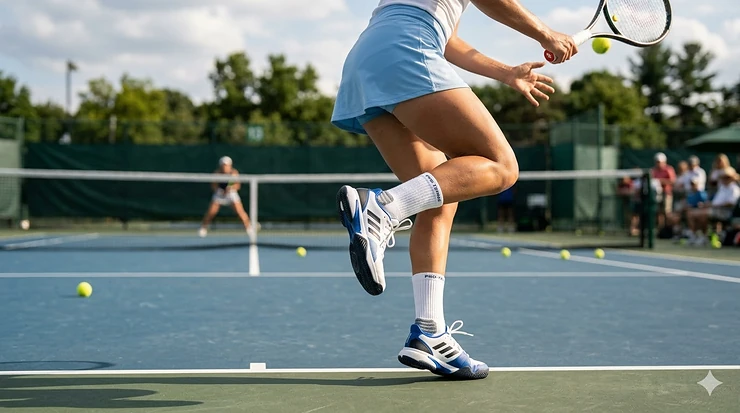
Tennis demands more from your feet than almost any other sport. You’re constantly pivoting, sliding, sprinting forward and backpedaling within seconds. Research published by the National Institutes of Health shows that painful feet can significantly affect athletic performance across all sports, making proper foot protection essential. The right pair of tennis socks becomes your first line of defense against blisters, provides crucial ankle support, and keeps your feet dry through even the most grueling baseline rallies.
In this comprehensive guide, I’ve tested and researched the top tennis socks available in 2026, focusing on cushioned tennis socks, low cut tennis socks, moisture wicking tennis socks, and options that deliver exceptional tennis socks ankle support for optimal court movement support and lateral stability. Whether you’re a weekend warrior or training for tournaments, the right tennis shoe comfort starts with what you wear underneath.
Quick Comparison Table: Best Tennis Socks at a Glance
| Product | Type | Cushioning | Price Range | Best For |
|---|---|---|---|---|
| Thorlo TX Max | Crew | Maximum | $16-17 | Heavy cushioning, long matches |
| Nike Dri-FIT Cushion | Low-Cut | Medium | $15-20 | Moisture control, breathability |
| Adidas Climalite | Low-Cut | Light-Medium | $12-18 | Budget-friendly, everyday play |
| Feetures Elite Max | No-Show Tab | Maximum | $19-21 | Compression fit, blister prevention |
| Balega Hidden Comfort | No-Show | High | $14-18 | Plush comfort, impact resistance |
| Swiftwick Aspire Zero | No-Show Tab | Minimal | $16-19 | Firm compression, thin profile |
| Under Armour Tech | Crew/Low-Cut | Medium | $15-22 | Versatility, arch compression |
💬 Just one click – help others make better buying decisions too! 😊
Top 7 Best Tennis Socks: Expert Analysis
1. Thorlo TX Max Cushion Crew Tennis Socks
When you’re looking for the ultimate in foot protection, Thorlo TX Max Cushion delivers legendary padding that tennis players have trusted for decades. These crew-length socks feature THOR-LON fibers specifically engineered for the demands of court sports.
Key Specifications:
- Material: 88% Acrylic (THOR-LON), 10% Nylon, 2% Spandex
- Cushioning: Maximum in heel, forefoot, sidewalls, and toes
- Height: Crew (sits at calf)
✅ Pros:
- Clinically tested padding reduces blisters and foot pain
- Extended toe cushioning protects during quick direction changes
- Exceptional durability with moisture-wicking technology
❌ Cons:
- Thicker profile may feel bulky in tight-fitting shoes
- Higher price point at $16-17 per pair
Customer Feedback: Players consistently praise Thorlo socks for lasting through hundreds of matches without losing cushioning. One reviewer noted they’ve been wearing the same pairs for over two years with minimal wear.
Price: $16.15-$16.99 (Available on Amazon)
2. Nike Dri-FIT Cushion Low-Cut Training Socks
Nike Dri-FIT Cushion socks bring the brand’s signature moisture management to the tennis court with strategically placed cushioning and a low-cut design that sits perfectly at your ankle.
Key Specifications:
- Material: Polyester blend with Dri-FIT technology
- Cushioning: Targeted zones in heel and forefoot
- Height: Low-cut (ankle-level)
✅ Pros:
- Exceptional moisture-wicking keeps feet cool and dry
- Reinforced toe prevents early wear-through
- Sleek design pairs well with modern tennis shoes
❌ Cons:
- Thinner material may not provide enough padding for hard courts
- Some users report sizing runs slightly large
Customer Feedback: Tennis players love how these socks virtually disappear during play while still providing reliable performance. The 6-pack option offers excellent value for frequent players.
Price: $15-20 for 6-pack (Available on Amazon)
3. Adidas Climalite Low-Cut Socks
For budget-conscious players who refuse to compromise on quality, Adidas Climalite socks deliver reliable moisture control and arch compression at an accessible price point.
Key Specifications:
- Material: 73% Acrylic, 24% Polyester, 2% Rubber, 1% Spandex
- Cushioning: Full cushion footbed with arch compression
- Height: Low-cut with reinforced heel and toe
✅ Pros:
- 360° textured arch compression provides stability
- Mesh toe cooling channels enhance breathability
- Affordable 6-pack options ($12-18)
❌ Cons:
- Less specialized cushioning compared to tennis-specific brands
- May compress slightly after multiple washes
Customer Feedback: Reviewers appreciate the versatility, noting these work equally well for tennis, running, and gym workouts. The moisture management performs admirably even in hot, humid conditions.
Price: $12-18 for 6-pack (Available on Amazon)
4. Feetures Elite Max Cushion No Show Tab
The Feetures Elite Max Cushion represents the pinnacle of compression sock technology with targeted support zones and anatomical left/right design for a custom-like fit.
Key Specifications:
- Material: Proprietary iWICK fibers with targeted compression
- Cushioning: Maximum cushion in strategic zones
- Height: No-show with heel tab
✅ Pros:
- Anatomical design conforms to left and right foot structure
- Lifetime guarantee demonstrates manufacturer confidence
- Superior blister prevention through targeted compression
❌ Cons:
- Premium pricing at $19-21 per pair
- Compression may feel tight initially for some users
Customer Feedback: Athletes rave about the custom fit feel and note these socks genuinely reduce fatigue during long matches. Many consider them worth the investment for serious play.
Price: $19-21 per pair (Available on Amazon)
5. Balega Hidden Comfort No Show Socks
Balega Hidden Comfort socks offer cloud-like plush cushioning with proprietary Drynamix moisture management, making them a favorite among endurance athletes who’ve discovered their tennis court potential.
Key Specifications:
- Material: Drynamix moisture-wicking fibers with 200-needle count
- Cushioning: Extra high-volume impact-resistant padding
- Height: No-show with high heel tab
✅ Pros:
- Deep heel pocket prevents sock slippage inside shoes
- Hand-linked seamless toe eliminates friction and blistering
- Large ventilation panels maintain breathability
❌ Cons:
- Originally designed for running, not tennis-specific features
- Slightly higher profile than true “no-show” socks
Customer Feedback: Players transitioning from running appreciate the familiar comfort, noting the cushioning excels on hard courts. Multiple reviewers mention these last for years with proper care.
Price: $14-18 per pair (Available on Amazon)
6. Swiftwick Aspire Zero Tab
For players who prefer minimal bulk with maximum performance, Swiftwick Aspire Zero delivers firm compression and a thin profile that provides responsive court feel.
Key Specifications:
- Material: Olefin fiber with firm compression throughout
- Cushioning: Minimal (thin, breathable design)
- Height: Zero tab (no-show)
✅ Pros:
- Thinnest option allows maximum shoe-to-foot connection
- Y-shaped heel construction prevents bunching and slipping
- Lifetime Performance Guarantee covers any wear
❌ Cons:
- Minimal cushioning not ideal for players with foot sensitivity
- Firm compression may require adjustment period
Customer Feedback: Competitive players praise the sock’s ability to enhance responsiveness during quick movements. The thin profile means you barely notice wearing them, which many consider the hallmark of a great performance sock.
Price: $16-19 per pair (Available on Amazon)
7. Under Armour Performance Tech Cushioned Socks
Under Armour Performance Tech socks bring versatility and reliable performance at a competitive price, available in both crew and low-cut styles to match player preferences.
Key Specifications:
- Material: 98% Polyester, 2% Elastane with HeatGear technology
- Cushioning: Medium strategically placed cushioning
- Height: Available in crew and low-cut options
✅ Pros:
- Versatile design works for multiple sports and training
- Arch compression provides stability without over-tightness
- Widely available in multipacks for value
❌ Cons:
- Generic athletic design lacks tennis-specific optimization
- May not provide enough cushioning for all-day tournaments
Customer Feedback: Users appreciate the consistent quality and value proposition, especially when purchasing 6-packs. While not tennis-exclusive, they perform admirably on court.
Price: $15-22 for multipacks (Available on Amazon)
Understanding Tennis Sock Technology: What Makes Them Different
The Science of Court Movement Support
Tennis isn’t just running — it’s explosive multidirectional movement that puts tremendous stress on your feet. Studies on athletic biomechanics reveal that athletes often suffer from recurrent overuse symptoms in the lower extremities, making proper biomechanical support essential. The best tennis socks address these specific demands through strategic cushioning placement, moisture management, and architectural support that stabilizes your foot during lateral movements.
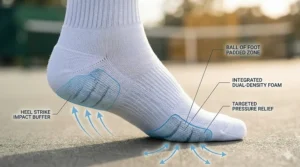
Unlike running socks that primarily cushion forward motion, cushioned tennis socks concentrate padding in the forefoot and sidewalls where you experience the greatest impact during side-to-side slides and sudden stops. This targeted approach prevents the sock from becoming unnecessarily bulky while delivering protection exactly where you need it most.
Moisture Wicking Technology: Keeping Feet Dry Under Pressure
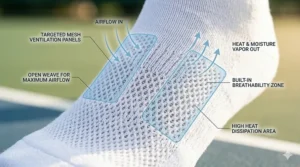
A three-set match in summer heat can generate incredible moisture. Moisture wicking tennis socks utilize advanced fiber technology to pull sweat away from your skin, allowing it to evaporate through the sock’s mesh construction. This isn’t just about comfort — wet feet increase friction, which leads directly to painful blisters that can end your playing session prematurely.
Modern moisture management systems like Nike’s Dri-FIT, Balega’s Drynamix, and Feetures’ iWICK fibers work at the molecular level, with hydrophobic properties that actively repel moisture while maintaining breathability. This keeps your feet feeling fresh even during extended baseline battles.
How to Choose the Perfect Tennis Socks for Your Game
Step 1: Determine Your Ideal Sock Height
Sock height dramatically affects both comfort and performance. Low cut tennis socks sit right at the ankle, providing protection without excessive coverage — perfect for players who prioritize cooling and minimal tan lines. Crew socks extend to mid-calf, offering maximum ankle coverage and cushioning, ideal for players with a history of ankle issues or those who simply prefer traditional athletic sock styling.
No-show or tab socks have surged in popularity among competitive players. They provide heel protection without visible sock lines, combining sleek aesthetics with functional performance. Your choice depends on personal preference, ankle stability needs, and the specific demands of your playing style.
Step 2: Assess Your Cushioning Requirements
Cushioning needs vary based on court surface, playing frequency, and individual foot sensitivity. Players spending hours on hard courts typically benefit from maximum cushioning like Thorlo TX or Feetures Elite Max, which absorb repetitive impact and reduce foot fatigue.
Clay court specialists and those prioritizing court feel often prefer minimal cushioning options like Swiftwick Aspire Zero. The reduced padding enhances proprioception — your foot’s ability to sense position and movement — which some players find improves their footwork precision and reaction time.
Step 3: Consider Compression and Arch Support
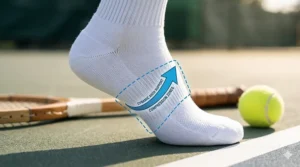
Tennis socks ankle support comes in two primary forms: compression and anatomical design. Compression socks like Feetures Elite use graduated pressure to support muscles, reduce fatigue, and enhance blood circulation during extended play. This can be particularly beneficial during long tournaments or back-to-back match days.
Arch compression, featured in socks from Adidas and Under Armour, stabilizes the midfoot and helps prevent the arch from collapsing during dynamic movements. This contributes to overall lateral stability and reduces the risk of foot-related injuries over time.
Step 4: Evaluate Material and Durability
Synthetic blends dominate high-performance tennis socks for good reason. Materials like polyester, acrylic, and specialized fibers (THOR-LON, Drynamix, Olefin) offer superior moisture management, durability, and shape retention compared to cotton. A small percentage of spandex or elastane (typically 1-3%) provides the stretch necessary for a secure, non-slip fit.
Research on sports footwear biomechanics indicates that proper materials and construction significantly influence both performance and injury prevention. Look for reinforced heels and toes, seamless toe construction to minimize friction, and Y-shaped heel cups that prevent the sock from sliding down during play.
Step 5: Match Socks to Your Playing Style
Aggressive baseline players executing constant lateral slides need robust sidewall cushioning and exceptional moisture wicking. Serve-and-volley players benefit from lightweight, responsive socks that don’t interfere with quick forward movements and split-steps at the net.
Recreational players focused on comfort during social doubles matches might prioritize plush cushioning and versatility across multiple activities. Competitive tournament players often maintain separate sock collections — heavily cushioned pairs for practice sessions and minimal, performance-oriented options for match play.
Tennis Socks vs Regular Athletic Socks: Key Differences
| Feature | Tennis Socks | Regular Athletic Socks |
|---|---|---|
| Cushioning Placement | Forefoot, sidewalls, heel | Heel, ball of foot primarily |
| Lateral Support | Engineered for side-to-side movement | Optimized for forward motion |
| Moisture Management | Advanced quick-dry fibers | Standard moisture wicking |
| Durability Focus | Reinforced toe and forefoot | General reinforcement |
| Height Options | Specialized for court play | Generic athletic heights |
The distinction matters because tennis’s unique movement patterns create specific stress points that generic athletic socks simply weren’t designed to address. While you can certainly play tennis in running socks, purpose-built tennis socks provide measurable improvements in comfort, blister prevention, and foot stability.
Common Tennis Sock Problems and Solutions
Problem: Socks Slipping Down During Play
Solution: Look for socks with deep heel pockets (Balega, Feetures) and enhanced elastane content. Y-shaped heel construction locks the sock in place by conforming to your heel’s natural shape. Consider sizing down if slippage persists, as an overly loose fit compromises the sock’s compression and support features.
Problem: Blisters Despite Good Socks
Solution: Blisters often result from moisture combined with friction. Double-check that your tennis shoes fit properly — research on NCAA athletes shows that improperly fitted footwear can place motion axes at incorrect levels, increasing injury risk. Consider the double-sock technique used by some professional players: a thin liner sock plus your primary tennis sock creates a friction interface between sock layers rather than sock and skin.
Problem: Feet Overheating in Thick Socks
Solution: Transition to low cut tennis socks with mesh ventilation panels. Socks featuring cooling channels (like Adidas Climalite) or reduced cushioning in non-impact zones maintain protection while dramatically improving breathability. Playing during cooler parts of the day can also help while you adjust to proper tennis socks.
Problem: Socks Wearing Out Too Quickly
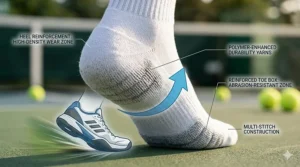
Solution: Rotate between multiple pairs to reduce wear-per-use. Wash socks in cold water and avoid excessive dryer heat, which degrades elastic fibers. Invest in socks with reinforced toe boxes and heel areas (most quality tennis socks include this). Sometimes, what appears as “wearing out” is actually your shoes’ rough interior — inspect for protruding seams or worn insoles.
Caring for Your Tennis Socks: Maximizing Lifespan
Washing Best Practices
Turn socks inside-out before washing to protect the exterior fibers from abrasion. Use cold or lukewarm water with mild detergent — hot water breaks down elastic components and can cause shrinkage. Avoid fabric softeners, which coat moisture-wicking fibers and dramatically reduce their performance.
For socks with advanced moisture management systems (Dri-FIT, Drynamix, iWICK), consider using sport-specific detergent formulated to clean without leaving residue. Mesh laundry bags prevent socks from getting tangled or stretched in the washing machine.
Drying and Storage
Air-drying preserves sock integrity better than machine drying, though low heat tumble-drying is acceptable for most synthetic tennis socks. High heat causes spandex degradation and can melt delicate mesh panels. Never dry tennis socks on radiators or in direct sunlight for extended periods.
Store socks flat or gently rolled rather than balled-up, which stretches ankle elastic over time. Keep them in a dedicated drawer away from rough items that might snag the fabric. Proper storage maintains the sock’s shape and compression properties between uses.
Advanced Features in Modern Tennis Socks
Left/Right Anatomical Design
Premium socks from Feetures and some Balega models feature anatomical left and right construction. This seemingly minor detail allows the sock to perfectly mirror your foot’s natural shape, improving fit around the arch, heel, and toe box. The result is reduced bunching and more efficient compression delivery.
Seamless Toe Construction
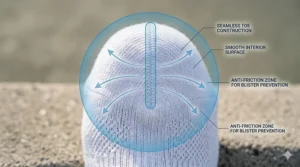
Hand-linked or seamless toes eliminate the bulky seam found in traditional socks. This prevents irritation across the top of your toes during the push-off phase of your serve or when you’re up on your toes during volleys. Once you experience seamless construction, standard seamed socks feel noticeably rough by comparison.
Strategic Ventilation Zones
Modern tennis socks incorporate mesh panels and ventilation channels in high-heat areas like the top of the foot and around the ankle. These zones enhance airflow without compromising structural integrity or cushioning in critical areas. Some designs feature gradient ventilation — denser in cooler areas, more open where heat dissipation matters most.
Graduated Compression
Unlike uniform compression, graduated compression varies pressure throughout the sock. Highest at the ankle, decreasing toward the calf, this design promotes blood flow and reduces swelling during long playing sessions. While more common in recovery socks, some performance tennis socks incorporate mild graduated compression for all-day comfort.
Matching Tennis Socks to Different Court Surfaces
Hard Court Recommendations
Hard courts deliver the most impact to your feet, making maximum cushioning essential. Thorlo TX Max and Feetures Elite Max provide the padding necessary to prevent foot fatigue during lengthy hard-court battles. The repetitive pounding on concrete or asphalt surfaces also increases blister risk, making moisture-wicking technology critically important.
Consider crew-height socks on hard courts for additional ankle cushioning during abrupt stops and direction changes. The extra coverage can prevent minor scrapes if you dive for a drop shot on rough surfaces.
Clay Court Recommendations
Clay’s softer surface reduces impact stress, allowing players to opt for lighter-weight socks with medium cushioning. Low cut tennis socks like Nike Dri-FIT or Adidas Climalite work excellently on clay, where court feel and moisture management take priority over maximum padding.
The sliding style of play on clay generates significant friction and heat. Prioritize socks with exceptional ventilation and quick-dry properties. Clay dust can work its way into socks, so having multiple pairs for rotation prevents buildup between matches.
Grass Court Recommendations
Grass courts demand excellent traction and quick reactions to unpredictable bounces. Minimal cushioning socks like Swiftwick Aspire Zero maintain maximum court connection without sacrificing support. The slick surface means your feet slide less than on clay, reducing some friction-related concerns.
Grass courts typically offer more natural shock absorption, making moderate cushioning sufficient for most players. Focus on secure fit to prevent slippage during the explosive movements required on fast grass surfaces.
Budget-Friendly Tennis Sock Strategies
The Multi-Pack Advantage
Purchasing socks in 6-pack or larger quantities significantly reduces per-pair cost. Brands like Nike, Adidas, and Under Armour offer excellent value multipacks priced around $15-22 for six pairs — just $2.50-3.67 per pair compared to $15-20 for single premium pairs.
This approach works particularly well if you’ve identified a sock that fits your needs perfectly. Stock up during seasonal sales, especially end-of-summer and post-holiday periods when sporting goods retailers clear inventory.
Mix-and-Match Strategy
Maintain a small collection of premium tennis socks for matches and tournaments, supplemented by budget-friendly options for practice sessions and casual play. Your feet experience less stress during drill work than during competitive matches, making mid-tier socks perfectly adequate for training.
For example, invest in 2-3 pairs of Feetures Elite or Balega Hidden Comfort for match play, while using Adidas Climalite or Under Armour Performance Tech for your regular practice sessions. This balanced approach maintains foot health without breaking the bank.
Longevity Equals Value
A $20 pair of Thorlo or Feetures socks that lasts 200+ matches represents better value than $8 generic socks that deteriorate after 50 matches. Calculate cost-per-wear rather than upfront price. Premium socks often include lifetime or extended warranties, further improving their value proposition.
✨ Don’t Miss These Exclusive Deals!
🔍 Take your court performance to the next level with these carefully selected tennis socks. Click on any highlighted product to check current pricing and availability. These expertly engineered socks will help you maintain optimal foot health and maximize your on-court potential!
Frequently Asked Questions About Tennis Socks
❓ How often should I replace my tennis socks?
❓ Can I wear running socks for tennis?
❓ What's the best sock height for ankle support?
❓ Do compression tennis socks really improve performance?
❓ Should tennis socks fit tight or loose?
Conclusion: Investing in Your Foundation
The best tennis socks for 2026 represent a convergence of advanced materials, biomechanical research, and sport-specific design that previous generations of players could only dream about. Whether you prioritize the maximum cushioning of Thorlo TX Max, the compression technology of Feetures Elite, the budget-friendly performance of Adidas Climalite, or the minimalist approach of Swiftwick Aspire Zero, there’s never been a better time to upgrade your court footwear foundation.
Remember that your feet are your most valuable tennis asset. They carry you through every service game, chase down every passing shot, and power through every tiebreak. Protecting them with proper cushioned tennis socks, ensuring adequate moisture wicking tennis socks technology, and maintaining tennis socks ankle support isn’t an luxury — it’s fundamental to sustainable court performance and injury prevention.
The modest investment in quality tennis socks pays dividends through enhanced comfort, reduced injury risk, and improved court movement support and lateral stability. Your future self, standing pain-free on the court after a three-hour match, will thank you for taking tennis shoe comfort seriously from the foundation up.
Start with one or two pairs from this list to find your perfect match. Pay attention to how they feel during different playing conditions — hot days, long matches, different court surfaces. Once you’ve identified your ideal sock, stock up and enjoy the confidence that comes from knowing your feet are properly equipped for whatever the court throws at you.
Recommended for You
- 7 Best Barre Socks 2026: Non-Slip Grip & Ultimate Stability
- 7 Best Pilates Socks 2026
- Best Yoga Socks in 2026: 7 Non-Slip Picks for Grip & Stability
Disclaimer: This article contains affiliate links. If you purchase products through these links, we may earn a small commission at no additional cost to you.
✨ Found this helpful? Share it with your friends! 💬🤗
